
- Film And TV
- 29 Mar 26
Cillian Murphy on Peaky Blinders: The Immortal Man – "By the end of the film, I think he begins to realise what he actually stands for"








Crime drama mega-hit Peaky Blinders is back for a feature film outing, boasting an awesome soundtrack, including music from Fontaines D.C. Roe McDermott hears from creator Steven Knight, plus stars Cillian Murphy and Barry Keoghan.
There are very few television series that manage to become, at once, a critical success, a mass audience obsession, a style reference point, a music moodboard, and a kind of modern myth. But Peaky Blinders did exactly that, turning the story of a Birmingham gang into something far larger than a period crime drama, and in Tommy Shelby, creating one of the defining screen antiheroes of the last decade.
It was always a show about violence and power, about the thrill of swagger, tailoring and iconography. But it was also something more bruised and haunted than its copycats ever managed to be: a story of men disfigured by war, of family as both sanctuary and curse, and of a country stumbling through modernity with soot on its face and trauma in its bloodstream.
Now that mythic television run is moving to the big screen with Peaky Blinders: The Immortal Man, a feature film that returns Tommy Shelby to Birmingham under the shadow of the Second World War, and pushes the long-running saga into what its creators frame as a final reckoning.
When the film begins, Tommy is no longer the ruthless political operator audiences last saw manipulating events from the corridors of power. Instead he is living in self-imposed exile, withdrawn from the world after the cumulative toll of grief, betrayal and violence.
Rumour in Birmingham has it that he has simply vanished into obscurity to work on his memoirs, and Tommy is writing – but what emerges on the page is less memoir than confession, an attempt to pour the accumulated weight of war, trauma, family tragedy and personal guilt onto paper.
The film is partly framed through that voice, with Tommy narrating fragments of memory and reflection, which fill in the gaps for audiences who may have drifted away from the series, while still rewarding those who followed every turn of the Shelby dynasty.
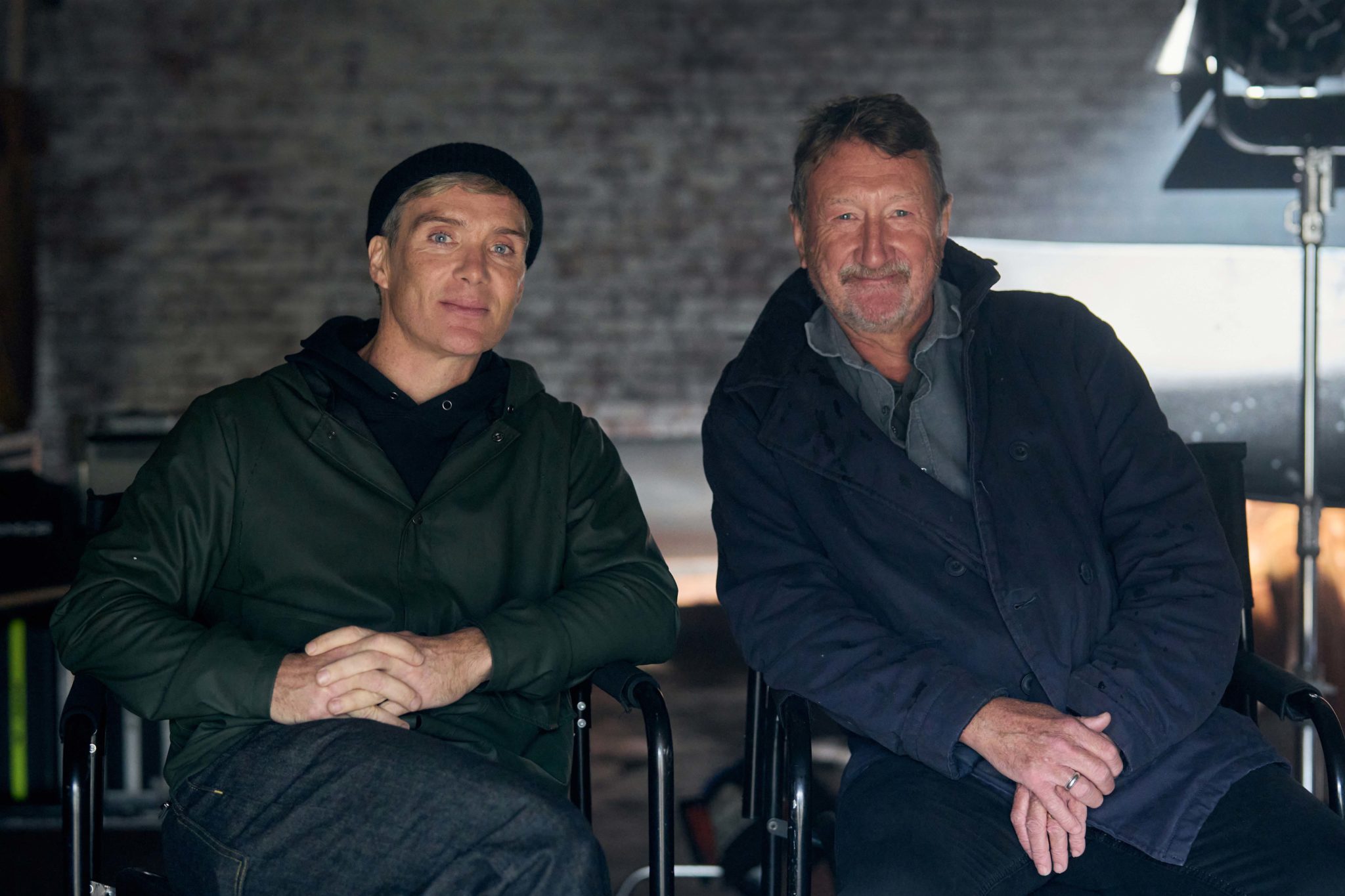
Cillian Murphy and Steven Knight
For creator Steven Knight, the move to film represents the fulfilment of an idea that existed long before the show became a global phenomenon.
“I did an interview after the first series where I said, confidently, I’m going to end this with the Second World War, and it’s going to be a movie,” Knight recalls with some amusement. “And here we are. I mean, it was very arrogant of me to imagine that would happen, but it’s happened, and I always wanted to end it this way. Always wanted to end it in Birmingham as the bombs drop. And I think what we have done is ended this part of the story in a quite magnificent way.”
But with all the historical and cultural background, the film is firmly grounded in the characters we know, love, hate, admire, fear.
“It had to be about Tommy Shelby,” says Knight. “This is the journey of Tommy from where we find him to where we leave him.”
That journey back to Birmingham is triggered not only by the war unfolding across Europe, but by unfinished family business closer to home. During the later seasons of the series, Tommy discovered he had fathered a son, Duke.
Here played by Barry Keoghan, Duke has grown into adulthood and taken control of the Peaky Blinders operation in his father’s absence, inheriting the Shelby name without inheriting the complicated moral codes that once governed the family.
Duke’s rule is volatile and reckless, and his actions begin pushing the organisation into darker territory than even the original Peaky Blinders were willing to tolerate. Keoghan describes Duke as a young man driven by abandonment as much as power.
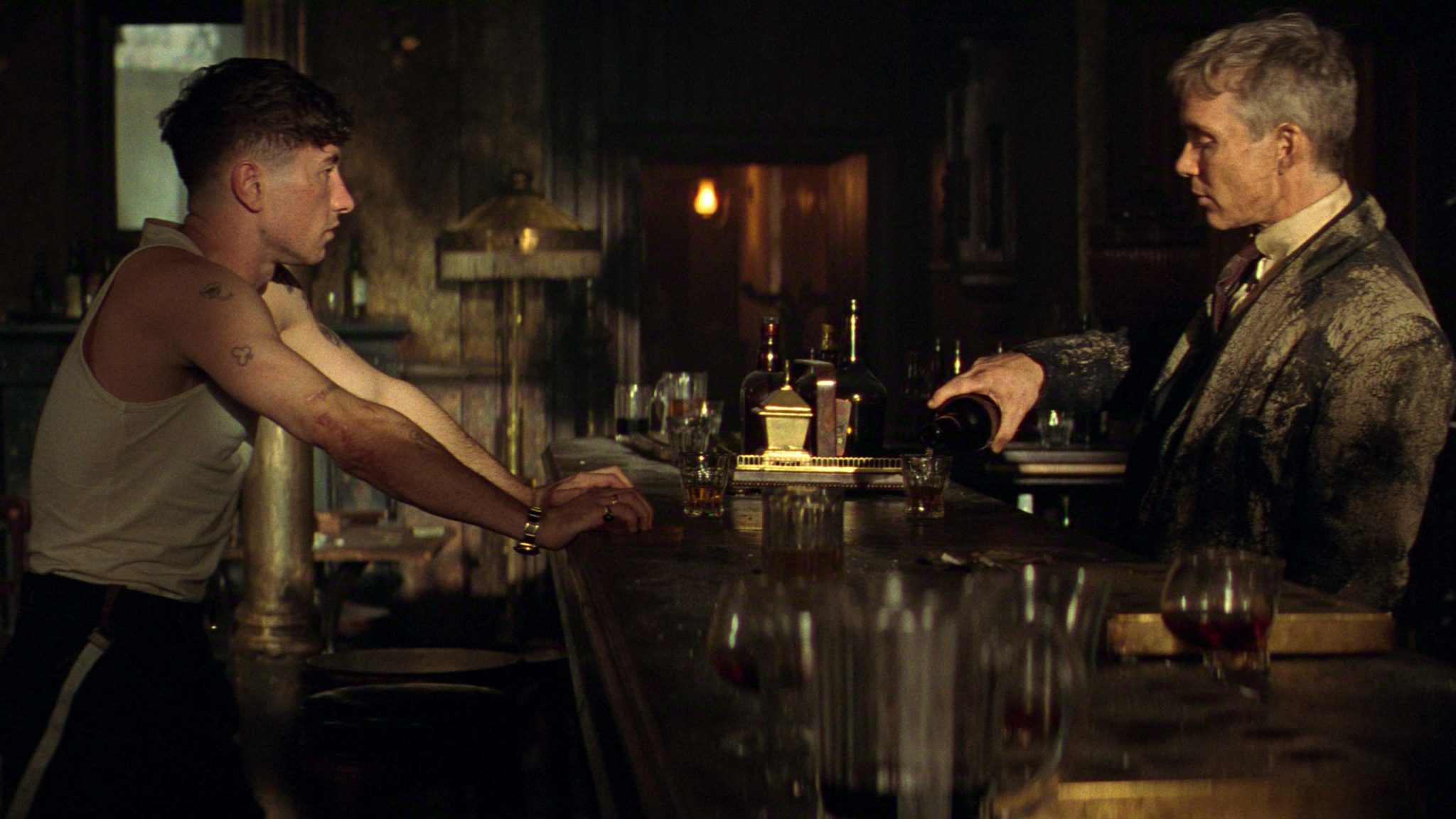
Barry Keoghan and Cillian Murphy in Peaky Blinders: The Immortal Man. Netflix © 2026.
“It was the relationship for me,” he says of the role. “It was the absence I leaned into, and the experience I have in similar ways, to the absence of my own dad, and the echoes I’ve heard of him and the kind of figure I’ve made him out to be. There’s an animalistic thing of the child looking for his dad. He’s trying to emulate him from what he’s heard. But when he actually meets him, there’s a contrast between the myth and the man.”
For Cillian Murphy, returning to Tommy after five years required revisiting a character whose psychology had already been explored across dozens of hours of television, while also finding something new that justified the leap to cinema.
“I think the luxury of having played him for so long is that all the research is kind of done,” he says. “You’ve got 13 years of it there, you’ve lived it alongside him, and you’ve kind of aged alongside him. That’s unique. I’ll never experience that again. But we wanted to make something that would justify its existence, because the TV show became richer and deeper with every series. So if we were going to conclude it with a film, it needed to justify itself.”
The answer, Murphy suggests, was to return to the central theme that had always driven the story.
“The main thematic drive has always been family. If we continued with that and made it a father-and-son story, then we knew we were on the right track.”
Behind the camera, directing duties fall to Tom Harper, who first worked on Peaky Blinders during its inaugural season and returns more than a decade later to close the circle.
“I don’t think there’s many people who can say they worked on something 13 years ago, and then came back and worked on it 13 years later,” he says. “When we made season one, we never realised what it would become. We knew there was something special about the writing and cast, but we could never have imagined the global phenomenon it would turn into. Coming back now feels like completing a circle.”
While the visual language of prestige television has increasingly blurred the line between small screen and cinema, Harper believes the film format still allows for a different rhythm of storytelling.
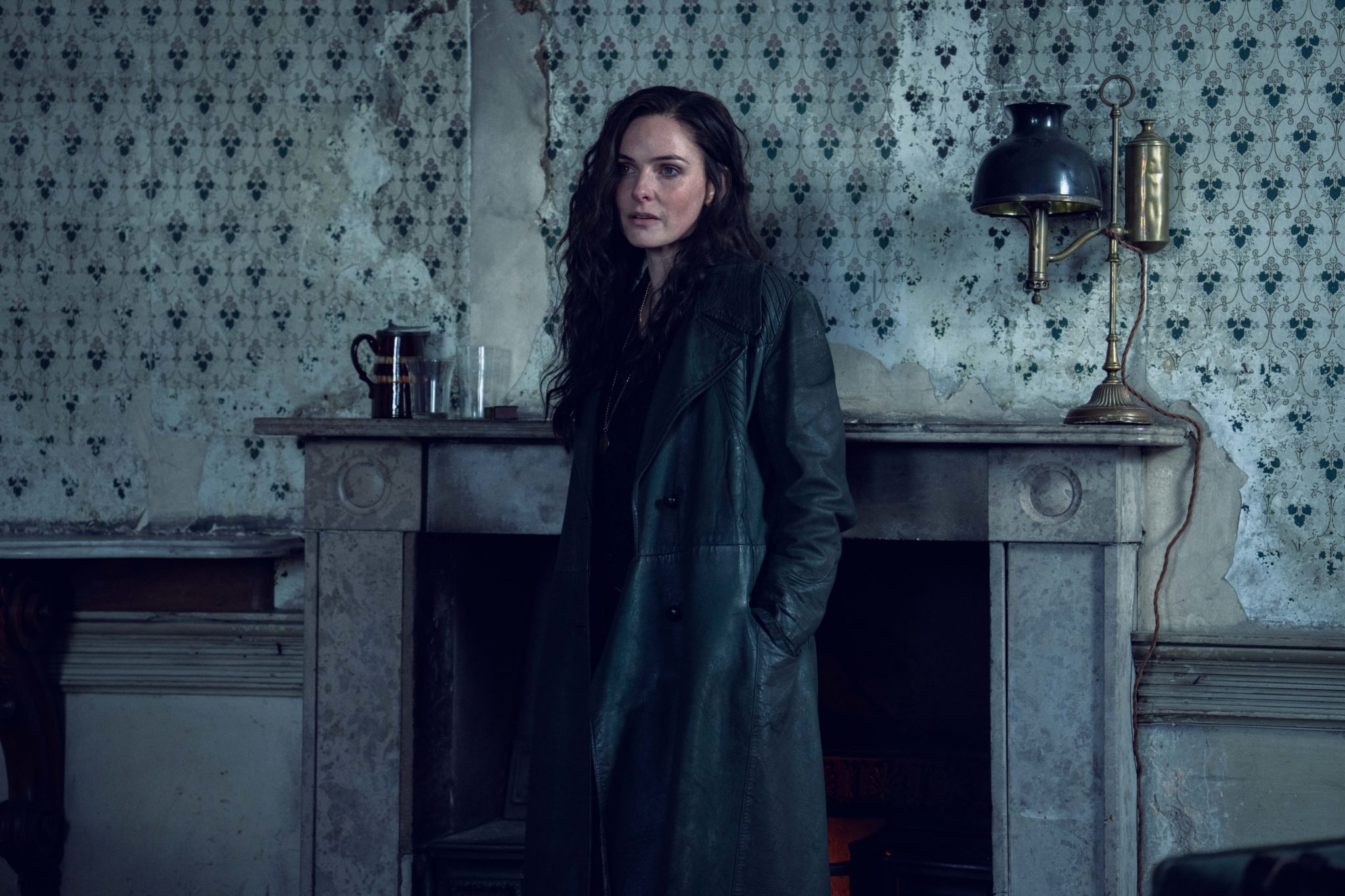
Rebecca Ferguson in Peaky Blinders: The Immortal Man. Cr. Robert Viglasky/Netflix © 2026.
“The focus is tighter,” he says. “You have a shorter period of time to tell the story, and you assume you have the audience’s attention for that time. That lets you hold shots longer and take some bold decisions. In this case, we also had more time and a bigger canvas, which allowed us to push everything further.”
One of the most striking continuities between the series and film is the music. From the beginning, Peaky Blinders set itself apart through anachronistic soundtracks that layered modern rock and post-punk over its early 20th century imagery, creating an atmosphere that felt both historical and contemporary.
The film continues that tradition, while introducing a major new collaborator in Irish band Fontaines D.C., whose work brings an unmistakable intensity to the soundtrack. Murphy, who helped initiate the collaboration, describes the connection as instinctive.
“I asked Grian Chatten from the Fontaines to get involved because they’re an unbelievably talented band,” he says. “When we were in prep, they were launching their record Romance, so we went to see them play in Camden and the energy of the gig was incredible. The lyrics, the darkness, the menace that’s in their music just felt perfect for the world of Peaky Blinders.”
Rather than simply licensing existing songs, the band became involved in the creative process itself, composing music that responded directly to the evolving edit of the film.
“Ant and Martin and Grian went into the studio and began writing to the pictures that Tom was making,” Murphy explains. “As the edits came in, they were writing to it live, sending music back and forth while we were shooting. Some scenes were filmed with the music already playing on set. As a music fan, I think those songs stand on their own as incredible tracks.”
The soundtrack also features a reimagining of Massive Attack’s ‘Teardrop’, placed at a pivotal moment in the narrative. Murphy describes its emotional impact in simple terms.
“It’s such an absolutely heartbreaking song, and where it appears in the film it’s kind of devastating.”
Alongside Murphy and Keoghan, the film introduces several new faces to the Peaky Blinders universe, including Rebecca Ferguson and Tim Roth. Ferguson’s character arrives from outside the Shelby orbit, but is deeply connected to the wider Romany heritage that has always threaded through the story.
For the actor, joining a world with such an established mythology was both daunting and exhilarating. “It’s beautiful to be asked by Cillian to bring something new to something that’s already shaped,” she says. “You can feel the history of it when you step onto the set, but the environment was incredibly open and creative.”
After more than a decade of storytelling, Peaky Blinders: The Immortal Man is less a victory lap than a reckoning. The series always understood that Tommy Shelby’s brilliance was inseparable from his damage, and that power could never entirely silence the ghosts that drove him.
Now, as war once again engulfs Europe and the Shelby legacy threatens to spiral beyond his control, the question that has lingered over the character from the beginning returns with new urgency.
“What do you actually stand for,” Murphy says of Tommy, “aside from making money and building an empire, and abandoning things along the way? That’s the question he has to answer. And by the end of the film, I think he begins to realise what he actually stands for.”
• Peaky Blinders: The Immortal Man is out now on Netflix.
RELATED

- Film And TV
- 02 Sep 26
70th BFI London Film Festival screening programme unveiled

- Film And TV
- 08 Jul 26
Ringo Starr praises Barry Keoghan ahead of Beatles biopics
RELATED

- Film And TV
- 03 Apr 26
New Peaky Blinders series announced

- Film And TV
- 25 Mar 26
Peaky Blinders: The Immortal Man debuts with 25.3 million views in three days
- Film And TV
- 19 Feb 26
Cillian Murphy and Barry Keoghan star in new trailer for Peaky Blinders: Immortal Man
- Film And TV
- 30 Jan 26
Beatles biopics first look photos shared

- Film And TV
- 29 Jan 26
Barry Keoghan reveals Ringo Starr haircut ahead of Beatles biopic premiere

- Film And TV
- 05 Dec 25