
- Music
- 01 Jul 26
Damien Dempsey: "We’ve a treasure trove of Gaelic gold in this land, and it’s great to see young people are getting back into it"








As he releases his 11th studio album Holywell, Damien Dempsey talks about singing as Gaeilge, Miriam Margolyes, Sinéad O’Connor, the power of a singsong, and more.
“I joined in doing the Charleston but they cut it out. Fuckin’ bastards.”
So says Damien Dempsey with a grin, when I meet him in O’Donoghue’s pub in Dublin. Referring to the video for his new single, ‘The Mickey Dam’, Damien is in flying form. The polished promo marks quite a different direction for him. Featuring a group of choreographed dancers spellbound by the music, how did he find the process?
“It was brilliant, yeah,” he enthuses. “John Reynolds’ wife, Fiona, got the idea for dancing to the tune in the forest from that book, The Táin. It worked out great and the dancers are amazing.”
‘The Mickey Dam’ was written about the thousands of Irish navvies who worked on the Craigmaddie Reservoir on the outskirts of Glasgow in the late 1800s. It’s a rousing ballad with brilliant lyrics, a song that will fit seamlessly into Damien’s live shows.
“It’s got great imagery, doesn’t it? Real cinematic, like watching a movie,” he reflects.
“I would have heard Frank Harte singing it, I’m a big fan of his. He’s an incredible singer and song collector. He has amazing stuff, loads of albums of gold, Gaelic gold. We’ve a treasure trove of Gaelic gold in this land, and it’s great to see young people are getting back into it.”
Damo’s upcoming album Holywell is a collection of ballads and folk standards, not a million miles away from the wildly popular The Rocky Road album, released in 2008. The singer sees himself as a custodian of these songs and wants to pass them on to his younger fans.
Alongside beloved ballads like ‘The Pharaoh’s Daughter’ and ‘Rising Of The Moon’, Holywell features modern tracks like Black 47’s ‘James Connolly’. The Irish-American rock band had a big influence on Damien early on in his career.
“I knew Chris Byrne really well,” he says. “I lived in his basement in New York. He brought me over and just gave me a job in his bar, and gave me a residency there. I wrote some big songs of mine over there like, ‘Apple Of My Eye’ and ‘It’s All Good’.”
Black 47’s left-wing politics and republicanism also had an influence on a young Dempsey.
“They’re an incredible band,” he raves. “They just gave you hope in music again. Chris would have given me a lot of good advice. Just watching how he wrote and performed, and his social conscience. I would have been very influenced by Chris.”
‘James Connolly’ was the perfect Black 47 song to cover.
“Chris sang it in a session one night and I just said, ‘I have to sing that’, it’s so good,” he continues. “The arrangement Marty Barry and Cathal Ó Curráin have done on this album is very strong, very powerful.”
Written about an earlier generation of Irish revolutionaries from the Irish Rebellion of 1798, ‘The Rising Of The Moon’ meant a lot to Damien’s grandmother, Katie. Her aunt, Jinny Shanahan (Damien’s great-grand-aunt) was heavily involved in the Irish Citizen Army and fought alongside James Connolly.
“She was with Rosie Hackett first, when they were in Jacobs when they got locked out,” he says. “They went on strike with Jim Larkin and joined the Irish Women’s Workers Union, and then the Irish Citizen Army. Jinny was training the women, you know.”
Born in 1908, Damien’s grandmother Katie helped her aunt Jinny hold guns and pass messages on to other members of the Irish Citizen Army.
“A lot of the women in the Citizen Army were actually lesbians,” says Damien. “They reckon Jinny and Helena Maloney, an Abbey actor who was in the Irish Citizen Army, might’ve been an item. They both got houses up in Kimmage three doors up from each other. Dr. Kathleen Lynn, of course she had a partner and that, so they were rebelling against the Roman Catholic Empire and the British Empire. They rebelled against two empires. They were some women.
“Jinny was cast out. The Catholic Church didn’t like socialists, which she was, and they didn’t like lesbians either. She wasn’t buried in the republican plot in Glasnevin and she found it very hard to get her military pension. She died before she got it. I have letters from Helena Maloney begging the state to give her a pension. Her father couldn’t afford to bury her. They were sort of sold out. Sold down the river by De Valera.”
Damien believes his sense of social conscience came from his relatives who came before him, like Jinny. The music of legendary folk singer-songwriter, labour activist and song collector, Ewan MacColl, continues to inspire Dempsey. The album features a poignant cover of his 1960s protest song ‘The Moving On Song’ (also known as ‘Go, Move, Shift’), which highlights the persecution of the Travelling community.
“It was brought to us by Martin Barry and Cathal Ó Curráin, two young lads from the North who play on the album,” he explains. “They said they had a great arrangement for ‘Go, Move, Shift’, so I gave it a go and it sounded good. Marty’s grandmother was Margaret Barry. She was a travelling singer. She was a Traveller and she brought Irish traditional ballads out to the world, even before the Clancys. She made them famous all around the UK and America. An amazing person and an amazing singer.”
Along with ‘Go, Move, Shift’, the album features other powerful songs about displaced people. The Scottish lullaby ‘Smile In Your Sleep’ was written about the Highland Clearances, which took place between 1750 and 1860, while the ancestors of the insurgent captain in the Irish Rebellion of 1798, Michael Dwyer, were driven from their land in Tipperary by the Crown in the 1660s. Talking about the cycle of colonisation, I ask what Damien thinks of the Dáil’s recent vote against a bill to impose sanctions on Israel.
“We need a left-wing coalition,” he asserts. “I think they’re very far removed from the people on the ground, Fianna Fáil and Fine Gael. They just need to be voted out for a while and eat some humble pie – regroup and come back better maybe. They just need a kick in the bollocks, I think.”
While we’re on the subject of Israel, what does Damien think about Ireland’s upcoming Nations League match against Israel at the Aviva Stadium in October?
“I don’t think it should happen, really, you know, at the moment. What’s been done to Gaza and Lebanon, I don’t think it should go ahead, but that’s my opinion,” he says. “I’m a big fan of Miriam Margolyes and Alexei Sayle and the Jewish Bloc over in England. I think they’re amazing. Listen to what they say, they’re really inspiring people.
“I don’t know what to say about Netanyahu and people like that. Demons who we have in power at the moment. Look what Marco Rubio’s doing to his own people in Cuba. It’s a bad time for leaders of the world. They’re terrible.”
“There’s a poster of Miriam Margolyes in me gaff,” he adds, smiling.
I don’t know whether he’s pulling my leg or not, but I hope it’s true and I wish she knew!
“She’s a legend,” he says. “You see how Netanyahu is just destroying the future of so many Jewish people with what he’s doing. He’s jeopardising their future. Just listen to Ehud Olmert, he’s speaking some fucking sense. He was the leader of Israel and he’s talking some fucking sense, like.”
FAVOURITE MEMORY
Damien’s friend and collaborator, Sinead O’Connor, showed longstanding solidarity with the people of Palestine and indeed, oppressed people across the board. With her third anniversary approaching on July 26, I ask Damien if he has a favourite memory of Sinead.
“When we did the Sean-Nós Nua tour,” he says. “I just said to her after the first show, ‘Will we have a bit of an old ding-dong in the bar afterwards?’ She says, ‘You’re gonna sing some more?’ I said, ‘Sure, yeah. Get the guitar out.’
“For every show then, she’d say, ‘Damo, let’s fucking go have a singsong’, and we’d have a singsong every gig. She fuckin’ loved it. I never seen her as happy as that tour. She was really happy.”
One particular night in Waterford stands out in his mind.
“She had loads of people down there, relatives, and it was one of the best singsongs I ever had. She said, ‘This is like being in heaven, heaven on Earth’, and it was.”
Like Sinead did on Sean-Nós Nua, Damien takes on Irish language songs on this album, including ‘The Coolin’ and ‘Seóithin Seothó’.
“It’s just a beautiful language to sing in,” he says. “It has a lovely sound. I always loved the sounds of ‘madra’, ‘uisce’ and ‘bainne’. The sound of the words on the air, it’s beautiful. It gives you a lift within. It gives your soul a cuddle when you sing as Gaeilge.”
Damien showcases a softer, sweeter side to his voice on this album and for these two songs in particular.
“I’m not fluent by any means,” he says. “I’m just learning as many words as I can, and hopefully one day I’ll get the time to go somewhere and learn how to stick them all together. I have lots of young fans and they’ll be learning those songs as Gaeilge, so that’s why I wanted to put them down.”
With his deep interest in Irish history, culture and its people, it’s no surprise that Damien has a grá for our native language.
“It’s a real shame that it was sort of beaten out of us,” he says. “I’m just reading about the bata scoir, that bat they used, the tally stick. When the children spoke Irish they’d be beaten. The language was colonised out of us. Not all of us of course, fair play to the Gaeltachts, them warriors kept it going. Fair play to the likes of Kneecap and Manchán Magan, who helped the Teanga revolution happen.”
These songs have lasted for hundreds of years, passed down orally from generation to generation. Looking at his own songbook from the last 20-plus years, has Damien ever thought about which of his own songs will be sung a hundred years from now?
“Not really, no,” he says. “Well, I mean, I’d love to think they would be. Hopefully they might be. Someone might lash one out now and again. I think ‘Colony’ might be, because it’s universal, timeless. ‘Chris And Stevie’ might still be helping people, I don’t know. ‘Negative Vibes’, people are always getting fuckin’ negative vibes off other people. Off the douchebags of the world!”
POSITIVE VIBRATIONS
Exuding positive vibrations, one of Damien’s earliest inspirations was Bob Marley, describing him as a “massive hero”. Reflecting on Marley’s unifying message and global reach throughout the ‘70s and beyond, he remarks, “I’m not sure someone like him would be allowed to be famous now.”
With songs that address systemic oppression and human rights like ‘Get Up, Stand Up’, ‘Them Belly Full (But We Hungry)’ and ‘Redemption Song’, I’m sure Bob would have been shadow banned at the very least if he were around today.
Known for his love of reggae and his 2007 album To Hell or Barbados, which takes its name from Sean O’Callaghan’s book about the thousands of Irish people who were sent to the Caribbean during the time of Cromwell, I ask if Damien has ever been to the Caribbean.
“Never been down the Caribbean, no. It’s on the bucket list.”
Given his deep spirituality, his openness to talking ayahuasca and his druid-like status in Ireland, would Damo be up for taking part in a Rastafari ceremony in Jamaica?
“Yeah, sure. I’d be happy to yeah. You have to be able to smoke the 10 skinner don’t you,” he laughs. “I’m a bit of a lightweight when it comes to weed, but if it’s indica, I can smoke any sort of indica. Indica’s medicinal. Sativa? I’d probably be in a psych ward! I’m writing an original album now at the moment. I’ve a new song actually about HHC.”
According to the National Drugs Library, “HHC (Hexahydrocannabinol) is a new semi synthetic cannabinoid product designed to imitate the effects of THC, the main psychoactive substance found in cannabis that produces a ‘high’. HHC has been available on the Irish market since 2022.”
“This is crazy strong skunk that the kids are smoking and it’s driving them fucking crazy, so I’m just warning them off,” says Damien. “Just tell them, ‘Mind their head,’ because without your mental health, you’ve fuckin’ nothing. I’d love to get down to Barbados. The Red Legs are still down there, the descendants of the Irish slaves that were sent down. So I could go down there and have a singsong with them maybe.
“There’s talk of that maybe for the documentary, but we’ll see. There was a documentary done on The Red Legs in Barbados and the woman says, ‘Me grandmother says we come from Dempsey.’ So that’s why I had the interest to go down.”
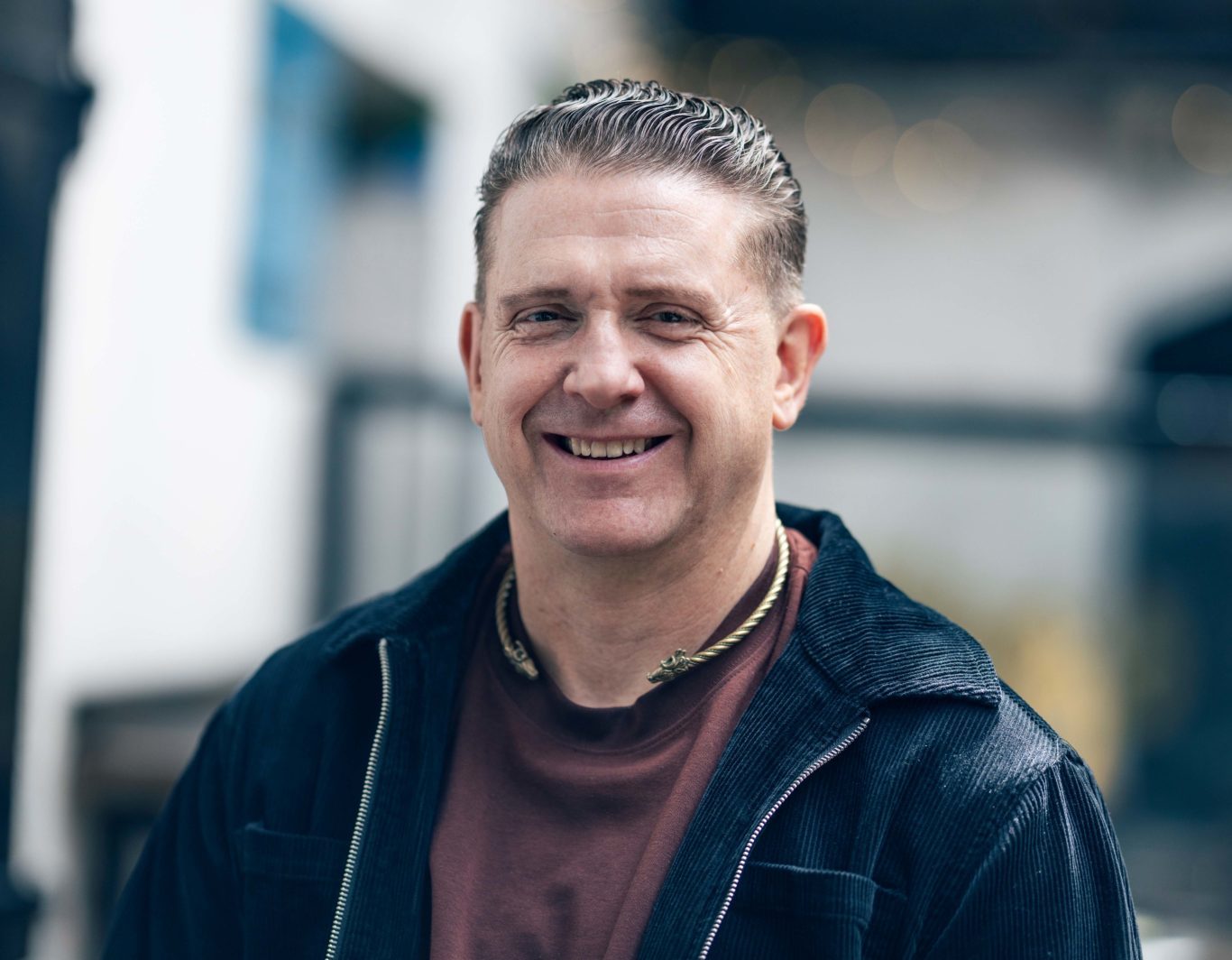
Credit: Cat Gundry-Beck
Damien came to know many of the songs on the album from his own family, so it’s only fitting that his mother Adrienne and his uncle Freddy feature on the recordings.
“We stuck down around 40 songs, so we’ll probably have a volume two at some stage.”
Recorded in Wicklow’s Big Tree Studio with long-time collaborator John Reynolds, how did Damien’s mother and uncle find the recording process?
“They seemed okay. You get to a certain age and you don’t really give a bollocks, like! You don’t really give a shite anymore,” he laughs. “They enjoyed it, they just kept asking about when their cheques were coming in. They’re not happy that they’re not on volume one!
“Me uncle Frank snuck in from beyond the grave. He’s passed over. That’s him singing at the start of ‘The Pharaoh’s Daughter’. I think me cousin might have come in with a video camera or something just to record the session. 1996 I think it was.”
Damien’s fans have always seen him as a beacon of light in hard times. What advice would he give to young people who are feeling lost and disconnected?
“I’d try and learn a bit of Gaeilge and try and learn a few Irish songs, you know, play Irish songs and maybe take up an instrument. Write some poetry. We’re a very artistic island. So that would be a good way to find your tribe, I suppose. Don’t be reading bad comments about yourself online. Try get off your phone, turn it off.”
NEXT PROJECT
Always looking ahead, Damien graciously shares some news on his next project.
“We just done a gig in the National Concert Hall with the National Symphony Orchestra,” he says. “They learned about 16 of our songs and John Reynolds recorded it, so what we’re working on now sounds great. So that could be a live album.”
Playing your songs with the National Symphony Orchestra is a bucket list accomplishment for any songwriter, but Damo’s people don’t hesitate to keep his feet on the ground.
“A little auld fella down where I drink said, ‘Damien, well, done on the National Concert Hall’,” he relays. “I said, ‘Thanks, Paddy. Yeah, it was wonderful.’ He said, ‘It was very good of them to play with you, wasn’t it? The National Sympathy Orchestra.’”
You’ve got to love the Dubs.
• Holywell is out now. Damien Dempsey plays the Iveagh Gardens, Dublin on July 17.


RELATED

- Music
- 12 May 26
The Wailers announce Irish summer shows


- Music
- 17 Apr 26
Album Review: Ziggy Marley, Brightside


- Music
- 06 Feb 26
