- Opinion
- 21 Mar 26
Tanya Sweeney: "We treat celebrities like deities. We’ve always done that, but social media has turbocharged it"








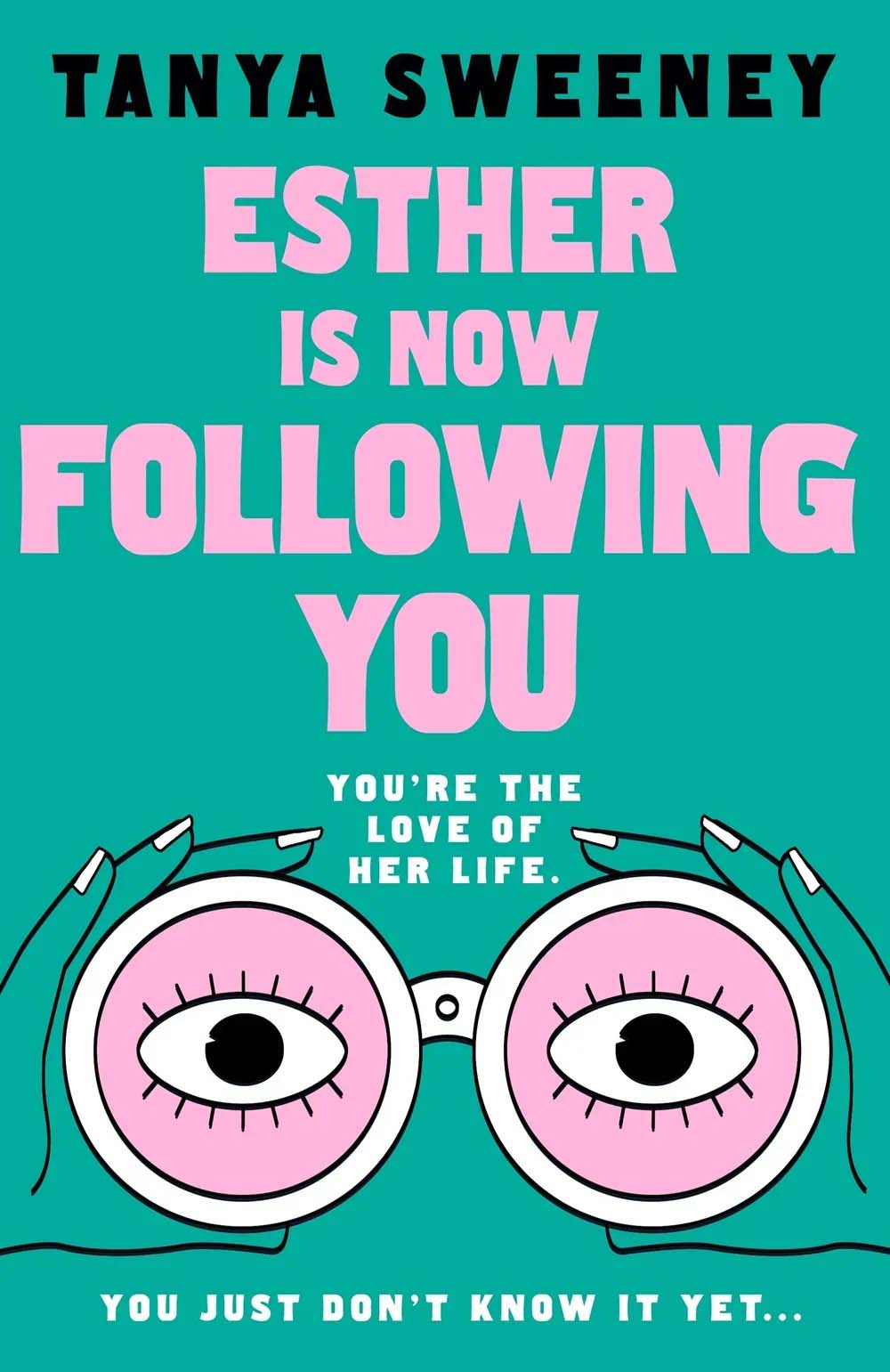
Tanya Sweeney discusses her riveting cautionary tale of online stalking, Esther Is Now Following You, which has earned the Dubliner a six-figure publishing deal.
The endorsements on the cover of Tanya Sweeney’s debut novel, Esther Is Now Following You, suggest a satisfying closing of the loop. Among them is praise from Marian Keyes – the same writer who Sweeney (when she wasn’t busy chatting to 50 Cent, or listing the Top Ten Sex Toys) interviewed 20-odd years ago in the pages of this magazine.
“I remember walking into her beautiful house in Dun Laoghaire, and my soul left my body,” Sweeney says. “It was so gorgeous. I took the 46A home to Mountjoy Square, where I was living at the time, and thought about how nice it is to write a book. I always wanted to, but at that point I was busy having fun writing for Hot Press, and being 25 or however old I was. So writing a book was put on the backburner.”
Sweeney has gone on to write for a number of publications, and is currently a journalist and Weekend magazine columnist at the Irish Independent. Her career, she says, provided much of the drive behind wanting to create a book of her own.
“Journalists are born storytellers,” she reflects. “I saw a lot of my peers writing novels and I remember thinking, ‘God, they are writing for newspapers and magazines and getting fantastic garlands for it.’ I think I’ve always had professional jealousy. As a woman, especially in media and journalism in Ireland, it feels like a real zero-sum game.
“When someone else has an opportunity, it feels like yours is taken away. That’s not necessarily the truth. No one is stopping you from writing a book and trying to get it published. I feel a lot of women have a scarcity mindset.”
It was other stuff that got in the way. A no-fault eviction forced Sweeney and her family, including her young daughter, into multiple moves, putting a stop to the novel 5,000 words in.
“I do think a bit of financial comfort helps with creative energy,” Sweeney says. “Things were extremely precarious. I remember going down to Lidl and having my credit card declined when I was trying to buy groceries. It was a tough time. We bought our first house about three years ago. I got rid of all my stressful energy and then came back to the book.
“I found a great creative writing course called the Online Writers’ Retreat. Their whole buzz is getting you to the end of your first draft. They’re not there to blow smoke. They are there to help you get out of your own head, and it turned out that’s what I really needed.”
The resulting novel tracks Esther, a thirty-something Irish woman drifting through marriage, friendships and a dull 9-5, which make up her listless London life. Following a traumatic event, she starts to get a little too interested in small-time TV actor Ted Levy.
What starts out as a few furtive visits to an online fan group (who call themselves the Tedettes) spirals into a level of stalking that would make Martha from Baby Reindeer look like an amateur.

Baby Reindeer
Once again, it’s Sweeney’s time as a music journalist – as well as an internship with MTV in the ’90s – which helped shape this cautionary tale.
“There was a woman who contacted me at MTV looking for backstage passes, because she was the secret girlfriend of a famous pop star,” says the author. “I was like, ‘Who is this woman? I need to know all about her.’ She took up space in my head. Fandom is really interesting when you’re a music journalist, because it’s such a big part of the package. I used to ask boyband members what it was like to have hordes of girls screaming at them.
NOT A PANACEA
“And they were like, ‘Yeah, it was kind of terrifying; it wasn’t necessarily fun’. I remember speaking to a psychiatrist about the phenomenon of the One Directioners, and he basically said, ‘Look, teenage girls, their brains are not fully formed developmentally. We are not meant to have this level of access to our idols; it’s warping us.’ That always stuck with me. I wrote something about Taylor Swift, and the Swifties came to me one evening on Twitter.
“I was fascinated by the way all this happened within half-an-hour. I started looking at the profiles. They were all talking to each other, and their Twitter bios would say, ‘Will come after anyone who says anything about Taylor Swift.’ I remember thinking, ‘Wow, there’s something really amazing about that.’”
The book’s characters, the Tedettes especially, are plagued by feelings of loneliness and isolation.
“When you’re part of an online community, you feel like you’re being cradled or helped, there’s an element of camaraderie,” Sweeney says. “But I find that with the group of friends in the book, it’s not a panacea to real loneliness. I wanted to explore loneliness and how that vacuum might be a fertile ground within which a parasocial relationship could really blossom.
“When I started doing research on stalking and the syndromes and disorders around it, I found there’s an emptiness a lot of the time. Right now, there’s so much emphasis on celebrity culture, especially in the news cycle. We sort of treat celebrities like deities. We’ve always done that, but social media has turbocharged it.
“We feel like celebrities are our buddies, because we can look on their Instagram and see their kitchen or what their kids look like. At the same time, we also see them as public property. I think Nicola Coughlan said about a month ago, ‘You need to back off; I’m a human being with a private life.’ Some people do think that everyone’s fair game now, and that they’re entitled to every part of their life.”
That last sentiment is amplified when romantic feelings are involved.
“Who hasn’t gone online and searched ‘Timothée Chalamet girlfriend’ or whoever it may be?” Sweeney says. “Humans are so naturally curious that I think we will take any rabbithole and go as far it will take us. And in the world of social media, that’s an infinite rabbithole. A crush is addictive on its own, even without the internet.
“There’s something so edifying about being able to head off into your mind to a relationship that’s working beautifully, with a person saying and doing all the right things. I’ve had many crushes in my time, both celebrity and civilian, and I can totally see how somebody would really go there and take it that bit further than most people might.”
ECHO CHAMBERS
Esther Is Now Following You is likely to get people questioning their own digital habits, particularly in the cyber halcyon days of the early 2010s. It was, through our ignorance or otherwise, a time when people had a more favourable view of social media, before abominations like Grok deepfakes, addictive algorithms, and, worst of all, food influencers who refer to meals as ‘eats’.
“We used to be bananas on Facebook, we had no idea of safety, decorum, or protocol,” says Sweeney. “I would have laid down in the middle of the road for social media at its inception. I thought it was amazing. I’m getting to keep up with my friends. The nosy part of me gets to jump in on people’s lives and see what they’re doing.
“Right now, I don’t really post anything on Facebook unless it’s to do with this book. I certainly don’t put my child up online anymore. Fifteen years ago, you’d be going to a gig, and the first thing you’d do is post it up on Facebook. You were doxxing yourself in real time. That’s why the book works well in the years 2010-2011.
“I don’t know if it’s age, or if I’m just in a very different place in my life right now, but it is just not holding the same function at all. Things have just become so malignant online, with echo chambers, disinformation and horrible rhetoric swirling around everywhere. I look at it now and get quite stressed from social media.”
• Esther Is Now Following You is out now.