
- Opinion
- 26 Apr 26
The Secret Drug Addict: "You cannot quite understand the power of addiction until you’ve seen it eat like acid through everything you are"








Having succumbed to Britpop excess, the now sober – 6,854 days and counting – Secret Drug Addict is on a mission to help others escape the cycle of addiction. He talks to Stuart Clark about his new book, working for Creation Records, people dying in front of him and his eventual road to recovery.
Twitter may have become the digital equivalent of a septic tank but in among the bigoted, divisive turds there are still gems like The Secret Drug Addict, who for the past nine years has been having an honest, non-judgemental discussion about addiction and how best to beat it.
“You cannot quite understand the power of addiction until you’ve seen it first-hand,” he (yep, we know it’s a chap) reflects in one of his posts. “Until you’ve seen it eat like acid through everything you are. It is astounding to watch. Its slow and total corrosion of your entire life is mesmerising.
“As you watch it, you think, ‘At some point, the corrosion will stop. There’s no way it will be able to eat through this next thing. This next thing is too important to me.’ But then it does. It eats through everything and you realise you are dealing with a vast and inhuman power.”
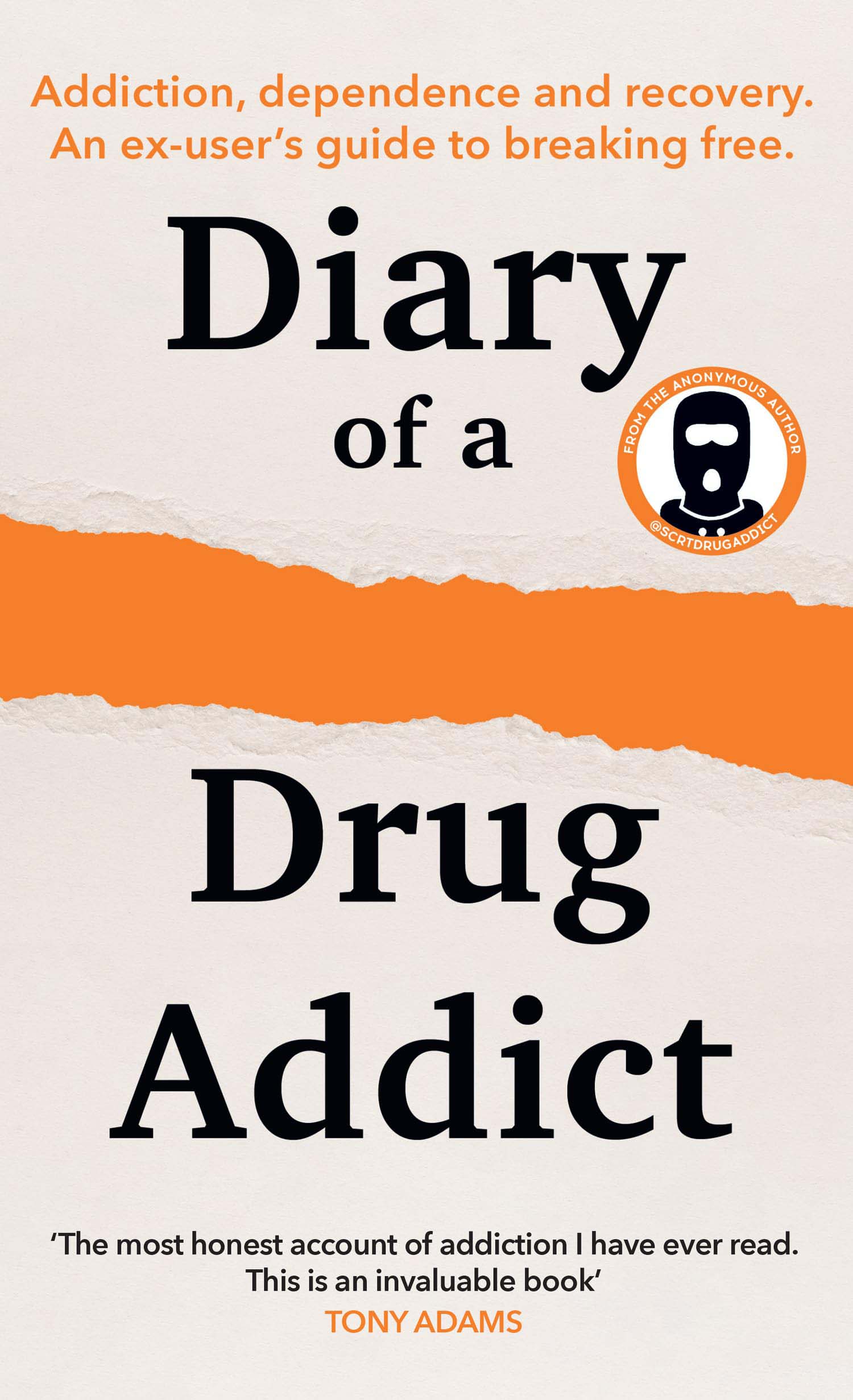
There’s only so much you can say though in 280 characters, which is why the fifty-something has now penned Diary Of A Secret Drug Addict: Addiction, Dependence And Recovery. An Ex-User’s Guide To Breaking Free.
Doing exactly what it says it does on the cover, it’s been described by Arsenal legend Tony Adams, who’s been through the alcohol ringer himself, as “The most honest account of addiction I’ve read. This is an invaluable book.”
TOLD TO LEAVE
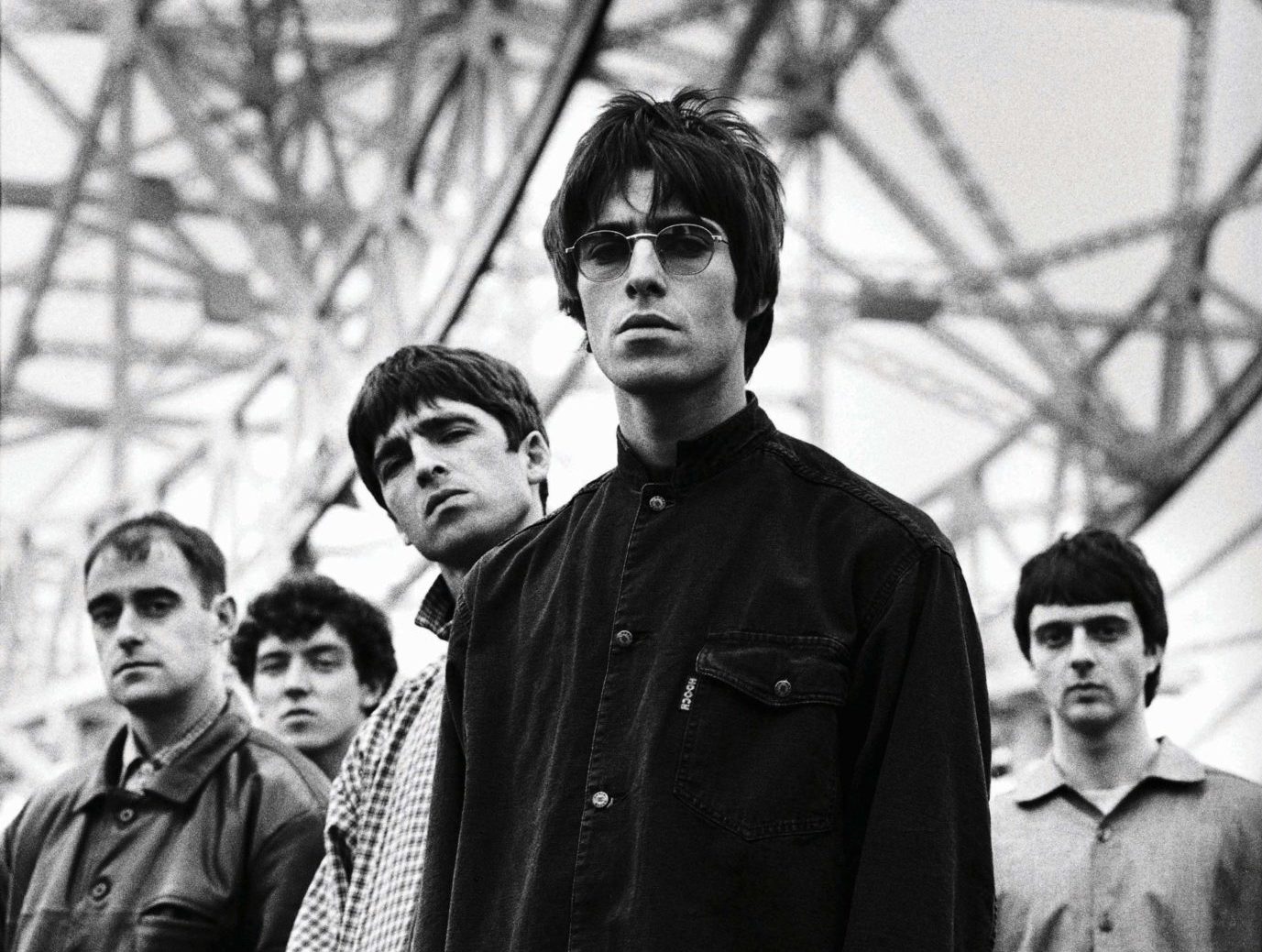
Growing up in “a fractious and dysfunctional family”, the Londoner’s drug use spiralled out of control in his early twenties when he landed what seemed like a dream job with Creation Records at the height of their Oasis-led success. By the time he hit 29, his chronic drug abuse threatened to not only end his career but also his life.
“Creation was a mad place, it was really overwhelming,” SDA recalls. “It was quite small because I’d come from Sony and Sony was huge. It was five floors and there must have been three or four hundred people who worked there. Creation maybe had thirty-five people so it felt like a real indie label. I had a little office out the back where I could drop the blinds, do drugs and listen to demo tapes. You’d come out to have a cigarette and Joey Ramone’s in the office.”
Was drug use totally normalised in the music industry at this point?
“You’d have bands come down to London and say to me, ‘Can you get us drugs?’” he resumes. “You’d pop out during your working day and score for the bands. My bosses were fine; ‘Just don’t be too long.’”
I imagine it was pretty hard to get fired from Creation Records. What was the straw that broke the camel’s back?
“I can’t actually remember because there was no H.R. at the time. I just got called into a meeting and was told to leave. So I walked into my office, packed a box and left.
“I was doing so many drugs that people were always asking for ‘em, so I ended up being kind of like a dealer. We had the Christmas party and I don’t think I got out of the toilets. Every time I tried to, somebody else came in and asked me for a line or offered me a line. I spent the best part of three hours in that toilet. I was so obvious at the Christmas party in terms of selling drugs that they got rid of me. I think that’s what happened. I’ve never asked (Alan) McGee if I’m honest with you.”
Losing his job had a hugely detrimental effect on the Secret Drug Addict’s mental health.
“At that time I was so defined by my job,” he explains. “My whole sense of self came from it. People would introduce me as, ‘This is my mate, he works for Oasis.’ That was who I was. And then when I wasn’t working for Oasis, it was like, ‘Fuck, I’m nobody. I’m nothing.’ I was 21 and it took me a long time to process that I’m not my job, I’m not my situation, I’m not my feelings. Those things do not define who I am as a human being.”
Was there kickback from his mates saying, “You’re no craic anymore!” when he got clean?
“Not really,” he resumes. “I did bump into Liam Gallagher fifteen years ago. I turned the corner and saw this Liam Gallagher lookalike. We locked eyes and I carried on walking and then I realised it was Liam Gallagher. I went back, not having seen him for a couple of years, and said ‘hello’ and half-joking he was like, ‘Still not drinking then?’. I was like, ‘Nah, nah, I’m still sober’ and he was like, ‘Fair one, good to see you anyway!’
“I think it had been apparent how miserable I was. I hadn’t been fun to be around and, in terms of worrying about being boring, I’m quite self-involved so I don’t really care what other people think about me.”
ANOTHER MEETING TOMORROW
Take it from me, SDA is not boring! It’s often said that you have to hit rock bottom before things get better. Is that a cliché or did he reach a nadir?
“A young girl overdosed and died at my feet,” he recounts starkly. “I was sitting there chopping out lines of coke waiting for the ambulance to come and thinking, ‘This wasn’t how it was supposed to be. This wasn’t in the script. I thought I was going to play up front for Arsenal. I thought I was going to be David Geffen or Clive Davis or Walter Yetnikoff and run a label, and I’m now a drug addict and people are dying around me.’
“That was the last big thing that happened but it was also moments like losing my job at Creation, girlfriends leaving me, losing other jobs, homelessness. It was all of those things that meant I couldn’t pretend that there was any other reason for it happening. It wasn’t because my parents were rubbish parents. It wasn’t because of some external thing. The common thread through it all was me and my drug use.”
The Britpop drug of choice, which SDA so avidly consumed, was cocaine. Had it been a few years later when The Libertines were kings of the Camden scene, might he have succumbed to heroin?
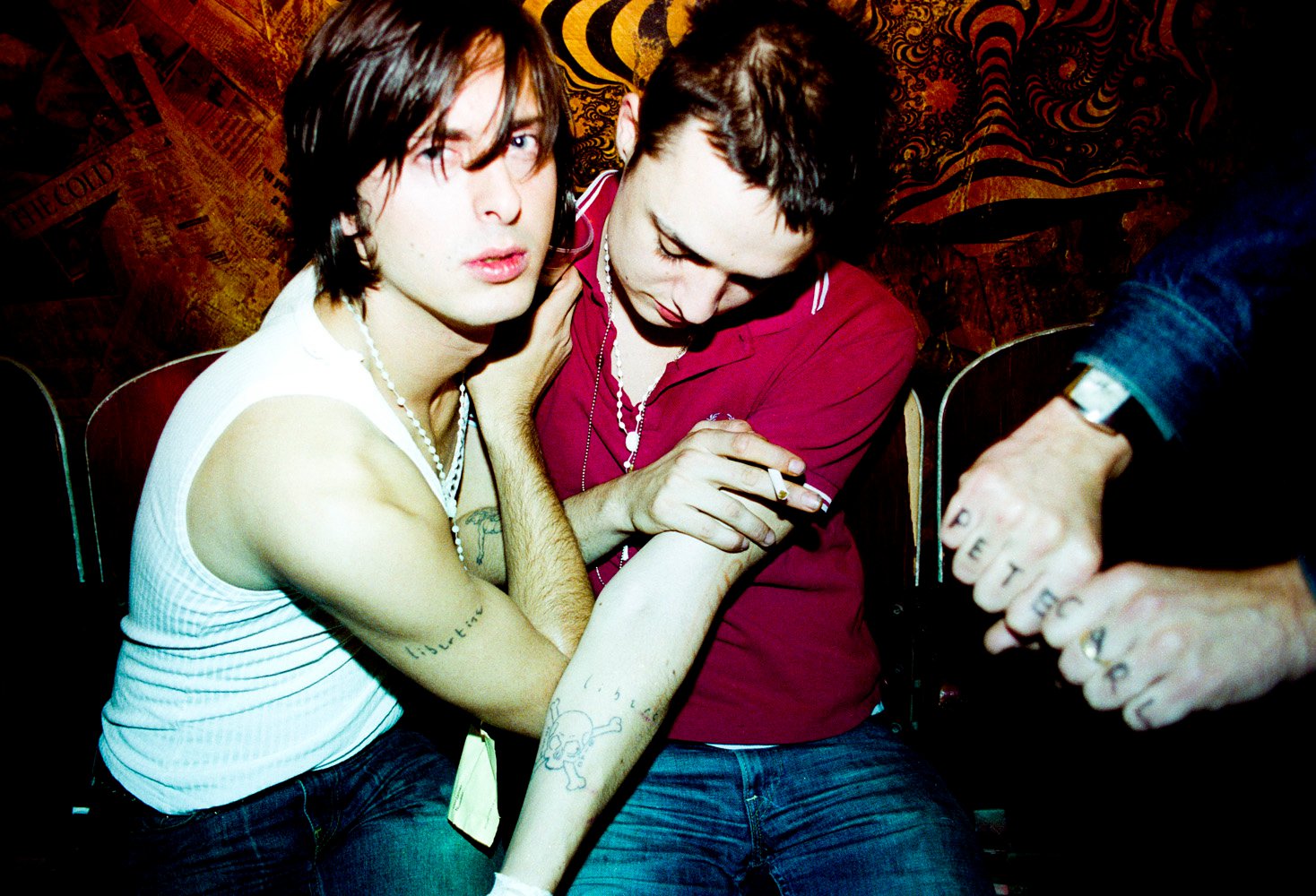
The Libertines - Carl Barât and Pete Doherty
“Definitely, 100%” he nods. “There’s always trends with drugs. Young people never want to do the same ones that old people do. They want to do different drugs, new drugs, their drugs. Growing up in the ‘80s when there were big problems with it in the UK, the perception was that heroin was quite dirty and for homeless people. There was the stuff around AIDS as well with sharing needles whereas coke was a Britpop thing. It was what rock stars did.
“I remember talking with a couple of musicians a few years later when The Libertines/Amy Winehouse broke and saying, ‘These people are mental! We thought we were bad staying up for three days doing insane amounts of coke… ’ This was just another level, but if it had been the norm with my peer group, I definitely would’ve been stupid enough to have experimented.”
Half of the book’s sharply written 271 pages are given over to the Secret Drug Addict’s recovery and the sequence of events leading up to it.
“I’d split up with this girl and was desperately trying to get her back. I’d been calling her quite a lot and she made it very clear she didn’t want to talk to me. She was at university in another city. I wasn’t sure if she was on half-term but she used to drink in Camden, so I was wandering around pubs looking for her in quite a bad mental health state. A friend of mine rang and said, ‘What you doing? You about?’ We used to hang out and get really stoned together. I said, ‘I’m in Camden.’ He said, ‘I’m driving, I’ll come and get you.’ He met me and could see I wasn’t looking well. He asked, ‘What’s going on, are you alright?’ I said, ‘No, I’m not” and started crying. There’s a conversation about mental health nowadays, but back then it was 100% not on the agenda. I’d never told anyone other than a GP or a drugs counsellor that I was struggling and really not well. He made a phone call and said, ‘Right, I’m going to take you to a meeting.’ I didn’t really understand where we were going but he had drugs and I didn’t, so I was like, ‘I’m going wherever he’s going.’”
What happened over the next few hours profoundly changed the Secret Drug Addict’s life.
“I’ve got in the car, I’ve rolled a joint and we’ve driven to this meeting outside a community centre hall,” he explains. “He took me in and we sat through the meeting. One of the guys started talking about when he started using drugs he couldn’t stop; if he did manage to briefly stop he’d be constantly thinking about drugs; how he couldn’t stay stopped; unhealthy relationships with women. And I was like, ‘Fuck, I thought I was the only person like that!’ My mates were degenerate drug users but they weren’t as bad as me. They didn’t seem to have the mental stuff. When the drugs ran out, a lot of them would say, ‘Fuck it, let’s go home’ but I’d be, ‘No, no, I can get more.’ Hearing this blew my mind and that’s why I tweet stuff ‘cause there’s a power in knowing you’re not alone.
“Afterwards, there was a lot of, ‘What area are you from? There’s another meeting near you tomorrow, you should go.’ I had no job, I had no girlfriend, so I started going to meetings and connecting with people. They’d say, ‘There’s a football competition’ and straight away I’d be like, ‘I’ll play!’ It just grew from there.”
SINGLE BEST THING
Asked why he decided to hide his identity online, SDA says, “I just didn’t want to be social media famous or make it seem like a vehicle for my ego. What you get a lot on social media – especially when it’s the mental health/addiction side of things – is people trying to monetise it. I don’t charge any money, I don’t want money. I just want to help.
“By the way, it’s definitely not because I’m ashamed of my addiction. A large part of me wanting to write the book was to challenge the stigma surrounding drug use.”
There’s a beautiful section in Diary Of A Secret Drug Addict about the birth of his daughter Dolly.
“It’s a real struggle to find the words…” he concludes, voice quivering with emotion. “I’d grown up in quite a dysfunctional family, I’d always been very careful not to have children. Never felt I could be a dad. Having a child taught me about love in ways that I didn’t know existed. Watching her eating or drawing – she’s twelve years old now – just blows my mind. I’m amazed by her every day. It’s the single best thing I’ve ever done.”
Don’t you just love a happy ending?
Diary Of A Secret Drug Addict is published by Harper Collins.
Listen to more of this interview on the latest edition of Hot Press’ Dealing With Drugs podcast. Check it out below or on Apple Podcasts:
RELATED


- Lifestyle & Sports
- 21 Sep 26
Student Special: "Saving money does not have to mean surviving exclusively on instant noodles and blind optimism"

- Opinion
- 20 Sep 26
Dylan Moran: "Time is literally all we have. It’s all we are"
RELATED


- Opinion
- 17 Sep 26
RTÉ confirms it will not participate in or broadcast Eurovision 2027


- Lifestyle & Sports
- 17 Sep 26