
- Opinion
- 20 Apr 26
Strait of Hormuz and rising oil prices: "Trump and Netanyahu have made a monumental miscalculation – and the rest of us are stuck with the consequences"








The bullies in charge in the US and Israel made a monumental blunder in not foreseeing that Iran would close the Strait of Hormuz – and everyone else is paying the price. Back in Ireland, vested interests should beware of playing the same bullying game.
It’s said that the flutter of a butterfly’s wings in Brazil can set off a tornado in Texas or a typhoon in China. Minor actions or occurrences can have major, and generally unexpected, consequences far away.
The idea derives from weather forecasting, but it’s now fundamental to chaos theory and engineering. Based on the global and local anarchy we currently have to deal with, we think it should also be built into political theory and practice.
In weather forecasting, including a small randomness in data analysis actually makes the conclusions more robust.
The bottom line is that unless you factor in the possibility of random deviations and imprecisions into your plan of action, you risk coming a cropper – or, much worse, your actions may disproportionately cause harm to innocents going about their lives.
The current war in the Middle East and the Gulf has yielded multiple catastrophes that illustrate the point. A rocket strike on a school, for example.
But that’s the way with wars. Indeed, some on this island have fudged issues of guilt by saying “bad things happen in wars” and yes, they do. But that doesn’t excuse the perpetrators.
Actions have consequences. That’s a basic fact. Acting first and thinking later may prove disastrous. As the old saying goes, “act in haste, repent at leisure”.
Yes, it’s not easy task to calculate how one ripple can become a tsunami. But that’s the way it goes.
STRAIT OF HORMUZ
In recent years the idea that we should think before acting – and that we should consider, and care about, the possible consequences of our actions on others has been gradually submerged by a tide of egotistic individualism, selfishness, tunnel vision and viral rages.
It’s really beyond some people. Too isolated by echo chambers and their own conceit, perhaps.
So to the present Gulf war, an attack on Iran by the USA and Israel – who. seem to have believed that they could kill the Iranian leaders and destroy lots of infrastructure and nuclear facilities and walk away. That would be that, the Iranian regime would collapse, the people would take to the streets and, bingo, problem solved.
Did nobody carefully consider the possibility that it might not be so straightforward?
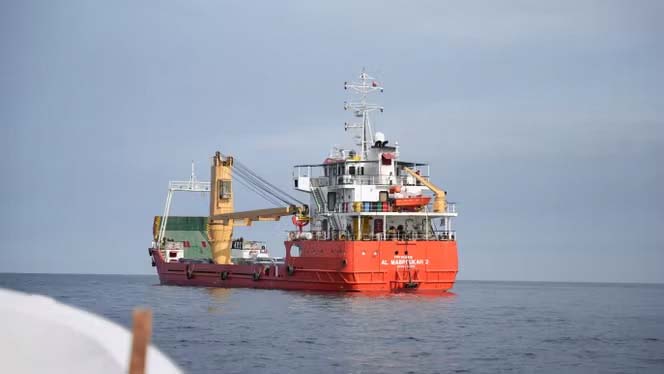
Did nobody mention, for example, what happened when the cargo ship Ever Given ran aground, blocking the Suez Canal for four days in March 2022?
The stuff that was stranded in the canal was worth almost $10bn per day and around 370 ships were queued. The effects of that blockage lasted for months.
It showed how global economic chaos could be triggered by strangling one key trade pinch-point – or another.
So, did the US and Israel not foresee a possibility that Iran would blockade the Strait of Hormuz, which lies on its south-western coast? If not, why not?
Were they so seduced by magical thinking that they just didn’t bother looking beyond what they rationalised as a short sharp shock (also ignoring the bloody fact that thousands would die). Or was the potential for colossal, catastrophic damage on global energy supplies and trade not seen as important?
OIL PRICES
Trump and Netanyahu have made a monumental miscalculation – and the rest of us are stuck with the consequences, and will be for a long time, including the huge disruption in oil supplies and the downstream leap in prices at the pumps across the world, including, of course, Ireland.
Ironically, some among the blockading farming contractors and independent hauliers admire Trump. Or so it seems from calls to action in some parts of the country, for example Waterford.
As is often the case with wildcat actions there’s no clear overall focus and many variations among the actors. But, they also don’t seem to have considered the downstream effects of their actions, other than bringing everything to a standstill.
For example, the blockades stopped seriously ill people from attending hospital appointments. If that wasn’t thought of it’s confirmation that – in Trumpian style – angry activists don’t think about the consequences of their actions.
It might also be that they just don’t care, which is even more disturbing.
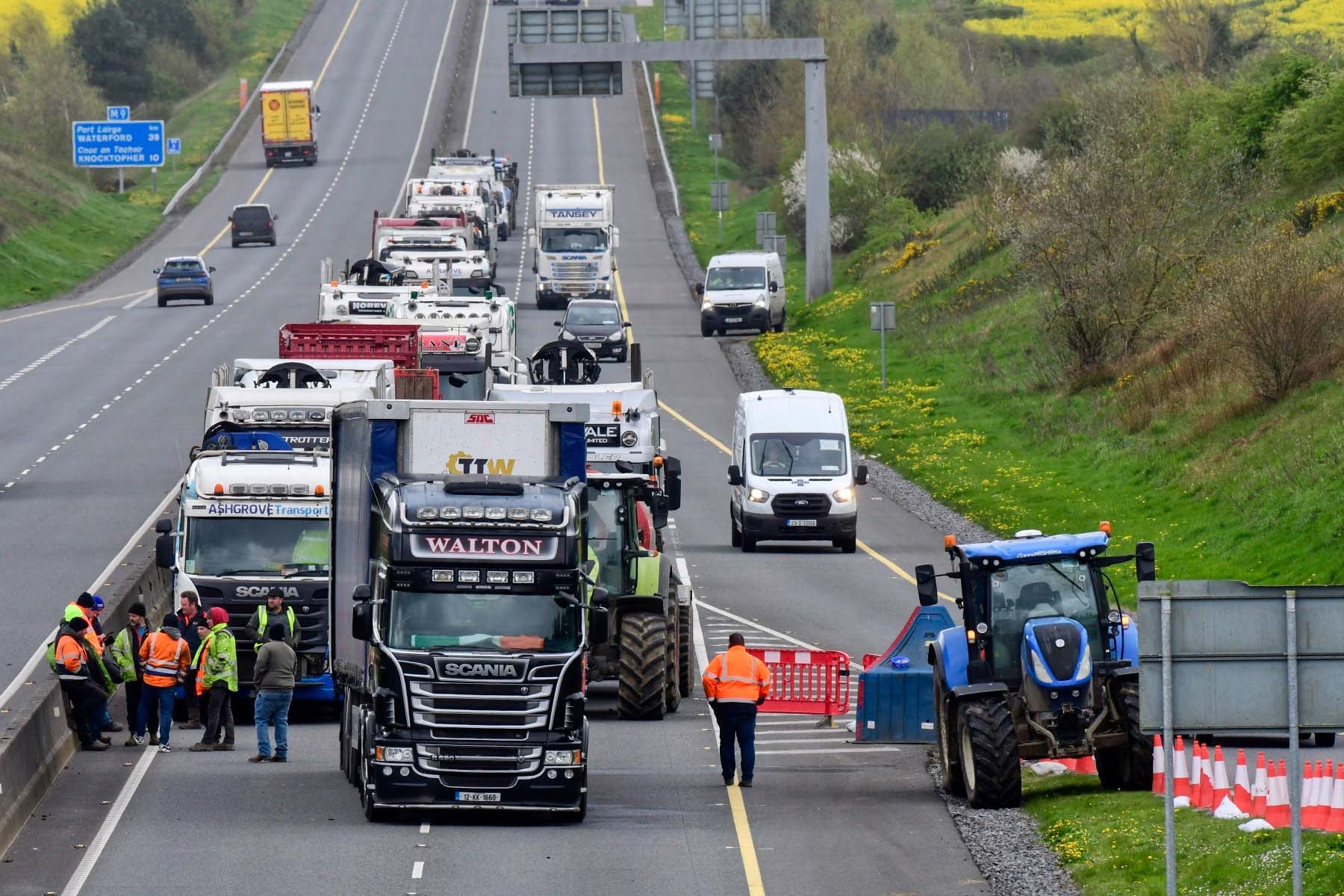
Picture: Harry Reid
Some of them said that they needed to strangle Dublin so the people of the city would learn where their food comes from. That’s even though most of the food eaten in Ireland comes from other countries and most of the food we grow in Ireland is exported.
So, blockading roads actually screws the very people on whose behalf the protestors claim to be acting.
Also, and contrary to what many believe, Ireland doesn’t have the highest oil prices in the world, or indeed in Europe. According to Euronews, the Dutch do. Followed by Denmark and Finland. Ireland’s prices are a little higher than the EU average, but not a lot.
It’s also worth pointing out that any supports from the Government, such as adjustments to the tax and excise regime, will be paid for with taxpayers’ money.
AGGRESSIVE BEHAVIOURS
On the subject of which, by the way, the fact is that Ireland has a strongly “progressive” tax system: that is, it reduces income inequality more any other OECD economy.
The top 10% of earners pay 40% of income tax and 60% of USC contributions. Earners in the bottom 50% of income distribution pay 10% of income tax and 5% of USC. And a third of all income earners (1.2 million people) pay no tax at all.
No one is saying that it is a perfect system. But it is far better than most.
Society functions on broad consensus and understandings, on a social contract both explicit and tacit, found through discourse, argument, agreement and compromise.
Balance between the rights of random groups and individuals and society is crucial. Everyone is entitled to state their case, to protest and chivvy decision-makers and politicians to hear their arguments. Protestors should be highlighting what needs to be done, and how. That’s constructive, not obstructive. But everyone else is equally entitled to go about their business without being held to ransom.
We have to identify and address the very real concerns of people who fulfil essential economic and social functions. Small rural businesses need more structured support, comparable to the help given to high-end start-ups. They should be seen as a kind of human infrastructure.
Anger’s a feeling, an energy, not a strategy. As neuroscientists will tell you, it largely impairs our ability to make decisions and act rationally, and favours impulsive, aggressive behaviours. Angry individuals too easily coalesce into a mob.
That’s rarely good from a social perspective. Bullying displays of power, and sneering disregard, undermine social functioning. Nobody likes being strangled.
And chaos rarely ends well.
RELATED

- Lifestyle & Sports
- 21 Sep 26


