
- Opinion
- 25 Mar 26
The war dogs couldn’t give a damn about climate change – so where does that leave us?








The current, utterly amoral, surge into multiple wars across the globe is confirmation that the thugs in the driving seat have no interest whatsoever in addressing climate change. Where the future of the planet is concerned, we are on our own. So we’d better get our defences organised – and fast…
“You fasten all the triggers / For the others to fire,” Bob Dylan sang in ‘Masters Of War’. “Then you sit back and watch / When the death count gets higher / You hide in your mansion / While the young people’s blood / Flows out of their bodies / And is buried in the mud.”
Same as it ever was. Look at the rich pickings they make, these self-admiring gods of hellfire and brimstone, these masters of war and all their enablers. In Gaza. In Ukraine. In Somalia. In Sudan. In the Democratic Republic of Congo. And now in Iran, Lebanon, Syria, and across the Middle East.
We know that wars lead to death, trauma, wreckage and ruins. That much has happened already in the attack by Israel and the US on Iran. At some point there will be talk of reparations, reconstruction and, probably, retribution.
Resources will be needed for post-war reconstruction. Already, the exploiters, gougers and billionaire chancers are salivating at the trillions to be made. Destroy it so that you can be paid billions to rebuild it. This madness is written about elsewhere in the current issue of Hot Press.
Meanwhile, an even greater danger is lurking. Climate change will trigger far worse destruction than what we see in Gaza, Iran and Ukraine.
Up here on Hog Hill we’ve tended to be optimistic, but no longer. Look at the smoke and dust, the fire and fury of war. Smell the absolute amorality and indifference of those waging it.
The war dogs couldn’t give a damn about climate change and so we might as well shelve the notion that we can save our version of the earth by small gestures. So where does that leave us?
BIGGEST PORT IN EUROPE
The appalling wars of aggression, recently launched and currently being waged, have forced us in Ireland to reimagine our neutrality and military capacity alike. Not to wage war, of course, but to defend our land and seas.
Of equal urgency, however, is that we must also prepare to defend ourselves against the sea and storms, as ice caps and glaciers melt.
Here, on this small island, the only place over which we have any chance of exerting control – most of our cities are at severe risk from rising waters. Now it’s time to start doing things rather than talking about them. King Canute failed. We can’t.
The Netherlands, as has often been the case, offers a lead.
On February 1, 1953 the country was whacked by the Watersnoodramp, its biggest flood ever, which is saying something, since much of it lies below sea level.
The dikes were broken and 165,000 hectares of land flooded, causing huge damage to infrastructure, livestock and homes. The total cost was calculated at 1.5 bn guilders, which is about €5.5bn-€6bn in 2026.
At least 1,800 people died. Over 100 were never found. Around 72,000 people had to be evacuated.
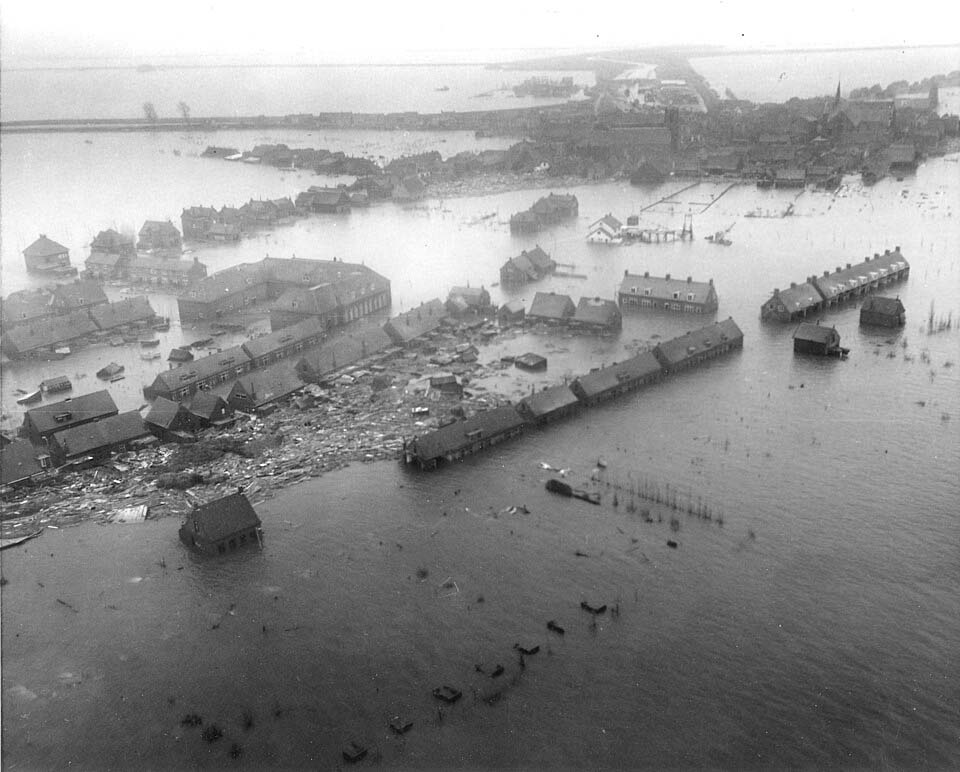
In response, instead of a bit of engineering here and rebuilding there, the Dutch came up with Delta Works, a network of storm surge barriers, dams, dikes, sluices, locks and levees to protect low-lying areas from flooding.
Estuaries were sealed off and the coast literally rebuilt into a straight line. It’s the biggest anti-flood system in the world.
The Oosterscheldekering is a 9 km-long set of dams to withstand the worst storm surges.
The Maeslantkering is one of the largest moving structures on Earth, a giant sea gate that guards Rotterdam, the biggest port in Europe.
It has two vast curved arms that swing out into the water to make a wall over 20 metres high. And that’s just to manage the threat from sea.
TUNNELS UNDER THE ALPS
There are also dangers at the back door: two of Europe’s biggest rivers, the Rhine and the Meuse, flow through the Netherlands to the ocean. They caused huge floods in 1995 and 2021. The latter triggered the evacuation of over 250,000 residents and a million animals.
The response is ongoing. As technology advances they modernise defences and innovate to grow what might be called intelligent infrastructure. Things like inflatable barriers that automatically inflate when water levels rise. Or self-healing wave walls that deflect wave energy back towards the sea, sometimes colonised with oysters and barnacles to build additional strength.
As for the rivers, new flood channels have been built to drain off and divert high (flood) water. It’s important to control and channel flooding waters, they say, but not to over-inhibit the rivers’ capacity to roam. So, they’ve created flood sinks and reservoirs to compensate for having built on flood plains and swamps.
For example, the Eendragtspolder is a 22 acre park and recreation area of reclaimed fields and canals. But it doubles as an emergency flood plain. Sometimes likened to a giant sponge, it can absorb four million cubic metres of water.
It’s all very impressive, a long-term and evolving response to an existential threat.
The Netherlands isn’t the only European country undertaking massive developments with both eyes on the future. Switzerland has built a vast network of 1,400 tunnels under the Alps. They include rail, road and buried galleries for water and power.
The New Rail Link through the Alps (NRLA) is the jewel in the crown. One of its tunnels, the Gotthard Base is, at 57 km, the longest rail tunnel in the world.
While the tunnels make life easier for commuters and tourists, the fundamental aim is environmental: to move long-distance freight onto trains, as mandated by the Alpine Initiative, approved in a 1994 referendum by Swiss voters.
The excavations and constructions were immense. But residents were protected and landscapes and ecosystems maintained or restored. If you build it they will come: rail now carries 75% of goods transport, and rising.
ARTIFICIAL FLOOD PLAINS
Switzerland is Europe’s highest country, the Netherlands its lowest. But they have this in common: they analysed a problem, debated and agreed what needed to be done – and then planned how and when. And then they did it, moving seashores and mountains and rivers in the process.
Now, cast your mind back to the recent floods in Ireland and the faffing and finger-pointing that went on.
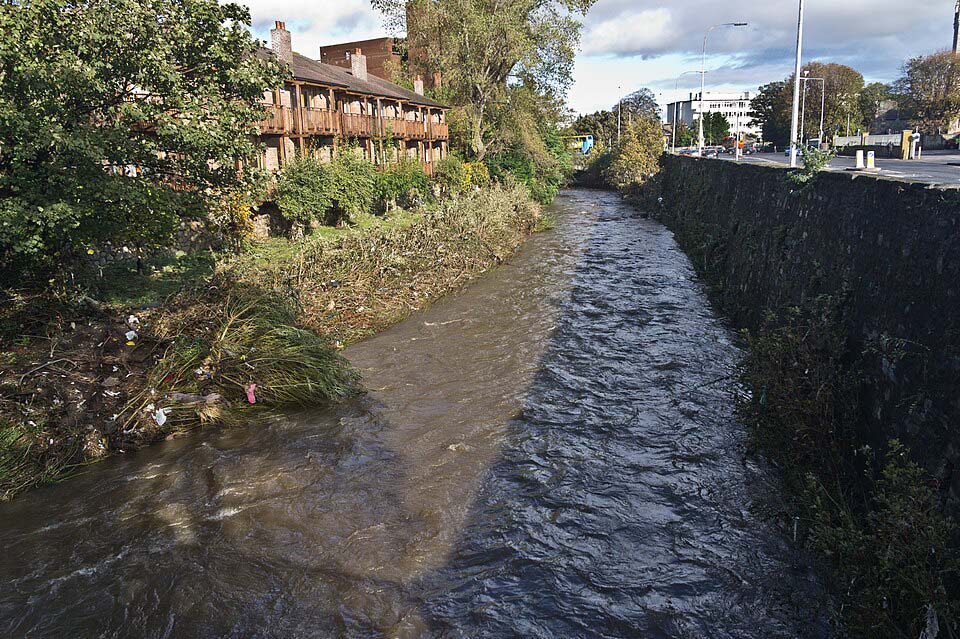
Look at nimbyism and the stasis that pervades our planning and execution of rail, road, flood protections, energy generation, housing – and even a children’s hospital.
While many parks around our major cities, including Dublin, could be repurposed as flood sinks, imagine the ructions if Dublin’s local authorities proposed to dig into St. Anne’s Park to make an underground floodwater sponge.
Well, both the Dutch and the Swiss took big infrastructural developments out of the short-term political system. We must do likewise.
Not through executive agencies. With a few honourable exceptions, like the Industrial Development Authority, these too easily grow belly fat. And arrogant.
Maybe it’s because they’re conceived as management companies, hamstrung by imagined models of efficiency and too swiftly converted into feeding troughs for consultancies and the legal profession.
Look at their “vision statements”. They all have them. But their visions are always about how they’ll go about their work, not what will be built.
As waters rise and coasts erode, all the indications are that we need to go Double Dutch: reinforce coastlines, build flood barriers, divert rivers and streams when and where appropriate, and create artificial flood plains where necessary.
Likewise, we need to really invest in rail, first to hugely increase network speed, convenience, connectivity and coverage, and second to construct comprehensive underground rail, especially in cities.
This will demand big thinking and a radical retooling of planning and delivery. No more can’t – or ‘can’t do’. We cannot afford to fail.
Otherwise, start building an Ark.
RELATED


RELATED


- Opinion
- 06 Jan 26
AI Data Centres Will Eat You Alive

- Opinion
- 31 Dec 25
Climate crisis: "The battle must go on. The alternative is unthinkable"


- Lifestyle & Sports
- 07 Oct 25
