
- Opinion
- 28 May 26
Child trafficking, exploitation and abuse in Guatemala: "What is happening is not a series of disconnected tragedies. It reflects deeper systemic failures"








In Guatemala, a persistent cycle of poverty, migration and violence puts many lives at risk. Especially alarming is that – hidden from view – an increasing number of young boys and adolescents feel forced to set off into the unknown entirely on their own, and prey to the worst the world can hurl at them. But there is, at last, a glimmer of hope...
Guatemala is often reduced to a point on a map, but in reality it is a country shaped by ancient cultures, deep roots, and enduring resilience – and by movement: a place of origin for migrants, a transit route, a destination, and increasingly, a point of return.
Bordered by Mexico, Belize, Honduras and El Salvador, with coastlines along both the Pacific Ocean and the Gulf of Honduras, this small Central American nation lies at the heart of one of the busiest migration corridors in the world, shaping the lives of hundreds of thousands of people.
Among them are children and adolescents, who shoulder a disproportionate share of the burden. Their lives are shaped by silence, isolation, and stories often left untold.
At a reception centre on the outskirts of Guatemala City, I met the director of a shelter for children who had survived trafficking and abuse, after weeks of correspondence about my visit – an encounter that would shape what followed, as I was gradually granted access to institutions and stories rarely brought to light.
A Complex Past
The evidence suggests that people have been living in the area now known as Guatemala since around 12,000 BC. It was the central home of the Mayan civilisation, which flourished from approximately 2,000 BC until its decline around 900 AD. While those structures faded, Mayan communities endured, and today an estimated six million Mayan people live in Guatemala, speaking almost 30 distinct Mayan languages, of which 21 are officially recognised, according to the United Nations Population Fund (UNFPA).
The country’s modern history is marked by colonisation by Spain, followed by political instability, civil war and periods of military rule. The 36-year internal armed conflict, which ended in 1996, left deep scars. The CEH (Comisión para el Esclarecimiento Histórico), established as part of the peace process, concluded that acts of genocide were committed against Indigenous Mayan communities, largely by state forces.
Guatemala’s population is now close to 18 million, the largest in Central America, with an estimated 3.2 million people living in the metropolitan area of Guatemala City. Despite its cultural richness and natural resources, poverty remains widespread: more than half of the population live below the poverty line, according to the World Bank.
Cycles of Exclusion
With this as a backdrop, I began documenting the impact of child trafficking and forced pregnancy – interconnected issues affecting girls and young women in Guatemala. While in the field, another far less visible reality emerged: the exploitation, abuse and trafficking of boys and adolescent males.
In one of my visits to a residential centre for boys who are survivors of trafficking and sexual violence – the location of which cannot be disclosed for security reasons – staff explained that the approach is to discourage the sharing of personal histories among residents and in everyday interactions. The philosophy is to protect privacy and reduce stigma, allowing silence to be respected rather than questioned.
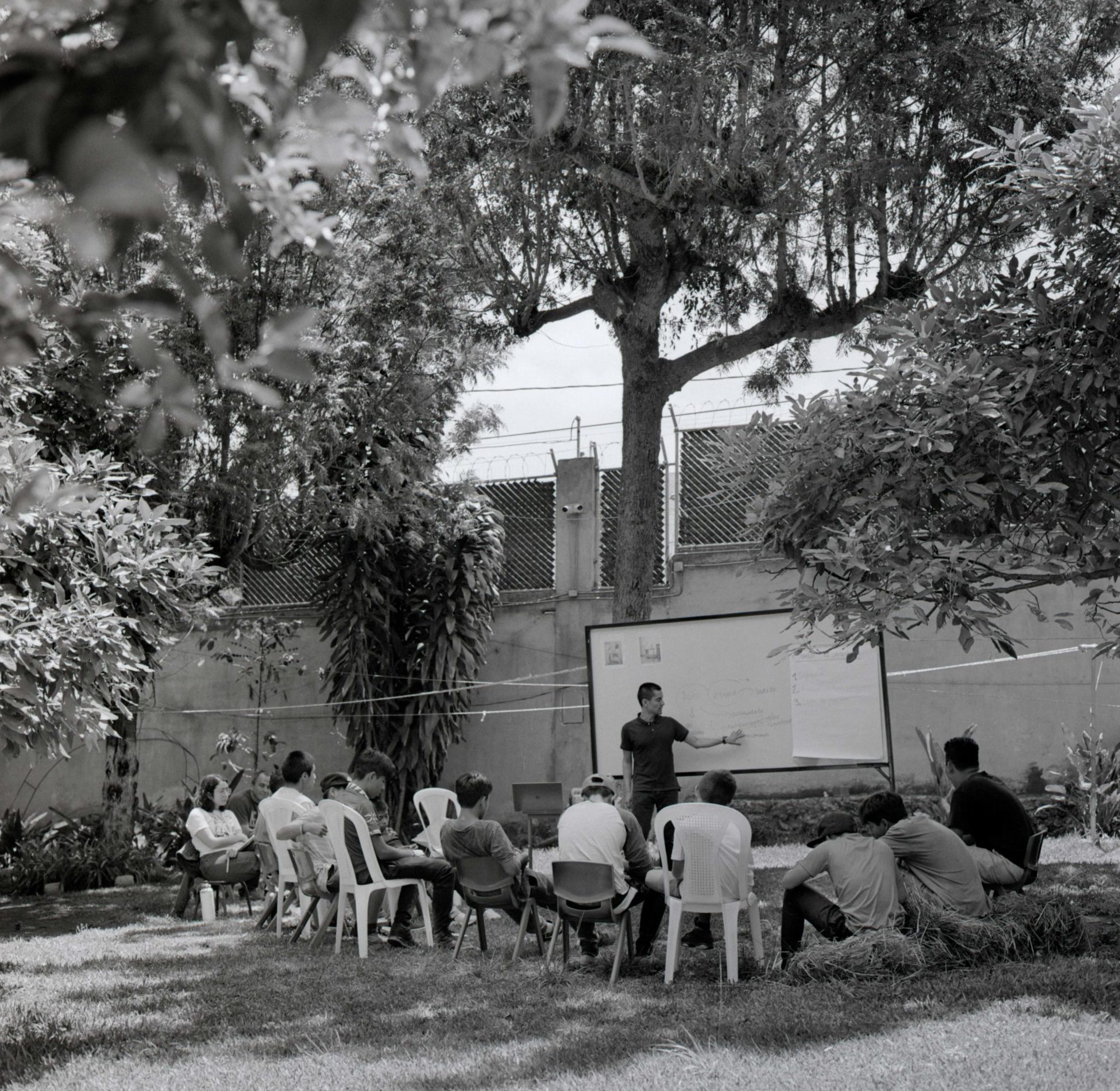
Photo: Marcelo Biglia
The programme supports children and adolescent boys over extended periods rather than short-term stays, combining secure accommodation with psychological care, legal support and access to education, alongside therapeutic activities such as music and crafts.
The more I listened, the clearer it became that services for male survivors are scarce, fragmented and often overlooked.
This gap is reflected in findings by UNICEF, ECPAT, and the International Organization for Migration, which have pointed to persistent shortcomings in protection systems for boys affected by trafficking and sexual violence. Many fall through the cracks of already fragile systems, left to navigate trauma, silence and stigma.
Even if my time in the country allowed only a partial glimpse into a far more complex reality, it became clear that the absence of protection, combined with poverty, cultural marginalisation, and unhealed wounds, can narrow the options available to them – where migration is often less a journey of hope than one of survival.
These children are caught in overlapping cycles of exclusion, trafficking and violence, with few ways to break free.
A Country on the Move
Migration is nothing new to Guatemala. For generations, families have left – pushed by poverty, pulled by the dream of a better life. But in recent years, one trend has become especially alarming: more children are on the move, and many are doing so alone.
Data from US Customs and Border Protection shows that the number of unaccompanied minors arriving at the United States border has risen sharply over the past decade, with children from Guatemala among the largest groups represented. More broadly, assessments by the International Organization for Migration indicate that minors now represent a significant share of migration flows from the country, and that these movements have intensified in recent years.
For many, these ventures end not in arrival, but in return. In early 2024, according to the Instituto Guatemalteco de Migración and the International Organization for Migration, more than 1,140 unaccompanied minors were returned to Guatemala over just four months, many having been intercepted in Mexico or at the United States border. Their paths are shaped not only by physical barriers, but by the same structural forces that compelled them to leave – poverty, insecurity and limited opportunity.
Rethinking charity
When children do migrate – often with no documents, protection or adult support – risks multiply. The most common routes take them through Mexico, often in the hands of smugglers, where journeys are marked by extortion, detention and violence, before they reach the United States border. According to Médecins Sans Frontières, children on these routes frequently face repeated exploitation, with vulnerability deepening at each stage.
Upon return, little has changed in the conditions that drove them to leave in the first place. The cycle repeats, bringing with it the risk of further attempts and renewed trauma. Yet even within this bleak reality, some organisations continue working toward more sustainable responses.
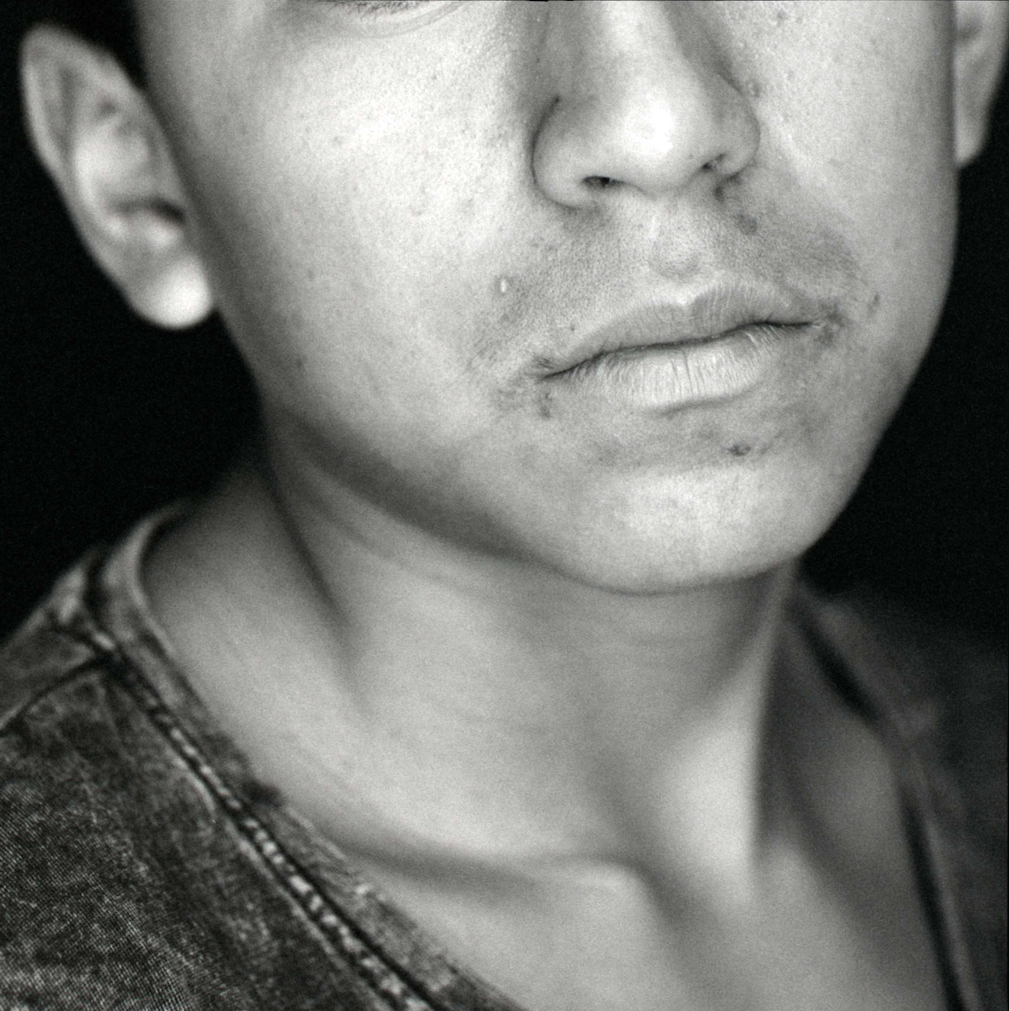
Photo: Marcelo Biglia
Despite the scale of the crisis, some local organisations are building pathways to more sustained forms of support. What sets these efforts apart is not only their care, but their approach: a shift away from short-term charity models towards longer-term, structured protection and recovery. These programmes focus on gradual reintegration and autonomy rather than emergency response alone.
Poverty in Guatemala is a long-standing reality, as noted by the director of a pioneering non-governmental residential programme, providing shelter for boys who have survived trafficking and sexual violence. The centre operates as a small-scale residence for young people, allowing for individualised care and supervision.
The programme combines secure accommodation with psychological support, legal assistance and access to education, forming part of a broader reintegration model that prioritises stability over institutional scale. “What has changed,” the director adds, “is the intensity and combination of crises now pushing more families and children to migrate.”
She observes that child migration is largely driven by widespread poverty, food insecurity worsened by climate-related droughts, limited access to education and employment, escalating violence – including gang activity and exploitation – and a weak child protection system.
These conditions are reflected in broader assessments by the World Food Programme, which has documented rising food insecurity linked to climate shocks in the region, and by Human Rights Watch, which has repeatedly highlighted persistent protection gaps and levels of violence affecting children in Guatemala. She emphasises that these pressures are increasingly overlapping rather than isolated, deepening vulnerability across communities. Without support, she adds, children are left to navigate deep emotional wounds, broken trust, and an uncertain future.
For many, returning does not end the journey; it marks the continuation of an unresolved cycle.
The limits of such work are also clear to those involved. Even the most structured programmes operate within wider systems that remain fragile and overstretched. As a result, recovery is rarely linear, and protection is never guaranteed beyond the walls of the institutions themselves.
Beyond Borders: A Shared Responsibility
What is happening to children in Guatemala is not a series of disconnected tragedies. It reflects deeper systemic failures: poverty, exclusion and long-standing inequality. When young lives are shaped by trauma and invisibility, the cost is not only individual but societal.
These stories may unfold far from where many of us live, but they raise questions that feel uncomfortably close to home: about safety, dignity and child protection. In Ireland, too, public inquiries in recent decades have exposed failures in these systems, with consequences that continue to be examined.
In every society, there are moments – often only recognised in hindsight – when vulnerable voices were not heard, and the consequences left lasting scars. The responsibility to listen, to act, and to uphold dignity is therefore not only global, but also local.
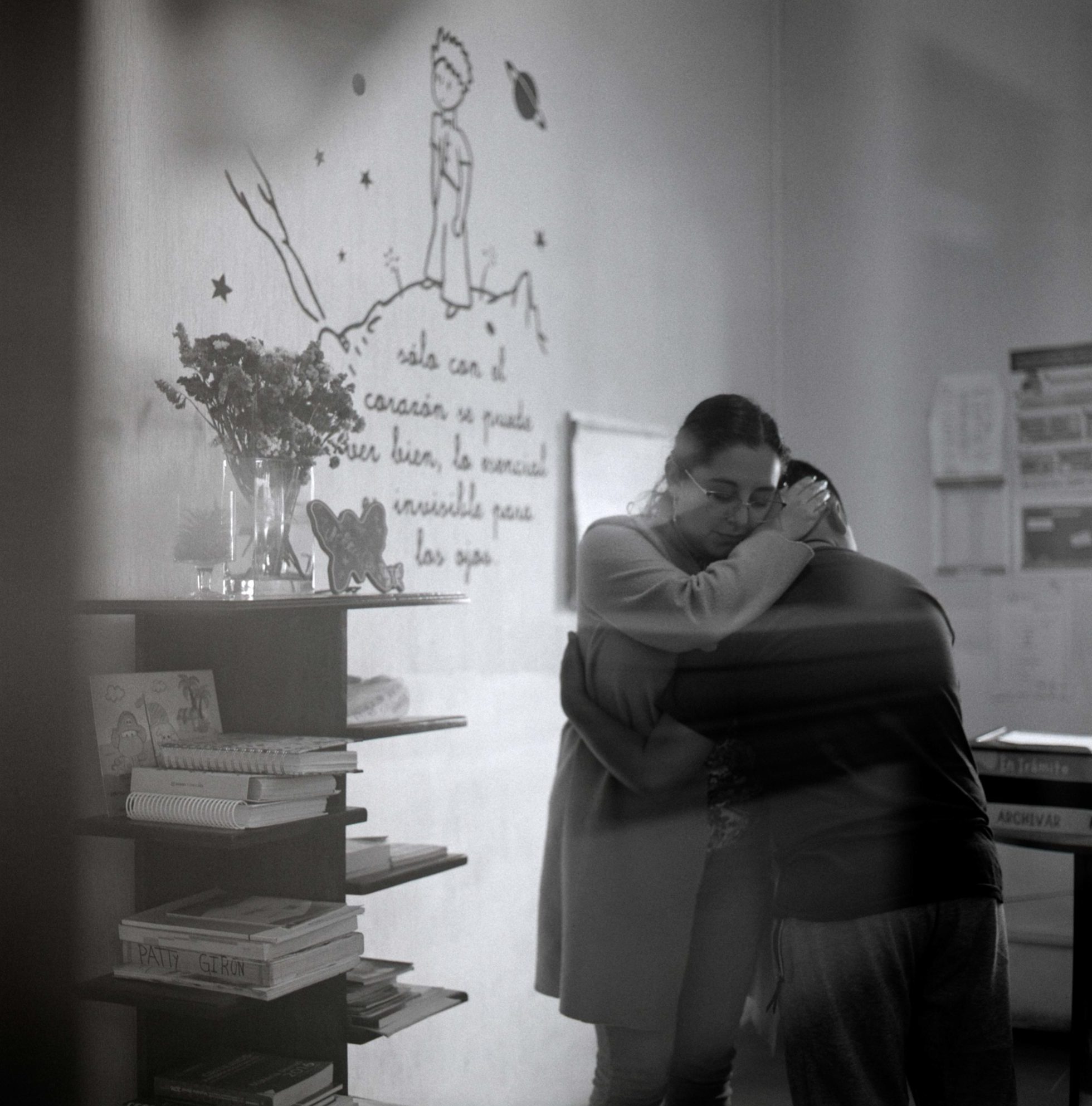
Photo: Marcelo Biglia
Why This Matters
When we talk about vulnerable children, it is easy to focus on the numbers. The numbers are devastating. But behind every statistic is a story.
A child who learned silence in school, where shame replaced trust – an experience not unique to any one country.
A boy who left home at 14 to reach another country, only to be deported alone.
A teenager who was exploited in a city he did not know, far from anyone who could help.
Their identities are protected – for their safety, we are told – while those who harmed them often remain unnamed and beyond accountability. These children did not choose to be institutionalised, trapped in a dysfunctional, prolonged limbo – nor did they choose to be photographed for public consumption. Yet, wordlessly, and through a trust-based exchange, they allow us to look and reflect.
As one counsellor working within the safeguarding structure noted, the priority is that children are not placed under any pressure to disclose their experiences, and that interaction with outsiders does not become another form of scrutiny or pressure.
“They’re not asking for pity,” said one of their mentors at the institution. “What they need is fairness.”
They need systems that see them, include them and protect them, and policies that invest in their future.
“They also need time to heal, to learn and to grow into the people they could be, if only given the chance.”
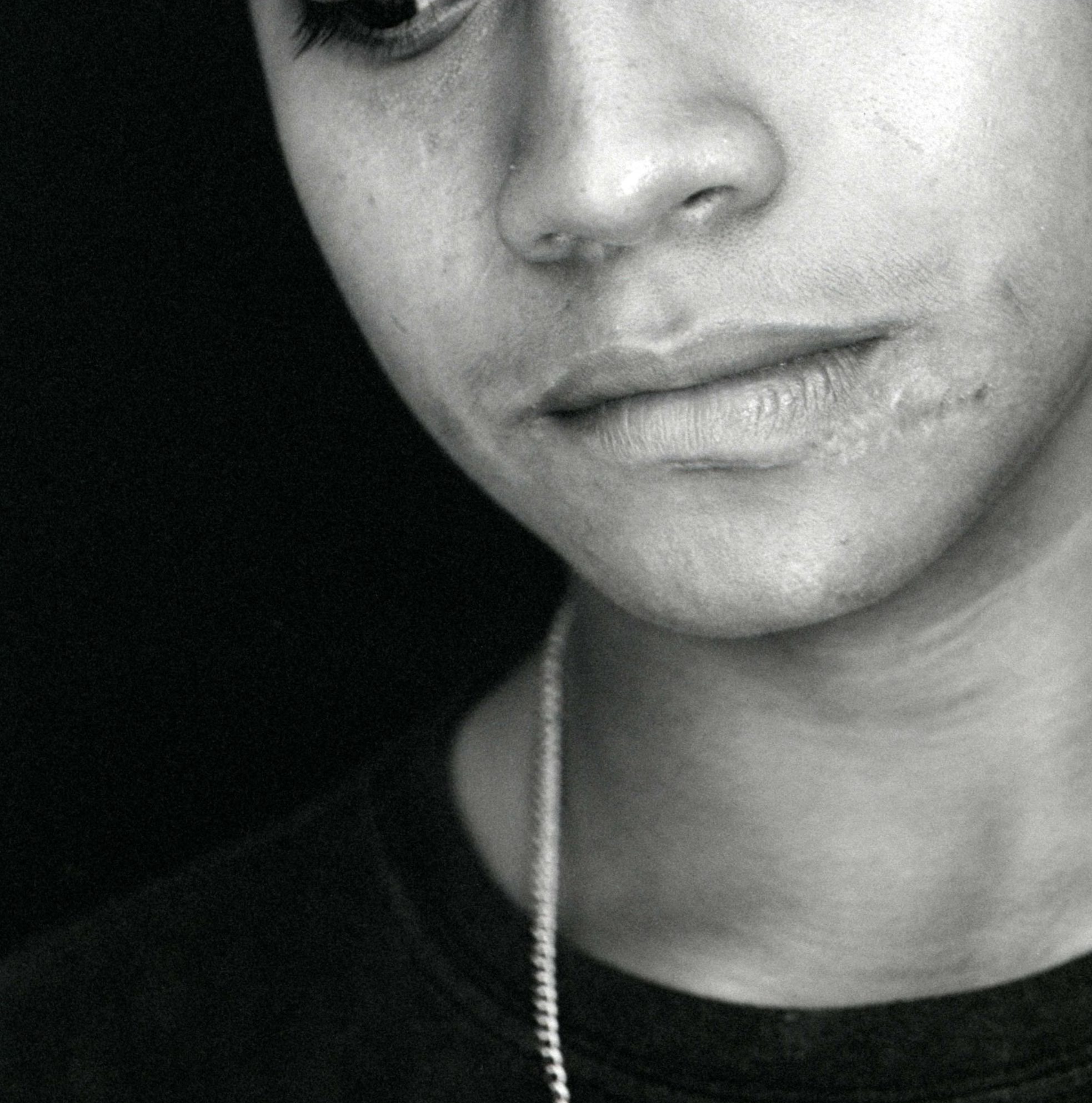
Photo: Marcelo Biglia
A Chance to Belong
These children are not only enduring abuse or crossing borders – they’re standing at the crossroads of survival and possibility. Where they go next depends on the choices we make from policymakers and teachers to social workers, advocates, and those who uphold justice. With the right support, exclusion does not have to define their future.
At its core, the issue raises a simple question: what does it mean to offer children not only safety, but a real chance to belong?
• Reporting for this project has been supported by the Simon Cumbers Media Fund.
RELATED


- Lifestyle & Sports
- 21 Sep 26
Student Special: "Saving money does not have to mean surviving exclusively on instant noodles and blind optimism"

- Opinion
- 20 Sep 26
Dylan Moran: "Time is literally all we have. It’s all we are"
RELATED


- Opinion
- 17 Sep 26
RTÉ confirms it will not participate in or broadcast Eurovision 2027


- Lifestyle & Sports
- 17 Sep 26