
- Opinion
- 08 Feb 26
Rob Doyle on Cameo: "I felt like I had turned fiction inside out, in a way"








Rob Doyle discusses his meta extravaganza Cameo, the cultural ructions of the past decade, and the memorable screen adaptation of his novel Here Are The Young Men, starring Anya Taylor-Joy.
When I previously spoke to Irish novelist Rob Doyle six years ago, it was to discuss his previous book Threshold, a dazzling exercise in autofiction – a genre then still coming to prominence. Doyle’s latest book, Cameo, effectively triples down on that approach, with a meta quality that’s positively vertiginous.
At the centre of the book is a writer who creates a character called Ren Duka, himself an Irish novelist who unexpectedly enjoys major commercial success. As the book progresses, the story spirals ever outwards, and there are stories within stories.
Among the characters we encounter on the hallucinatory trip are cult New York author Dina Tatangelo; a film star facing public disgrace; a Japanese manga artist; and a Dublin taxi driver who might just shuttle his passengers between worlds. Hell, there’s even a character called Rob Doyle, a writer attempting to stare down his own personal demons.
Doyle – the real one – imbues Cameo with his trademark comedic flair, with the novel boasting laugh-out-loud satirical riffs on the absurdities of modern culture. A technical marvel, the book is also a wildly entertaining read, and a welcome escape from the grey depths of January.
“When I got to the end of Threshold, I thought, ‘What do I do next?’” reflects Doyle, sitting in the Dalkey Martello tower he calls home. “That book was extremely personal and I poured everything I had into it. But then you get back to the drawing board and it’s trial, error and experimentation. When we moved here about four years ago, a wave hit me. Suddenly, I felt I was writing in a whole new style.
“I felt like I had turned fiction inside out, in a way. I’d created a novel whereby the body of it was a critical bibliography of this author, and how his life was interlaced with his autofictional creation, Ren Duka. The story emerges as the lives of the author and his character begin to collide in all sorts of ways.
“So we’ve got books within books, and then Ren Duka creates his own books. Suddenly, I felt I had the massive breakthrough that I’d been praying for. The way I’ve been describing it to people, was that it was like taking Threshold and putting it through a supercollider – Threshold goes quantum!”
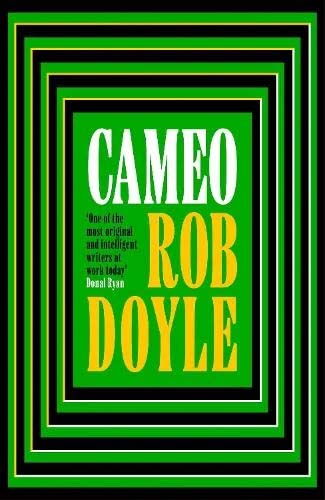
As the author acknowledges, it makes for an uproarious read.
“This book goes into some pretty far out places,” muses Doyle. “The backbone is the life and death of the author and his creation, Ren Duka, but within that framework, it goes to all sorts of destinations. So we hear from all of these different voices. We hear from the actor who played Ren Duka in movies, and he’s reckoning with public disgrace. Then we hear about another creation I really like, Dina Tatangelo, who’s like an inverse of Ren Duka.
“She’s an underground, sexually explicit New York novelist who writes a series of obscure novels, with her own fictional persona. We get all these figures, it’s radically nonlinear. To be honest, this is what I’m hyper-proud of. It’s the one where I’ve pushed myself furthest.
“Structurally, I’ve done something I’ve never done before – and if I may say so myself, I don’t see that anybody has done it before. I don’t necessarily feel that way with my previous novels, proud as I am of them. But with this one, I had a dizzying sense that I was breaking new ground.”
In tracking Ren Duka’s picaresque journey, Doyle also examines the strange cultural moment we lived through over the past decade, when fraught – sometimes extremely fraught – online discourse was the order of the day.
“It was particularly the stuff we went through from about 2015 to last year, really until Trump took over for the second time in the US,” he says. “There were extreme excesses of a certain strain of US-originated, progressivist online culture, which basically colonised everything for quite a few years. It led to all sorts of toxic absurdities, psychosis and mass hysteria. The culture industries fell like dominoes before all of this.
“I was very much watching from the sidelines. Even while it was happening, it seemed so obviously worthy of satire, so I had some fun with that in the novel.
“In the culture wars, Ren Duka bounces back and forth like a pinball between the far left and far right – he’s being cancelled every which way. It was fun for me to revisit that stuff and think back on how crazy it all was.”
Certainly, it was an interesting time, if a deeply strange one.
“In the book, I get a laugh out if it, but those years left a very bad taste in the mouth too,” says Doyle. “Because you can’t really unsee what you saw. So many people who you thought would know better revealed something – it’s like the ideological enemy has revealed its true face.
“It’s very hard to regain respect for certain people, who you saw going along with these conformist ideologies, and the orgies of sanctimony and censoriousness. They were scary times too, because no matter who you were, the mobs were waiting to find deviation from the orthodoxies.
“I always knew the backlash was going to be severe, because so many people felt so aggrieved and humiliated. It was so obviously a kind of inverse class war. But it’s a shame the backlash had to be quite so severe as what looks like a renaissant worldwide fascism. But this is where we find ourselves.”
Doyle originally debuted in 2014 with the novel Here Are The Young Men, a dark examination of Dublin youth culture that had echoes of Bret Easton Ellis’s cult classic Less Than Zero. One of the great Irish literary debuts, it also became one of the best Irish films of the 21st century, courtesy of a bravura 2020 adaptation by director Eoin Macken.
The film also boasted a stellar cast, including Dean-Charles Chapman, Ferdia Walsh-Peelo and Anya Taylor-Joy, who subsequently attained superstardom courtesy of her appearances in the likes of The Queen’s Gambit, The Super Mario Bros. Movie and Furiosa.
“I first saw the film of Here Are The Young Men during Covid times,” says Rob. “Like so much stuff in that era, it got a slightly anti-climactic rollout. I was living in Berlin at the time, and I watched it premiering on my crappy little laptop, with no speakers or anything. I liked it, but it wasn’t until two years later that it had a premiere in the Lighthouse Cinema.
“That was the first time I saw it on the big screen with the full soundsystem, and it was a different movie. Tonally, it’s an interesting interpretation of the novel for me, in that it turns up the romance aspect, which isn’t as strong in the book. It’s also got this dreamy, ambient quality I really respond to in certain sections.
“So it’s got its own thing going on, and particularly having seen it in the cinema, I became very fond of the film.”
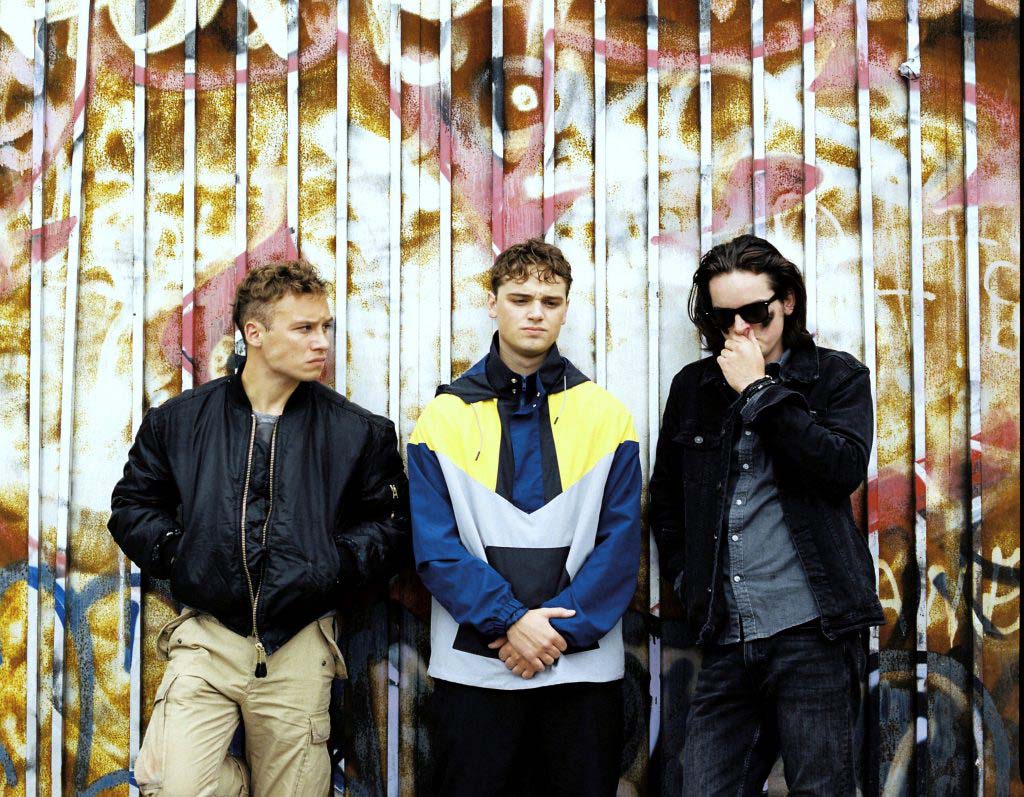
Here Are The Young Men (2020)
Moving onto broader topics, I bring up literature’s role in contemporary culture. Like me, Doyle has an ongoing interest in the world of video games, and we are both big enthusiasts of Hideo Kojima, the genius Japanese creator of the Metal Gear Solid series.
It’s long been true that the impact of games like MGS, Call Of Duty and Grand Theft Auto dwarfs that of even the most acclaimed novelists. So where does Rob think books fit in the current landscape?
“I don’t know,” he considers, “I mean, I hear what you’re saying. I like staying connected to the world of games, it interests me greatly. My partner Róisín cut her teeth as a tech writer, and she’s a gamer, all of that. I would hate to close myself off to the future – that’s not the way for a writer to go.
“But the role of the literary novel in the wider culture, I don’t know what to say about that. When I got into serious reading and writing, it was a weird kind of reaction or rebellion against something. It was like a ‘fuck you’ to what was around me. It may even have been a weird, self-destructive thing – it was like my way of closing myself off from everything treacherous and painful.
“But I’ve moved out of the stage of my life where I’m interested in making statements about the role of the novel, or anything like that. It feels like it’s my job to just keep reading, studying and feeding my imagination – and then responding creatively to the world around me.”
• Cameo is out now.


