
- Music
- 21 Dec 25
NIYL on the return of Pop Maximalism: "Somewhere between the sacred and the synthetic, pop still believes in something"








Limerick soul-pop maestro NIYL looks at how, despite a fractured cultural landscape, artists such as Rosalía and Florence + the Machine are succeeding with albums that demand attention and immersion.
There is a particular, almost theatrical hush that descends when pop artists cease chasing virality and start chasing something larger, something ritual in scale. Recently, as we crept into the Samhain’s grasp of the seasons, that hush was shattered by two very different but very decisive eruptions: Rosalía’s LUX, a four-movement orchestral odyssey that demands to be heard and enjoyed as ceremony rather than streaming impulse; and Florence + The Machine’s Everybody Scream, a gothic, communal purge that stages catharsis like a cathedral service for modern trauma.
Both records refuse meekness and it is clear to the listener that they are not mere production shifts, but philosophical re-writings of what pop can mean in a climate where the algorithm flattens sensation. These albums and artists suggest: pop can still matter.
The Attention Economy and the Return to Ceremony
On LUX, Rosalía constructs pop as ritual. She opens with ‘Sexo, Violencia y Llantas’ and moves through ‘Reliquia’ and ‘Berghain’, the latter a lead single featuring the London Symphony Orchestra and collaborators like Björk and Yves Tumor. The album unfolds like an oratorio where the dancefloor becomes altar, and beat becomes liturgy.
Rosalía treats pop itself as relic, a vessel of memory and devotion, bridging ancestral form with contemporary experimentation. In Movement IV, ‘La Rumba Del Perdón’ fuses rumba rhythms with orchestral grandeur and spiritual lyricism. Across the album, a pattern emerges: multi-movement architecture, choral weight, and a multilingual palette (Spanish, Catalan, Italian, German and more) create an immersive odyssey rather than a collection of singles, a work designed to be experienced amidst a culture of endless doom-scrolling and screen fatigue.
Florence + The Machine approaches ritual from another angle on Everybody Scream. The title track opens with howls, layered percussion, and swelling orchestration, a communal exorcism in sound. Tracks like ‘One Of The Greats” and ‘Witch Dance’ weave folk horror, witchcraft and Gothic theatre into mass catharsis. Maximalism here is not just sonic scale, but emotional scale: the scream is public, the ritual collective. Where Rosalía invites inward reflection, Florence embodies outward release.
Both albums resist the fractured attention economy, the era of loops, scrolls and instant gratification. Their maximalism asserts the opposite. These are records that demand presence, patience, immersion. They remind us that some music is not made for playlists; it is made for process, for pilgrimage, for ceremony.
The Irish Echo: Ritual as Resistance
As an Irish artist, I feel this wave of maximalism not from the sidelines but from within a landscape shaped by history, memory and contradiction. My recent album Parish Is Burning exists in this space: cinematic electronics, choral echoes, and religious imagery reframed through queer identity and belonging. The title carries a paradox, the parish burning, the sacred collapsing, but from its soot emerges a new narrative, one defined not by submission but by agency.
Ireland’s religious institutions once dictated rhythm and morality; they shaped identity, controlled ritual, defined belonging. Today, the parish lingers like an echo: the pews are emptier, but the architecture remains, loaded with memory and that tension, sacred form without guaranteed devotion, is fertile ground for artistic excavation. It is here that Irish artists turn symbols of past authority into instruments of defiance.
You can hear this reclamation across Ireland’s musical landscape. Hozier reframed sin and salvation into protest; Jennifer Walshe dismantles liturgical form to question collective identity. CMAT transforms heartbreak into confessional theatre; Ye Vagabonds and Saint Sister reimagine folk as hymnal remembrance; God Knows and the Narolane collective channelled ritual into rap; Kneecap turn political irreverence into liturgical spectacle. Across genres, Irish artists are re-enchanting the sacred, not to replicate its power, but to reclaim it.
This synergy, between global pop’s return to grandeur and Ireland’s reclamation of its spiritual vocabulary, creates an ecosystem where scale serves defiance. Choral swells, orchestral grandeur, liturgical echoes: these tools are no longer neutral. They assert, resist, and illuminate. They say: we exist, we claim space, and our stories matter.
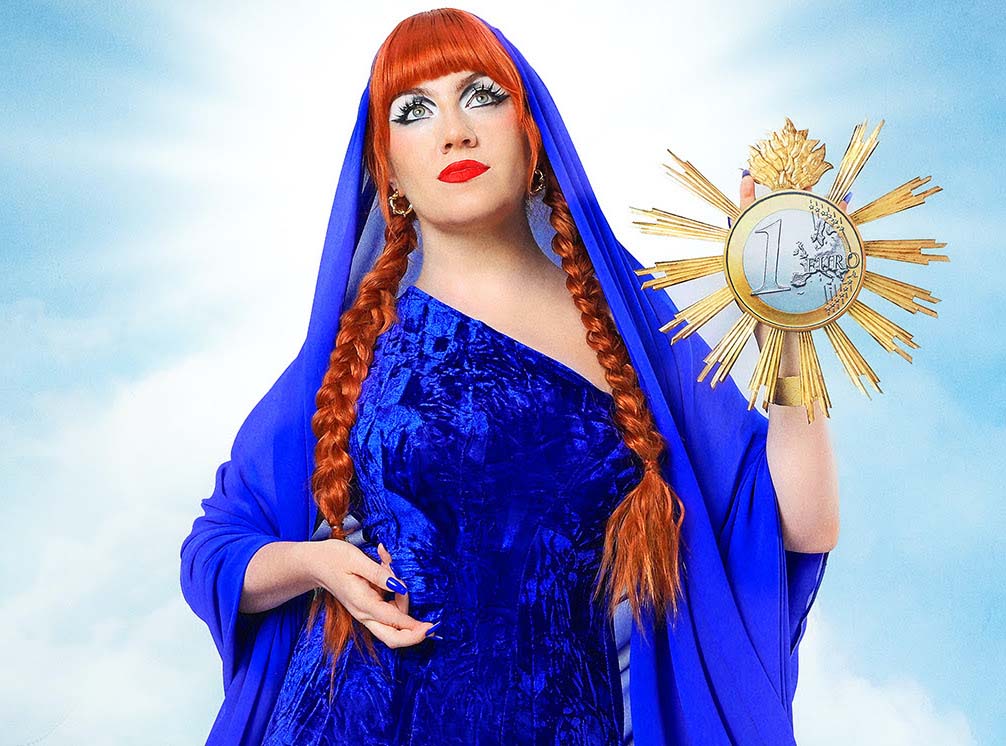
In reclaiming these forms, artists are harnessing the authority of structures that once subjugated, bending them into shapes that communicate liberation, defiance and visibility. What was used to enforce conformity is now wielded to assert difference, an elegy, a manifesto and a declaration, all at once.
The Sublime vs. the Algorithmic
There is a philosophical thread beneath this shift: a human hunger for the Sublime. In the 18th century, it was found in mountains, storms, the infinite. In 2025, it is found in walls of sound, voices stacked until they feel beyond a single body, strings climbing until they resemble mausoleums of feeling.
Maximalism becomes a rebuttal to algorithmic tedium. When music becomes background, pop threatens meaning. When AI can replicate style, authenticity demands labour. Real instruments, choirs, live brass, these gestures are the human crack in the matrix.
Rosalía grips that crack: in ‘Mio Cristo’ she sings in Italian of faith, abandonment and transcendence. Florence scrapes at it: her ‘The Old Religion’ feels like elegy and resurrection intertwined. And in Parish Is Burning, I aim for that same convergence, the voice trembling between trust and defiance, the production holding ambition but not at the cost of intimacy.
The Danger and the Grace
Of course, maximalism can collapse into spectacle. A grand cathedral of sound means little if no one walks through the doors. The critic’s question becomes: is this ritual re-enacted, or merely costumed? Are we dressing up in sacred tropes, or taking their weight?
Rosalía and Florence answer by tying production to meaning, their concept albums earn the choir because the subject demands choir. Grandeur serves the story.
In both the global and local sense, pop’s turn to grandeur is really a turn to faith, not in the divine, but in the idea that sound itself can still mean something. For all its layers, its choirs, its crescendos, maximalism insists that emotion, real, imperfect, embodied emotion, is worth the labour it takes to express.
The New Parish
I sometimes imagine every artist builds a parish, a congregation gathered by sound, story, voice. Some build altars, others bonfires. What unites us now is the instinct to build something that lasts, especially at a time when emotion is too often stunted by speed. Grandeur becomes the last safe place for belief.
Pop going cathedral-scale doesn’t simply mean louder or more instruments. It means larger meaning. It means asking for time, stillness, attention, all in defiance of the scroll.
As Ireland’s churches stand half-empty and new rituals find life in studios and spaces, the hymn becomes a synth line, the choir a layered vocal, the sermon a song. And somewhere between the sacred and the synthetic, pop still believes in something.
RELATED

- Music
- 21 Oct 26
KhakiKid releases Live For NPR's World Cafe EP


- Music
- 29 Sep 26
CMAT to perform on US talk show The Daily Show tomorrow night
RELATED

- Music
- 14 Sep 26
Watch: CMAT performs on Saturday Night Live UK

- Film And TV
- 03 Sep 26
CMAT announced as musical guest for Saturday Night Live UK


- Music
- 30 Aug 26
Electric Picnic 2026: Saturday Round-Up

- Pics & Vids
- 30 Aug 26