
- Film And TV
- 19 Jun 26
John Carney on Power Ballad: Nick Jonas "is inscrutable and deep, and mercurial and fascinating. The more I know him, the less I know him"








Irish director John Carney on his new musical comedy Power Ballad, his youthful desire for success, and his relationship with his Oscar-winning hit Once.
When I log onto Zoom to speak with John Carney, his wife, actress Marcella Plunkett, is just leaving the room. Behind him, the family dog is stretched across a sofa, fast asleep. A cat has wrapped itself around the computer, enjoying the warmth of the machine.
Every few minutes, one of Carney’s young children materialises in the background, either to deliver a tiny handwritten book on some folded paper, or to hide mischievously behind furniture before darting away again.
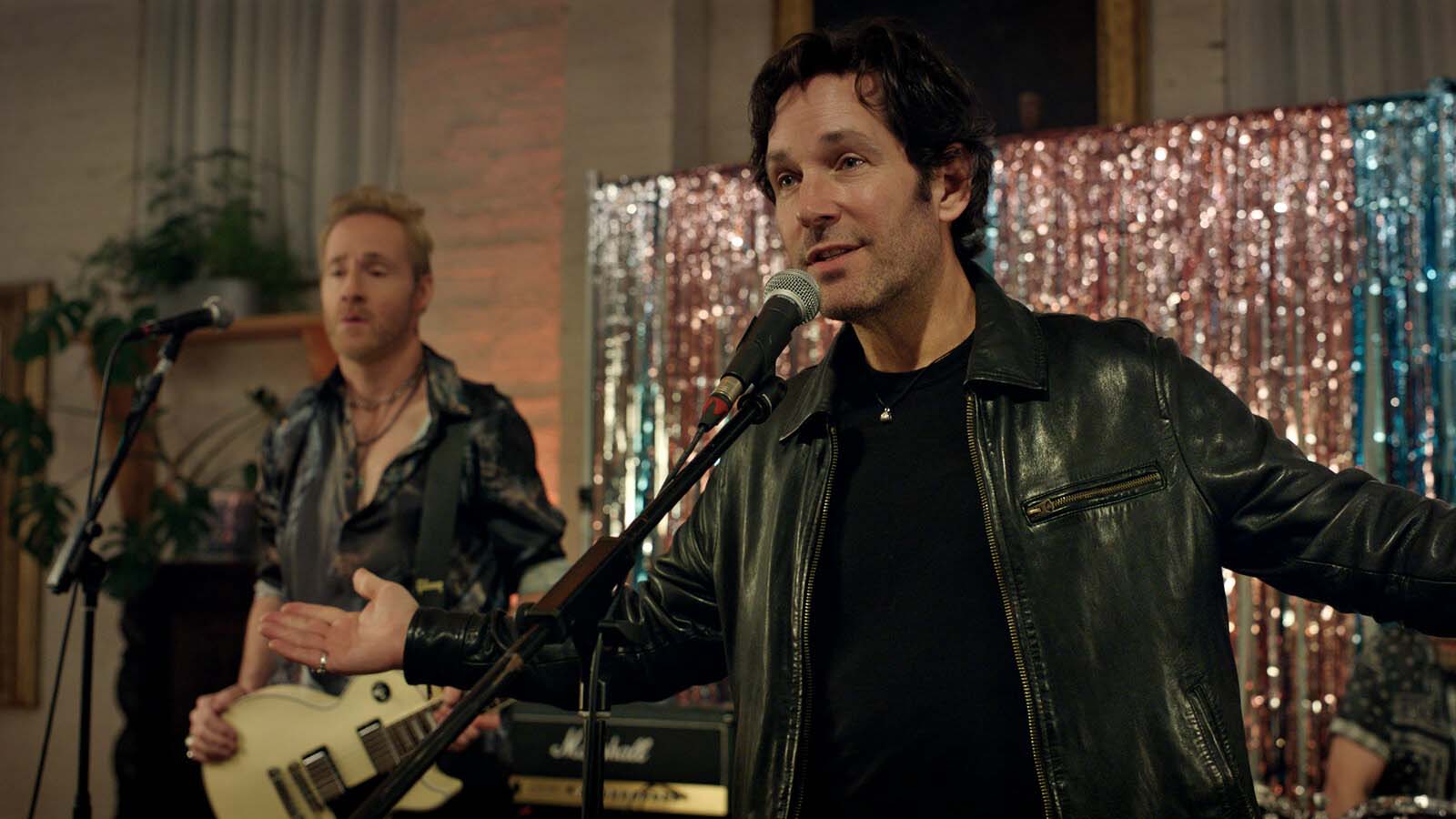
It is a lovely scene – domestic, affectionate and entirely unselfconscious. It also bears a striking resemblance to the emotional terrain of his latest film, Power Ballad, which stars Paul Rudd as Rick Power, an American musician who moved to Ireland years ago dreaming of rock stardom. Instead, he built a different sort of life, falling in love, having a daughter, and becoming the frontman of a successful wedding band.
It is a gorgeous, ordinary life, but when A-list former boy-band star Danny (played by Nick Jonas) hears an unfinished song Rick has been working on for years, and transforms it into a chart-topping comeback hit, Rick becomes obsessed not simply with recovering the song, but with recovering the life he feels should have been his.
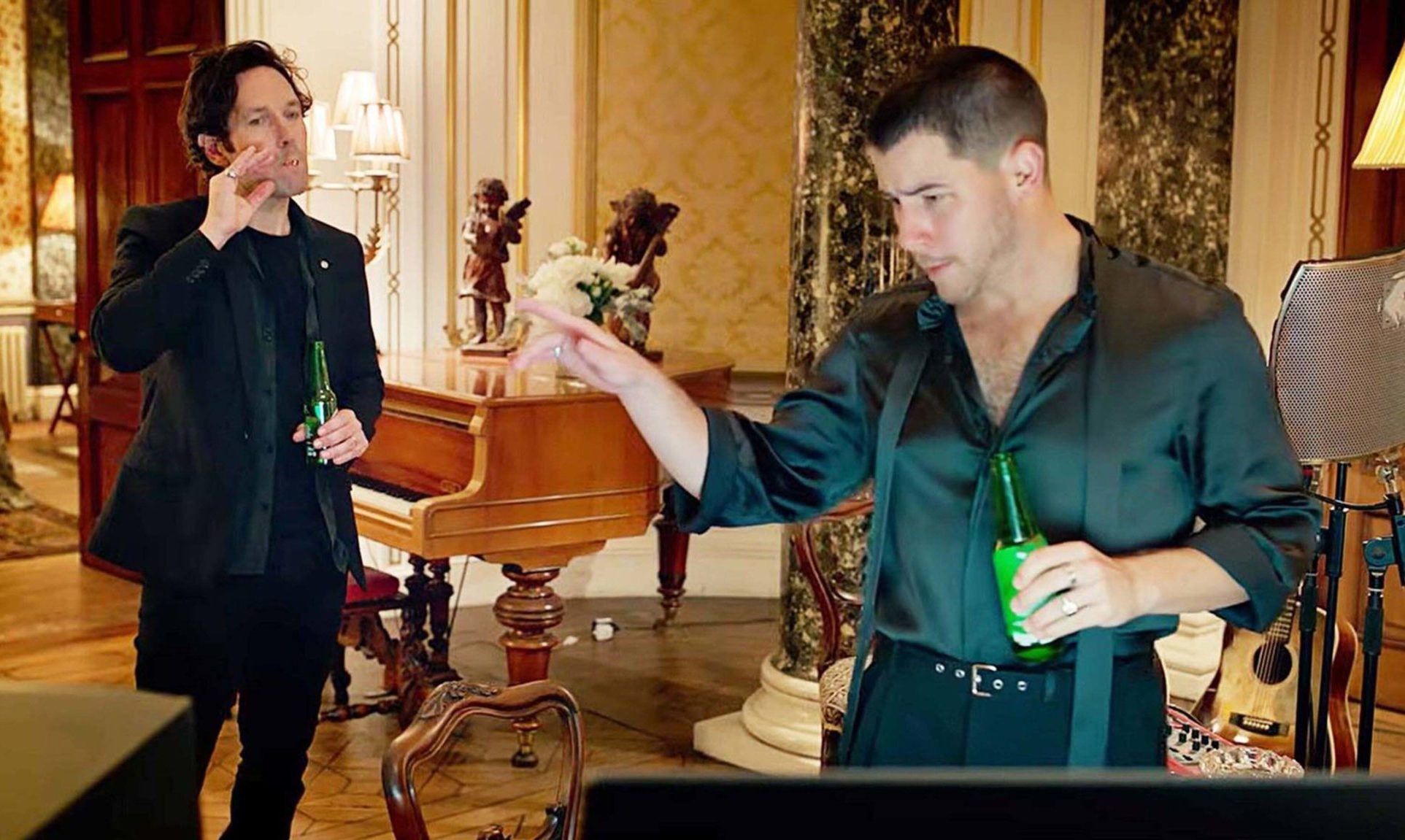
Paul Rudd and Nick Jonas in Power Ballad
The casting of Paul Rudd and Nick Jonas is central to why Power Ballad works, and Carney says the actors could hardly be more different.
“Paul is very fun and bawdy, and hilarious and appealing,” he says. “He wears his heart on his sleeve.”
Jonas, by contrast, remains something of an enigma.
“Nick is inscrutable and deep, and mercurial and fascinating. The more I know him, the less I know him. He’s very, very, very methodical in the way he works.
“He doesn’t leave anything up to chance, yet he knows how to improvise if he needs to. It’s like he could do anything he needs to get the thing done. He’s a remarkable person. Very hard to figure out.”
Several performers were considered for Danny, including Shawn Mendes, but they were wary of audiences conflating fiction with reality.
“A few pop stars were worried people would get confused between them and the character,” Carney says. What impressed him about Jonas was that he had no such concerns. “The fact that he didn’t have any doubts was what drew me to him. I thought, he’s never going to be needy. He’s never going to come up and say, ‘Can you make me nicer?’”
What makes Power Ballad particularly interesting within Carney’s body of work is that his films – Once, Sing Street, Begin Again, Flora & Son – have traditionally been populated by characters who love music more than success. But Rick wants fame – a desire Carney has reflected on over the years.
“I probably wanted recognition and validation a bit too seriously when I was young,” says the director, now 54. “But I found it to be like many things in my life – I just need a bit of it. Now, I could utterly take it or leave it. But I think only because I proved to myself that I could get a bit. I would be like Rick if I had never tasted it.
“If I got past 25 and had never gotten recognition, I think that would destroy me. But I think I’m mature enough now that, having tasted the gin and tonic, I don’t need a bottle of it. I just need to top that off every now and then.”
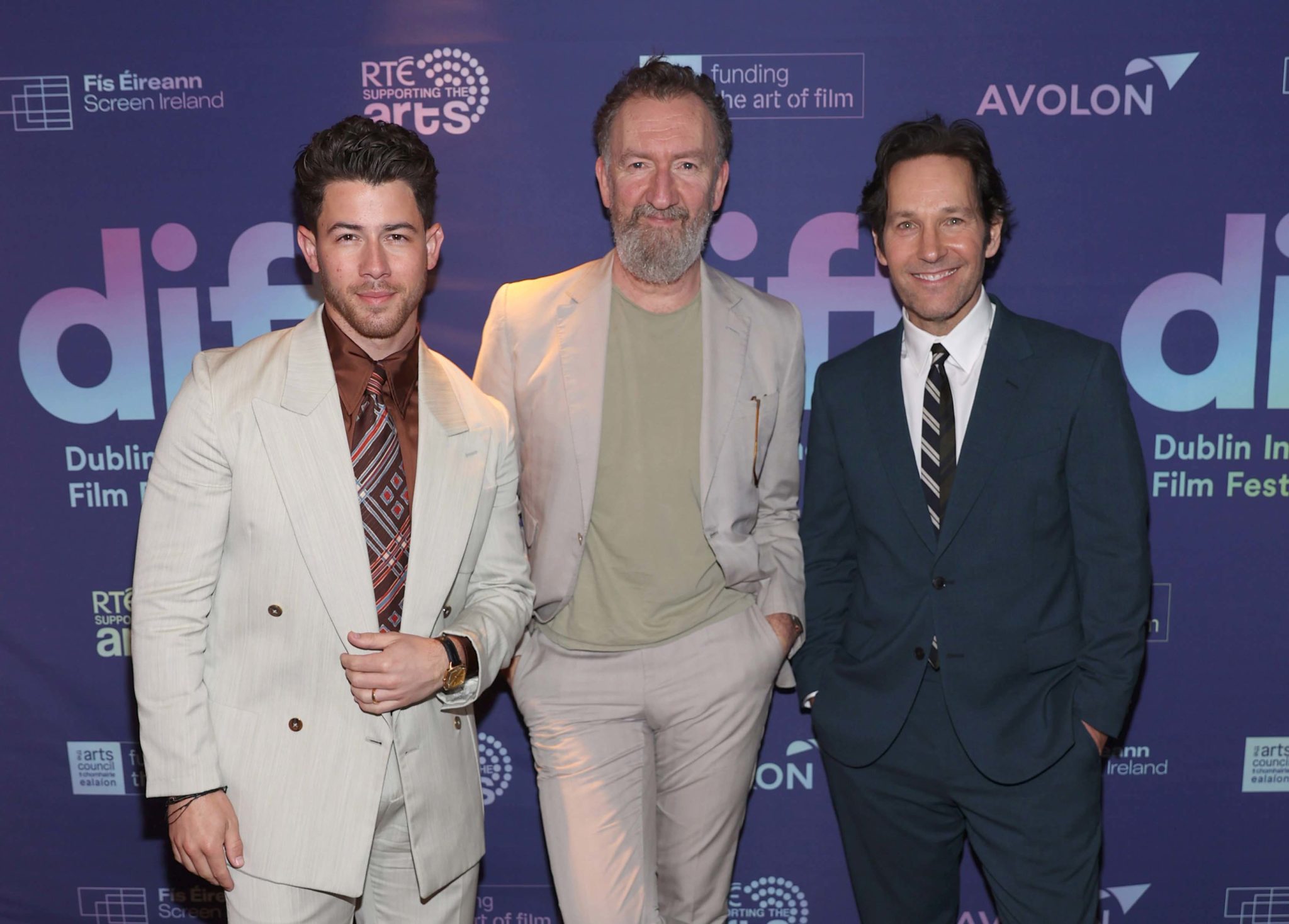
Nick Jonas, John Carney and Paul Rudd at the World Premiere of the film Power Ballad at the Dublin International Film Festival at the Bord Gais Energy Theatre, Dublin. Credit: Brian McEvoy
WHAT DO WE WANT?
Rick’s obsession is the idea of the One Big Break that will change his career and life – but Carney knows from his own experience with Once that the breaks don’t feel the way you think they will. The 2007 tiny-budget film about an Irish busker and a Czech immigrant became a global phenomenon, winning an Academy Award and establishing Carney internationally.
But it didn’t make Carney any money – the deals he signed didn’t let him benefit from the worldwide popularity and Broadway adaptations of the musical – and he speaks about that success with a degree of ambivalence.
“I actually don’t know why I didn’t have a more straightforward relationship with the success from Once,” he says. “It wasn’t plain sailing afterwards. If I look at somebody like Neil Jordan or Jim Sheridan, when they had their moment, it seemed like they were ready for success. They knew what to do next. They knew how to keep it going. I personally feel like I wasn’t ready, even though I should have been ready.
“God knows, I tried hard enough. But I did not know how to react when it happened and I made loads of false moves afterwards, work-wise and family-wise. I did loads of mad things after that success, in a way that you would feel a more mature person would just busy himself with the work and build on it.”
He pauses.
“It’s very hard to express the feeling of getting everything you want, which is what Once was. Once was getting everything I wanted on all my own terms. I’d been saying for 15 years that I could make a movie for nothing, that I could launch people, that I could connect with audiences. I genuinely believed that. Then it happened.”
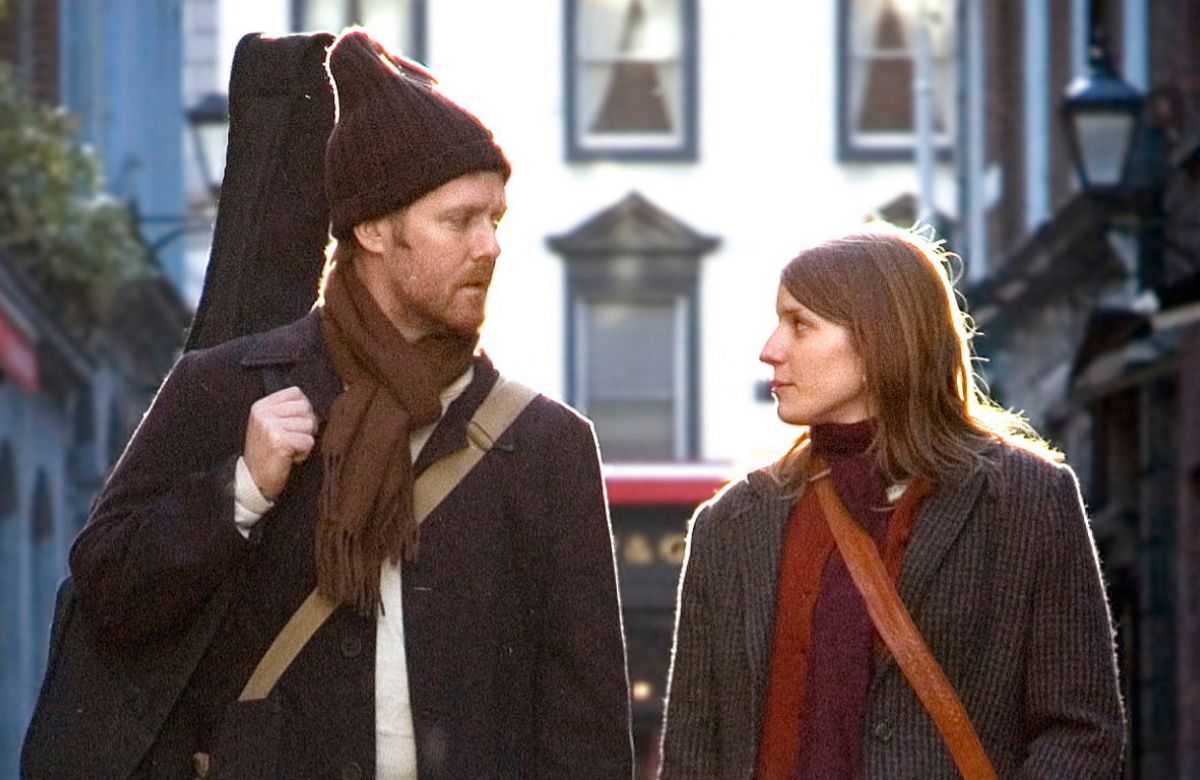
Once
This is the honesty and nuance that Carney has become known for. He is also candid about his relationship with reviews and box office – while many actors and directors loudly proclaim they don’t read them, Carney is already analysing the reviews and returns of Power Ballad (he’s unhappy that UK audiences aren’t turning up in larger numbers).
“I think it’s crazy to say you don’t read reviews. I think you read the first hundred reviews and get a sense of what the reality of the movie is. After that, there are too many. But I don’t buy anybody who says they don’t read them,” he scoffs. “It’s like Christopher Nolan saying he doesn’t have an iPad.”
What interests him is not validation so much as conversation.
“Every filmmaker’s movie is reacting to the response to the last movie they made. They’re reacting constantly.”
But what remains constant in Carney’s work is his commitment to earnestness and sincerity. His films ask audiences to care deeply about music, romance, creativity, friendship and hope without irony. At a time when many contemporary stories seem filtered through cynicism or self-awareness, there is something strikingly unfashionable about that commitment.
Several recent Hollywood musicals have reportedly downplayed the fact that they are musicals in their marketing, as though audiences might somehow be embarrassed by sincerity itself. Carney has clearly spent time thinking about this.
“I mean, I see it in everything,” he says. “I’m always trying to figure that out and evaluate it. But the whole thing of ‘we’ – what do we want, what do we need, what’s happening culturally? – I think it’s getting harder and harder to identify that. It seems like everybody is just at home on these devices, venting and showing off and venting again. They bring out the worst in you. It really is interesting how the phones work.
“They niggle at your worst view of yourself and your worst view of other people. We’re being told we deserve way more. Look at this guy with everything. Look at this girl with the impossible physique. Look at this guy with the muscles. That’s being fed to us at an insane level,” he notes – the theme of comparison that comes up in Power Ballad.
A PERFECT LIFE
Carney’s children sneak into the room again, giggling quietly. Asked whether fatherhood has changed his relationship with filmmaking, he laughs.
“If you’re doing it properly, it has to. When I see the output of some people with children, I think you’ve got to be neglecting something and it’s not your movies... You couldn’t make great films and be a good Dad. There’s just no way… I’ve barely got it together to do anything.”
He says his children have shifted his perspective a lot.
“I’m not as interested in my voice anymore,” he continues. “When I read a bad review now and my kids are in the next room, I now think, ‘They’re going to think their Dad’s a dick!’ Or I think of slagging off Keira Knightley and I’m like, ‘Oh no, I forgot that I would have children one day’, and they’re going to come in and say, ‘What were you thinking, you asshole?’ I think it tempers you.”
They’ve also brought a lot of gratitude to his life.
“I’m quite a competitive person, which is not something that I’m particularly proud of,” Carney says. “But the truth of it is, there’s so many better filmmakers and way more powerful heavy hitters than I will ever be, and I’m glad I’ve been able to sit back and go, ‘I really genuinely don’t feel that I could be having a better life than I have right now. I don’t feel like there’s a better place for me, or that I’d like a little bit more time in Hollywood. This is a perfect life.’ And I kind of think we should all be thinking in that way a little bit more.”
As he says it, Charlie remains asleep on the sofa. The cat has not moved. Off-screen two children wait for their Dad to finish an interview so they can show him the magical projects they’re working on. For a film about the dangers of chasing success, it is difficult to imagine a more persuasive argument for appreciating the life already in front of you.
• Power Ballad is in cinemas now.
RELATED

- Film And TV
- 09 Sep 26
After The Monster: Who Owns a Film When One of Its Makers Causes Harm?


- Film And TV
- 18 Aug 26
Watch: official trailer for Oasis documentary Don't Look Back in Anger
RELATED

- Film And TV
- 11 Aug 26
Final trailer released for D-Day drama Pressure starring Andrew Scott and Kerry Condon

- Film And TV
- 07 Aug 26
FILM OF THE WEEK: Love Me Tender - Reviewed by Roe McDermott


- Film And TV
- 21 Jul 26
Universal Pictures release trailer for Other Mommy

- Film And TV
- 14 Jul 26
