
- Opinion
- 11 Jul 26
We Must Not Lose Sight Of The Importance Of The EU







Ireland has just begun its Presidency of the European Union. Over a six-month period, it will set the agenda for the 27 countries that make up the European family. There is much good that we can do – but skilled diplomacy will be at the heart of it…
The notion of Ireland as the island of saints and scholars was drummed into Irish schoolchildren for many generations. It was, and remains, a creation myth for the Ireland envisaged by Irish Catholic nationalists.
The core message is that, as the Roman Empire collapsed, Europe was overrun by pagan Barbarians and descended into chaos, while the Christian Irish became ever more ascetic, pure, studious and missionary.
Ancient history, perhaps, but as Ireland assumes the six-month mantle of EU presidency, its influence lingers.
There’s a basis for it too. While modern research reveals that the collapse of the Roman Empire wasn’t nearly as chaotic as once thought, early medieval Europe was certainly complicated and messy.
Ireland, in contrast, was fairly peaceful and bucolic. A bit like 20th century Tibet, there were many monks who, in addition to their ascetic prayerfulness, transcribed the Gospels into extraordinarily artful and beautiful books and whose monasteries were centres of learning that attracted scholars from Britain and the European mainland.
Also, fired with missionary zeal, they crossed to Britain and mainland Europe, establishing monasteries and shrines and reintroducing Christian devotion, philosophic thought and learning.
MORE OUTRAGE
Whatever the truth of “the island of saints and scholars” story, it was a masterful branding exercise, a motivational instrument inculcating national pride in Irish moral, intellectual, religious and aesthetic superiority and promoting religious observance, study and asceticism.
And, in its own peculiar way, it endures, permeating much of the critical commentary from Opposition politicians, “civil society groups”, academic experts and commentators on our EU Presidency. There’s plenty of exceptionalism and intellectual, political and philosophical elitism. And preaching.
It’s as though Ireland is (still) an island of saints and scholars, whose people are duty-bound to engage in moral and philosophical missions, to go forth and preach, to hurl from the ditch, object and frustrate and, basically, save Europe from the Barbarians again.
But which Barbarians?
Around any corner, you’ll find folks who blame the EU for something if not everything: the rise in immigration, or Russia’s rebirth, or rules and regulations and increased bureaucracy (generally outcomes of the EU’s commitment to a Green agenda; and to demands for transparency in planning, administration and expenditure, and the like). Or tax. Or whatever pains your particular ass.
The EU can’t win. Notwithstanding the great prosperity that membership of the European Union has brought to Ireland’s people over the past 50+ years the most common commentaries accentuate the negative.
Up here on Hog Hill we don’t share the worries on Irish neutrality in the EU context. After all, the EU hasn’t exerted pressure on Irish Governments to dilute or abandon neutrality. Plus, Ireland’s neutrality is itself conceptually amorphous and vague, which makes its status as the defining expression of our moral order and sense of identity all the more puzzling.
Also, it’s not easy to explain (say to an intelligent 15 year old) why the EU and the US would trigger more outrage (albeit in very different ways) in Ireland, than, say, Russia or Iran do. Or climate change.
We’re not arguing against the imperative for our leaders to condemn Israel, which they do, and to generally harry European leaders to do likewise. But in all the smoke and dust maybe the saints and scholars have lost sight of the EU’s origins, and raison d’etre.
FINANCIAL CRASH
Lest we forget, it started life as a real-world alternative to barbarism, after the greatest war-driven loss of life ever, during World War II.
The carnage was on a scale that we in Ireland, for all our education and sense of moral, philosophical and intellectual superiority (not to mention historical baggage), simply cannot properly imagine. And World War II in Europe was merely the latest and most catastrophic episode of the kind of bloodshed and destruction that had been endemic for almost three millennia.
Remember, it wasn’t Irish saints and scholars who scrambled through the dust to rescue Europe from the Barbarians who had generated humanity’s darkest hour, and most evil power. It was the soldiers of the Red Army and Uncle Sam. Their colossal sacrifice deserves far more respect from neutral Ireland than they get.
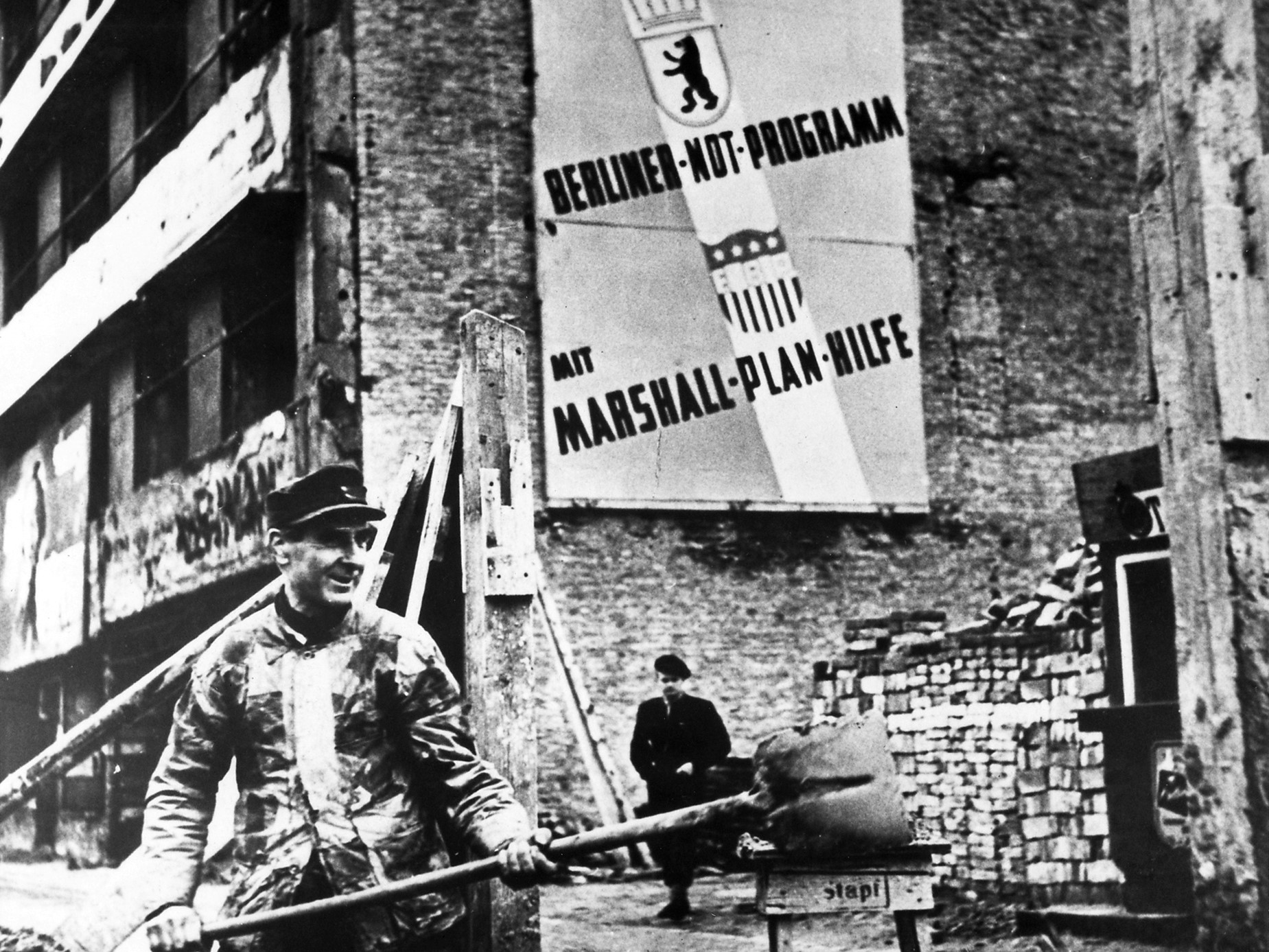
The US went above and beyond. The Marshall Plan helped Europe rebuild and recover. It was resolved to focus on common values, to build partnerships and trade rather than enmities and war, and to use negotiations and agreements rather than tanks and guns to resolve conflicts. And to promote progress, peace and prosperity. The Treaty of Rome followed.
It’s very far from perfect. As with all the best human projects, it’s an ever-mutating work-in-progress, always in motion, never arriving. Mercantile and moral imperatives collide. It’s unwieldy, a sprawling union with a complex series of overarching objectives intended to build competitiveness and living standards. Heeding every Member State’s views severely limits its scope for action. It’s not a single State.
In fairness, Europe has weathered some severe storms, like the never-ending war in the Gulf and Middle East, the rise of fundamentalist Islamic terrorism, the financial crash, the Covid pandemic, Russia’s rebuild (funded in no small measure by sales of gas and oil to EU countries who had endorsed the Nord Stream gas pipeline) and subsequent invasions of Crimea and Ukraine and asymmetric war on Europe. And so on.
Overall, Irish support for the EU has sustained over the years, but there’s torpor too. Some of our MEPs have been embarrassing. Do they reflect what we see it for? Is it just to give us money? Surely not.
SIDELINE ABUSE
There was strong opposition to joining the EEC at the outset. Some was from the left, who saw it as an essentially capitalist conglomerate dominated by powerful States like Germany and France, and that view persists.
Other opposition focused on neutrality and sovereignty, a perspective rooted in the inward-looking, isolationist and protectionist Ireland that existed between 1922 and 1959, when Seán Lemass took the reins as Taoiseach.
Over fifty years later, Ireland is transformed. Yes, it has many flaws but anyone who thinks that it would be an open society and an economic powerhouse without membership of the EU is living on the wrong planet.
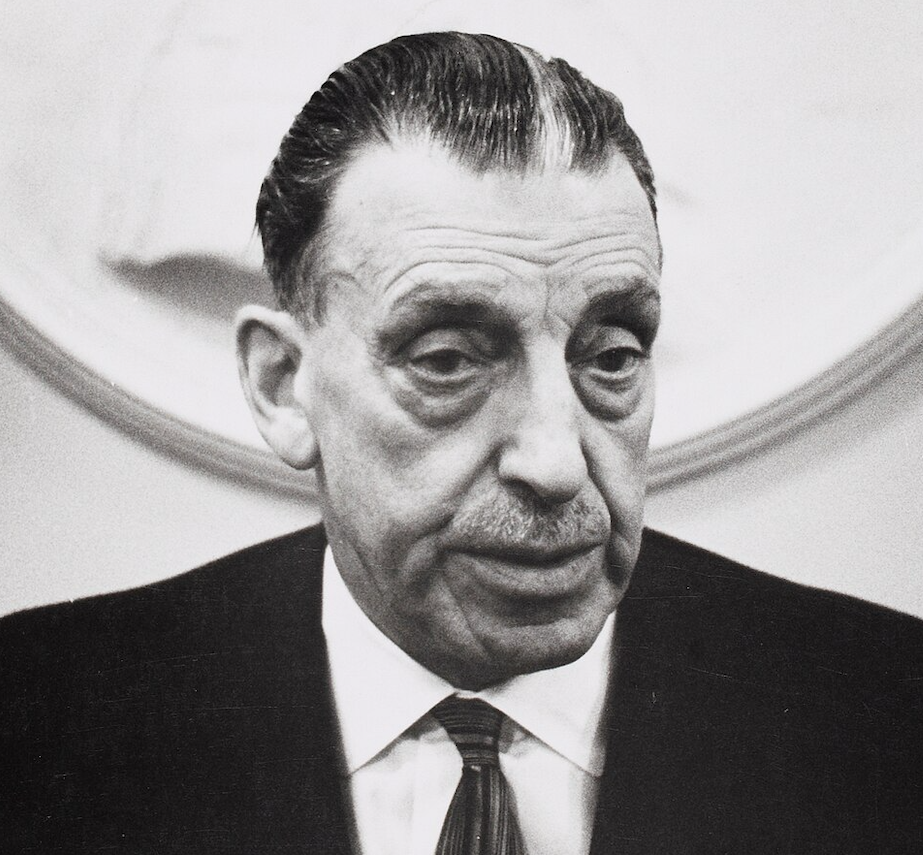
Seán Lemass
We’ve played our part, mostly for the better. In their pomp Ireland’s politicians and officials have been the supreme Europeans. Their great skill in the EU has never been to express and enforce the hard line. Rather, it’s been to accept ambiguity and solve problems by finding the right words, embracing, translating and collating the different voices to find agreement.
Most people get this and accept that there’ll always be limitations. But there are some who’ll always prefer isolation, the pieties and the miseries, not unlike those monks who set forth in canvas currachs to sail to Iceland, there to live on berries, weeds, mushrooms and salmon and, especially, away from other people.
Are Barbarians on the rise again in Europe? Perhaps. But is a pious and declamatory condescension – from the moral high ground – an acceptable response? Up here on Hog Hill we don’t think so. It’s as useful as sideline abuse is to footballers.
Stick to our core beliefs, for sure, but let the part we play be constructive too.
Every able shoulder to the wheel!
RELATED


- Opinion
- 05 Oct 26
KNEECAP show support for Garvaghy Road community

- Lifestyle & Sports
- 21 Sep 26


