
- Opinion
- 10 May 26
Djamel White: "There’s always this elevated status given to these gangland characters – they’re spoken and almost gossiped about like celebrities"








Djamel White on his compelling debut All Them Dogs, interning at Roddy Doyle’s Fighting Words, and his love of Love/Hate, The Sopranos and The Wire.
In Djamel White’s gripping debut All Them Dogs, Tony Ward arrives back in Dublin and finds himself working with Darren ‘Flute’ Walsh, a top enforcer of local crime boss Aengus Lavelle. With Tony needing Flute’s protection to escape retribution for past misdeeds, the duo find themselves negotiating the dangerous terrain of Dublin’s criminal underworld – but when a mutual attraction develops between the pair, things start to get even more precarious.
Set in the suburban Dublin hinterland of Fonthill and Cherry Orchard, a landscape of council houses and industrial estates, the novel has an appealingly raw edge, with Tony’s first person narration adding to the gritty authenticity. I wonder if during White’s formative years in Dublin, there was any kind of gangland backdrop?
“Yes and no,” he considers. “I’m from Lucan originally, and I’m here now as well. I grew up in Cavan, actually, and then moved back to Dublin when I was 16. In terms of how it featured, it’s this kind of presence that exists side-by-side with daily life, I found. It was weaved in and out of estates, and you bump up against it in social circles. I was an early school leaver, and I had interactions with various people.
“I’ve said in other places there’s always this elevated status given to these gangland characters – they’re spoken and almost gossiped about like celebrities. They carry a certain mythos, which I found quite interesting. You could say it’s a peripheral experience, that I’ve been a passive observer. But there was knowledge already in me that I was able to draw from.”
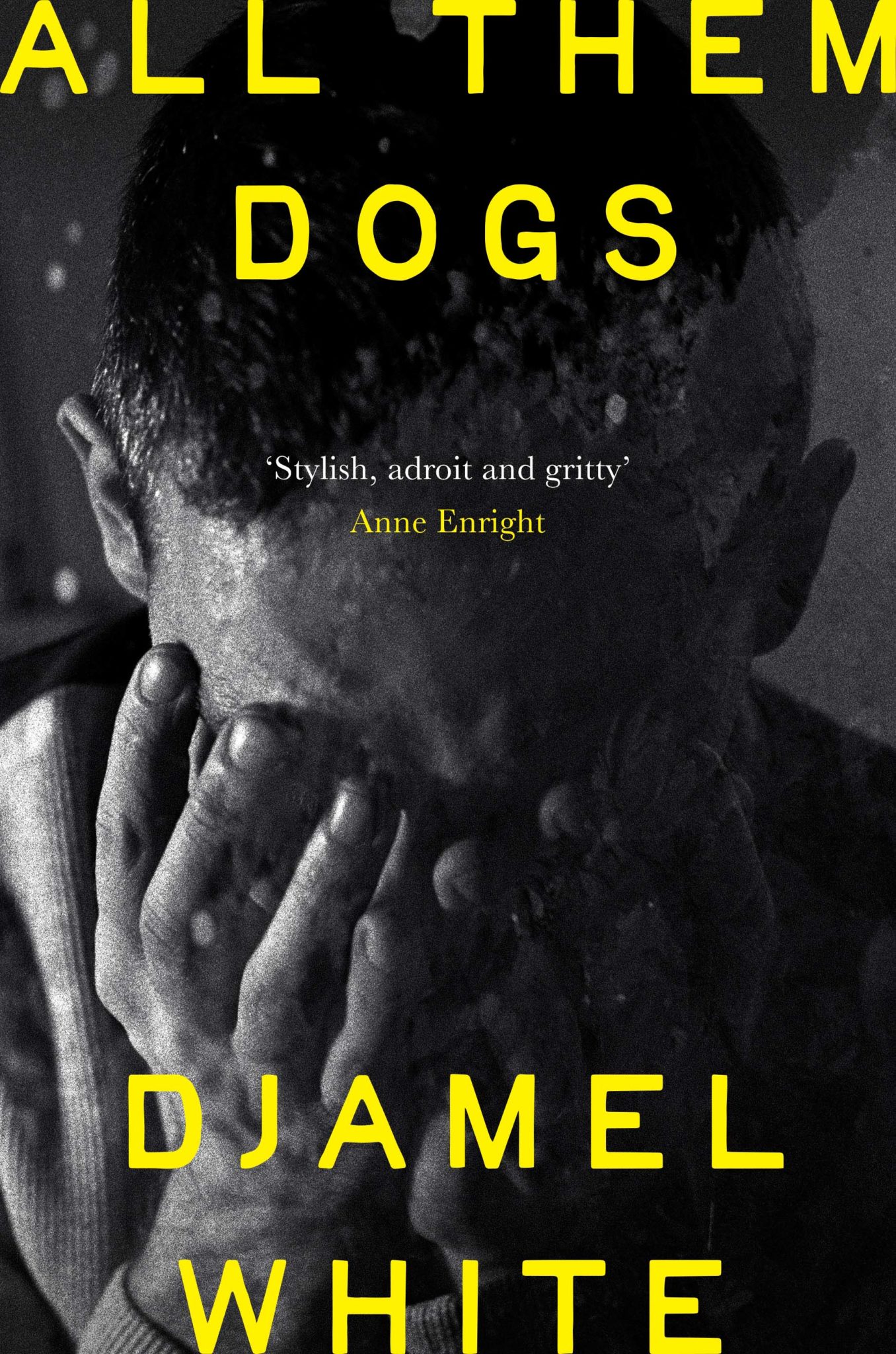
Previously, White has also noted that in allowing a mutual attraction to develop between his two leads, he wanted to flip the gangster genre on its head.
“Early on, that aspect was in the short story the novel grew out of,” he reflects. “I kind of thought, will it go there? Does it go there? For me, the characters lead everything, and their interactions develop as I put them in these situations. The concept of the original story was that Tony has returned to Ireland, and he knows people are after him, so needs to get in quick with a crew to be safe.
“The conditions of all that is he’s only ever really safe in the car with Flute, so you’ve got this very contained environment with two hyper-masculine men. What’s emotionally interesting for me, is how do you break down some of that façade, without it being pastiche? Or without betraying the foundations they’ve built their identity on?”
While the gangster genre is obviously a cornerstone of American popular culture, it’s possibly under-explored in an Irish context.
“I thought Love/Hate was a brilliant, landmark show,” says White. “I loved it. But yeah, it’s not something I’ve seen in written fiction. I thought, ‘This isn’t something that’s been explored in any great detail.’ It’s been in the background, I can think of a few novels that utilise it. But in terms of having a main character in that world, who’s in it to win it, that felt like fresh territory to me.”
Was it difficult to find Tony’s voice?
“Well, I sound very middle class, but I’m not,” explains Djamel. “This is a council estate in Lucan that I’m from, all my family are Dubs. I just didn’t really develop the accent myself, but that environment Tony exists in – it’s there, it’s been in my immediate life. So it was close to me, I found. In terms of Tony’s central dilemma, he longs for companionship.
“But I feel like in life, he’s been beaten down so much in his relationships, mostly with men – his father, his mentor, his brother. He’s got this reluctance to trust. He has to be seen almost as this stereotypical figure, but at the same time, he wants a softness and acceptance. The irony of it is – without spoiling the novel – he finds that acceptance within this world of violence and dreadful masculinity. That’s the conceit.”
In developing the story, was the author influenced by movies and TV, as well as crime novels?
“Probably film and TV the most,” replies Djamel. “I love The Sopranos and The Wire, and the first two seasons of Top Boy – particularly when it was with Channel 4 – are just fantastic. There’s a relentless grimness to that I found very real. I found it intoxicating, actually, just the stories and turmoil that can happen to characters in those worlds. And then all of the mob movies… I mean, let’s be real, some of the best movies are mob movies.”
Having started rewarching The Sopranos last Christmas, I found myself noting how out of step it felt in the current cultural landscape, where even prestige TV has lurched towards familiar IP.
“I mean, prestige TV has changed so much,” observes White. “Now they’re just these elongated stories, where The Sopranos had the balls to have almost feature-length episodes. They had three-act structures with self-contained stories – it was almost like a hybrid of series and serial. That’s how I understand that era of television, and I don’t know how that format would survive today in streaming.”
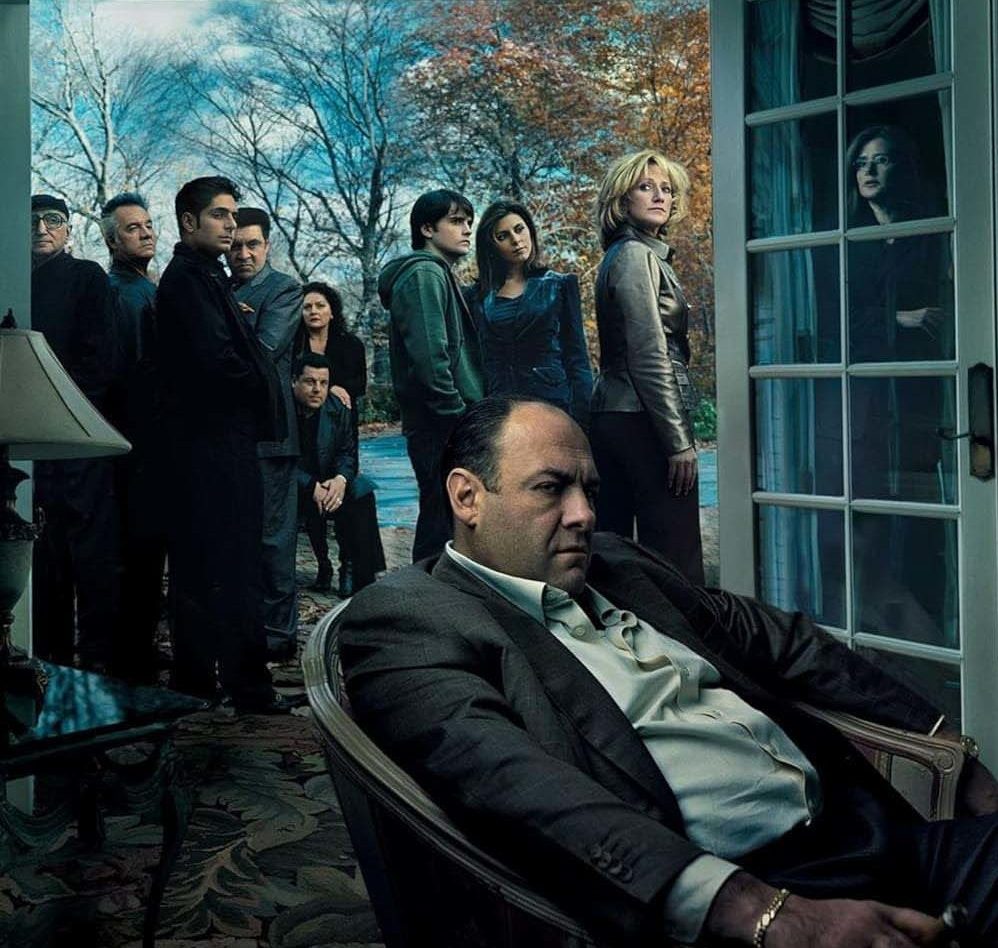
The Sopranos
Also notable was the unapologetic abrasiveness of the protagonists in the show. Gangsters aren’t especially known for socially acceptable views, which of course runs the risk of characters being excessively unlikable – was that a concern for White?
“It’s about striking a balance,” he suggests. “They’re not gonna give a fuck about conventions, and they’re also not gonna give a fuck about social issues. So I thought, there’s a zeitgeist that doesn’t need to be captured, in the sense that it needs to be commented on. But it can be present as these characters move through a Dublin that readers recognise, I think.
“I just needed to stay true to the perspective I’m writing in. So there’s not gonna be these moments where Tony stops and thinks, ‘Is it acceptable I said that?’ He simply does it, and I just have to trust readers already know Tony’s not a model citizen. And the views of the author may not necessarily be reflected in the murderous gangster that he’s writing as.”
More broadly, gangland stories have been everywhere over the past decade with the ongoing Hutch/Kinahan feud. Has White kept abreast of the story?
“I mean, it was everywhere, it was unavoidable,” he says. “I didn’t go out looking for it, but it was there, and that’s what I mean about it having this kind of scandalous quality. We’re unique as a country in that, if somebody gets hit by a car crossing the road, it makes the national news. So when it comes to murder, oh my god, we’re gonna know about it. Which again, is kind of what draws you in, almost against your will.
“I remember in the early stages of all the trouble, I’d be walking to Fighting Words, and there were armed guards on the road at Mountjoy Square. I’d never seen the likes of it – when I say armed, they had sub-machine guns. But yeah, I’ve seen the TV shows, I’ve heard the Nicola Tallant podcasts, but I didn’t necessarily go and do heavy research. Like I said, it was just exposure.”
Co-founded by Booker winner Roddy Doyle, the aforementioned Fighting Words helps students of all ages develop their writing skills. Having interned with the organisation, did White – who also studied at UCD – meet Doyle at any time?
“Throughout the years of Fighting Words, I only met with Roddy a handful of times,” he says. “So I wouldn’t say there’s anything in the form of, like, a relationship between us. I remember the first day I saw him, I was actually in the foyer doing a brief interview with the general manager, Sara Bennett, who’s been an amazing feature in my life. Roddy just happened to walk in.
“I leapt out of my seat and shook his hand. I was like, ‘It’s an absolute pleasure to meet you.’ If I recall correctly, he kind of just laughed! Which immediately dissolved a lot of tension. Unlike any other medium, these behemoths are quite accessible. I think that’s what’s really brilliant and unique about writing.”
• All Them Dogs is out now.
RELATED


- Lifestyle & Sports
- 21 Sep 26
Student Special: "Saving money does not have to mean surviving exclusively on instant noodles and blind optimism"

- Opinion
- 20 Sep 26
Dylan Moran: "Time is literally all we have. It’s all we are"
RELATED


- Opinion
- 17 Sep 26
RTÉ confirms it will not participate in or broadcast Eurovision 2027


- Lifestyle & Sports
- 17 Sep 26