
- Music
- 03 Mar 26
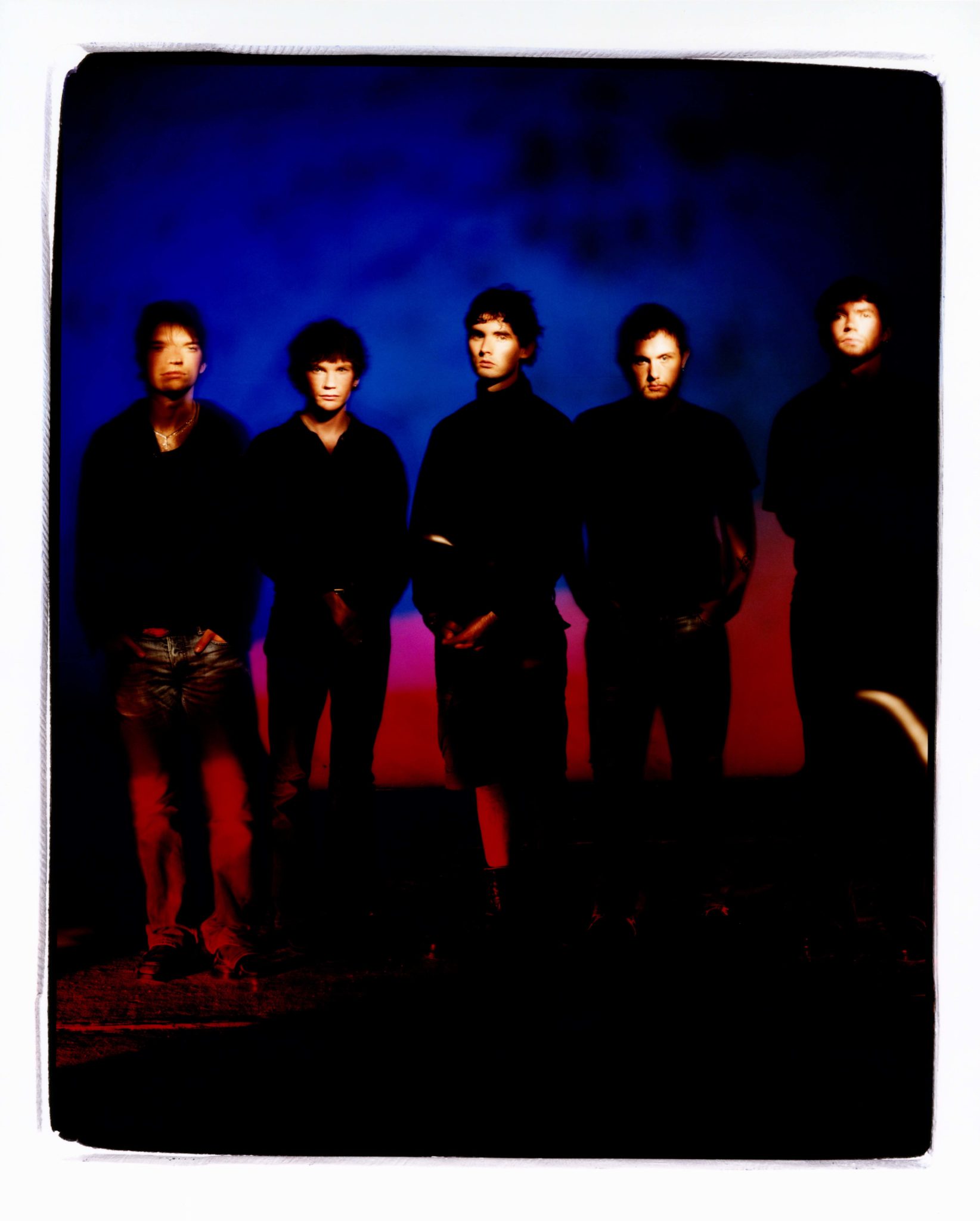
Cardinals: "We think that a band should be a collective thing – not any one person taking the lead, really"








As they gear up for a run of Irish shows, Cardinals tell us how Cork, Palestine, Kevin Barry, religion, and the “romantic” accordion have all shaped their debut album, Masquerade.
From visuals featuring the fiery red neon cross of the Church of the Ascension in Gurranabraher, to lyrics referencing a drink and drug- fuelled stroll from “City Hall to George’s Quay”, the world of Cardinals has been informed, indelibly, by Cork City.
“It’s where we all started properly playing together as Cardinals,” vocalist/guitarist Euan Manning reflects. “We didn’t grow up in Cork City, so when we all came there, it was like we were exploring together, and having all these new experiences together – which bonded us as well.”
These days, those new shared experiences include clocking up streams in their millions, supporting the likes of Fontaines D.C. and The Pogues, being tipped for greatness by major overseas outlets, and getting their music featured in the soundtracks of both Netflix’s House Of Guinness and EA’s Skate. But long before all that – and even before relocating to the city from their hometown of Kinsale – the roots of the five-piece (rounded out by two more Mannings, Finn and Darragh, as well as Aaron Hurley and Oskar Gudinovic) already ran deep.
“Me, Euan and Oskar have been in school together since we were 12 or 13,” bassist Aaron explains. “And Finn is Euan’s brother, and Darragh’s their cousin. So we’re all pretty close already.
“I’d say we spend the most time together out of anyone else in our lives,” he adds. “You start to naturally form a pretty tight relationship. It’s nice – it’s like a brotherhood.”
“We think that a band should be a collective thing,” Euan nods. “Not any one person taking the lead, really.”
That’s certainly the sense you get on their new album, Masquerade, which arrived last month as one of the most accomplished Irish rock debuts of recent memory. It follows their 2024 self-titled EP – which Aaron now considers a portrait of their “formative years”, when they were “still trying a lot of things out.”
“We were still finding our feet,” he resumes. “But it was good, because by the time we got around to this album, we were able to tune in on what we really wanted to do and say. It’s a lot more cohesive, and thematically consistent.”
Embracing both a cool, shadowy edge, and big, arms-outstretched romance, the band recorded Masquerade in London’s legendary RAK Studios, with increasingly in-demand English producer Sam ‘Shrink’ Breathwick, who also worked with NewDad on last year’s Altar.
But with their rehearsal space located up on Dublin Hill, overlooking Cork from the heights of the northside, it was inevitable that the city would find its way into the project. Like author Kevin Barry – or indeed Lisa McInerney – before them, Cardinals found that they didn’t need to have grown up in the city to find rich wells of inspiration within it.
“I read City Of Bohane when I was like 16,” says Euan. “It’s obviously not based in Cork – and Kevin Barry’s not even from Cork – but he spent a lot of time living there. And you can see, within the City Of Bohane, this idea of a seedy, dark, violent underbelly of Cork. That was a big one for us.
“Even outside of that novel, he’s written some great articles about Cork that were very important to us as well, when we were thinking about how we wanted to portray the city, and how we think about the city,” he adds. “Kevin Barry’s brilliant.”
Cardinals’ portrayal of the city even had international music blogs educating their readers on British atrocities during Ireland’s War of Independence, with the release of the Masquerade single ‘The Burning Of Cork’. In some respects, it marks the band as part of a wider movement in music right now, that’s not afraid to lean into the local – and in which identity doesn’t have to be dulled down for broad appeal.
“I feel like it comes and goes every 10 or 20 years,” Aaron notes. “Irish people embrace their locality and where they’re from. And then, maybe you’ll have a generation of people who don’t – and they’ll try to present themselves as something different. It definitely does feel like, at the moment, everyone is pretty proud of where they’re from, and they’re not afraid to show that.”
But Cardinals have also made efforts to distance themselves from the growing tendency to treat Irish culture as a commodity or fad.
“I like to think that we’ve kind of removed ourselves from that scene,” Euan reflects. “Or that thing of artists, in London, trying to lean into that Irishness, for the sake of being around Irish bands. I’d like to think that we’re not around those people. But it is strange, sometimes.”
Even when it comes to incorporating Finn’s accordion into their sound, the band are conscious of the fine line that can exist between gimmickry and ingenuity.
“We’ve become hyper-aware, to avoid any clichés where we can,” Euan says. “Hopefully we’re succeeding there! We’re considered, when it comes to writing with the accordion. And Finn is very considered.
“Also, people see the accordion as an Irish instrument, which it isn’t,” he points out. “As well as listening to as much trad music as he’s been listening to, he’s been listening to Russian accordion music, played on a bayan. He’s listening to one artist at the moment who was a prisoner in the ‘90s, and he recorded an album in prison [Oidopuaa Vladimir Oiun’s Divine Music From Jail], which is throat-singing and accordion.
“We all like the idea of the accordion as a more romantic instrument, and sort of Parisian as well – outside of just its trad circle here in Ireland.”
Credit: Steve Gullick
Across the album, Cardinals were also inspired by social change – most notably, Ireland’s shift from Catholic domination to a considerably more secular society.
“I think it’s on all of our subconsciouses – it’s just been a part of our lives since we were young,” Euan remarks. “For me, as a lyrical writer, it’s about using religion and the Church as a lens, to view things like devotion and love – because those are all things that are spoken about a lot in Mass. And even betrayal. It’s like a tool for writing lyrics, because you can use it to explore all the themes you want – sometimes without having to face it directly.”
On ‘The Burning Of Cork’, meanwhile, Cardinals draw parallels between the 1920 attack on their city by British forces, and the genocide in Gaza.
“It’s always in our heads, but we didn’t set out to write a song about it, really,” says Euan. “There’s a link between the two, simply because the same soldiers that were here in Cork were sent to Palestine after the War of Independence ended. So to have a song called that, and not say that there’s a parallel, is just ignoring that whole thing.
“I also think that we’re often taken out of context there,” he continues. “Some people will see that there’s a comparison being made there, and be like, ‘That’s insulting to the Palestinian people’ – because what happened during the Burning of Cork was obviously tragic, but not to the same scale as what’s happening in Palestine today. They are obviously going through much, much worse. But to say that there’s no comparison is equally inadequate a point to bring up.”
With a run of headline shows across Ireland, UK, Europe and the US lined up for this year, Cardinals’ main focus now is getting Masquerade gig-ready.
“It’s important to be as prepared as possible for that,” Aaron nods. “Naturally the songs are going to evolve and progress on their own, as we play shows, regardless of how much we practice. But with this album, we want to be hitting the ground running.”
• Masquerade is out now. Cardinals play Ulster Sports Club, Belfast (March 5); Savoy, Cork (6); and The Workman’s Club, Dublin (7).


RELATED


- Music
- 23 Oct 26
Sonny Fodera announces IMMA show for August 2027


- Music
- 23 Oct 26