
- Culture
- 17 Apr 26
Mary Costello: "One thing’s for sure, man’s survival does not depend on missile defence systems, or political alliances or any of that"








On the eve of the release of her stellar new book, A Beautiful Loan, acclaimed Irish writer Mary Costello sits down to discuss its colossal twin totems – Albert Camus and Carl Jung.
In Albert Camus’ The Plague, there’s a small, quietly devastating subplot involving old Salamano and his mangy spaniel. Every day, the pair shuffle through the streets of Oran, Algeria locked in a ritual of mutual misery – Salamano curses the dog, jerks its leash and occasionally lashes out. The animal whimpers along beside him.
Then one day, the dog disappears. Suddenly the bluster collapses. Salamano is lost, roaming the streets asking if anyone has seen it. Camus lands the punch softly – beneath the shouting and cruelty was attachment. In an absurd world, even the most miserable routines can become the fragile scaffolding of love.
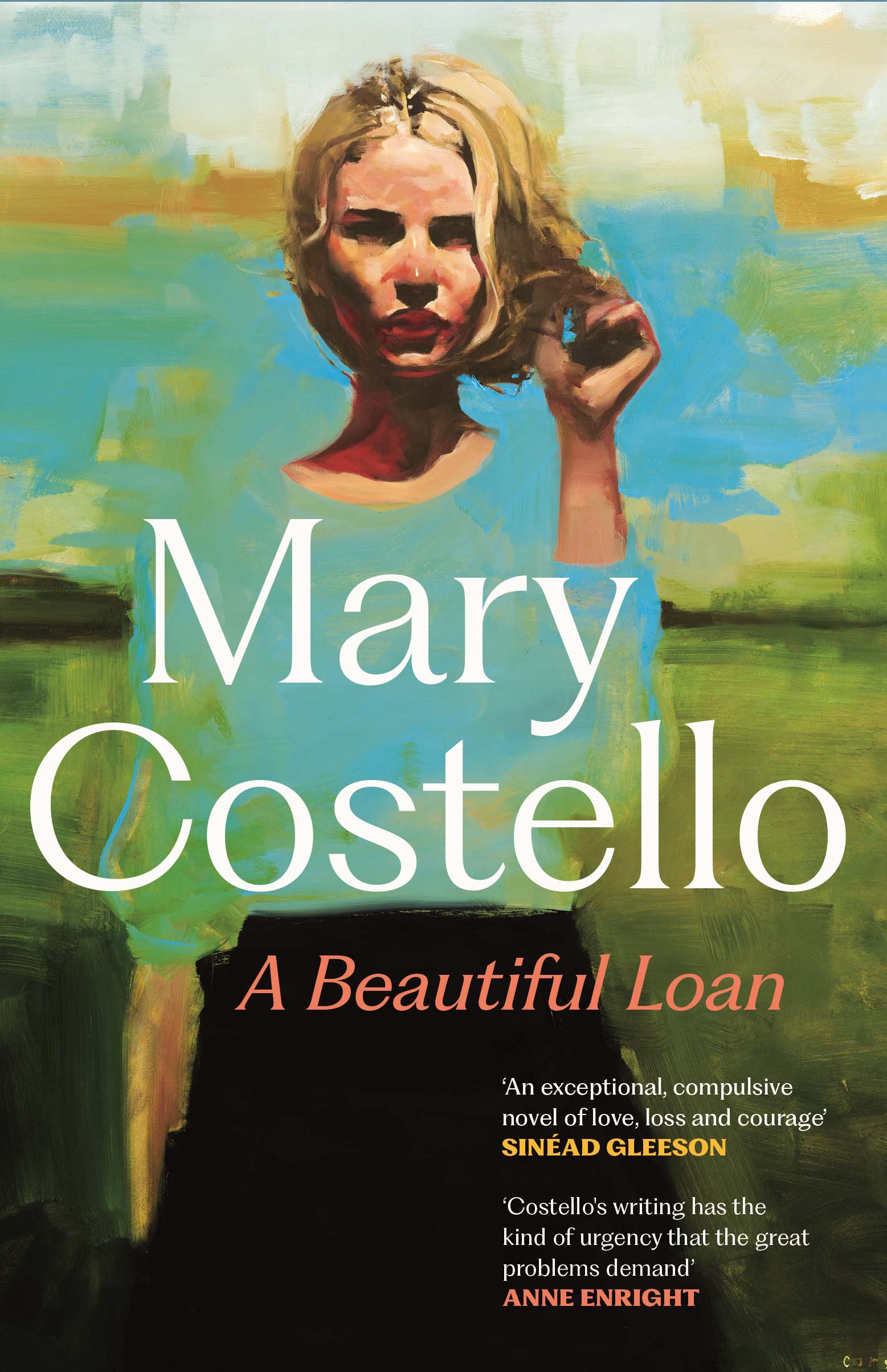
It’s a scene recounted rather wonderfully in Mary Costello’s beyond-brilliant new book, A Beautiful Loan – an exquisite, Trojan Horse piece of art, which poses modestly, but is one of the great existential works of Irish literature in recent times.
A teacher by training, Costello is marvellous company, possessing intelligence sharp as a harvest blade, in a way baleful but playful with it, like a giant tossing road-bowls. When I ask about that Salamano scene, she immediately flexes.
“It’s the ability to hold opposites,” she contends, “to mediate opposites. Salamano is absolutely cruel to his dog, but we also know he loves the dog. How do you contain those opposites? Jung said, ‘It’s the ability of a person to hold the tension of opposites within them’. And that means holding the shadow, our negative side as well as our positive side.
“He gave a famous interview – after the Second World War and the atomic bomb, Jung was asking, ‘Is man going to survive?’ Up until that point, only God had the ability to annihilate humanity. Now mankind can wipe out humanity in massive numbers, and Jung said that man’s survival depends not on nations, but the ability of each individual to become conscious of how much they can bear the tension of opposites within themselves. How much can each of us can recognise and integrate our own shadow side?”
JOURNEY TOWARDS CONSCIOUSNESS
It is a key question. Mary Costello teases out the subject further.
“In today’s world,” she continues, “I’m just bereft at how we are projecting onto others. For a thousand years, Europe projected its shadow side, its negative, dirty traits, onto Jews. Jews were humiliated and dehumanised, culminating in the industrial extermination of six million people in Nazi Germany. Now some of us in the west are projecting our shadow side onto Palestinians, Muslims, migrants. It just grieves me.
“I have been in the pits of despair in the last two-and-a-half years, watching the genocide unfold in Gaza. Certainly, individuals have to do the work. Because one thing’s for sure, man’s survival does not depend on missile defence systems, or political alliances or any of that.”
At book’s end, Costello writes about Han, a Korean word, which Anna Hughes, the main character describes as, “the feeling of being less than whole. I thought of Camus too. There is no escaping Han.” This leads Anna into further admissions, which are blindsiding in their ambiguity – disconsolate yet soothing.
“I’m glad you saw that,” Mary says. “It’s her examination, not just of events in her life, but the vibrations of her soul, the climate of her mind – really the climate of her psyche. So, when we get to the end, she’s free. The two men in her life, her encounter with religion, her encounter with Jung, all of these have played a part in helping her to become conscious.
“I feel that our species, mankind, is the only species that has brought absolute suffering – wreaked havoc on itself and on all other species. I often think if there was a way to measure the quotient of joy versus the quotient of pain and suffering that mankind goes through, the ratio of suffering would be higher.
“We know the universe will eventually die out. The second law of thermodynamics says that everything rises, flourishes and dies back – entropy. We think we go on. We think we’re so special that we are not subject to the laws of physics. This bugs me sometimes. Why do we think we will escape the laws of physics? So, the end of humanity will happen. I say roll on the sixth extinction, because then it would be the end of all suffering and who would not want the end of all suffering?”
A Beautiful Loan swings methodically between the two great totems of Camus and Jung.
“Carl Jung,” Mary explains “is very important to Anna. I studied Jung in my twenties and thirties, and he fits my character and became a kind of guide for me. More than any philosophical or theological text I read in my whole life, Jung has stayed with me. The process of individuation, the journey of the self towards wholeness, the integration of the conscious and unconscious aspects of the mind.
“These are all parts of everybody’s journey, even if we’re not really aware of it. But for Anna – as a child, she was god-minded, so she’s porous and interested in the metaphysical. As she gets older, it is literature that provides sustenance for her. But the lifelong journey is towards consciousness. That’s my own feeling as well.
“In my first novel, Academy Street, Tess Logan was a young woman who went off to America and hankered after home, and had this urge to put her finger on something numinous or divine. It was like looking for the Eden of childhood. I myself equate that human impulse for the divine being really the human impulse for consciousness.”
Academy Street was named Irish Novel of the Year and Irish Book of the Year in 2014 and was shortlisted for the EU Prize for Literature, the Costa First Novel Prize and the International Dublin Literary Award.
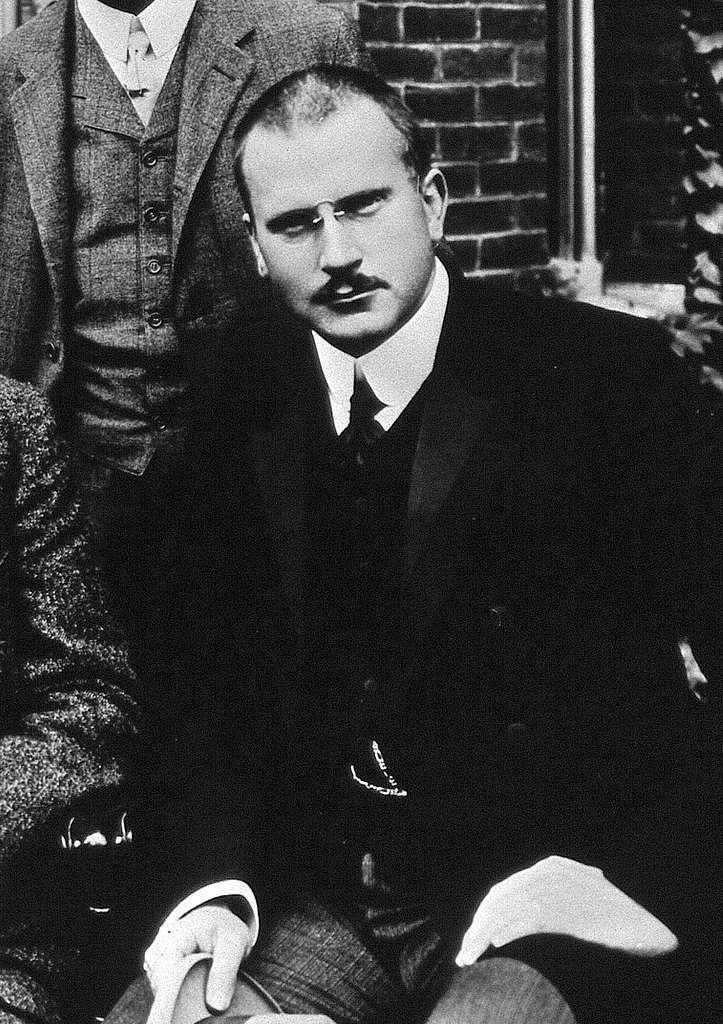 Carl Jung
A GREAT MYSTERY
Back in the present, the exquisite narrative of A Beautiful Loan doubles as an education in Jung, complete with entry level reading list to the powerhouse of analytical psychology. In addition, there are marvellous segues to the oeuvre of volcanic acting force Robert DeNiro (in particular Sergio Leone’s majestic Once Upon A Time In America), and an intrinsic examination of the early life, and indeed unfortunate early death, of Camus.
“One of my favourite books of his,” Mary expands, “is The Myth Of Sisyphus, in which he argues about the absurdity of life. Here we are pushing the boulder up the hill all the time. Here we are going against all this turmoil in life, the existence of all this suffering. What is the point in going on when we know all the suffering exists? But Camus comes down on the side of life, like Leopold Bloom in Ulysses, whose wife is having an affair under his eyes – he still comes down on the side of family, life, lemon soap and sun. Camus does too. People don’t think that, but he does, because he celebrates the existence of the beach, the sun, love making – the sensual life.”
The patron saint of sacred loneliness, Rainer Maria Rilke, also makes an appearance in A Beautiful Loan, when Anna’s psychologist quotes him “defining love as two solitudes that protect and border each other”. That’s the perfect summation of an earlier scene in the novel, when Anna meets her ex-husband in traffic, each encased in their car, unable to connect, seismically marking the end of the affair.
“Anna and Peter meet on a narrow street,” Mary explains, “after they’ve separated and it’s been quite volatile. There is this look of recognition. She’s a little bit afraid he’ll say something, so she doesn’t let down the window. And there is a look between them, and the hostility has gone. And then we know what happens later.
“As people, we all have these moments. They’re pivotal, but it’s only with hindsight we can look at them and examine them. There is, I do feel, that metaphysical element to our existence where we don’t know what’s around us. I don’t necessarily have any truck for organised religions, but I do respect religion. I respect people who believe and have faith in an afterlife.
“I consider maybe there are other realities. I feel that consciousness is this great mystery. It’s the greatest thing that science and philosophy are wrestling with – that area of consciousness we cannot pinpoint. And Anna is in that territory. That’s the area that interests her. So, what sort of an unspoken message passed between herself and Peter?”
• A Beautiful Loan is published by Canongate and out now.
RELATED

- Culture
- 02 Nov 21
Track of the Day: Sinéad O'Brien - 'GIRLKIND'

- Culture
- 28 Sep 26
David McSavage coming to 3Olympia Theatre with Says I To You

- Culture
- 28 Sep 26
Angela Scanlon to take over Sara Cox's Drivetime slot on BBC Radio 2
RELATED


- Culture
- 23 Sep 26
Dublin's Bar 1661 named among best bars in the world


- Culture
- 23 Sep 26
Shortlist for 2026 Booker Prize revealed after judges' "tussle"


- Opinion
- 20 Sep 26