
- Film And TV
- 28 May 26
Ryan Tubridy: "I was in the eye of a very, very mean storm"








Having put the payments scandal that rocked RTÉ a few years ago behind him, the former Late Late Show host Ryan Tubridy has emerged with a new books podcast and a fresh perspective on life. Here, he reflects on that extraordinary furore, what he misses about The Late Late Show, his family’s political background, his recent marriage and how he’s benefitted from therapy. Plus his plans to possibly write a crime novel…
Ryan Tubridy is wearing skinny jeans. I’m not pretending to be HP’s fashion correspondent here. Rather, it’s a telling indication of where the man himself is at right now.
At one point during the interview, he mentions he has barely worn a suit in two years. He was used to wearing them all the time, not just behind the Late Late desk but at social events, as if he was always half in character.
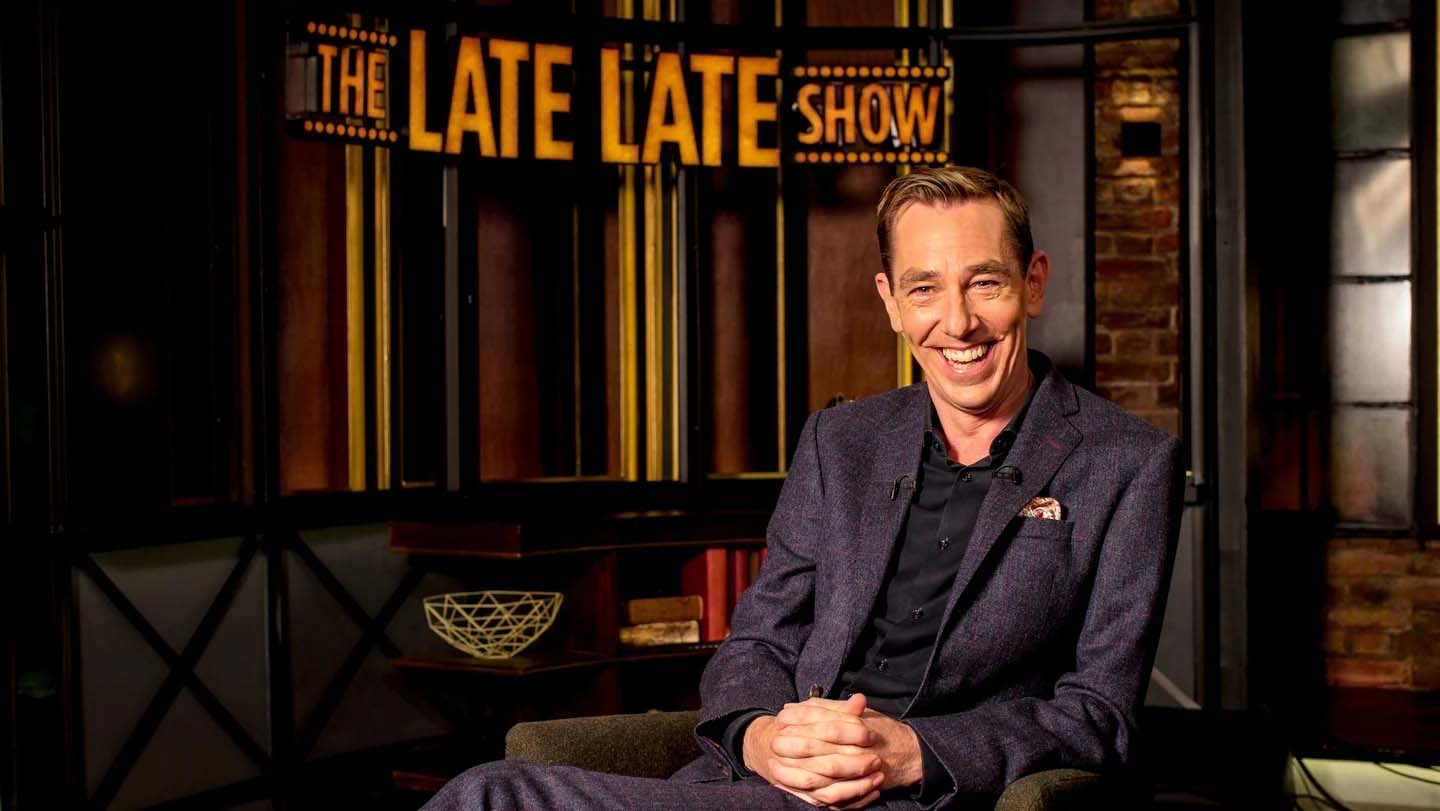
That character – known to more or less everyone in Ireland at one stage – unravelled in 2023 when it emerged that RTÉ had understated his earnings by €345,000 between 2017 and 2023. A Grant Thornton review found no legal wrongdoing whatsoever on his part, but Tubridy took the biggest kicking all the same. As the highest-paid presenter at the national broadcaster he faced the brunt of the public scorn, had his face plastered across front-page splashes, and endured a seven-hour grilling alongside his friend and agent Noel Kelly before an Oireachtas committee. It was a deeply wounding experience and it changed him.
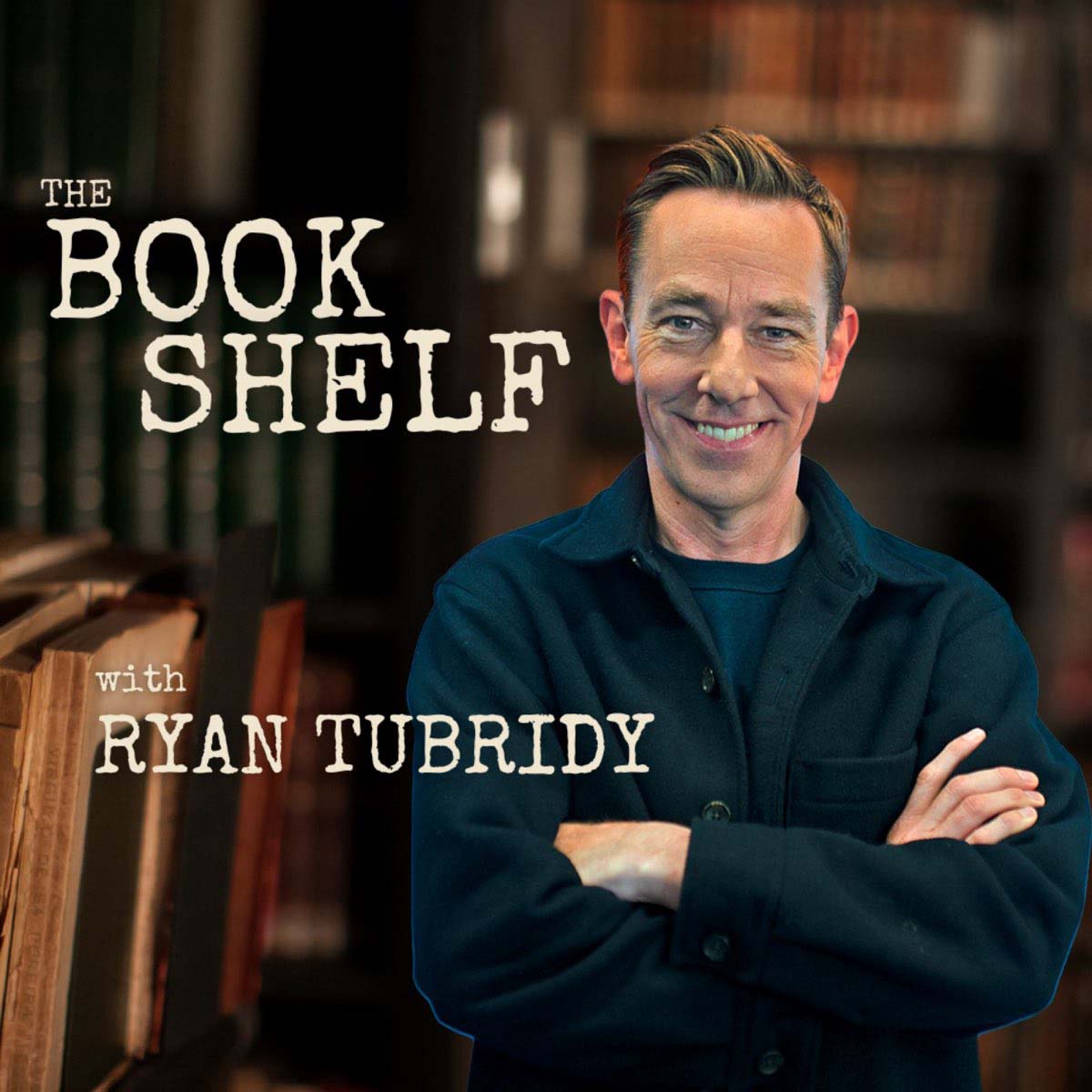
Tubridy has since had a stint at Virgin Radio in London, and now hosts a Sunday afternoon show on Times Radio, alongside a weekend show on Irish local stations. More importantly perhaps, he got married to Dr. Clare Kambamettu, and is now doing his thing on The Bookshelf, a podcast where he can freely explore his love of books with his guests – and take out live, when the occasion suits.
He seems, for the first time in a long time, like himself.
A straightforward opening query – how are you doing?
I’m very well. I’m in very good form. A very good place in life. I’m just on a very different road than I ever expected to be on. And so far, so good.
This show you’re doing is part of that different road.
Yeah, I present a podcast called The Bookshelf. The guest comes on and gives three books from their shelf: one from their childhood, a book that changed their life, and a book that brings them joy. It’s been a great success, and we said we’ll give it a whirl on the road. We did one in the Pavilion. Joseph O’Connor was our guest and it went really well. We went to Limerick with Blind Boy as our guest, and then to Cork with the Brennan brothers, John and Francis. Then we’ve Galway with Tommy Tiernan as our guest, that’s also sold out.
When did your love affair with books begin?
I was brought up in a house with bookshelves around the place. I fell in love with spines of books. I love books physically, I think they’re like little mini works of art. I love book covers. In my house and home, all the spines make up a mosaic, like a painting. So they’re not in any great order on the shelves, I just love having the physicality of a book. My dad was a good reader and books were always around. He never asked us to read or forced us to read, and that’s probably the best way to get a kid to read.
Do you remember the first book you fell in love with?
Enid Blyton was always there because they were short and easy to navigate. The Secret Seven and things like that. I like the sense of adventure and otherworldly Englishness.
You mentioned a few questions you ask your guests. Can I put them to you?
My book from my childhood is generally George’s Marvelous Medicine. That’s largely because I feel Roald Dahl understood that adults are really painful and annoying and children are good, but get bossed around the place a lot. He got that darkness of childhood that was kind of fun. So I loved his books.
Then the book that changed my life was probably one called The Chronicle Of The 20th Century. It was a big annual and every year of history from 1900 to 1987, as it was at the time, was treated like a newspaper article. I got really interested in the Titanic and then World War I, World War II, Vietnam, The Beatles, the Stones, Kennedy, all as newspapers. That got me interested in journalism and questioning and history and pop culture. The book that brought me joy is Kazuo Ishiguro’s Never Let Me Go, which is one of the most beautifully written, poignant books I’ve ever read.
What makes a great book?
It’s pace and thrill. I like the hunt, and I like a thriller, and I like a story that brings you places. I don’t want too much drama, and I don’t want anything too depressing. I think books should be an escape to an interesting place rather than a desperate place.
Do you have a favorite author?
I love Robert Harris because he writes amazing historical fiction as Cicero in the Cicero trilogy. He can jump from ancient Rome to modern Britain and back again. I like Anthony Horowitz. And I love John Boyne. I like the likes of Liz Nugent. There’s a whole heap of young Irish crime writers.
Was there a book in the last few years that was an anchor for you, considering everything that happened?
No. Sometimes when you’re going through a trauma or you’re unhappy in life, you need go-to books that are your comfort books. Louise Penny is a Canadian crime writer who I would describe as being an author of great books like that. You’re getting a crime novel, but there’s a twist of kindness to them, but also edge. I can’t read a book without edge. She marries the two nicely. I always recommend her books to people who are very distracted by life.
Some authors I’ve spoken to recently say that there’s less risk in writing now – and you have to write a certain type of book to be published.
I feel great sympathy for them because they have the book they want to write in them and somebody’s going: ‘Yeah, do you have any cosy crime?’
You’re also competing with AI and the scraping and slopping of AI, which I think must be very disappointing for writers. It’s a very tough business to be in. I don’t envy a writer’s life. You probably have to sell a lot of books to be comfortable, but it’s a vocation.
Talk to me a little more about AI.
From my understanding of it, it’s twofold. One is that companies are feeding books into big word processors and stealing words from authors and their works. And that sounds pretty rotten. Secondly, a writer recently had to have her book pulled because she claimed that somebody in her circle took the book and did some work on it, but she actually put it through AI and the book got published. The good thing about this story is that readers saw it and were reading the book and said, hang on, this is AI. So we’ve become AI-literate.
How AI-literate are you?
I’m an utter illiterate. I couldn’t tell you AI, apart from the odd meme and the odd voiceover where it goes a bit robotic.
What does someone’s taste in books say about that person?
It says that they are reading. I don’t care what their taste is. That they’re reading is enough for me. If they’re reading manuals on how to work a computer, or if they’re reading the back of a cereal packet, or if they’re reading a bus timetable, they’re a reader. I do not know why I’m so evangelical about people reading. I love seeing a book in someone’s hand. It makes me smile. It gives me joy. Whether it’s on the train or on the bus, I love seeing books in hands. I love seeing books anywhere. I’m not a snob. If you’re reading, you’re my friend.
What if it was Mein Kampf?
That would be a tricky one. I’d have to say, ‘Please tell me this is for deep research’. I’d be concerned for them. But I mean, that’s probably one for their psychiatrist.
Fair enough. You’re a history buff too, right?
I love history. I’m not an expert, but I loved history as a kid. My dad was a great, casual teacher, like the way some great parents are. We saw a man in Connemara once. He said: ‘That’s Noel Browne’. I said: ‘Crikey, Noel Browne from the mother and child scheme, it changed everything in Irish history and socially.’ So yeah, he was great for that. That got me interested. We used to go to museums and I was fascinated by the past.
You have historic political connections in your family [grandfather Todd Andrews was a Fianna Fáil activist and associate of Éamon de Valera]. What are your thoughts about Fianna Fáil’s role in making Ireland an oppressive place to live, for women and children especially?
Yeah, I think that the constitution from the get-go was kind of troublesome. The Proclamation seemed to be a much more progressive document to the one that ultimately became the Bunreacht na hÉireann in 1937, which I think was an opportunity missed and probably held us back by a couple of decades. I think that was a pity. It was a very different time politically and to an extent socially.
Your job as a presenter for so long involved judging the national temperature. What did you make of the fuel protests?
I thought it was deeply sad. I was very moved by the plight of those hauliers and truck drivers. There’s an establishment view that would say, well, they’re blocking the roads and they’re a pain in the neck. My gut wasn’t there. My gut was: ‘Look how upset they are.’ I mean, it’s easy for me to say, because I wasn’t affected by it. I wasn’t rushing to try to get to a medical appointment and they weren’t blocking my road. So that’s somebody else’s problem in that sense. But I watched their faces, actually, and I could see almost the veins on their neck. These people were really angry. I don’t think it was senseless anger. I think it was rooted in a deeper upset.
Would you consider joining the protests?
If that was my brother or my uncle or my father, driving his truck to the city in Cork or Dublin, I’d be there with him, because it was desperately sad.
Somebody mentioned that we have a rainy day fund with all the tech money that’s come in. And somebody said: ‘Yeah, well, it’s lashing. Use it.’ And I’m more inclined to lean that way on the seesaw.
Why was this podcast the right vehicle for you after you left RTÉ?
I was always interested in doing a books podcast because books are my thing. It’s my jam, as nobody says… I always loved Desert Island Discs. There’s a sense of that about the show. I interviewed a crime writer yesterday as a guest for the next season. And she said, ‘I’m telling you things I’ve never said before. Because I trust you. And I’ve always trusted you as an interviewer.’
How important is that?
I love that they feel safe, these guests, in a small room. They know I’m not trying to catch them out. They know I’m not trying to make them look or sound or seem small or weak or other. They know that what they say is what we’re interested in. So I’m really enjoying that long-form interview as well. Sometimes, I found on the Late Late, the time you had to interview people was so short. You could never get into it. And it made the interviewer look jumpy. And it made the guests look rushed. Whereas this is a beautiful opportunity to really get into their stories.
You were also working in London for two years. What did that do for you?
It gave me a safe space and a refuge and just a place to breathe. I just needed a little break from the country I love and it provided that perfectly.
Something I’ve picked up from other interviews is that you’ve changed your priorities in life...
I was work heavy. I was working five days a week in the morning on the radio show and then over to TV in the afternoons, and then a big show in the evening. And then a few drinks after the show. Saturdays, I’d be written off from exhaustion and then ready on Sunday to go for a walk, and then it’s Monday. That’s a hamster wheel. I liked it. I loved it. And then it stopped, and I realised I’m glad it stopped because it was a lot. I was giving too much. So now I prioritise things differently. It’s better.
You told the Irish Times in 2021 that therapy wasn’t for you. You’ve gone again recently and gotten a lot from it. What changed?
I wasn’t ready for it the first time. That’s why I said that at the time. It wasn’t for me because I gave it a go and I couldn’t connect with it. Then I gave it another go. I said, ‘I think I’m ready to just iron out a few creases in my mind.’ I met a therapist and I connected. And it’s been great.
Was there a bit of a shock to adjusting to life post-RTÉ? You had been working there since the 1990s.
I definitely felt a life shock. Paul Lynch, who wrote Prophet Song, mentioned that in an email to me. ‘Life shock’. It’s quite an expression. It’s like if you’re driving along and somebody hits the back of your car at quite a speed and you get whiplash in your ear. So yeah, it was life-changing in a desperate way for a while – and in a beautiful way in the long term.
Tell me about what was desperate and what was beautiful.
It was just very rough. The seas were rough that I was sailing on. I wasn’t sailing on them, I was being buffeted. It was tempestuous and it was difficult. I was trying to keep it together. And that was it. I was in the eye of a very, very mean storm. And like in any great story, you know, the storm stops and the sea is calm. And now I’m in a beautiful place. I can enjoy it now. I can enjoy the water and the views.
When the fallout happened, and you were reading the headlines about you, did you feel betrayed by your colleagues in the media industry at all?
No, I think they had to go with what they perceived to be the story as it was presented. I think some people went quite hard. And maybe it felt a bit heavy going. Some people were more reasonable. It depends on the paper. It depends on the publication. But yeah, it was not an easy time.
I know you’ve been asked about this stuff hundreds of times.
Well, it’s not that I mind you asking. That’s your job. You’re a journalist and that’s completely understandable. I suppose part of me feels like it’s an older story now. It’s funny because members of the public will say to me now, ‘Are you still talking about that?’ I say, ‘Well, it’s only because I’m asked. I don’t really enjoy it.’ I don’t mind looking back saying, ‘God, that was crazy.’ But I’m very happy about how the future is great and how hopeful I am and how good things are.
Miriam O’Callaghan said she felt there was a degree of grandstanding during the Oireachtas committees. Is that something you felt?
The Oireachtas experience was quite strange in retrospect. But I tell you what, I sat there for seven hours. And at the end they said: ‘We better let you go.’ I said: ‘You will not let me go. Please ask me every question now.’ I could have stayed there for another seven hours because I wanted it all done. I went because I have nothing to hide. And they did what they did. So I think you should consider, when you’re chatting to members of the Oireachtas, to ask how they felt it went. I know how I feel.
Were drink and drugs something you came across much in showbiz, or that you were worried about or had to be wary of?
No. The Late Late Show was always a fairly safe zone. We enjoyed some great nights in the green room, but that was all fun. A few beers. We didn’t have any craziness in that regard. It was innocent pints and good fun.
What would you say is the biggest misconception people have about you?
That I’m a bit smug. A bit self-regarding. And I can understand that. I think there was a projection of that as part of my time in RTÉ. I probably had a persona. When you present the Late Late Show and you get into that suit, in some ways it’s like putting on your dad’s suit. It’s Gay’s suit or Pat’s suit. It’s a little bit big for me. Then you just get into it and you tailor it down a little bit, and you taper it in, and then it becomes your suit.
You’ve been able to slip out of it recently!
I haven’t worn a suit for nearly two years. I used to wear suits if there was a semi-formal function or whatever. I was just like, ‘What was I doing?’ So you loosen up. So yeah, there are perceptions of me, no doubt about it. I always enjoy meeting somebody who then says, ‘You’re not bad, actually. I quite like talking to you.’ A lot of people reading this will go: ‘I can’t believe they’re putting your man in this magazine’. And they’ll go: ‘I never liked him.’ I mightn’t be everyone’s cup of tea, but come and say hello. You never know what you might find. I’m probably not as bad as you think, and I’m probably not as good as other people think.
But you’ve got to have thick skin as well, right?
Hugely so. Yeah, I have very thick skin. I don’t know if I always had it, but I have it now.
When did it thicken?
It thickens when you’re handed the job of being the host of The Late Late Show. And everyone thinks they could do a better job. That’s when it started to thicken. Then, it gradually became elephantine, which was great. Protects you from brickbats and arrows.
I get a sense that you might feel a bit freer now.
I feel very unshackled, yes.
Is there anything you miss?
I miss a lot of my colleagues. I loved the people I worked with, yeah. And I miss that collegiality. Because they were great fun. We had great fun making the programmes. I was leaving the Late Late Show anyway, so that was fine. I made my peace with that. A lot of the radio people are still my friends and we still meet for pints. I kept in touch with the ones that wanted to be my friends and that’s been lovely.
Social media is the other side to this. I read that at one point you were against it and started using a Nokia?
Oh yeah, I did. At one stage I was getting so fed up with Twitter and so on. That was about 10 years ago. I went to a Nokia and it lasted about six months. I had to stop because my friends were saying, ‘Stop this performance. We can’t get in touch with you. We can’t organise pints’. And I was missing out on the news. So I had to abandon that.
How do you manage social media, having so many followers – and people saying things about you, nasty or otherwise?
Well, the good news about Instagram is that people tend to follow you because they like you. So you don’t get much mean stuff. And if you do, you quietly walk away from it. But it’s a very positive place. That’s how I handle that. I just focus on the good stuff.
Is it hard to not care about what people say?
I’m needy, and needy people need to be appreciated and listened to and heard. That’s why I went into the business. It’s probably a neediness. But I’m also curious. I think that’s more the reason I went in. I love asking questions. I like learning. I like knowing more. I like being educated and being enlightened, whether that’s in a book or in a conversation or in a movie. So that’s part of what we do. I think anyone who puts a microphone in front of them has an element to them that wants to be liked or loved.
Were you into sports at all when you were a kid?
I joke that I retired from sport at the age of nine because I was no use. But I did have a good principal who saw me as a chatterbox and said ‘Here, present the school concert, give that a go’. And I did, and I went, ‘Oh, here we go, this is good’. I was reviewing books for kids on the radio at that time, and I thought, ‘Yeah, this is my thing. Talking. Talking a lot’.
Did you ever feel like an outsider because you weren’t into sports, in a school like Blackrock?
No, in fairness, they weren’t as unenlightened as I thought they might be when I went in. I got involved in the school charity and Vincent de Paul. I got involved in other things. I was involved. I went to watch rugby. You know, I wasn’t angry sitting there at the chessboard, giving out about them. I got stuck in.
You’ve talked about how excited you are for the future. What excites you most?
Well, I got married in December. To an extraordinary woman. We had the most beautiful wedding in Clifden. And Clare (Kambamettu) gives me great strength and hope and love. And she’s very relaxed in a way that I wasn’t and am now. We don’t want the best hotel or the best room. We just are happy hanging out wherever we go. She’s brought an awful lot to my world and to my mind and to my outlook and my intellectual analysis of things. And so between Clare, my daughters, my immediate family and my friends, who I’ve had since school, life isn’t bad at all because I know what’s important. And that’s a lovely realisation. It might have come a little late, but I’m glad it didn’t come later.
Might you even be glad that what happened, happened? Maybe you know who your ‘real people’ are when you go through something like that.
I mean, yeah, I knew they were always there, but I didn’t realise just how amazing they were. That was on me. Am I glad it happened? I wouldn’t wish what happened to me on too many people. Would I change anything? There are things that I’d change in terms of dynamic and communication and so on. But that’s for another day. It’s gone now. The upshot of it is, yeah, I’m weirdly glad it happened. It gave me permission to enjoy a much better life.
Did it change how you view money at all?
How I view money? No, I mean, no, I don’t think so. No.
You’ve written a couple of history books in the past. Would you consider writing again? Fiction or something autobiographical?
Yeah, I would. I wrote a book about John F. Kennedy’s trip to Ireland when he came here in 1963. That story has never gone away from the back of my mind. So who knows if that might pop up again in some shape or form.
Any specific ideas yet?
I was out once with some people that asked the same thing. A crime writer friend of mine, who I won’t mention by name because it hasn’t happened yet, said, ‘Let’s write a book together.’ So we are thinking of writing a crime novel. Based on a chat show host accused of a crime he didn’t commit. Or he might have committed. There’s murder. And we take Agatha Christie’s library and replace it with a green room. And in the green room are 12 people. The runners, the producers, the presenter, the chauffeur, the person serving the drinks. And one of them has murdered somebody. We have a working title and we’re talking about it. So who knows, it’ll be a year or two, but it’s kind of exciting.
You’ve mentioned crime a lot. What is it about that world that appeals to you?
I love the certainty of a crime novel. During World War II, Agatha Christie became so big because there was no certainty in the world. People were discombobulated. And she wrote these short books that were 200 pages: toff gets beaten to death on a plane. Tubby Belgian with a twirling mustache comes in. Figures it out. End. Solution. Culprit found. Sent to jail. I love the arc of that. I like the certainty of a crime story. They bring me where I want to be.
You have a motto. It’s Latin: Forsan et haec olim meminisse iuvabit, meaning something along the lines of ‘Someday we can look back and laugh’.
Oh, yeah. Some might say it’s pretentious, but I did see it written once. I think it’s from the Aeneid. But either way, the point of that sentence, the reason it stays with me, is because the lesson in it is that no matter how bad it is, no matter how intense the darkness is, and how crazy the water is around you, there will come a time when we look back. And in my case we’ll laugh and go, ‘Can you imagine ever going through that again? Can you believe we went through that? Can you believe that happened?’ And you look into your pint almost like a daydream and smile and go, ‘Holy smoke’. And on we go.
• The Bookshelf Live with Ryan Tubridy comes to the 3Olympia on June 8.
RELATED


- Film And TV
- 24 Apr 25
Netflix reveals release date and first look at The Thursday Murder Club

RELATED

- Film And TV
- 30 Aug 24
IFI Cinema to screen Roddy Doyle’s Family

- Film And TV
- 23 Aug 23
In The Middle of The Fields: Final part of series out now

- Film And TV
- 02 May 23
Hollywood royalty Tom Hanks will be attending June’s Dalkey Book Festival

- Film And TV
- 04 Apr 23
Warner Bros. Discovery negotiates deal for Harry Potter series


- Film And TV
- 19 Jan 23