
- Opinion
- 29 Oct 26
On the Pipe: Crack Has Changed the Dynamic, and the Need for Harm Reduction Has Never Been Greater


Crack cocaine has changed what Ireland’s harm reduction services hand out, and has had a dramatic impact on the needs of the people who use it. Tony Duffin spoke to two people who see the change first-hand.
For decades, Needle and Syringe Programmes in Ireland were largely about providing sterile injecting equipment. That has changed and the pipe is now more in demand.
The official data points the same way. Health Research Board figures show cocaine is now the most common drug, other than alcohol, that people are treated for, with 6,535 cases in 2025. Crack cases rose to 1,741, up from 173 in 2017. Of those, 96% smoked it. Almost one in four was homeless.
Harm reduction services pick up on trends in real time. For example, the equipment Needle and Syringe Programmes order and give out, and what they hear from the people who they engage with, casts light on what has been happening on the street.
And it is not hidden. Crack is now smoked openly in Dublin city centre.
Crack has changed the dynamic
Eddie Mullins, CEO of Merchants Quay Ireland, sees it every day in MQI's harm reduction services. "If you were to look at one particular drug and its impact at the moment, it is crack," he says. "Crack has just changed the dynamic."
He described a recent visit to MQI's supervised injecting facility at Riverbank. In the early days, the aftercare room was calm, because people had taken heroin. Now it is chaotic. People are up one minute and down the next.
"There's never been a greater need for harm reduction," he says.
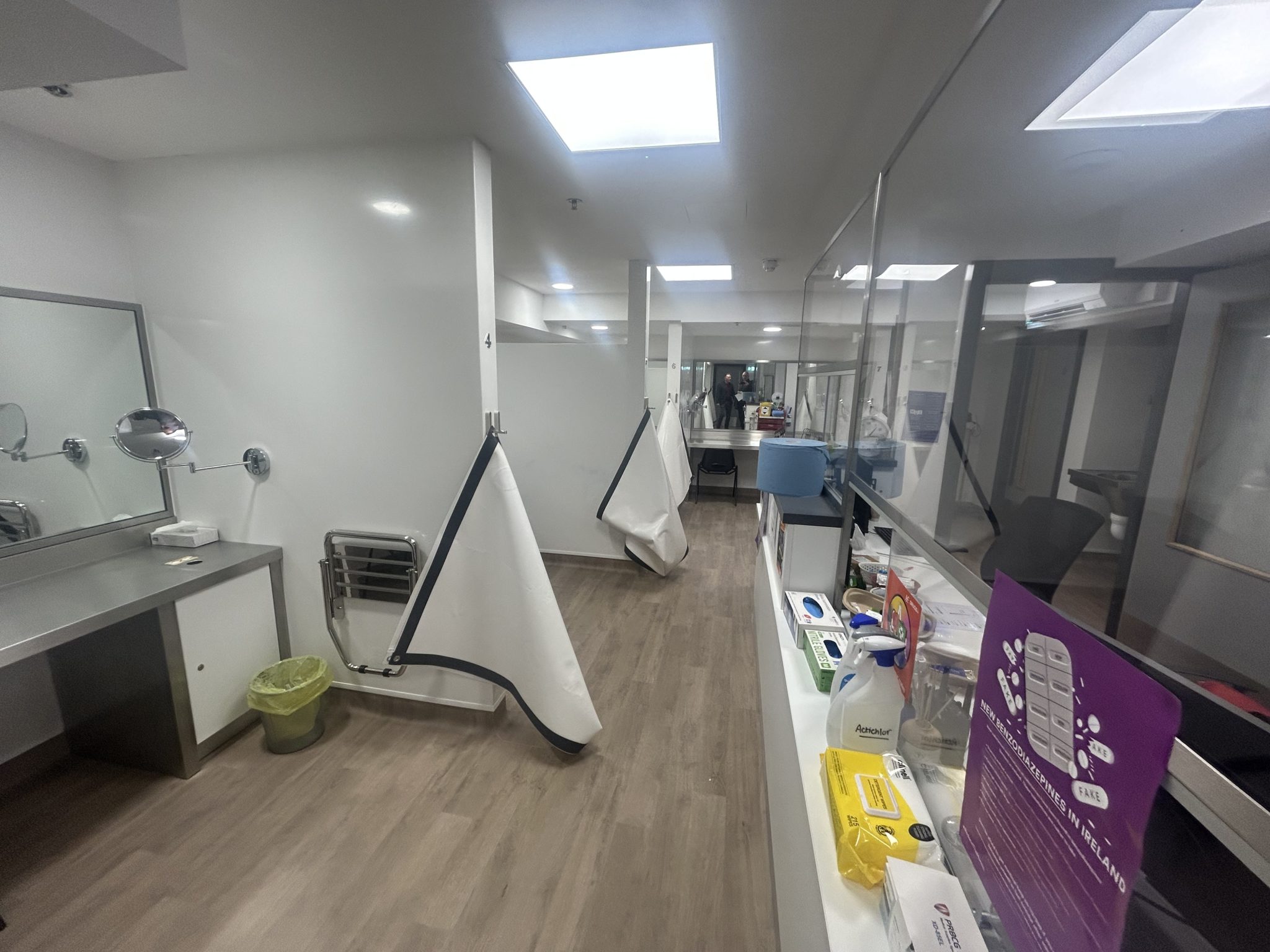
MQI Supervised Injecting Room
Michael Considine, founder and CEO of One-Use Harm Reduction Products, an Ennis-based company that supplies harm reduction products internationally, says 80% of the equipment it now supplies to agencies in Ireland is for smoking. Not long ago, smoking equipment was closer to 20%. The main driver, he says, is crack cocaine.
The shift has come over the past four years. It was gradual, but it is now unmistakable. Most of the demand is for crack, which is now widespread. The item most often requested is the simplest one: a straight glass pipe.
Even in a country this small, there are regional differences. Michael says most demand for pipes comes from the cities: Dublin, Limerick and Cork. The treatment data fit. In Limerick, cases treated for cocaine doubled in a single year, from 221 in 2024 to 446 in 2025.
Pipes can also be used to smoke methamphetamine. Michael says it gets a mention from time to time, but reports are rare. The treatment figures agree. Amphetamines accounted for 152 of more than 15,400 cases in 2025, about 1%.
Why pipes matter
Crack brings different risks to heroin. Burns and cuts to the mouth from damaged or makeshift pipes. Infections can be passed on through shared pipes. Chest problems, paranoia, days without sleep or food. So the basics matter: sterile equipment, food, rest, wound care and a route into mental health support.
That is why harm reduction services give out pipes. Makeshift pipes, such as broken glass, drinks cans or rolled-up foil, cause cuts and burns. Shared pipes carry a risk of passing on infections such as hepatitis C. A clean, heat-resistant pipe of your own reduces both. And every pipe handed over is a contact: a chance to offer testing, naloxone or a route into treatment.
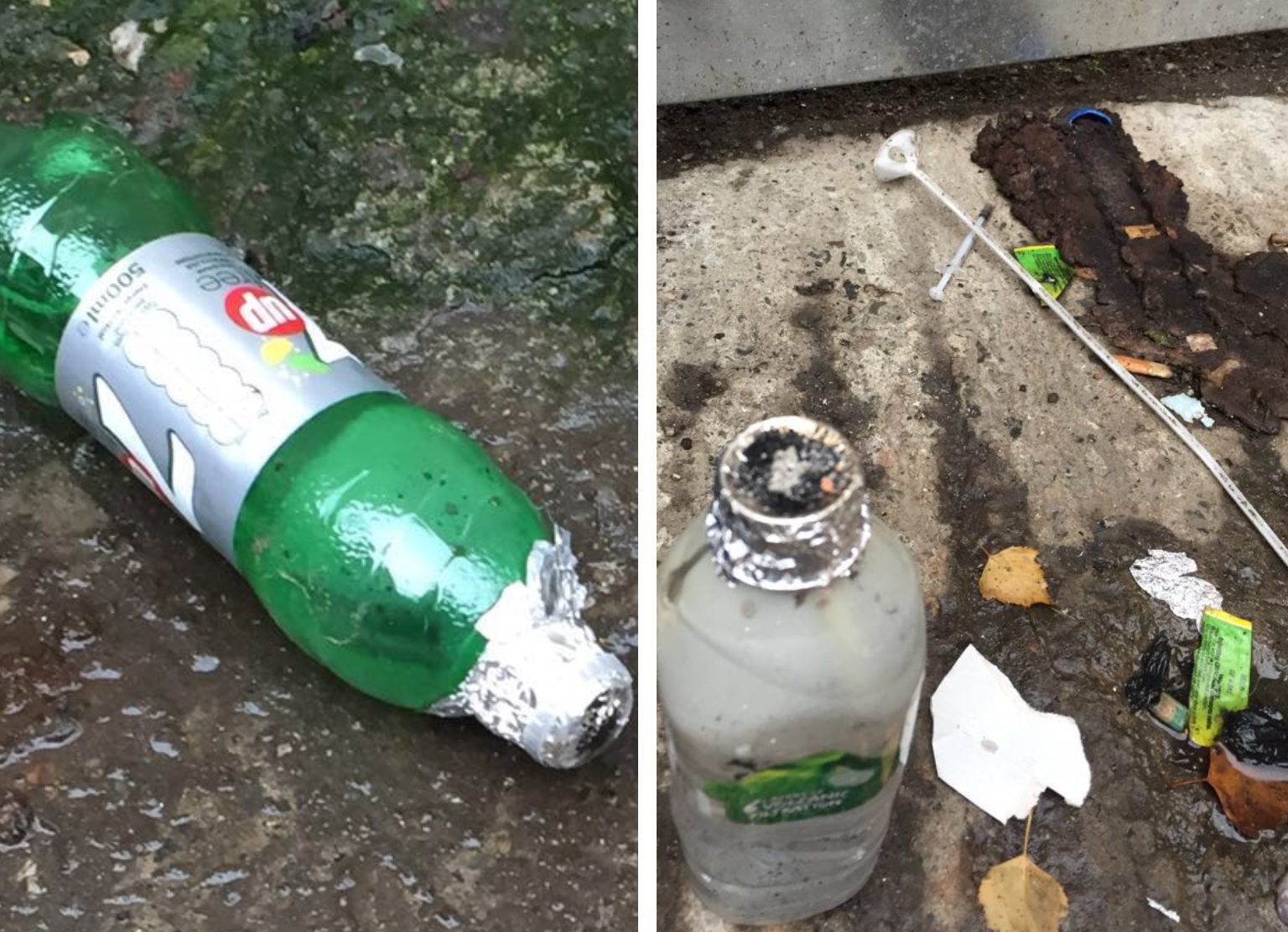
Makeshift crack pipes in Dublin city centre. Credit: Tony Duffin
Unlike heroin, there is no substitute medicine for crack cocaine treatment. There is no methadone for crack. But few people use crack alone. Polydrug use is the norm, and many people who smoke crack also use opioids. Treatment for polydrug use is a door into care, and once someone is through it, their crack use can be addressed too.
What comes next
The new National Drugs Strategy 2026–2030, published in October, recognises the rise in crack. It commits to expanding harm reduction "for all types of drugs" and to adapting it to a new drug landscape. Elsewhere in Europe, drug consumption rooms already provide spaces to smoke as well as inject. The Medically Supervised Injecting Facility at Riverbank is for injecting only. Hopefully that can change soon.
The National Drugs Strategy action plan is where that commitment becomes practice. Crack is named in the strategy but not yet in the plan. The plan commits to "evaluate harm reduction interventions for non-opiate drugs". That is a real chance to innovate, and to shape harm reduction around how people use drugs today.
Harm reduction is cheap and works. A clean pipe costs very little. A hospital admission or a case of hepatitis C costs thousands of euro per case to the health system.
In the 1980s, heroin caught Ireland unprepared. This time is different. We have experienced harm reduction services, and people on the front line who have watched this change build over years. Michael sees it in what harm reduction services order. Eddie sees the impact at Riverbank. Hopefully, the new strategy will give us further means to respond.
Tony Duffin is Lead Consultant with Progressify, Chair of Correlation – European Harm Reduction Network (C-EHRN), a trustee of Harm Reduction International, and co-host of the Hot Press podcast Dealing With Drugs. He is an Adjunct Teaching Fellow at Trinity College Dublin.
RELATED

- Opinion
- 20 Oct 26
Khalid El-Astal: "My wife is my whole life... I can’t move on at all"

- Opinion
- 14 Oct 26
Europe needs urgency and intent rather than pieties and inertia

- Opinion
- 11 Oct 26
U2 at 50: "What a long, strange trip it’s been. For all of us..."
RELATED


- Opinion
- 05 Oct 26
KNEECAP show support for Garvaghy Road community

- Lifestyle & Sports
- 21 Sep 26


