
- Opinion
- 13 Sep 26
Student Special: "How can Irish educators help young people prepare for the lives they hope to lead, if the future is unknowable?"








What are students supposed to do – when we haven’t a clue what the future holds? As the impact of AI threatens the world of work – not to mention the future of the planet – the answer is that you have to take nothing for granted, get stuck into the business of being the best you can be and refuse to lie down and be run over!
It’s hardly fair. If present trends continue, most of today’s Irish students should usher in the next century popping corks and chowing down on print-at-home turkey and ham. What a grand utopian prospect!
They’ll be retired by then, of course, and cushioned by wealth, medical science and technological advances that ensure mental health, perfect skin, self-driving cars, good food and drink. Every need will be catered for, curated and choreographed by the family robots. Maybe even a holiday trek to Mars for the New Year.
Or, maybe not. 2026 students face a tsunami of change. The coming upheaval will dwarf what happened in Europe between the printing press and the microchip. Predictability is dead meat. Climate change is hitting overdrive: all the worst forecasts are proving right. Countries burn and drown, crops fail.
The global economy has been upended by Donald Trump and his puppeteer, the man who is pulling the strings, Binyamin Netan-yahoo. Totalitarians proliferate and cluster world-wide. Warfare is now endemic and increasingly automated, teetering on the edge of Terminator territory.
BECOMING INDEPENDENT THINKERS
But from the point of view of students and the education process, and system, the most pressing pessimism derives from the uncontrolled growth of AI which has broken loose, in academia as in the rest of the world, and is infiltrating every open nook and cranny. It’s great for information-gathering and analysis, and research knowledge, and management – but not so good for personal interactions, commercial transactions, decision-making, work and jobs.
It’s out there without a plan or agreed restraints – and pessimistic experts are forecasting an AI Three Mile Island or Chernobyl-type incident where it all runs riot. Unlike nuclear power, at least in the West, it has been developed and released by private companies headed by billionaire tech lords, who head up companies that are richer, and therefore more powerful, than very many of the world’s sovereign states.
Their technology reflects its creators. At best they might be deemed amoral rather than immoral. But at worst? Hmmm. The probability is very high that the machines will begin thinking for themselves, competing with each other, displaying behaviour as bad as we see from people rather than better, and ultimately ending up in increasingly global struggles for supremacy. It’ll be digital aliens going rogue.
There’s no knowing how it’s going to play out – which brings us back to education and a question: how can Irish educators help young people to prepare for the lives they hope to lead, if the future is unknowable?
Doing so will demand a new energy and direction – and as things stand, innovators in Irish HE institutions struggle for air, in a system that prepares graduates for a society and labour market built on capital and competition.
Students load up on what they need to pass exams and achieve qualifications. Becoming independent thinkers and doers is secondary. Content and delivery are cautious and conservative, burdened by over-management and undersupply.
Predictability is seen as a virtue. Everything is systematised, controlled. The second level emphasis on rote learning has infiltrated higher education. Students even ask for prepared notes.
THE FUTURE WILL DEMAND A FUNDAMENTAL SHIFT
Things have to change. Many professional and tech jobs will disappear. We need to nurture more makers, shakers and breakers. Shit’s going to hit the fan. How much, we don’t know, but we’d prefer not to be in the way.
Of course, forecasts that this or that new technology would wipe out jobs, economies and civilisations aren’t new. And many did. Iron replaced copper. Horses freed raiders to roam. The printing press terminated scribes.
In recent times there were wild predictions about how digital tech would wipe out jobs, and it did. But new skills and occupations emerged, like coders, influencers (yes!), bloggers, tech lords and so on. Extra leisure, and a new focus on health, grew old sports and spawned new ones, like bouldering or mountain biking.
According to a certain Elon Musk, when AI cuts loose nobody will have to work and you’ll have time to do stuff that you want to do rather than have to do.
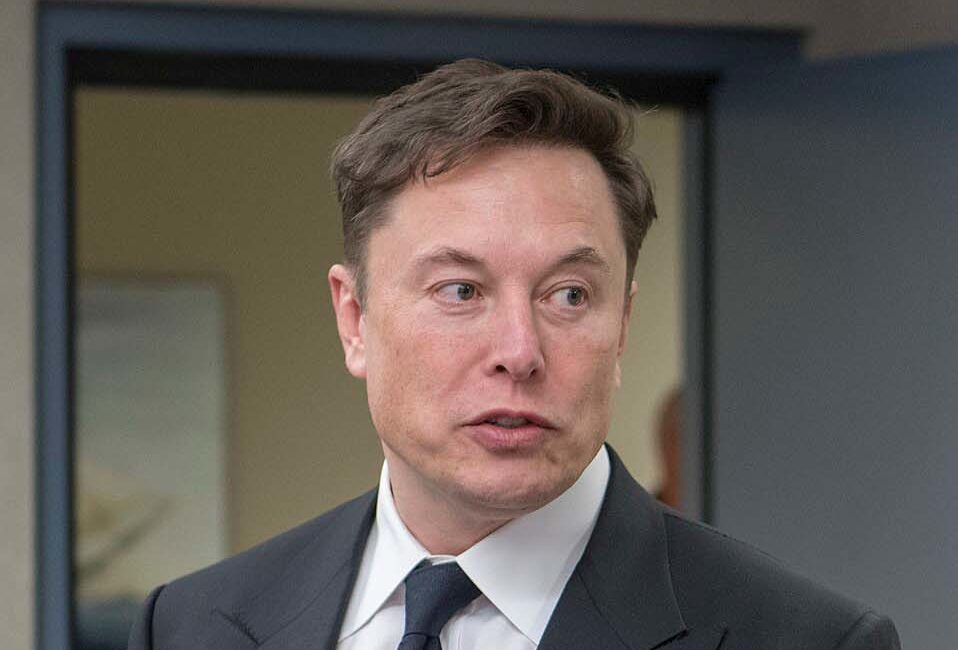
Elon Musk
Right. What he hasn’t explained is how this’ll work. Where will the money come from to support all this game-time? Who’ll pay? How’ll you buy a house? Given the absolute opposition of so many tech masters to taxation, it’s hard to see any of this making even the remotest sense, other than for the guys who own the means of production.
It’s at least as likely – or more likely – that there’ll be massive social breakdown, which may be why tech lords are building bunkers in New Zealand and buying castles in Ireland.
But if he’s right, it still begs a fundamental question: what can students do to prepare?
We can speculate. The education-to-work pathway will be less paved. With AI, a savvy student can harvest all the linear college lecture stuff in about 30 seconds (though what to do with it is an entirely different challenge). So learners may well opt for broader programmes that prepare them for life as well as work.
Hopefully, new kinds of work will emerge, but traditional occupational skills will become the hard currency, enhanced by tech improvements.
In theory, threats from AI should encourage an ability to think independently, laterally and probably subversively, and to ask “the important questions.” But if you are being fed by the dragon that controls the media, the platforms and the propaganda, that instinct may be easily stifled.
Graduates will need communication, improvisational and problem-solving skills, and to be flexible, wily, resourceful and resilient. But how do you develop those qualities? It is the 60 million dollar question.
AFFORDABLE STUDENT HOUSING
All of this suggests that Higher Education would do well to adopt the characteristics of adult education, like self-directed learning, the pursuit of alternative possibilities and acknowledgement of tacit knowledge. One knows more than one can tell.
Similar lines of thought are prompted by a paper written in 2002 by the late American educator Elliot Eisner on what education could learn from the arts about “the practice of education.” He was prescient in his analysis.
“Our lives increasingly require the ability to deal with conflicting messages,” he wrote, “to make judgements in the absence of rule, to cope with ambiguity, and to frame imaginative solutions to the problems we face. Our world is not one that submits to single correct answers to questions or clear cut solutions to problems.”
So, he suggested that “the aim of education ought to be conceived of as the preparation of artists.”
In defining “artists” he cast the net beyond the fine arts to include “individuals who have developed the ideas, the sensibilities, the skills, and the imagination to create work that is well proportioned, skilfully executed, and imaginative, regardless of the domain in which an individual works.”
His observations remain enormously pertinent in 2026. For example, he endorses the way the arts “teach students to act and to judge in the absence of rule, to rely on feel, to pay attention to nuance, to act and appraise the consequences of one’s choices and to revise and then to make other choices” – thus integrating thinking and feeling. And so on.
One thing is certain: we can’t go on as if nothing’s changing. If we do, the ground may well be swept from beneath our feet.
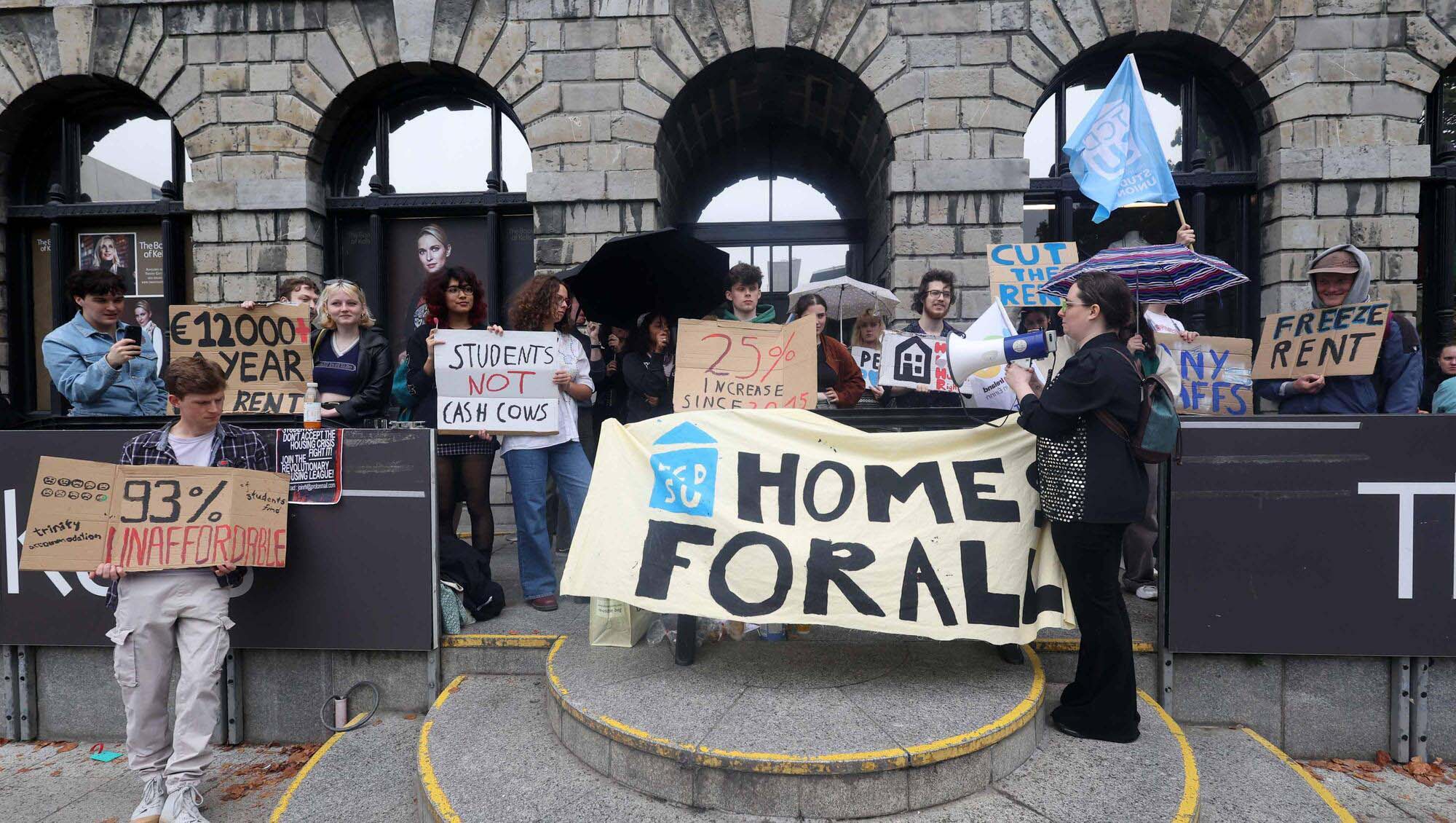
Students protest the housing crisis
But up here on Hog Hill, we don’t sense any great urgency in the national chatter on education. The state’s attention span, like the media’s, is short and focused on what claims attention, like league tables or smart-phones for teenagers – rather than what deserves it, such as robust mental health supports or affordable student housing. That is such a fundamental issue that it beggars belief that it has been so hopelessly mismanaged and neglected.
It’s time for those in authority to wake up and smell the coffee.
But don’t hold your breath. Instead, get active yourself.
Read the full Student Special in the current issue of Hot Press:
RELATED


RELATED


- Opinion
- 27 Feb 26
IRMA warns of AI threat to €1 billion Irish music industry

- Opinion
- 15 Jan 26
X bans Grok AI from creating sexual deepfakes amid backlash

- Opinion
- 13 Jan 26