
- Opinion
- 14 Oct 26
Europe needs urgency and intent rather than pieties and inertia







The EU is alive and well. We need to more fully acknowledge just how much it has contributed to Ireland’s relative well-being. We also have to work at strengthening what is good about it – and avoid banana skins.
And so, the choppers rattle and hum, sirens wail, flags fly. Ceremonies are held, business is done and delegations come and go. For six months, Ireland holds the Presidency of the European Union. It’s a key part of the complex management and oversight of an entity of 27 nations, each with its own separate Government, electoral system, political culture and historic identity.
Ireland’s EU presidential record is good, characterised by constructive engagement, consensus and collaboration. Quietly effective, you might say, focused on achieving as much as possible in the given time-frame. Observers continually mention how the Irish paved the way for German reunification in 1990 and , again, the major eastward enlargement of the EU in 2004.
The origins of the EU lie some 75 years ago, in the blood, dust and death of the two huge European wars of the 20th century. Since then, as the EU, it has become a powerful bloc of 27 independent and interdependent countries. And Europe has known peace and prosperity. Investment in education and training has paid off, boats have risen with rising tides, and living standards have been significantly raised. These are facts.
But now, as was glumly acknowledged by EU President Ursula von der Leyen in her 2026 State of the Union address, the set of assumptions that guided those developments are gravely threatened. We are, she said, in “a complex age of great possibilities and great perils, which all countries are seeking to navigate.”
No argument there.
ALLY TO THE WEST
Under Donald Trump, the US has pivoted away from the Atlantic alliance forged in the aftermath of World War II, to embrace and endorse some very illiberal ideas and oligarchies and, through tariffs and trade embargos, attack the open-market trading approach the EU espouses.
The world is now, said von der Leyen, openly hostile. A territorial war of aggression rages “on our continent” – a reference to Russia’s invasion of Ukraine – and others close at hand, in the Middle East and the Gulf. A “battle of narratives” is seeking to weaken confidence in Europe and to paralyse our democracies.
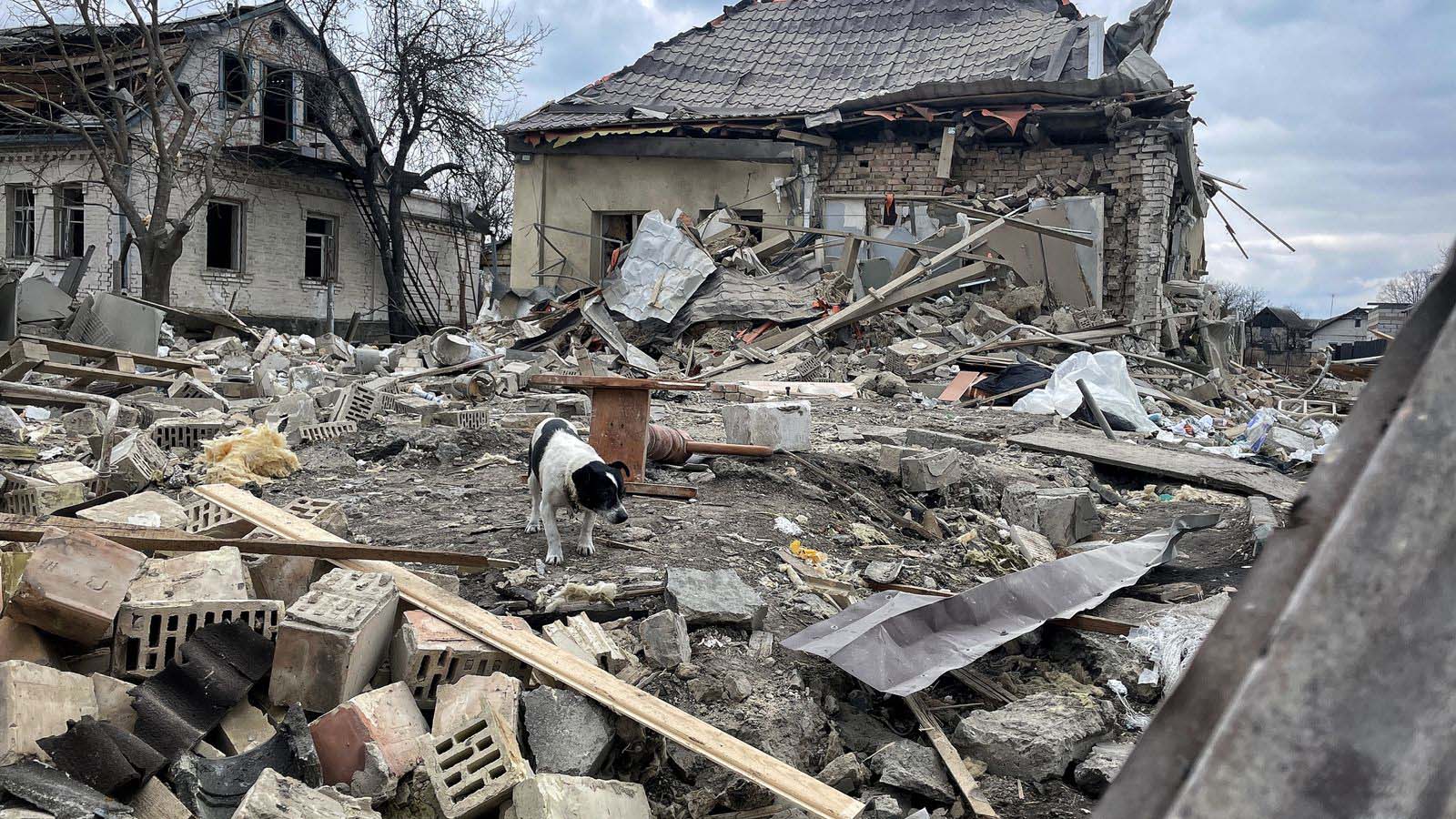
There are, as we all know, equally pressing challenges at the granular level of people’s lives: the rapidly rising cost of living and housing, the speed at which change and technology are affecting jobs, societies and political discourse. And the never-ending need to build and build and build.
The agenda von der Leyen set out for the EU is “to build an economy where innovation and energy flow across borders. Where companies compete and grow across Europe, and savings finance our future”, and she offered a long list of plans and initiatives to speed up actions, cut red tape, further strengthen the green transition, secure cheaper energy, build Europe into an independent tech powerhouse, tackle climate change and control AI.
There’s to be “the first-ever” European-level Housing Act to tackle short-term rentals and housing speculation. Also, a Quality Jobs Act; continued commitment to the European Pillar of Social Rights; and investment in the regions.
To build climate resilience, there’ll be a European Climate Insurance Alliance, a European Heatwave Plan and a new European Water initiative.
On Artificial Intelligence, the AI Act will put guardrails in place and there’ll be a partnership with “like-minded partners like Canada, the United Kingdom and others.” In the same vein, the EU is cultivating a new Atlantic partnership with Canada for “a common prosperity and economic security space”.
The proposal that Canada be the first associate member of the EU isn’t quite the massive leap that some imagine. It’s already a member of the European chapter of UNESCO. It’s also likely to be good for Ireland, the EU’s most westerly outpost. Suddenly, unexpectedly, we’ll have an ally to the west other than the USA. Win-win, we say.
CALL FOR CHANGE
Not everything is as straightforward. In 2026, it’s a sad new reality that security and defence are central issues. Peace is on hold and, as threat levels climb, Europe must be prepared. So, there’s to be “a new European security strategy to address hybrid threats: cyberattacks and sabotage, arson and drone incursions”.
It’s a challenge. Europe is a conglomerate of 27 nations. Its decision systems are slow, built for consensus and compromise, whereas responding to attacks – and they are happening – needs to be immediate.
Neutrality advocates will protest, but – with Russia upping the ante, and the US siding with the far right in Europe – the question is a genuine one. How can Europe agree on a coordinated response to deter escalation and mitigate the impact? With Ireland’s handful of helicopters, small ships and a few planes? Or by calling in the Brits to patrol our territorial skies? Nah, it’s no longer tenable.
The blood-soaked Israeli war on Palestine illustrates the European conundrum.
Ursula von der Leyen’s observation that “the deep suffering in Gaza and unchecked settler violence in the West Bank have deeply affected Europeans”, is fine as far as it goes. “The Israeli government’s decision to advance the illegal E1 settlement project is unacceptable”, she added. But she admitted that last year she had “called for Europe to act, proposing a number of measures” – but without success.
“Member States have been unable to build the necessary majorities for a unified response,” she stated. “Some Member States have moved ahead. Others are considering doing so. (But) When Europe is divided, it cannot change the course of events.”
Hence the call for change.
At the end of the day, the goals are not the problem; achieving them is. That is a challenge which people across Europe must find a way of resolving.
A SIGNIFICANT ACCELERATION
People love Europe best when it works. And it has worked for Ireland in far more ways than people realise. Over €112 million of EU money is being spent on the upgrading of both Dublin and Cork ports. €34 million was awarded from the Horizon Europe fund for an aerospace project pioneering sustainable hybrid electric technologies for regional aircraft. Even the Luas red line was EU funded to the tune of €82.5 million.
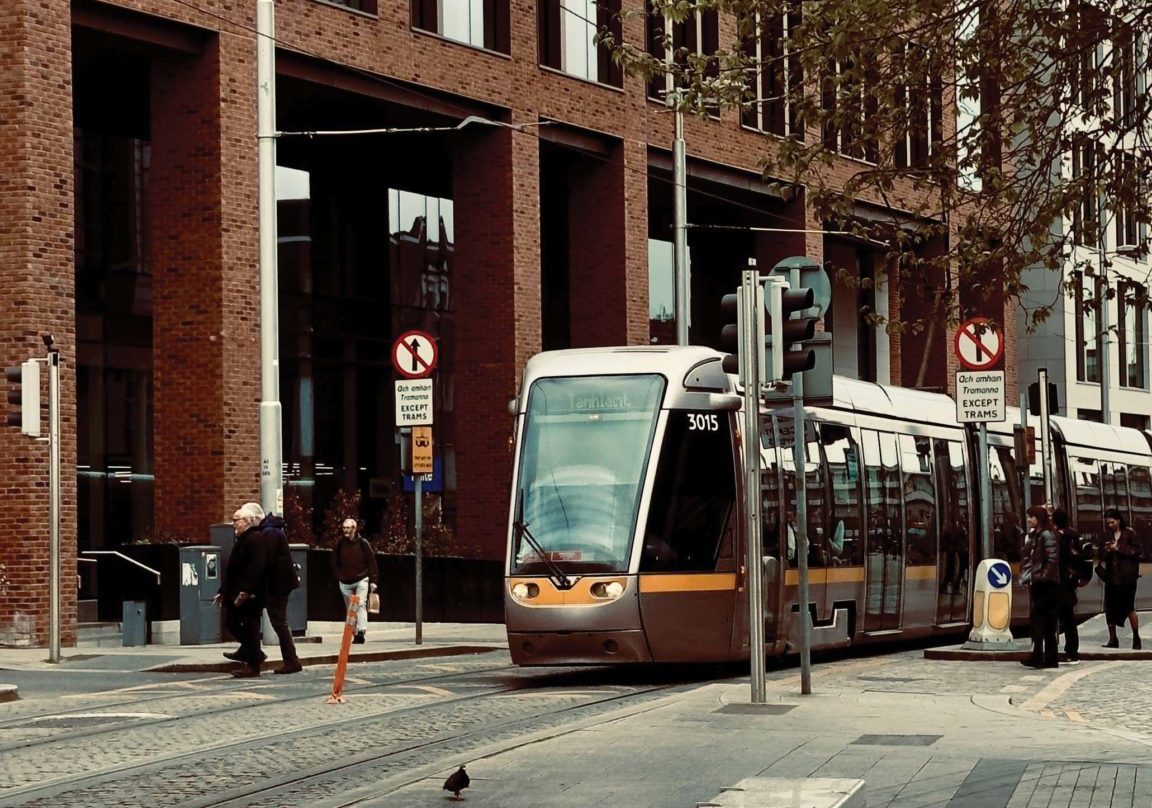
The big plans have to make progress at the granular level of people, homes and communities. And, as anyone who lives in Tallaght will tell you, they do! But we don’t always make the most of the opportunities.
Take, for example, the European Union’s Just Transition Fund (JTF), designed to support communities across Europe in meeting the challenges of the green transition. In Ireland it’s co-funded by the Government and the EU, to a total of €169m, with a focus on the Midlands, the region most affected by the transition from peat production.
But according to Ireland’s Comptroller and Auditor General’s 2025 report on public services, there have been “repeated failures” to utilise funds provided under JTF due to implementation delays. The money’s there, but we’ve significantly underspent! Jaysus, in the Grand Era of Overspending?! Furthermore, there have been other underspends on the JTF since 2023. Indeed, some actions and targets have been abandoned, for example the rehabilitation of 10,000 hectares of land.
This is Ireland’s failure.
The C&AG adds that the Government needs to draw down over €25.3m in EU funding by the end of 2026 “to avoid an automatic de-commitment of funding” and that this will require “a significant acceleration on the rate of drawdown.”
The lofty principles and goals are grand, but it is up to us to make the most of our involvement in the EU – at every level. Europe needs urgency and intent rather than pieties and inertia.
As ever, actions speak louder than words.
RELATED


RELATED


- Opinion
- 27 Feb 26
IRMA warns of AI threat to €1 billion Irish music industry

- Opinion
- 15 Jan 26