
- Opinion
- 20 Oct 26
Khalid El-Astal: "My wife is my whole life... I can’t move on at all"


“It’s three years now and every single moment I just think of her."
That was Khalid El-Astal at Electric Picnic, mourning the loss of his wife and other family members who were murdered in Gaza by the Israeli Defence Forces. Belfast born and now living in Dublin, he told his story to Stuart Clark in the Hot Press Chat Room.
The Hot Press Chat Room @ Electric Picnic was jammed for our Sunday afternoon panel discussion, Palestine: Music, Art & Resistance.
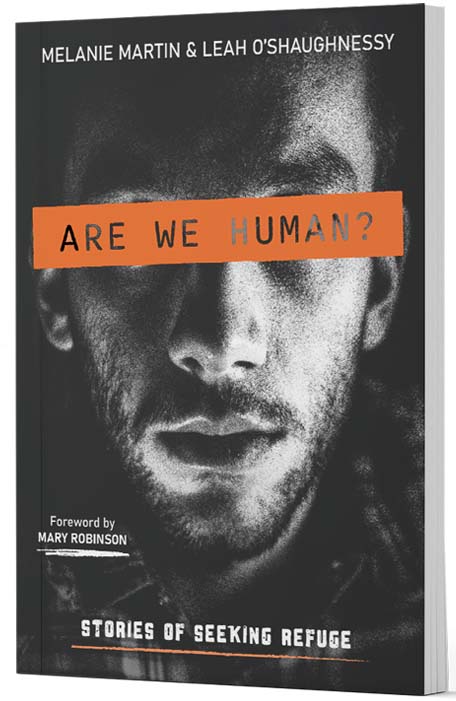
Chaired by Stuart Clark, it comprised of activist and comedian Tadhg Hickey who’ll be combining the two activities in his upcoming one-man show; camogie player, GAA Palestine member and Are We Human? Stories Of Seeking Refuge co-author, Leah O’Shaughnessy; and Khalid El-Astal, a Palestinian-Irish man born in Belfast whose wife Ashwak Jendia, mother Hanaa and brother Majed were murdered in 2023 by the Israeli Defence Forces when they bombed their house. He’s now living in Dublin with his two young children, Sara and Ali.
It was a fascinating and far-reaching conversation with Tadhg talking about his participation in the October 2025 flotilla which was stopped at sea by the Israelis and his recent meeting with Greta Thunberg, and Leah discussing the sporting kickback here against the Israeli government and how conflicted she felt travelling to Trump’s America to watch her husband, Pico Lopes, in World Cup action for Cape Verde.
You can watch the whole exchange shortly on the Hot Press YouTube channel, but here we’re going to concentrate on Khalid’s story, which he tells with great eloquence and, despite the horrors his family have endured, positivity towards the future…
Stuart Clark: Khalid, welcome to the Chat Room. Can you tell us a bit about your upbringing?
Khalid El-Astal: Yes, I was born in Belfast. My dad did his PhD and master’s degree in Queen’s University. Then he worked for a while in Belfast as a researcher. I was seven or eight when we went back to Gaza, so I’ve lived most of my life there. I have a master’s in Physics but have always worked with computers, managing IT apps and IT projects.
After Belfast, was Gaza a wee bit of a culture shock?
I don’t know because I was really young! It’s not that big a difference to Gaza (laughs), like you feel at home in both places.
Gaza has two sides. It’s amazing when it comes to people and families. I lived in one of the biggest cities, Khan Yunis, where you know everyone. If you don’t know them directly, you know their dad or your dad knows one of their family. This part of being a child in Gaza and living a good life was great. But there’s another part where everything is very complicated and difficult. Take a simple thing like electricity. The best you’d get was twelve hours a day and then you were cut off. We didn’t get clean water easily. The unemployment rate was 60%. People wanted to work but there were no jobs.
And this, of course, was before the Israeli Defence Forces invaded.
In 2016, which was a long time before the war, I got a scholarship in Glasgow in Scotland. I have an Irish passport but I couldn’t travel at that time. I put my name down to leave Gaza but it took a year.
Because of your family situation you’ve been able to travel reasonably freely, but that’s obviously not the case for most Gazans.
The older generation travelled but not my generation. They’ve never even visited the nearest country, which is Egypt. We live in the same country but, at the same time, we can’t go to the West Bank because Israel is between us. We have the same culture but we can’t go there, it’s impossible. I have an Irish passport. Irish people can go to Israel but I can’t because I’m Palestinian. If everything was okay in Gaza and I wanted to go back there, I couldn’t because you don’t know when the border’s going to be open or closed
You could get trapped there for an indefinite amount of time.
Exactly.
Why can’t Gazans cross into Egypt?
It’s a Palestinian-Egyptian border but nothing can happen without the Israelis agreeing. So, even when the Israelis weren’t at the border in Rafah, they gave the orders to the Egyptians and the Palestinians and told them when it could be opened. And then, the Israelis have a system whereby they decide whether people can leave or not. So, the Israelis control the border at all times.
If the Israelis didn’t control the Rafa crossing, do you think Egypt would be more proactive?
Yes, but not that much, to be honest. Because the Egyptian government have their own problems as well. They closed the border for a long time [before Israel took control of it]. They have trouble with terrorist groups around it. They have their excuses and they’re not co-operating that much.
Three years ago your family suffered an appalling tragedy. Can you talk us through it?
My plan was to come to Ireland, which makes sense because I was born here. But I was struggling with my father to convince him. He said to me, “If you go to Ireland it’s a very good place and you’ll never come back.” He knew if I went to somewhere like Saudi Arabia or Turkey I would return to Gaza. So, I went to Saudi Arabia and had been working there for a year when the war started. At first I was thinking about going back but my dad called and said, “Don’t while this is still going on.” My best friend was with me in Saudi. He’s a big part of my life. We’ve been through universities together; we started a business together; we had kids at the same time. A week into the war, a bombing happened in their house and he lost his wife, his two kids, his two brothers and his dad, all in one second. I couldn’t stop crying. I had toys for these kids and was planning to go back to Gaza in November. I thought, “This is the worst thing that can happen…”
But, tragically, that wasn’t the case…
My wife and my kids were in Gaza, moving from place to place because of what was happening. It was escalating very fast. They were in the north first, then the middle of Gaza. Another bombing happened near them, so I told my wife, “Don’t stay with your family, stay with my family in Khan Yunis because they have internet.” I was hoping that at some point the border would open and the embassy would call them and say, “You can travel now to be with your husband.”
The first day they were with my family, my brother WhatsApp-ed me three photos of my kids injured in hospital. He said, “Your mom died, your brother died and your wife is injured and in the intensive care unit, but your kids are safe.” The doctors at the time said my wife was in a stable condition, but had suffered very bad burning to 60% to 70% of her body and her face. It was mixed emotions. I was really happy that she was alive, and they said she’ll be fine at some point.
I was thinking, “We’ll go to Ireland and have plastic surgeries somewhere. The kids are fine. Everything will be okay.”
I got a call from her brother, saying, “You have to call to just speak to her.” I called and tried to talk to her; she didn’t say anything, she was just screaming. The doctor said she had blood poisoning or an infection or something like that. And then, she just passed away. My wife is my whole life. It’s three years now and every single moment I just think of her. I can’t move on at all.
Eventually, you managed to get Sara and Ali out of Gaza.
Yeah, I got the kids to Dublin. It’s amazing the help and support I’ve got from people here. The kids are happy – they’re learning Irish at the moment – but it’s not easy. My dad and my brothers are still in Gaza. People keep saying it’s a ceasefire. This is not a ceasefire. They kill at least ten a day; that’s just like normal. The whole Gaza Strip is 30% the size of Dublin. They have some shops, they have some Wi-Fi, they can do hotspots but it’s very dangerous.
Khalid, thank you for sharing that. Would the average Gazan realise how much support there is for them in Ireland?
When the war started in 2012, Ireland was one of the biggest supporters of Gaza. People started to know that – and with social media, everyone in Gaza now knows about Ireland and that we’ve experienced the same kind of suffering.
Do you think boycotts work?
Yes, they do. They make companies think before deciding to collaborate with Israel, and that’s a really important thing. It’s not just about Palestine and Israel anymore; it’s about all oppressors who think they can do whatever they want and get away with it. Boycotting is a kind of identity. It represents people from different places and is expanding.
Finally, as little Sara and Ali settle into their new life, do you have some degree of hope for the future – and what can we do to help the people of Gaza?
The Irish are the most amazing people I’ve met and dealt with in my life. If I’d ended up somewhere else, I wouldn’t have this hope, honestly.
This hope comes from everyone who’s helped me. It comes from people like Leah and Melanie Martin who wrote my story and kept the memory of my wife alive.
It comes from the retired people who volunteered to help with the play I did about Palestinian prisoners. This hope comes from everyone I see in the streets with a Palestian badge or a flag or something like that. My hope comes from John, my friend, and his wife who take the kids every second weekend to give me a break.
The normal conversations you have with these lovely neighbours or people you meet in coffee shops. If I was anywhere else, I wouldn’t get the same feeling. I could end up killing myself. Because I thought about that the first day when my wife passed away. So, everything for me is still very, very valuable. It’s made a big difference for two kids and their dad and their family who are still back in Gaza. Ireland, except for the weather, is the best country in the world!
We’re privileged to have had you here today. Thanks… and free Palestine!
RELATED


- Film And TV
- 26 Nov 25


