
- Opinion
- 13 Jul 26
Lilian Seenoi-Barr: "There’s no action plan to deal with racism in Northern Ireland"








Lilian Seenoi-Barr, the Derry councillor and former mayor, has been at the forefront of communities in the North standing up to the far-right. She talks to Stuart Clark about the rioting in Belfast, missed opportunities to stop it, and fears that it’ll flare up again.
As horrific as the June 8th knife attack on 44-year-old Stephen Ogilvie in Belfast city centre was, the racist rioting/pogrom which followed has left minority communities traumatised and fearing for their futures.
While Loyalist paramilitary groups and imported agitators orchestrated the violence – there are credible reports that a number of young people had their drug debts cleared in return for throwing petrol bombs – the bare minimum was done by unionist politicians to quell it.
Asked whether there’s been a distinct lack of leadership from unionist parties, Derry-based anti-racism campaigner Cllr. Lilian Seenoi-Barr says, “100%, oh, 100%. One of the biggest challenges in Northern Ireland is that racism is sectarianised. You can see that unionist politicians do not talk or act in a welcoming manner when it comes to minoritised people or people of colour. So, it wasn’t surprising for me to see unionist politicians not standing up for us. It wasn’t a surprise to not see them fighting for our community and excusing the riots.
“I think the lack of leadership is from both sides,” she adds, “but I do know nationalist politicians have unequivocally called the racism out. We don’t see the same from unionist political parties at all.”
Seenoi-Barr, who in 2024 was the first person of colour to become Lord Mayor of Derry and Strabane, says anti-racist sentiment has been steadily building on both sides of the border.
“The violence and the racism we see now has been emboldened by the lack of action and response from the governments both here and in the Republic of Ireland,” she maintains. “I remember in November 2023 there were riots in Dublin. In 2025, the Belfast Islamic Centre was attacked. The Belfast Multicultural Centre was set on fire three times. Businesses owned by Muslims and Black people were set on fire.
“It’s really upsetting for us to witness that, and particularly for families who simply came here to seek a better life, to seek safety.”
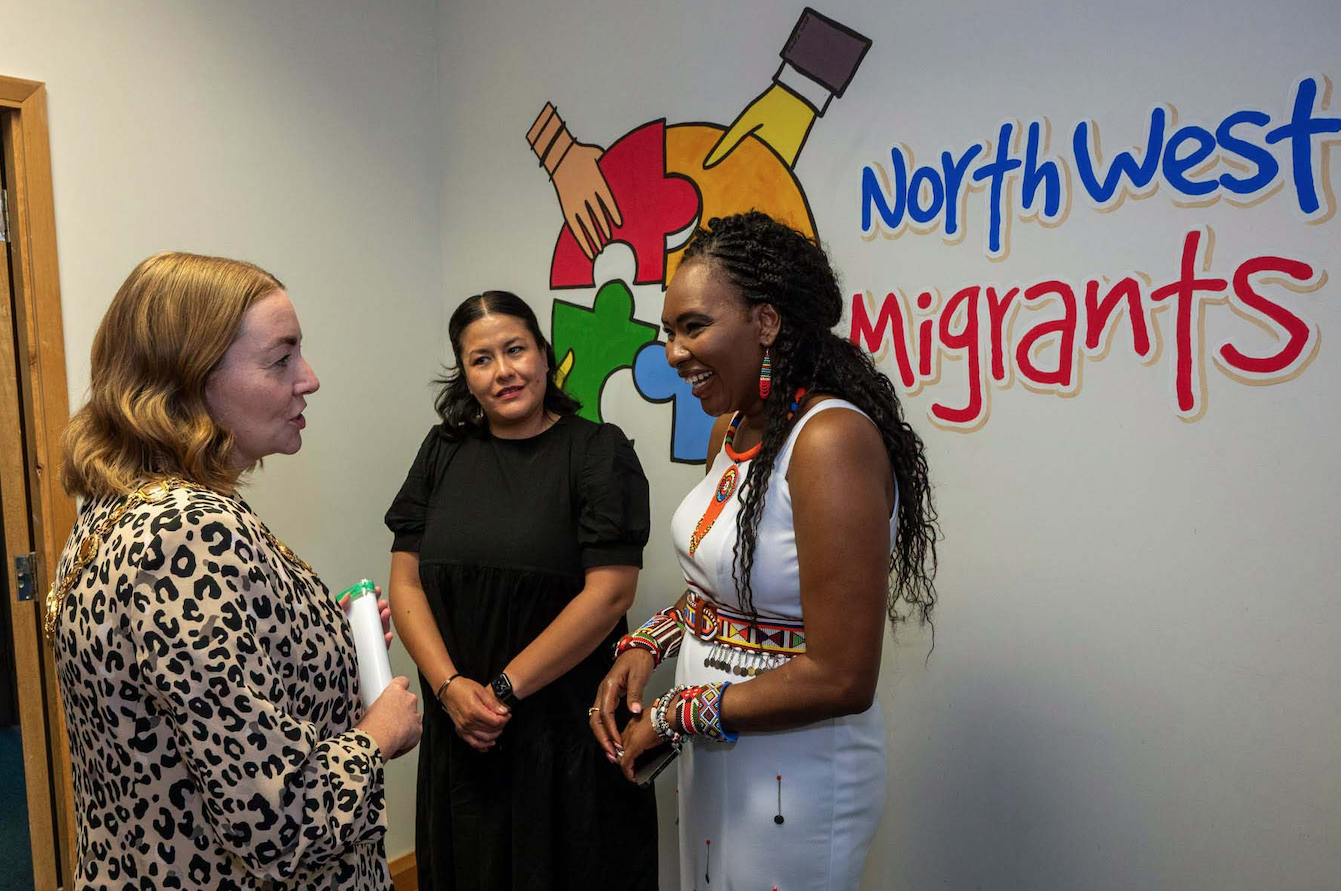
Minorities currently make up just 3.4% of the Northern Irish population, with a sizeable chunk of those fleeing violence in their countries of birth.
“In 2016 we brought Syrian refugees here who are Muslims because we were giving them sanctuary,” Seenoi-Barr notes. “We signed up to the Afghan Resettlement Programme to give them safety. They are also Muslims. We signed the Refugee Convention 1961 to resettle people from war-torn countries and have Palestinians coming here.”
Lilian believes that the attack on Stephen Oglivie provided far-right groups with the excuse they’d been seeking to attack minority groups in the North.
“We witnessed something that we’ve never seen before; people organising to attack people who look different,” she resumes. “We saw people from London, Dublin and Glasgow. I think they see the unionist community as a soft spot. The far-right are targeting those communities because they’re easy to manipulate. And let me say, some of the unionist leaders are the best you can work with. I mean that. They have challenges they’re facing in their own communities and don’t want violence in them. We need unionists who don’t subscribe to those racist ideologies to step up.”
Seenoi-Barr is fearful that the bonfires, marches, symbolism and other trappings of July 12th could reignite last month’s violence.
“I spoke to the BBC recently and said it’s just a matter of time before we’re back to where we were a few weeks ago,” she rues. “The bonfires have become like our festival of racist riots. As a community, we are organising to see how we can support one another and work with the PSNI. But it’ll take time for us to believe that this isn’t going to happen again because we don’t see any intervention from government. We don’t see any preventative measures being put in place. There’s no action plan to deal with racism in Northern Ireland. We have a justice system that doesn’t respond to hate crime. When somebody threatened to kill me, that wasn’t seen as racism. It was seen as a misuse of electronic communications.”
Lilian received her first death threat as mayor after far-right US commentator Alex Jones called her an “invader” on his InfoWars site.
“I didn’t know who Alex Jones was until a Belfast Telegraph journalist told me about him,” she reveals. “I told them this; I’m a Maasai woman. Maasai women are warriors. When someone like that attacks me, they have no idea of the psychological capital I have. The reception from the people of Derry gave me the confidence not to be frightened by online. abuse. Ninety-nine per cent of the local population will protect me.”
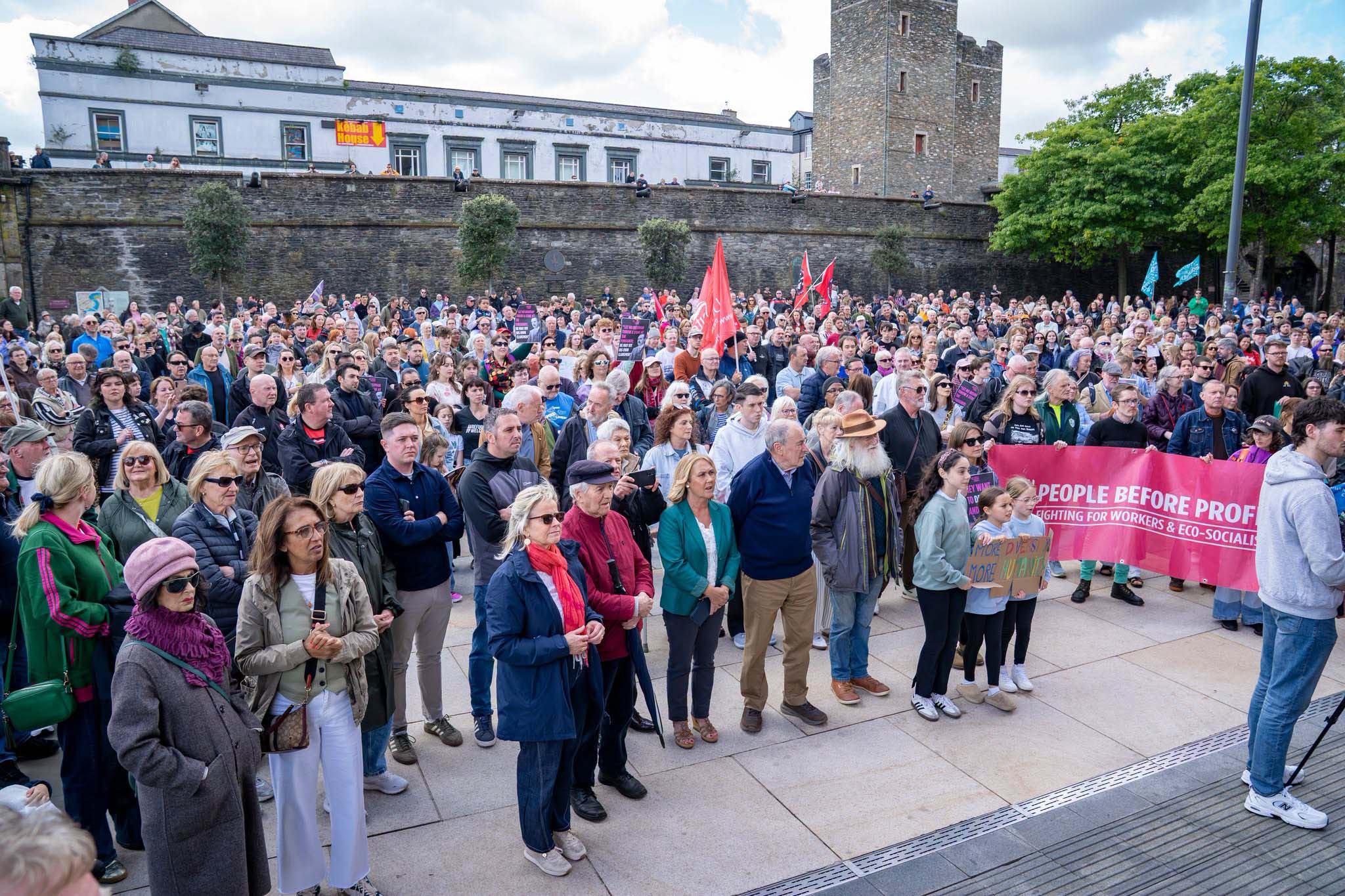
United Against Hate Rally in Derry on June 13, 2026. Credit: Aodhan Roberts
On a more positive note, tens of thousands of people attended the Together Against Hate marches on June 13th in Belfast and Derry.
“Those solidarity marches sent a very strong message to people that you’re welcome here, that we’ve got your backs” Lilian reflects. “Civil society really showed up, getting people to doctor’s appointments and children to schools. It bought food and took it to those who were frightened to leave their homes. It moved people from risky areas and found accommodation for them. Neighbours were protecting neighbours.
“This incredible community solidarity was solidified by these marches. It was a very strong message that was sent by the people of Northern Ireland.”
Finally, as somebody who’s spent her entire adult life trying to ensure the safeguarding of women, what does Lilian make of the Jeffrey Donaldson case?
“Oh my goodness, it’s shocking,” she says. “During my time as mayor, two women were killed on our streets. There were women who were raped on our streets. Child abuse is not something that started with Jeffrey Donaldson. There’s still so much to come out – the people who knew about his behaviours and never spoke about it. The people who mostly attack me; when you look at their track record, they have attacked local women.
“In Ireland as a whole, we need to be very honest about disrespect towards women. We need to have a serious conversation about child abuse and violence against women, and to tackle silence culture. Violence against women is a dark, deep stain in the fabric of Northern Ireland, and I think the only way we can tackle it is through education.”


RELATED

- Opinion
- 05 Oct 26
Bernie Sanders and AOC praise The Strokes at NYC concert

- Opinion
- 05 Oct 26
KNEECAP show support for Garvaghy Road community

- Opinion
- 04 Oct 26
5 Essential Books to Read as a Student – Selected by Donal Ryan

- Opinion
- 02 Oct 26
Watch: The Mary Wallopers perform live on Garvaghy Road

- Opinion
- 30 Sep 26
Filmmakers defend NAZA documentary amid threats from Israeli government

- Opinion
- 30 Sep 26