- Opinion
- 14 Nov 26
Joe Duffy: "I like the whole idea of memorialising Liveline in a book. Because in fairness – RTÉ aren’t going to do it"


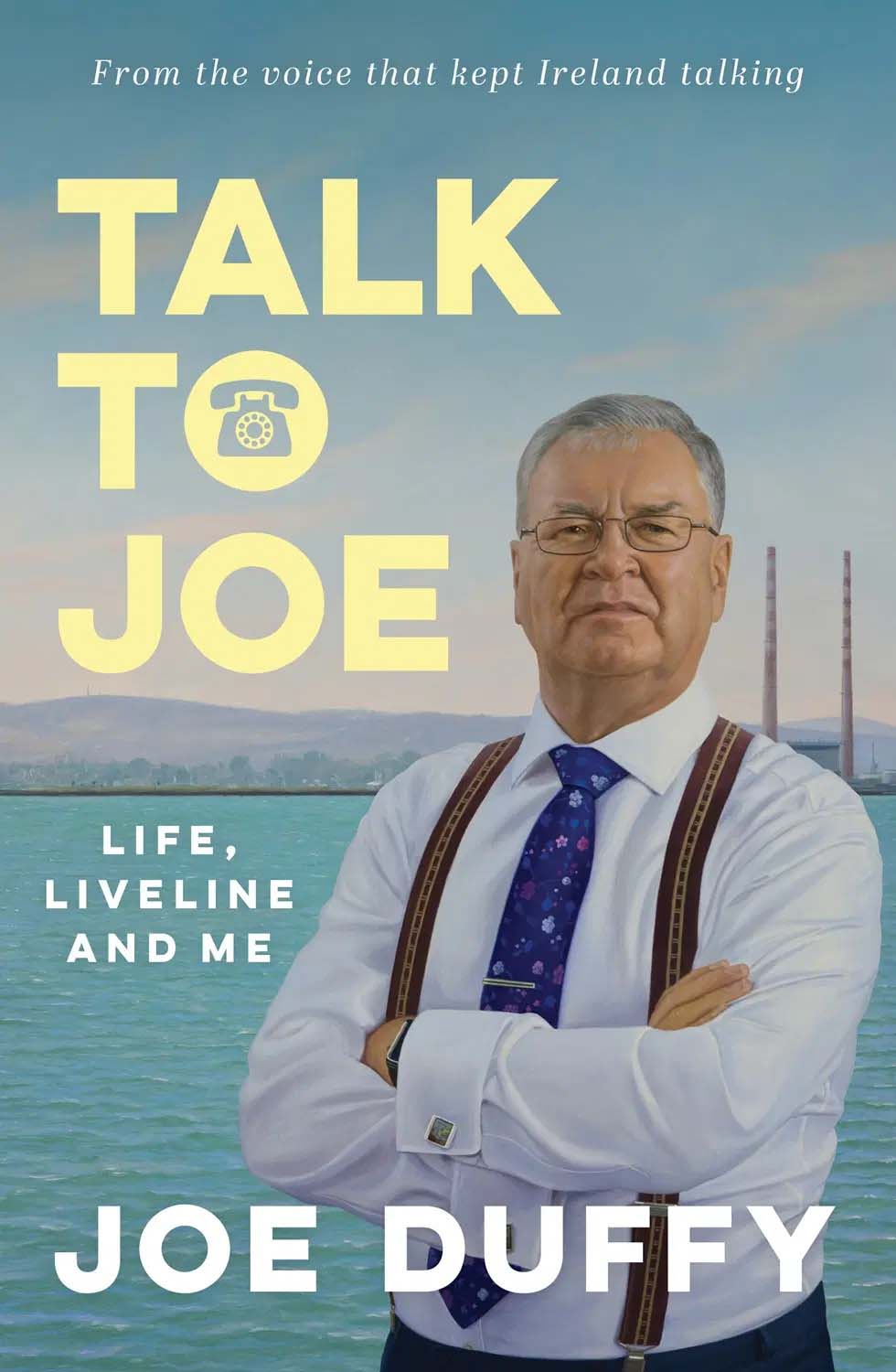
In his new book, Talk To Joe: Life, Liveline And Me, Joe Duffy relives some of the most poignant – and controversial – moments from the 27 years he spent presenting his ratings-grabbing RTÉ 1 show. He also comes right up to date by calling out the genocide in Gaza; issuing RTÉ Director General Kevin Bakhurst and Pope Leo XIV with report cards; and pledging his eternal love to U2!
While Joe Duffy is adamant that he’s hung up his headphones for good, his new Talk To Joe book finds him reflecting on 38 of his most significant moments, spilling many beans about his former RTÉ paymasters along the way.
From the unlawful Stardust killings, the maternity hospital crisis and his campaigning to close Irish head shops – Joe and I had an enjoyably heated discussion about that on the radio – to clerical sex abuse, the Troubles, and the fallout from a debate on transgenderism, it’s a 357-page reminder that there was no radio show like a Joe radio show.
Speaking to Hot Press shortly before returning to Montrose for a Late Late Show appearance, Joe is softer and more vulnerable that he sometimes was on air, evangelical about the causes he’s championed and eager to set the record straight on that trans brouhaha in particular.
“The caller and a number of other women had attempted to attend a meeting of the National Women’s Council and had been refused entry,” Duffy writes in the book. “Her concern was about wording – specifically, the use of gender-neutral terms in certain documents, including health information and legislation. She felt that the removal of the word ‘woman’ from contexts relating to female health raised important questions.”
Whatever the intentions, it resulted in Dublin Pride describing the discussion as “extremely harmful and anti-trans” and pulling out of a commercial partnership with RTÉ. More brickbats were thrown by the Irish National Council for Civil Liberties who charged: “In the context of increasing transphobic and homophobic attacks, this Liveline conversation is incredibly irresponsible.”
We’ll get Joe’s thoughts on that in a moment but first, he seems remarkably busy for a man who told listeners “That’s all folks!” in June last year.
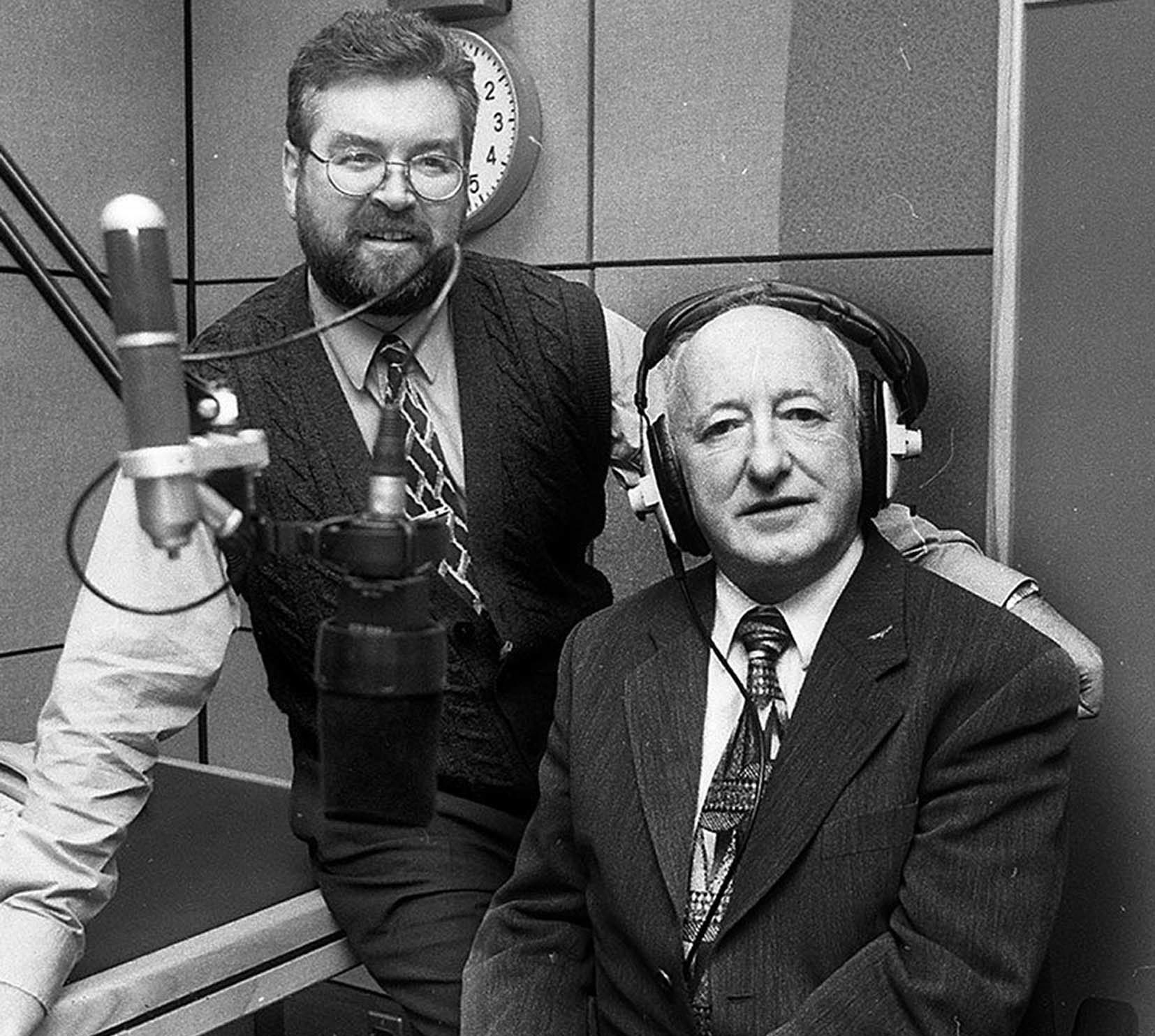
Joe Duffy back in the day with Michael D. Higgins
Stuart Clark: Joe, exactly how retired are you?
Joe Duffy: Well, I’m not going back in to broadcasting and I’m not doing podcasting.
Does podcasting not float your boat?
No, there are too many of them. Usually it’s just two people yapping to each other with not much intent or purpose. If I were forced to do one, it’d probably be true crime. But I’ve no interest in podcasts. I like the idea of writing and when Ciara from Hachette asked me to write Talk To Joe after I retired, I just got stuck in. I like the whole idea of memorialising Liveline in a book. Because in fairness, Stuart, RTÉ aren’t going to do it. The challenge was to turn a load of transcripts – nearly 200 callers are featured – into something readable and a mix of heavy and light. I did over 5,000 Livelines and a fair few of them were important.
None more so than when you talked about the Stardust killings. I remember arriving in Ireland for the first time and thinking, “Oh my god, it’s just like Hillsborough. Ordinary decent people being blamed for the shocking negligence of others.”
I just read Andy Burnham’s book with Steve Rotheram, and it seems to me his whole political career has been propelled by the Hillsborough scandal. As I say in Talk To Joe, I wrote about the Stardust when it happened. I was in Trinity and me and another student journalist fella, Derek Cunningham, went up every day to the first Keane Tribunal on the Stardust. Justice Ronan Keane being the husband of Terry Keane, who’s back in the news at the minute because of Vincent Browne’s Charlie Haughey book. I saw the Butterlys giving evidence. It was quite obvious to me that the doors had been locked and that there’d been no malicious fire-setting. which is what Ronan Keane left the door open for. When the Keane inquiry came to an end in 1981, I wrote a long article for a magazine a gang of us students put together, Strumpet. We said quite clearly that, “The doors were locked. This is a scandal. This is a crime.”
And we had to wait, what, 42 years for the Coroner’s Court to confirm what we already knew; unlawful killing. I live near Artane where there’s still huge anger that the Butterlys were never properly held to account
I share that anger! I mention another fire in the book, the Noyeks builders providers’ one. It happened on March 22, 1972 on the corner of Parnell Street and Dominick Street. A fire started in the downstairs shop, which because it had paint, white spirits and adhesives, became an inferno in minutes. The people in the store thankfully managed to run out, but there were two floors above it, mainly staffed by women who ran the office. For three of them, it was their first day in work. There was no fire escape.
On the first floor, people were able to open the windows and jump – some of them onto the roof of a bread van which had parked up. On the third floor, the windows were triple-glazed for some reason and wouldn’t open. One witness told us that, before they died, he saw the women throwing their manual typewriters at the windows and them just bouncing off. The youngest was 19 and most of them were in their twenties.
There’s never been an inquiry into that fire and why effectively they were in a death trap. A caller contacted us from Holland. One of her friends had died in the fire. She wanted to know why there’s no memorial on the spot. Paula Meehan, the poet, also rang the show. One of her best friends, Mary Leader, died in that fire too. Mary’s father died within a year of her death. I have their names in the book.
Let us also pay tribute here to Mary Leader, Ann Condon, Mary Culleton, Martha de Burgh Whyte, Dolores Finnery, Patricia Gore, Marie McNally and James Pryal. May you all Rest In Peace. You just mentioned the Troubles. If Liveline had still been running, would you have been all over the Garvaghy Road dispute?
We would’ve, yeah.
Do you shudder when you hear Carla Lockhart speak and her rhetoric?
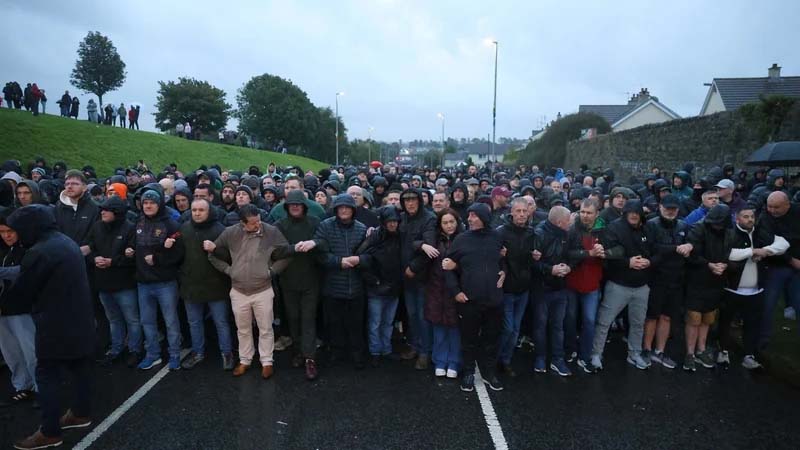
Well, I shudder when I hear a lot of people’s rhetoric! There’s no march going down Garvaghy Road. There’s no debate. The Parades Commission were badly at fault. It’s the most incompetent decision they’ve made since they were set up after the Good Friday Agreement. I don’t know what world they were living in. I have a chapter in the book about a very good friend of mine Jude White whose mother, Peggy, was killed in the Troubles.
I was born in ’56, so I was about 14 in ‘69/’70 when they started. I’d never been to Belfast so, without telling anyone, I hitched to Belfast. I wanted to get a sense of the Shankill and the Falls Road. Later I became president of the Union of Students in Ireland. I had a lot of occasion to travel north and was there for the 12th of July when the Shankill turns into the biggest drinking festival you’ve ever come across. It puts the Puck Fair in Killorglin to shame! Whilst watching the 12th of July march, I tried to cross to the other side of the street but somebody pulled me back and said, “No one crosses an Orange Parade!” That was a lucky escape...
I can sense reading Talk To Joe that you’re still scarred by the ferocity of the backlash to your trans discussion.
Yeah, absolutely I am. The first chapter I’d love people to read is chapter 12, Erica’s Independence Day. It was 2020, Erica was a 65-year old farmer living in rural Ireland. Her mother had called the previous day’s Liveline to tell us the difficulties her daughter was facing as she started her transition journey. Then Erica came on and told her story.
She was born a man but knew from an early age that she was different. She talked really beautifully about going into Debenhams on Patrick Street in Cork. She was still dressed as a man and started talking to the young woman behind the Lancôme counter about makeup. Eventually, the young woman said, “Are these for yourself? Great, I’ll help you choose.” And that opened the gate to Erica deciding to live openly as herself. I listened back to that programme with great, great pride at the way I handled it and the way the callers related to Erica. It was such a warm, empathic story.
Which comes across very clearly in that Erica’s Independence Day chapter.
Two years’ later, there’d been a dispute that morning at the National Women’s Council about a number of women who wanted to get in to raise the issue of language. They were denied entry and they phoned Liveline, which sparked a discussion. The debate was primarily about language and I was really upset about the way it was distorted.
Two Labour Party people lead the onslaught. They branded it as hate speech and said people had been misgendered and that the debate should never have happened. There was one incident where a caller misgendered another caller. The other caller, who was a trans woman, said, “Absolutely, no problem. This is radio, my voice is still very deep. It hasn’t changed and I completely understand. There’s no offence taken.” And the first caller said, “Well, there was no offence meant.”
It was completely amicable and yet it was taken totally out of context. The finality of it was that not one complaint about those three segments were upheld by the Broadcast Authority of Ireland – and anyone has the right to complain to the BAI. I was accused of stoking up hatred against trans people at a time when attacks on trans people were increasing. They said the debate should never have been allowed. Who are the Irish Council of Civil Liberties to decide what debate should be allowed and not allowed?
The debate was genuine. I never said – as I was accused of – that trans people do not exist or have rights. Quite the opposite. Paul Murphy, the TD, condemned Liveline and said the presenter has a track record of attacking marginalised groups. Now, he didn’t give one example. I sent him a handwritten note saying, “I don’t think that’s fair. I’d love you to withdraw it or clarify it or give me examples.” I didn’t get a reply. He was in the Sunday Independent there at the weekend. He said he stood over what he said, which is bizarre.
The Head of RTÉ Radio 1 at the time, Peter Woods, defended you, but the then Director General, Dee Forbes wasn’t interested.
I didn’t see her, end of. She never contacted us to say, “Listen, I’m sorry you’re getting all this abuse.” But I didn’t have much contact with Dee Forbes anyway. Peter Woods, my line manager, defended us.
You were at RTÉ for 37 years, so know how it all bolts together. If you were made Director General tomorrow, what would you do?
Oh, Jesus! First of all, I’d shut down the campus. A lot of the stuff we do now, especially radio, could be in a small building in the centre of Dublin – like Newstalk, Today FM and several other stations who have the same level of output as RTÉ. You don’t need a big complex. Radio Centre is almost completely empty. Most TV programmes on RTÉ are made outside of Montrose now, and they’re talking about Fair City – which I love – and The Late Late Show moving out too. We have incredible independent studios now in Ardmore and Ashford. They’re making American TV programmes, so I’m sure they could make Irish ones as well.
Did you envy Pat Kenny moving to Newstalk and being free of internal RTÉ politics whilst halving his workload?
I thought that was an incredibly courageous decision and it really shook RTÉ. Pat left on a Friday and some of the best producers in the building, including on Liveline, were immediately transferred onto the new programme to replace Pat’s. RTÉ were determined that he should not get the better of them.
I think that was also when we became way, way too dependent on commercial income – and the pitfalls of that. I never even knew we had a corporate box in Croke Park. I can’t even tell you if RTÉ have one in the Aviva. They probably have. I was unaware of barter accounts. I was unaware of the Rugby World Cup guests being flown hither, thither and yon. Instead of going after more ads and sponsorship, maybe we should have said to the government: “Listen, we’re going to have to close down buildings.”
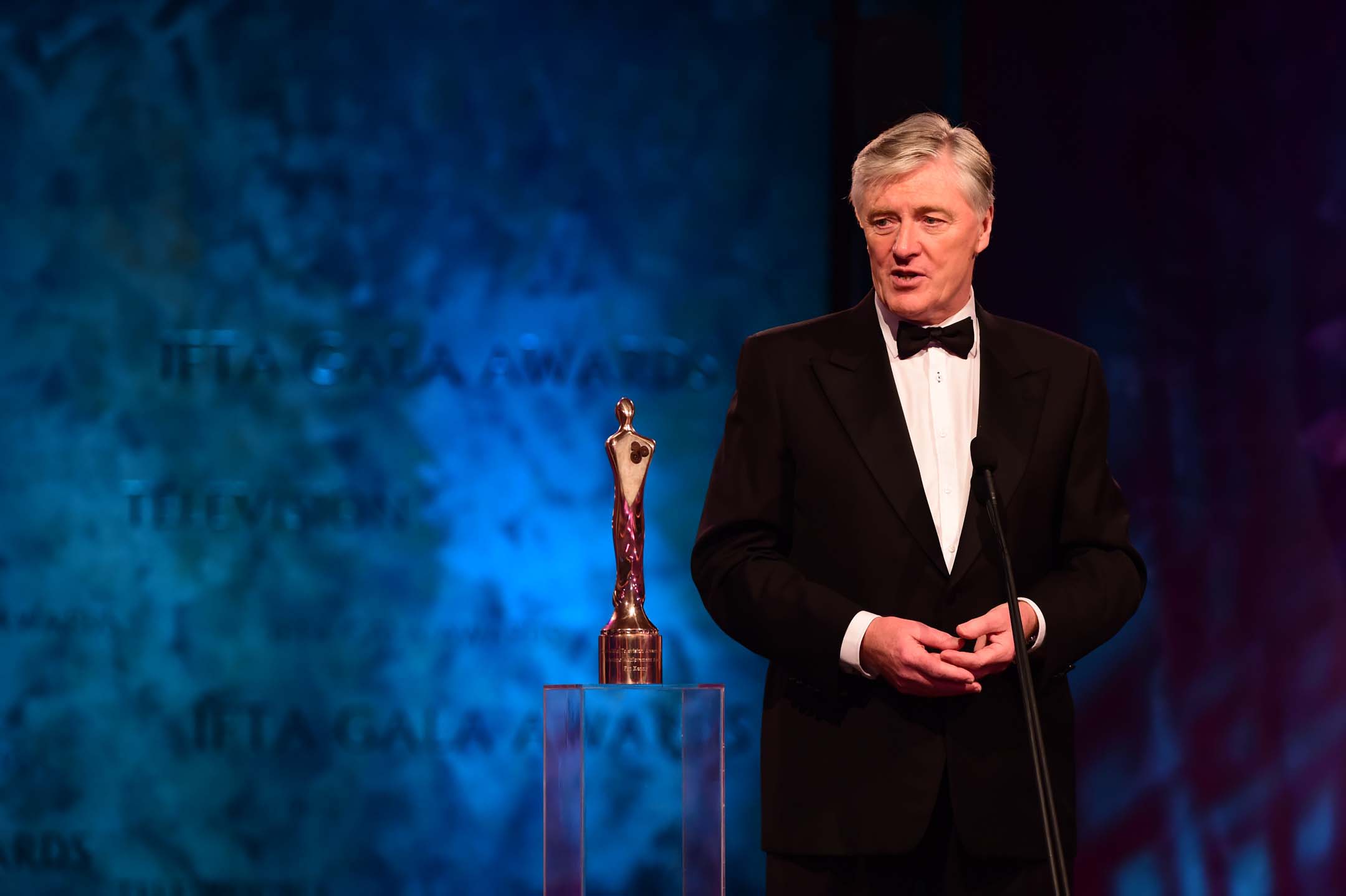
Pat Kenny. Credit: Michael Chester
If you were giving the current Director General, Kevin Bakhurst, a report card what would it say?
(Laughs) He’s extraordinarily diplomatic. He could be the British Ambassador to Ireland if they want him. He’s got great patience. He steadied the ship, but he’s made a couple of mistakes. One of them – and I say it in the book – is that Kevin should have stuck up more for individual RTÉ employees when Dáil committee members were attacking them. That was unfortunate. I’m thinking of the Fair City photographer, Beta Bajgart. She was traduced by the Fine Gael Senator, now a TD, Micheál Carrigy, who read out the tender for her job and said he could do the same job with his or his assistant’s smartphone.
How would you have responded to that?
I would have walked out – or pointed out to the senator that the phone he was holding up, and his assistant’s phone as well, were all paid for by the taxpayer! They should have defended the likes of Richard Collins, the Chief Financial Officer, more. Any googling of Richard at that time would have shown that his wife had been killed tragically in a freak accident when a tree blew down on Waterloo Road. Richard Collins was not the problem in RTÉ. They got a great laugh it seemed, asking him exactly how much he earned and he stumbled ‘cause he’s not a media performer. That was deeply humiliating for him and should not have been tolerated.
Is there an argument for the licence fee being axed and RTÉ becoming a subscription service like Sky or Prime?
No, a subscription just won’t work. A lot of it needs to be subsidised or otherwise TG4 wouldn’t happen. Raidío na Gaeltachta wouldn’t happen.
Are RTÉ right to be boycotting Eurovision again this year?
Yes, absolutely, totally, completely, without a doubt. Every Wednesday, twelve o’clock at Dáil Éireann, there’s a protest by citizens in support of Palestine. I’ve attended it. Also, without fail, there are daily protests outside the Russian Embassy on Orwell Road. Go if you can. RTÉ are absolutely correct in boycotting it. Anything that brings attention to the genocide at this stage… Have you seen the new documentary, Naza?
Sadly, I missed its run at The Lighthouse. For the benefit of Hot Press readers, it’s a 2026 investigative documentary by Israeli journalists Yuval Abraham and Rachel Sor, which examines the targeted AI killings of Palestinians.
Stuart, it’s absolutely heartbreaking.
What did you think of Ed Sheeran, in how he dealt with Robert Kraft and the rest of the pro-Israeli lobby in the US?
In fairness, there’s nuance to the whole Ed thing. Sometimes burdens are unfairly loaded on to people’s shoulders. Ed was caught, uh, off-balance. Obviously I don’t know Ed Sheeran, but he’s never given an inkling that he was in any way on the side of a perpetrator or an injustice. Maybe it was the promoters that really put the screws on him. Ed seems to be an all-round good guy and he’s got relations in Gorey in County Wexford. I think his granny is there…
U2 came in for similar criticism...
I love Bono, I love Larry, I love Adam and I love The Edge. I will never tolerate any criticism of them politically. I think the band have been brilliant. I think Bono gets unfair criticism. Totally unfair. U2 are the best thing this country has produced. I stumbled across them performing in a community centre in Artane one Sunday afternoon near the end of the 70s. There were very few people there. (Laughs) They were brutal with the exception of The Edge and Larry. Larry could play drums. But, anyway, I’ve followed them with such intent. I love them.
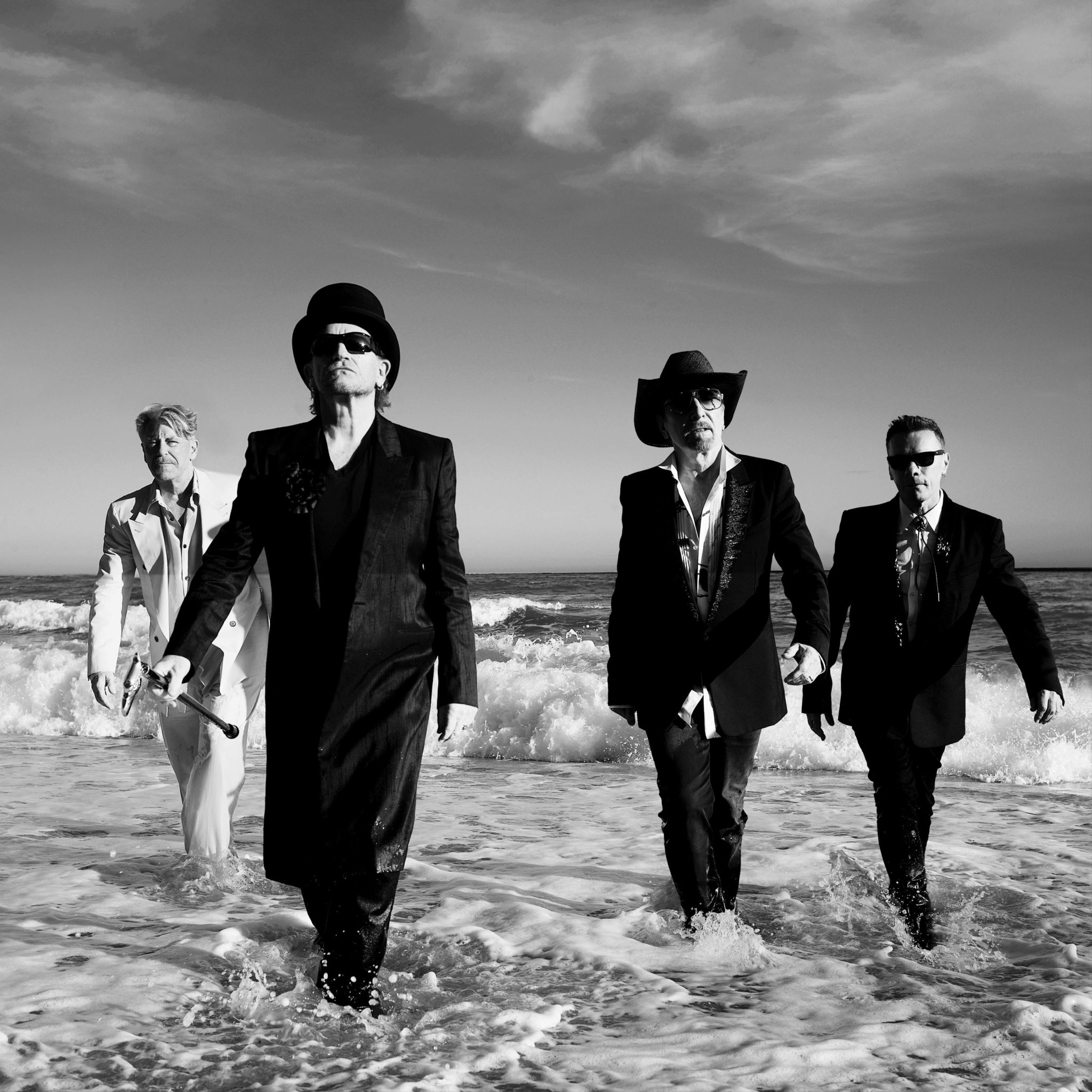
U2. Credit: Viviane Sassen
Macklemore packed the 3Arena out the other night with his pro-Gaza show. Being as understated as ever, former Minister for Justice, Alan Shatter, called it “a Nuremberg rally lookalike.”
Oh, no! Please, I had a rule on Liveline. Nobody was ever allowed to invoke anything to do with Nazism or Hitler. Sometimes without a lot of thought someone would say, “You know, this is worse than Hitler’s Germany” and I was like, “That analogy can never be true. What happened (in World War 2) was so horrific.” So, no, don’t use those analogies.
Would you be a Kneecap fan?
I went to the movie which was brilliant. Really sharp, really insightful. (Laughs) I’m not mad about balaclavas… but I’ve no issue with people taking political stands.
You describe yourself as a collapsed Catholic. What caused the collapse?
It was all the scandals. It was the duplicity. I know it’s not directly connected, but the exclusion of women is just scandalous. It’s beyond belief. It’s unarguable at this stage, yet they still try and argue it. They had a synod of lay people the other day and they decided to maintain the exclusion and the treatment of women as second-class citizens. No thanks!
You obviously knew Michael Cleary, who was head curate in Ballyfermot from 1973-’83, very well. You also shared a stage with Eamonn Casey and him. Do you feel personally conned by them?
I always knew Michael Cleary was a chancer. He was in so many ways a spoofer. There were a number of funerals I went to in Ballyfermot where he was supposed to be the celebrant, but he never turned up because the poker game went on longer than expected or whatever.
I have a vivid memory of a bus strike in Ballyfermot in 1969. I was working in the Metropole ballroom, cinema and restaurant on O’Connell, where Penneys is now. I was hitching a lift to try and get into town to go to work. This guy in a white Volkswagen Scirocco flew by me, arm draped out of the open driver’s window, cigarette hanging out of his mouth. It was Michael Cleary. Anyone looking at me would’ve known I was late for work, but he was obviously rushing to his next poker game. I tell you something… he wasn’t going home to mind his children!
Do you think that Pope Leo XIV has got off to a good start?
I wish he’d speak out even more. I’m such a believer in action. I’ve hoped that The Pope would fly to Gaza and kneel with those people. The whole, “Oh, he’d be putting his life in danger” line... Why would The Pope be in danger going to a so-called democratic country that’s just had elections, to try and show solidarity with these people who are suffering so much? More action please!
You never got to interview Donald Trump. If you had, what would have been your first question??
“Do you ever talk well of anyone else?” That and what good does he see in the world, given his venomous, vitriolic abuse of people? From trans people and gays to Muslims, his rhetoric is poisonous. I think we’re lost for words and for hope when we think of Trump.
• Talk To Joe: Life, Liveline And Me is published by Hachette