
- Music
- 26 Feb 26
Mick O’Gorman of Mikam Sound: "We would always try to do it better rather than harder"








Celebrating the golden jubilee of his company Mikam Sound, Mick O’Gorman reflects on his magnificent career, which has seen him travel the world with The Chieftains, and work on world-class productions like Riverdance.
What makes a great show? We’re quick to praise the performers, the venue, and the crowd – and rightly so. But behind every gig are unseen heroes, whose job it is to make sure all that sweet noise reaches your brain without any fuss.
For the past 50 years, Mick O’Gorman has been shaping what people hear, working with a host of star names including Don McLean, The Damned, The Chieftains, Eurovision, and most famously, Riverdance.
He had to borrow money from his sister to buy his first PA system, which was originally used by Labi Siffre. Now, he runs two successful, long-lasting sound companies, Mikam Sound and MOSCO Sound Design (the latter is a Sales Partner for d&b Audiotechnik speaker systems). But starting out in 1960s Ireland, sound engineering was hardly the profession it is today.
“It wasn’t [taken seriously]. With the showbands, the vocalist would put up the PA because he’s the only one who used it,” O’Gorman explains. “It used to be the lead singer’s friend or the guy who didn’t get the gig as a bass player that used to be the front-of-house engineer.”
O’Gorman’s route into the music industry began while he was studying at Trinity College, where he befriended Drogheda-born folk hero John Ledingham, better known as Jonathan Kelly.
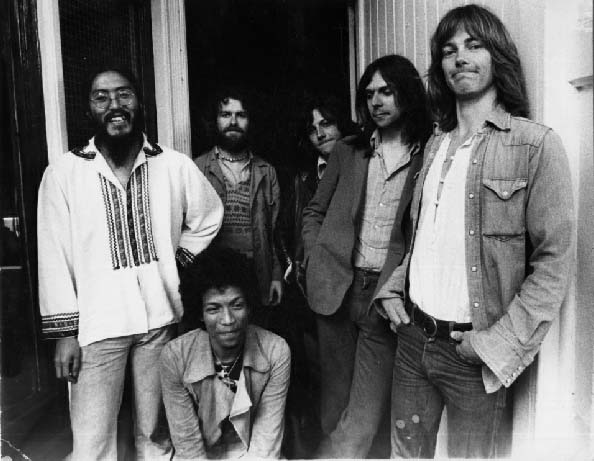
The Jonathan Kelly Band
“He went off to England and got a record deal, and he was managed by the drummer of the Bee Gees, Colin Peterson,” O’Gorman says. “I was in Trinity and I had driven this guy, John, when he was in college. He said when he got a deal, I would be his tour manager. I didn’t finish my degree because I knew what I wanted to do when the time came. We had a van and a truck full of equipment, but it was all quite small.
“It was kind of egalitarian. You might stop at a motorway service, and the Moody Blues or somebody would be there, but you’d all be standing in the same queue for food. I used to go to the Marquee Club in London. I used to go see the Yardbirds, Manfred Mann and The Who and it was all equal. I remember standing to get my drink and Roger Daltrey was standing inside, behind me, not expecting to be at the front of the queue.
“It felt a lot less corporate and the scale was small, because it wasn’t really about festivals; it was about clubs and things like that. It was good fun. We’d drive everywhere, play the gig and come home.”
O’Gorman’s career evolved from driver and tour manager into sound engineer and designer. He did all the above – and more – while touring with The Chieftains.
“I travelled with The Chieftains in America and that was really interesting,” he says. “We’d drive and fly and we’d carry all the stuff with us. It was in the ‘70s and early ‘80s, so there was no airport security. It was brilliant. It was easy; everything was so easy. You just took all the stuff, put it on the plane, harps and all sorts of things, and you’d get off the other side and throw it in the van and drive off.
“I did the lights, I was the sound engineer, I was the tour manager, and I collected the money – the most important job. They were very easy and they carried everything; they were the best I ever worked for.
“We went to China in 1982. Everyone was wearing Mao uniforms and we were closely guarded. It was some Irish-Chinese cultural society that took us there. There’s a movie and an album about it. I remember thinking: ‘There’s me, Mick O’Gorman, standing on the Great Wall of China.’ That doesn’t happen to everybody.”
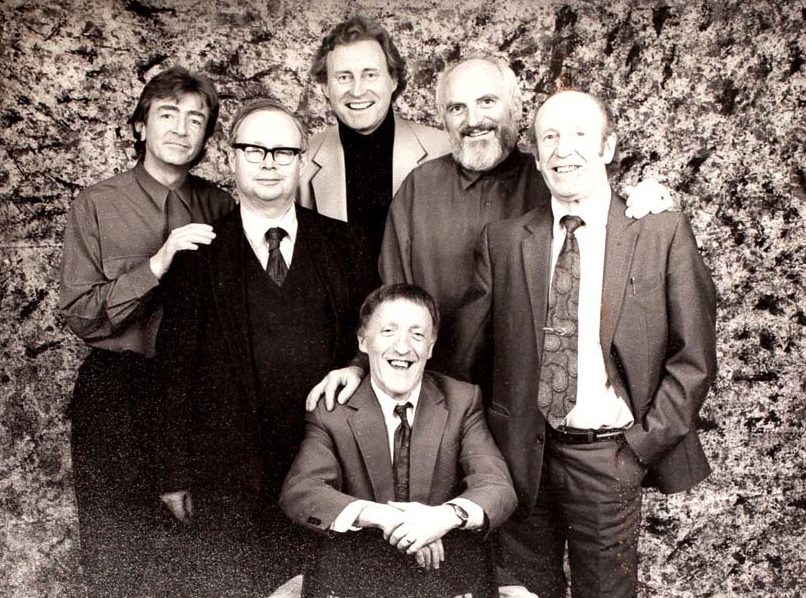
The Chieftains
ACCURACY AND CLARITY
Working with acts like The Chieftains also sharpened his approach to sound philosophy, as traditional Irish music demanded accuracy and clarity.
“Rock and roll is odd because you have quite a bit of latitude about what the instruments sound like,” O’Gorman begins. “What the drummer thinks and what the sound engineer thinks might be different, and you also have a lot of latitude with guitars and voices. Since we worked with The Chieftains and Riverdance, we didn’t want to colour the sound and take it in a direction apart from accuracy.
“Ireland is unusual because there are so many acoustic instruments in traditional music and Celtic fusion. Musicians know their instruments very well. I’m not being rude, but they might know more about their instrument than the typical rock musician. They might have been playing the flute since they were five. I’ve always thought that Irish sound engineers are good at caring.
“There were quite a few people involved with me, and we had a sort of reputation, so we would always try to do it better rather than harder. That’s the other thing: it’s the performer, the engineer, the sound equipment, the venue, and the noise of the audience. There’s lots to go in.”
One of his most significant breakthroughs came in the early 1990s during the 250th anniversary performance of Handel’s Messiah at The Point. O’Gorman and his team came up with an innovative solution when the orchestra wasn’t amplified, but the venue demanded projection.
“We suggested putting in delayed speakers down the room to delay the sound and you can push it backwards and it adds reverb. So the sound amplified further than the instruments could naturally play.”
Soon after came Eurovision and Riverdance, with whom O’Gorman has built a lasting relationship. He’s still their sound designer, supplying and shaping the production’s audio, and while Mikam Sound typically don’t tour the world anymore, Riverdance is the exception.
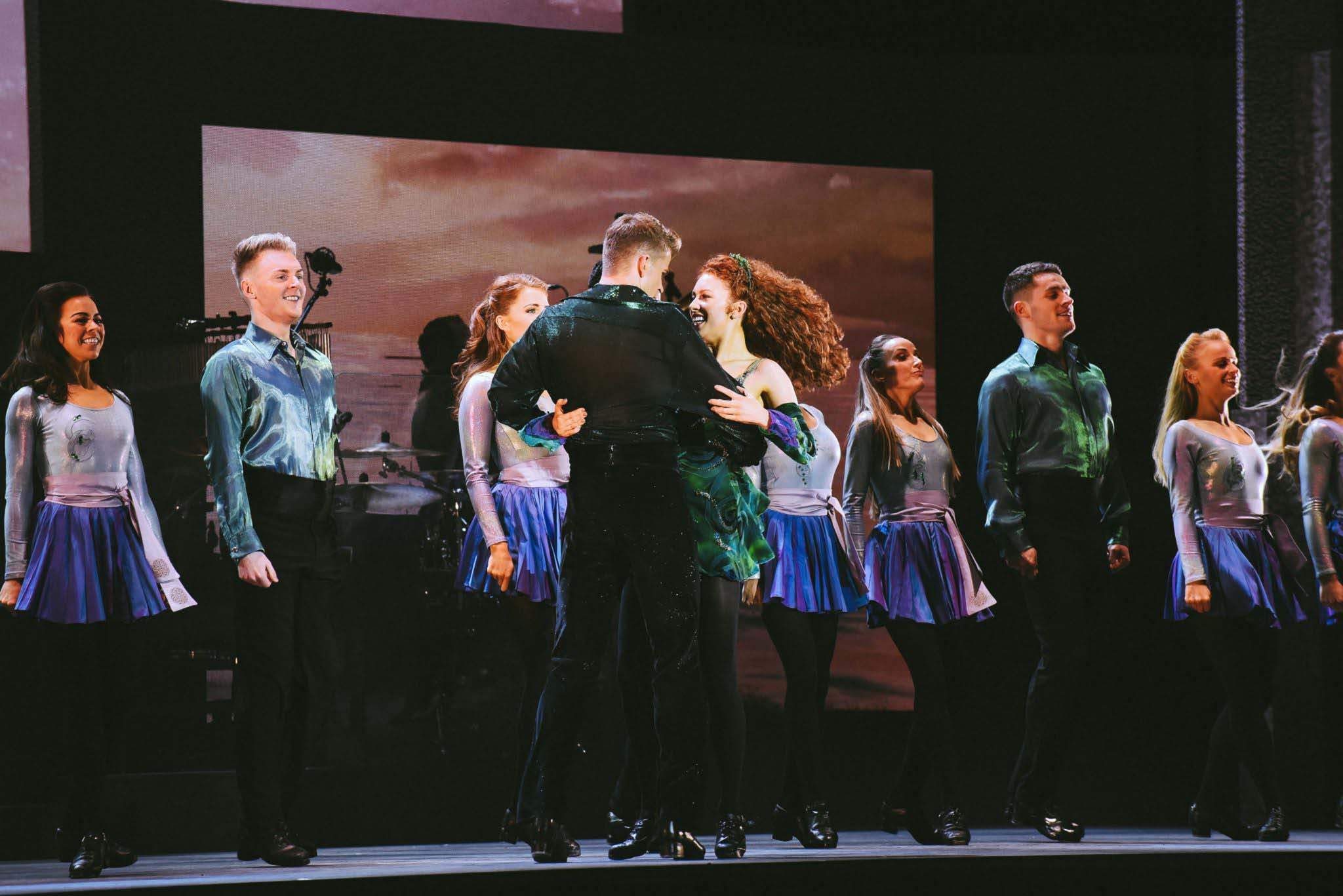
Riverdance. Credit: Miguel Ruiz
Closer to home, Mikam maintains and rents out a dedicated sound system at the Gaiety, also managing the theatre’s sound convention system.
“I’m a sound supplier and my view is that every seat should be a good seat,” O’Gorman says. “Whatever you pay, you should get a good experience. If everyone gets a good experience, they applaud louder, which is better for the people on stage. The system in the Gaiety is like that. It matters to me when you’re up at the back of the upper circle that it’s good. In fact, I always judge it by standing back up there when we do the pantos; if they’re not laughing up the back, we need to adjust the sound.”
DISCERNING EAR
O’Gorman is an audiophile in every sense of the word. By his own confession, a significant portion of his disposable income goes towards his personal hi-fi system. He’ll even leave shows early if the acoustics offend his discerning ear. This makes him perhaps the most qualified person to ask: what is the best-sounding album ever recorded?
“It changes. Currently it’s Roxy Music, Avalon,” he says (honourable mentions go to Rubber Soul and the Stones’ Aftermath). “The bass player and guitarist were out of Joe Cocker’s Grease Band. The drummer is Andy Newmark, who would have been one of the last drummers in Sly and the Family Stone. Roxy Music was only a three-piece by then. It was just Bryan Ferry, Phil Manzanera and Andy Mackay, but it was recorded by Rhett Davis, and mixed by Bob Clearmountain, who’s the best engineer in the world.
“A lot of people don’t like Roxy Music because they think it’s a bit samey, but I like the funky, romantic mood, and Bryan Ferry is an unbelievable keyboard player. I updated my hi-fi the other day, so I spent more money and listened to the album again, and there are little bits I never noticed before. I doubled the price of the speakers!”


