
- Music
- 10 Jul 26
Jimmy MacCarthy reveals meaning behind ‘Ride On’: “What I had feared about this organisation became a reality, with the shooting in Trinity College”








The legendary Cork songwriter tells us the remarkable story behind one of the country’s most treasured songs – which has been covered by Christy Moore, Mary Coughlan, Coldplay, Paolo Nutini and more
As he gears up for a run of sold-out shows, Jimmy MacCarthy has sat down with Hot Press for a major interview, to finally reveal the stories behind some of his most beloved compositions – including ‘Ride On’.
To this day, ‘Ride On’ remains Christy Moore’s most-streamed track, with over 20 million listens on Spotify alone. Mary Coughlan had significant success with her own rendition, which featured on her 1987 album, Under The Influence. The song has also been performed on numerous occasions by both Coldplay and Paolo Nutini, among many other Irish and international acts.
The meaning behind the iconic song, however, has remained the subject of speculation for decades.
But as part of his new Hot Press interview – available to read in full in the current issue, which lands in shops this weekend – MacCarthy has told us that 'Ride On' was in fact inspired by a young woman he met at an anti-nuclear event at Carnsore Point, in 1979, and her involvement in a "Marxist-Leninist" group.
“She was very bright,” he tells us. “We got on like a house on fire, and we became an item.”
"Later on, she told me that she was a member of an organisation that was Marxist-Leninist. They were a collection of university graduates, and a large smattering of highly politicised working-class people. They were all very bright, and very idealistic. But that Red Brigades idea I had a problem with.
“The IRA, and offshoots of that, were born out of partition, and we all understood that,” he adds. “You’d have to be stupid not to. But imported models like the Red Brigades [an Italian militant group, active in the '70s and '80s] we did not need.
“I had prescience, with regard to this. I was having strange dreams – and I wrote ‘Ride On’. And when ‘81 came, what I had feared about this organisation became a reality, with the shooting in Trinity College.”
On March 24, 1981, British businessman Geoffrey Armstrong was shot in the legs while delivering a guest lecture in Trinity College Dublin. The three masked gunmen reportedly told the lecture theatre: "This is a protest on behalf of the H-Block prisoners."
“Once this shooting had happened – I knew she wasn’t personally involved in anything extreme, but she was part of this organisation,” MacCarthy notes. “So I parted – and therefore: ‘I could never go with you, no matter how I wanted to.’”
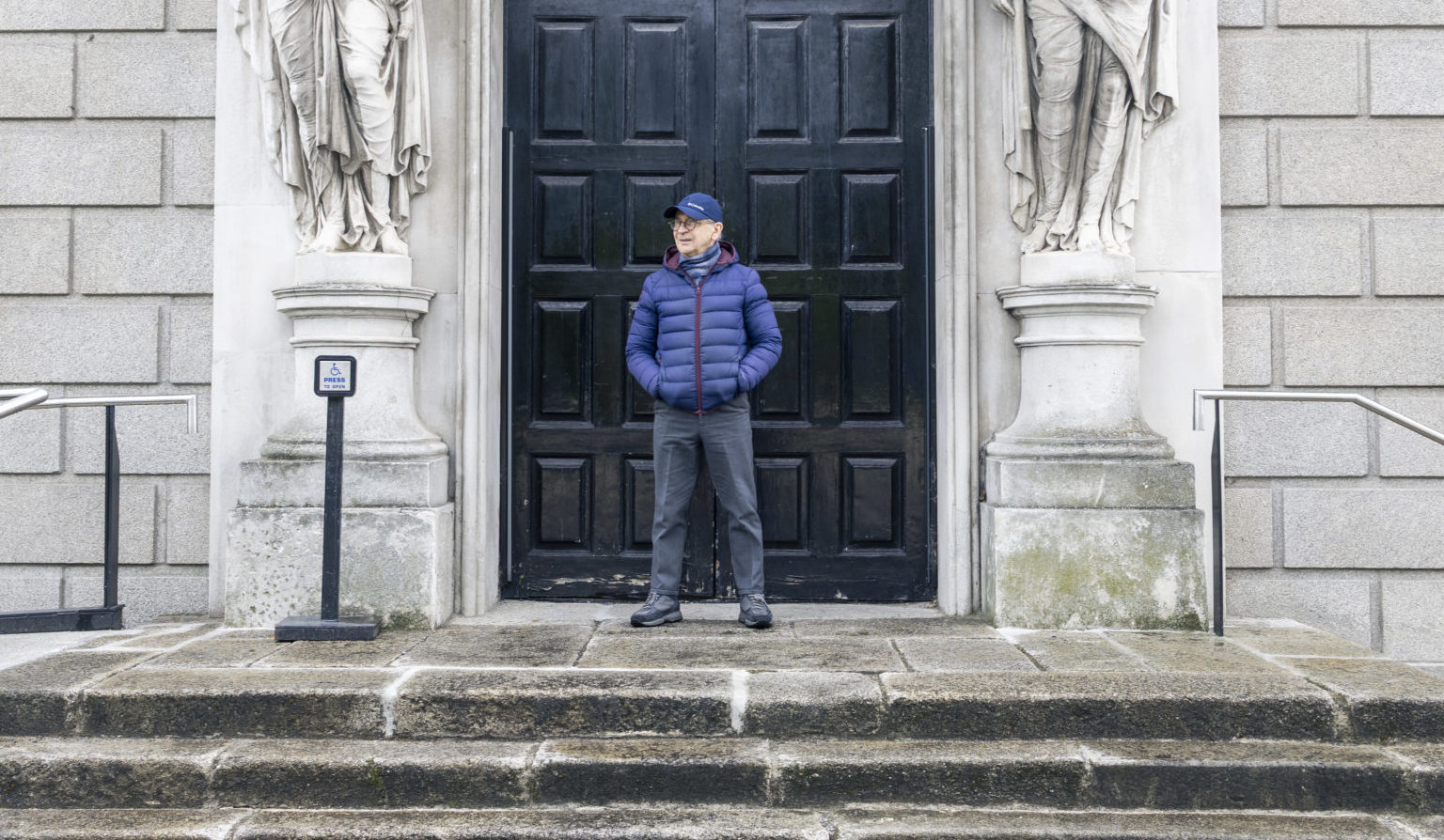
Credit: Cat Gundry-Beck
Elsewhere in the interview, the revered songwriter reflects on an extraordinary journey through life and music, and reveals the stories behind several of his other classic tracks, including ‘No Frontiers’, ‘Bright Blue Rose’ and ‘Missing You’.
He also tells us about his plans to re-release his debut album, The Song Of The Singing Horseman, this autumn – followed by a reworked version of The Dreamer in 2027.
The re-release of The Song Of The Singing Horseman – which originally came out in 1991, via Mulligan Records – will coincide with a run of gigs, including the Cork Opera House (October 1 & 20) and the National Concert Hall, Dublin (October 14 & 22).
Read the full interview in the current issue of Hot Press – featuring cover star Charli XCX – in shops this weekend, and available to order online:


RELATED

- Music
- 15 Oct 26
Orbital announce new album and Irish shows


- Pics & Vids
- 15 Oct 26
Heidi Curtis at Whelan's (Photos)


- Music
- 15 Oct 26