
- Music
- 10 Jun 26
Jack Antonoff: “The level to which Bleachers and my music have grown, makes me feel a deeper and deeper sense of trolling towards those who aren’t a part of it"








As indie-pop maestros Bleachers return with the brilliant Everyone For Ten Minutes, frontman and super-producer Jack Antonoff discusses the record’s creation, being inspired by Springsteen, life in the public eye, AI and The Sopranos. Plus he chats about his work with icons Taylor Swift, Kendrick Lamar and Lana Del Rey.
Led by super-producer Jack Antonoff, New Jersey crew Bleachers are back with their electrifying new album, Everyone For Ten Minutes. Once again, the record wonderfully balances uplifting and anthemic rock with more melancholy moments, all mixed with pop and new wave flourishes. The album also boasts sumptuous widescreen production, as might be expected from a group headed up by Antonoff. One of the most in-demand producers in the world, his glittering CV includes work on smash hit albums by the iconic likes of Taylor Swift, Kendrick Lamar and more.
When I catch up with the frontman, he’s in Akansas visiting his wife, Hollywood star Margaret Qualley. Tomorrow, he’s due to fly to California, as Bleachers gear up for an international tour to promote Everyone For Ten Minutes. This is the group’s sixth album, and I wonder how the process of making it compared to the others – was it easier or more difficult?
“It’s always a mountain,” says the friendly Antonoff. “They’re all such different albums, but the process is very similar. One minute I’m a god, and at another, I’m a fucking idiot. I’m vacillating back and forth between knowing exactly how to do this, and then somehow forgetting absolutely everything. It stuns me how that happens – and it also thrills me. What’s similar is what it takes to do it.”
Does it ever get frustrating?
“Yeah, but in a beautiful way,” he considers. “I think that’s what’s so powerful about it – it’s the kind of work that you can’t master. Everything you know becomes irrelevant, and everything you don’t know, you’re searching for. You can’t do something the same way twice. Everything just works or doesn’t, so you can’t have an almost-great song. You’re searching for this feeling, and the feeling is in your gut.
“And your gut is loud – there’s nothing louder than your gut telling you what’s right and what’s wrong, if you’re listening. So you’re just sitting there and the randomness is stunning. You’re working forever and ever on something in a great studio, and it’s just not right. And then you’re at home, maybe recording a little thing on a tape deck, and it sounds better than anything you did for the past three weeks. So I do understand why some people go fucking insane – I’m trying not to!”
The soaring nature of Bleachers’ songs recalls fellow New Jersey native Bruce Springsteen, who’s actually guested on one of the band’s previous albums. Was he an inspiration to the group growing up?
“Yeah, but in the biggest way,” says Antonoff. “Because there’s this long history in New Jersey of how valuable, but also unseen, our music and culture are. He’s obviously the loudest voice waving that flag around the world. His influence can’t be overstated, it’s monumental.”
Speaking of New Jersey, before Christmas I started rewatching The Sopranos, which of course is set in the state. For me, along with Twin Peaks, it remains the greatest TV show of all time. As a native of New Jersey, what did Antonoff make of its huge international impact?
“Well, I completely agree on those two picks as the greatest TV shows of all time,” he replies. “The only one I would add in there would be The Wire. It’s weird, I actually started rewatching The Sopranos recently too! In terms of its success, it was interesting. When you’re from New Jersey and something from there catches everyone, part of you is proud and part of you is like, ‘Ah, fuck off’. Understandably, just because we are so self-sufficient in New Jersey. I think that’s actually very similar to the Irish spirit, which is probably why I connect so much to Irish music.
ARMOUR AND POWER
“We’ve been so left out having that proximity to New York City, and for some reason, always being the butt of a joke that doesn’t even make sense. The energy is more like, ‘Fuck it, we’re going to do our own thing.’ There’s an armour and power in feeling unseen that we like.”
Rewatching The Sopranos, one of the aspects that caught me was how, in its focus on sharks and grifters, it anticipated a lot of where society and politics were going.
“Yeah, I completely agree with that,” nods Antonoff. “It was obviously way ahead of its time and it’s better than ever. The part the world missed is that, even if you’re going to be a completely unsavoury character, to have a lot of heart. No matter what Tony did, he had a lot of heart, somehow. That’s the great trick of the show. I think some of the Tony Sopranos of today miss the most important part (laughs).”
Returning to Everyone For Ten Minutes, on one track, ‘Dirty Wedding Dress’, Antonoff refers to being approached by a reporter and asked to read an article. Was that a positive or negative experience?
“Very negative,” he says. “I was backstage at a concert and casually talking to this reporter, not even doing an interview. The death of my sister came up and I was telling her about it. She went, ‘Oh, I know, that’s canon.’ It was a very small moment that maybe this reporter would never even remember, but it was a stunning moment to me. It put me very clearly in touch with how quickly someone can reduce your humanity to a known fact, or something they’ve heard before.
“What I wanted to was say, ‘Well no, that’s an amazing reduction of something that I’ve not only been through, but I’m experiencing my whole life, including tonight and talking to you.’ A lot of my albums and work are telegraphing to a very specific group of people, who are my people. And that can be anyone, but it’s not everyone. There’s this misunderstanding that music, especially popular music, is made to please everyone, and it’s the exact opposite.
CONSTANT REDIRECTION
“So it stunned me, and made me want to put a quip about it in the song. Just what a funny experience that is, to tell your stories so deeply to a group of people. But then also people who aren’t your people hear those stories, and they can’t feel them or understand them. Because they’re not on this journey with you, yet they know something so intimate about you. How bizarre.”
It’s an odd aspect of being a public figure.
“It spoke to what it’s like to publicly make work and be any kind of public person,” continues Antonoff. “It reaffirms this idea that, just because a lot of people might know who I am, it doesn’t mean I care at all about anyone but the people who are really in this long conversation with me. All my work is a constant redirection back to that.”
Meanwhile, on another track, ‘Take You Out Tonight’, Antonoff sings, “Make the records I wanna make / Fuck off and tell them anything”. Was that directed at anyone in particular?
“It’s sort of the same thing,” he considers. “I’m in a very deep relationship with my audience. Everyone’s welcome to join that relationship, but it’s not casual, it’s deep. Then there’s all these other people, these sort of transient, grifter types. They might know who I am, and then in any given moment, they feel like they want me to answer to them for anything. I couldn’t care less about them, so it’s, ‘Make the records I wanna make / Fuck off and tell them anything’.
“I’m like, ‘Kind of just lie to them and tell them whatever the hell I want.’ It’s a thing that’s probably getting better now, but for a long time, a lot of us were really inundated with the least impactful people in our life. And very often, they weren’t even people, and that’s been the nature of the failed experiment of the internet. The album title, and the album itself, speak to it.
“It is just reclaiming our humanity. It’s me as myself, as the stories I tell, honouring what the band does, all these things. Half the people who might be talking about me online are literally not even human beings. And the other half, I don’t think they’re really even part of my audience or care. So fuck off – I’ll tell you whatever I want! I’ll tell you my hair is pink and I live in fuckin’ Brazil. You don’t get to be a part of this.
“The level to which Bleachers and my music have grown, makes me feel a deeper and deeper sense of trolling towards those who aren’t a part of it.”
There aren’t many people who’ve enjoyed Antonoff’s success as both artist and producer. Growing up, did he always want to pursue both?
“I didn’t want anything, it’s just what I did,” he reflects. “I wrote and recorded songs, and I had my band. And then I always helped my friends with their songs – I didn’t know that was called producing at the time. But with the amount that I tour, there’s a very few people like me out there who are truly doing both. I’m doing both with every ounce of my being.
“A lot of other people out there are more a producer, and will do an album here and there. Or they’re really an artist, and they’ll help someone here and there. But I’m doing both all day every day, with everything.”
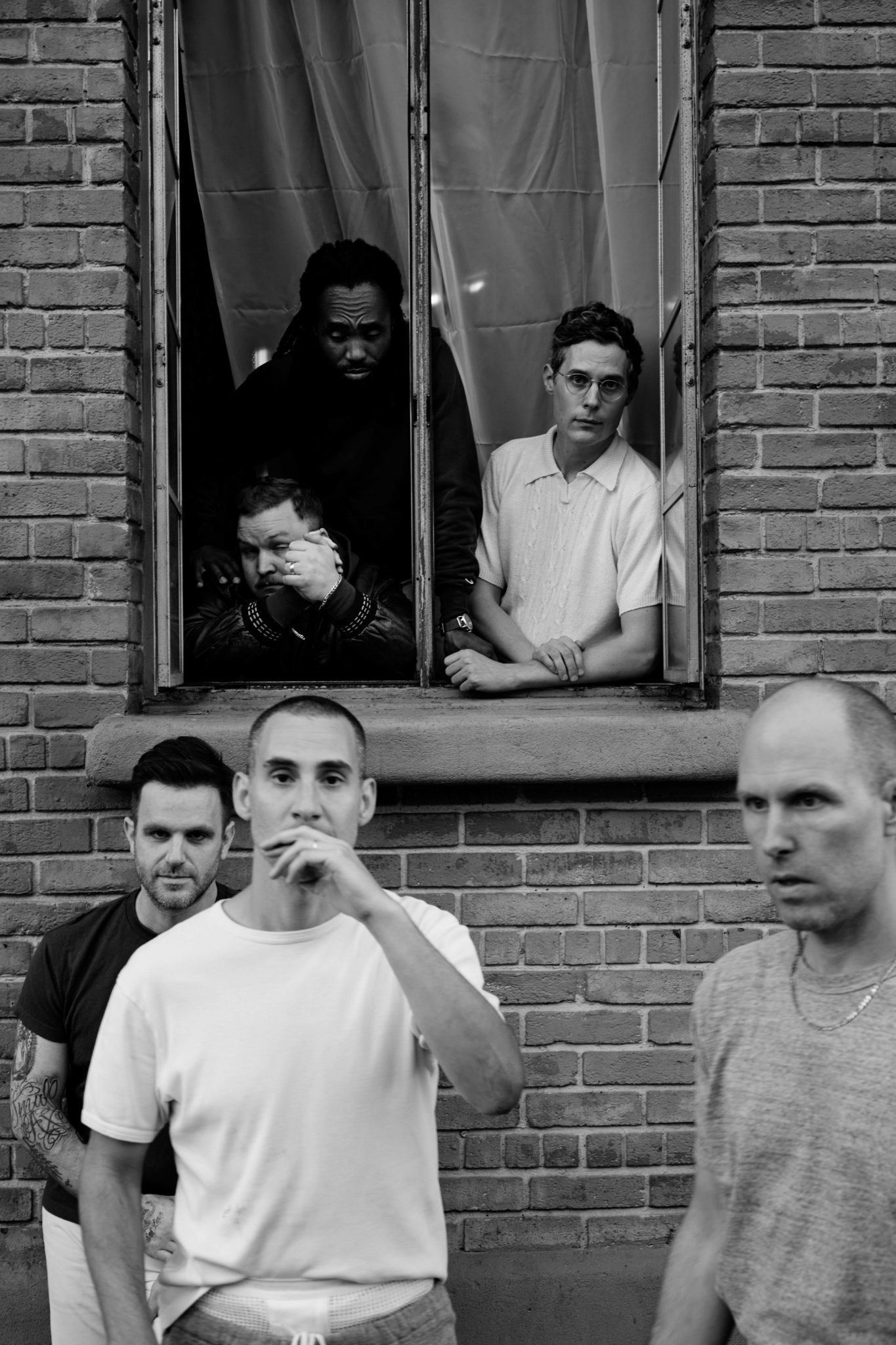 Bleachers
Does that leave less time for personal stuff?
“No. A lot of people maybe wonder how I move between them all. It doesn’t feel much different to when I was 15 – they all happened at the same time and I loved doing it. I recognise how non-traditional it is just in my conversations with people. But I don’t feel that way when I’m in the studio writing a song, and then the Bleachers guys come and play on it. And then later that day, someone else comes in and we work on their record – that’s just my life.”
In the early days of Bleachers, Antonoff spoke of being inspired by the movies and soundtracks of John Hughes, the late movie director responsible for such teen classics as The Breakfast Club and Ferris Bueller’s Day Off. Does he continue to be an influence?
“In the beginning of Bleachers, it was a literal sonic influence,” says Jack. “But it’s always been a big influence. He’s a complete master at sewing together this great sadness and dissonance with great hope. It’s almost like there’s no in between, there’s just the two edges. Total despair or total elated hope. It just reminded me so much of how I feel inside.”
PERFECT SOUNDTRACK
For me, Ferris Bueller is Hughes’ masterpiece. Interestingly, although it boasts an all-time classic soundtrack, it didn’t receive an official release until years later, as the director initially felt the songs didn’t work together as a collection. Is it also Jack’s favourite Hughes movie?
“Yeah, it’s a perfect soundtrack,” he says. “I don’t know, I think maybe The Breakfast Club would be my favourite. I think that’s just a perfect movie, it’s almost a piece of theatre. Then there’s the way the music plays with it. The whole thing is like a mix of utter despair and boredom, and then it’s completely on fire, fighting and dancing. I think it speaks to what it’s like to be around more than a lot of other things.”
Previously, there have been occasional co-writes on Bleachers albums, including with Lana Del Rey. Were there any notable co-writes this time out?
“The band helped write more of this album than they have in the past,” says Jack. “That’s the most notable contribution, that a lot more music came from just messing around live and seeing what happens. But you call on people at different times. Sometimes I really want to be alone, sometimes I want to have that weird shock of having a friend or collaborator come in and mess around with me on something.
How did the previous co-writing with Del Rey happen?
“When you’re working on albums with people, you spend a lot of time together, so everyone’s hearing everything. When someone has an idea for something, it’s coming out of them no matter what. I’m always very open to these people in my life who know me best. So it just happens very organically.”
When Antonoff sets out to produce an album, does the artist explain the shape and concept, or do they simply ask him to come and do what he does? Or is it a mix of both?
“It’s a mix of both,” he explains. “Usually, I find the real journey is to find that shape and concept together. I also always feel that shape and concept starts as one thing, and then quite quickly morphs into something else. Sometimes I feel having that concept is almost just armour to get into the room, and then once you actually start making things, the concept changes to what is not describable.
“But saying, ‘Let’s just make something that’s indescribable’ is a hard way to get into a room, so often the journey into the room is, ‘I love this, and these super-roomy drum sounds.’ Or, ‘I want a baritone guitar, kind of all sloppy.’ Or it could be, ‘I’ve been really into this Solina String, high synthesiser sound.’ All these little things that lead you from one journey to the next, and set you off on the trail.
UNIQUE PERSONA
“You can’t say, ‘Alright, we’re going off on the journey, and the goal is to make the greatest album of all time that transcends everything, and speaks to exactly what it’s like to be me in this moment.’ You’d be like, ‘Okay, well where you do you start?’ So you take baby steps, like a new guitar. For me, on the Bleachers album, it was the harpischord and the harmonica. Little sounds that inspire you and make you jump out of bed in the morning, and make you rush back to hear that sound again.
“And before you know it, you’ve tricked yourself into telling a really serious truth, that you might have been too scared to even consciously tell.”
Del Rey has such a unique persona and aesthetic, is capturing that feel like a specific frequency you have to tune into?
“Yes, but the ones who are the most specific, are also the ones you can be the most adventurous with,” says Antonoff. “Because when I’m working with Lana, I never think to myself, ‘This isn’t Lana’ – because everything she does is Lana. When she goes and gets a coffee, it’s the most specific thing in the world. She’s so firm in who she is, it actually creates a lot of freedom. I think that’s why we’re able to make so much experimental music together.”
Showing remarkable range, Antonoff was also among the team who produced hip hop superstar Kendrick Lamar’s 2024 album GNX. What was the experience like?
“It was a joy,” he enthuses. “It’s not very different to the way I’ve been describing the process of a lot of these records, which is some interesting ideas, but mostly what I remember are the great times. And then the true genius just comes in the weirdest moments, when you didn’t plan it, and I love that. I mean, that was a really special album to make, and it was a very small group of people who just loved being in a room together.”
It’s interesting that when you look at Lamar’s 2015 masterpiece To Pimp A Butterfly, it’s almost like an anthology of styles, incorporating hip hip, electro, jazz, funk and more. It must make for a great adventure as a producer.
“Well, it’s bit like what I was saying about being specific, which is, if you’re very firm in who you are, it allows you even more space to experiment.”
Another notable guest on early Bleachers material was electro-pop pioneer Vince Clarke, the man who’s crafted numerous era-defining hits as part of Erasure, Depeche Mode and Yazoo. Had Antonoff always been a fan?
“Well, Yazoo, Depeche Mode and Erasure, for different reasons, are all three of the most important bands to me,” he says. “So I always dreamed about working with Vince, and on my first album, I called him and he picked up. That’s really the story! It was brilliant – he’s a genius and one of the great architects of modern pop music. I’m into all of the stuff he’s done, and honestly, my favourite is probably Yazoo. I just think that’s so timeless, beautiful and subversive.”
Of course, Antonoff is also renowned for his production work with Taylor Swift, on blockbuster albums such as Reputation, Midnights and The Tortured Poets Department. With the 18-month Eras excursion, which grossed $2 billion and became the highest grossing tour of all time, Swift became quite possibly the biggest pop star ever. What was it like for Antonoff to see that ascension?
VOTE OF CONFIDENCE
“Just a real vote of confidence in honesty and specificity,” he says. “There was never a moment where we talked about doing anything besides whatever the hell she was feeling in that moment. The only lesson I’ve learned is the route there is just by making what you absolutely love and feel compelled to write about. Which isn’t always what’s signalled down from other sources, but that’s just the truth. She’s just that good.”
It’s interesting that throughout our discussion, Antonoff has emphasised the importance of individualism and instinct. It’s a long way from art being made through industrialised mass production – a direction some tell us we’re heading with AI.
“But you gotta listen to who’s saying that, though,” Antonoff adroitly observes. “You’re not hearing that from artists – you’re hearing that from a bunch of old guys who probably will profit off it. It’s not real, it’s just a scam to extort more money from the thing. But art will remain exactly as it is, and will probably somehow get better and better.”
Finally, Antonoff has a simple reaction to the prospect of playing in Ireland later this year.
“I cannot fucking wait!”
• Everyone For Ten Minutes is released on May 22. Bleachers play 3Olympia, Dublin on November 30.
RELATED

- Music
- 24 Oct 26
Andy Irvine: "When I took on Woody, I took it all on"


- Music
- 23 Oct 26
Sonny Fodera announces IMMA show for August 2027
RELATED


- Music
- 23 Oct 26
Dónal Lunny: Legendary Irish musician dies, aged 79

- Music
- 23 Oct 26
John Mayer releases new single 'Tom and Jerry'

- Music
- 23 Oct 26