
- Culture
- 26 Mar 26
John Carter Cash: "I was not shielded. I was in the midst of my father’s addiction"








With new stage show, The Ballad of Johnny & June: The Musical, on its way to Dublin, John Carter Cash talks about his famous musical parents and their relationships with the likes of U2, Kris Kristofferson, Rick Rubin and Joe Strummer.
While my Favourite Album of All Time changes daily, Favourite Gig will always be a dead heat between The Clash in the London Lyceum on December 28th 1978 as part of the Give ‘Em Enough Rope tour and Johnny Cash, The Carter Cash Family and Kris Kristofferson’s February 10th 1993 visit to the University Concert Hall, Limerick.
On both occasions big blubbery man tears were cried, such was the life-affirming brilliance of what was happening on stage.
Fast forward 48 and 33 years respectively and the mere thought of them still makes me dewy eyed.
“You were there in Limerick? Wow!” enthuses John Carter Cash. “I was on that tour so you’d have seen me perform. I think we were all on fire at the time! Kris was like an uncle to me and we spent a lot of time together. I got to work with him during the latter part of his career, which was wonderful.”
After wowing the good denizens of Limerick, Johnny & Co. headed to Dublin where they played another blinder in the Olympia.
“Bono, Edge and Larry Mullen were on stage with us that night,” John recalls. “We did ‘Big River’ together. Bono was reading the lyrics off his hand!”
The morning after the night before was spent in Windmill Lane Studio where the Man In Black recorded ‘The Wanderer’ with U2.
Relegating Bono to backing vocals, the Zooropa album closer triggered a Johnny Cash career renaissance that was later to continue with the Rick Rubin-produced series of American Recordings, more of which anon.
“Dad was very excited, I was very excited – I love U2,” he resumes. “Bono was still working on the lyrics to ‘The Wanderer’ when we walked into the studio. The next day my dad finished the vocals and it turned out wonderful.”
Bono looked decidedly unimpressed when he asked me once, “What’s your favourite U2 song?” and without thinking I said, ‘The Wanderer’.
“The one he’s in the background on!” John laughs. “For me, it’d be ‘Bullet The Blue Sky’ but there are so many great U2 songs.”
Johnny Cash’s stock was already high here having gifted us – and the rest of the world – ‘40 Shades Of Green’.
“Dad had been travelling for a while and always fantasised about coming to Ireland. When he eventually did, he was descending in the plane whilst looking at this map with all the different Irish towns and cities, which he tied into the lyrics. It just worked beautifully and touched so many people. A lot of them think it’s an old Irish folk ballad but my father wrote it in 1959.”
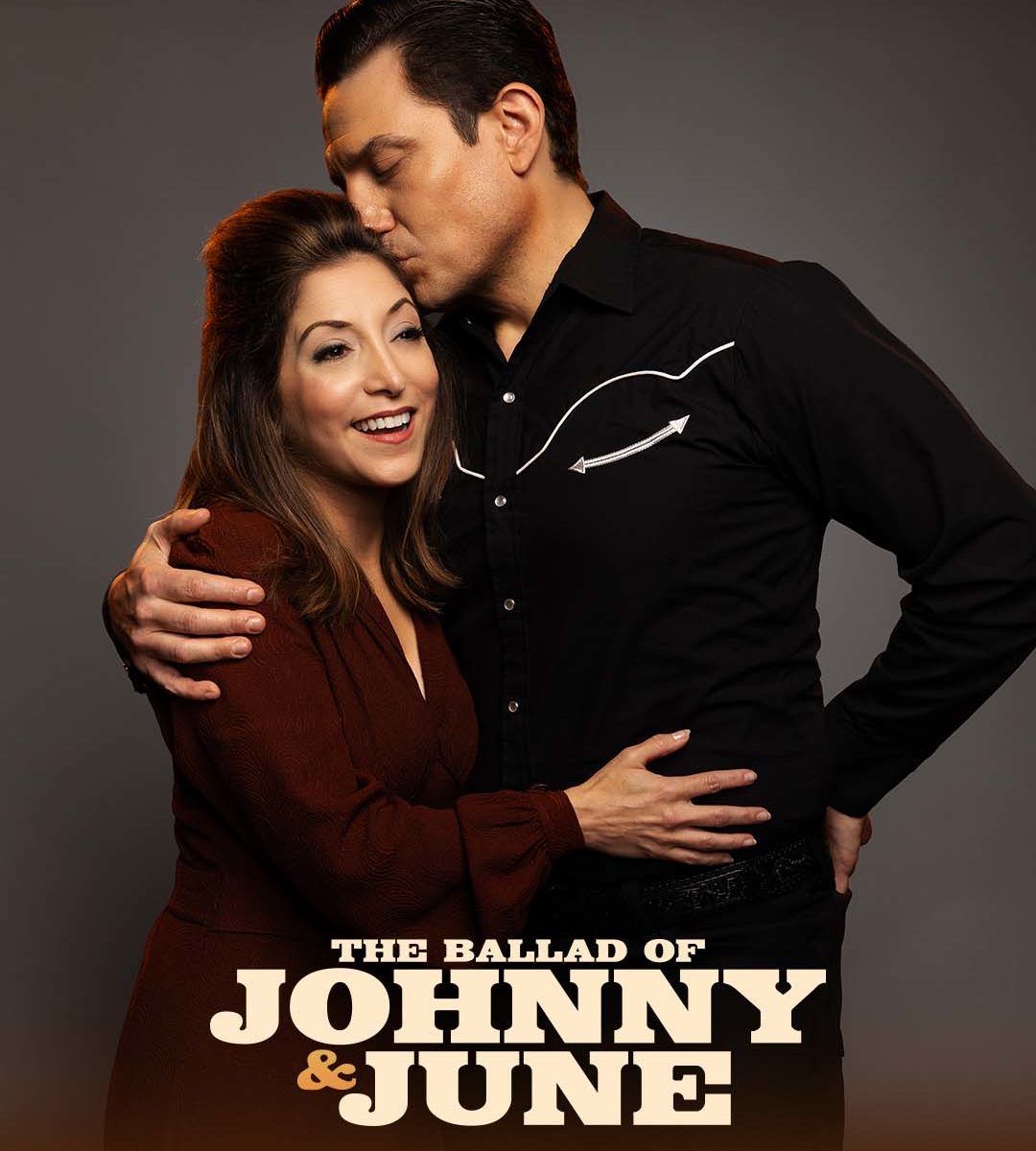
The only child of Johnny Cash and his second wife June Carter Cash, who was also on stage that night in Limerick, John is backstage at the Bord Gáis Energy Theatre which from March 31-April 11 is hosting the new stage show, The Ballad Of Johnny & June: The Musical.
Already a smash hit in North America, it’s directed by Des McAnuff, a serial Tony and Laurence Olivier Award-winner who’s previously scored Broadway hits with the likes of Big River, The Who’s Tommy and Jersey Boys.
“My father’s favourite play was Big River, so I couldn’t pass up on the opportunity of collaborating with Des and the Dodger Group,” Carter Cash resumes. “The time I spent working on the play with him – and it was a lot of hours – meant so much. All the time, they were recording our conversations. Then they came to me and said they wanted my character to be the one to break the fourth wall by singing the theme song and narrating the story of Johnny and June. I was a little nervous and wanted to see how that worked out – which is brilliantly!”
Is it career spanning or a snapshot of a particular time in his parents’ lives?
“No, it’s the entire life. There’s not different actors playing different ages, though, it’s the same ones the whole way through. It shows my father’s life when he was young, when he lost his brother, went into the air force – he was a high-speed morse code interceptor – and then coming back and working on those early recordings in the Sun Records studios.
“The Walk The Line film ended in 1968 like it was happily ever after – and it wasn’t. This shows the hardships my parents endured in the 1980s. It shows them making it through that and getting stronger because of it.”
Asked whether he was shielded from the darkness that crept into his parents’ lives, John takes a gulp of water and then says, “No, I was not shielded. I was in the midst of my father’s addiction. I was on the road with him. Travelling, I was in a room with my Dad and I could hear his laboured breathing and everything. There were a few really low moments where he couldn’t make it, he fell down… it was bad. Then he turned around and changed his life. We had an intervention and he went to the Betty Ford Center. There were many years of sobriety after that but my Dad did go back to addiction and struggle. I’ve also dealt with addiction and struggle.”
Did Johnny immediately jump at the idea of working with Rick Rubin or did he need convincing?
“What he thought at first was: ‘Why do you want to work with me? What’s your deal? What do you want to get out of it?’ The answer being that Rick was looking for a different direction and more serious side to his career. He loved my Dad’s music and the heritage that was there. And then they just connected as people, they connected as friends. That’s where it was built from.
“They recorded all those songs on American I and then said, ‘Let’s bring the band in.’ They tried it but weren’t happy. It was those songs they did first that were so powerful.”
Given just how nakedly honest and mortal sounding those American Recordings are – you can literally hear the death rattle on the later songs – does John find them difficult to listen to now?
“There’s a sort of separation – there has to be for me to sit here and talk to you about Johny Cash,” he reflects. “If it was all that I did, I think I would lose my mind but I do a lot. I’m an abstract artist, I’ve an album out called Pineapple John and all these other things. I’m grateful for that, that’s how I make it.”
What did John think when he saw the ‘Hurt’ video for the first time?
“I worked on the video, so I knew the magic that was going to be in it. Dad didn’t know it yet, so I sang the scratch vocal on ‘Hurt’ with the band. Somewhere out there is that recording with Mike Campbell, Benmont Tench and Smokey Hormel. I’d like to hear it!
“But, yeah, it impacted me greatly. Everybody was a little nervous about watching it. How’s Dad going to react? Well, Dad was like a little kid – ‘This is going to be a huge hit!’ He knew how good it was.”
We’ve mainly been talking about Johnny but June equally was a force of nature.
“She certainly was,” her son smiles, “Mom’s just been inducted into the Country Music Hall of Fame. She wrote ‘Ring Of Fire’ and sang those Carter Family songs on the road for decades, touching so many people around the world. She was very close to other artists like Kris Kristofferson, Larry Gatlin, Waylon Jennings and Jessi Colter and helped them through their own struggles. She was headstrong but also kind, funny and heartfelt. She was dancing on stage up until the end of her career, so it was a life well and fully lived.”
Watching The Ballad Of Johnny & June, you realise that Johnny Cash was a punk rocker before the term was even invented.
“He was,” his son agrees. “You mentioned The Clash earlier – well, when Dad was recording American V with ‘Hurt’ and all those other wonderful songs, Joe Strummer was in the studio all the time. He was just so tender, positive, energetic, hopeful and fun to be around. Joe was never pushy, he was just there.”
What was the catalyst for Johnny ‘n’ Joe duetting on Bob Marley’s ‘Redemption Song’?
“It would have been me,” John notes. “Rick wanted Dad to do ‘One Love’ but he didn’t like the idea. So I suggested ‘Redemption Song’ and he really wanted to do it when he heard it again. Joe loved it as well – which comes through very strongly on the recording.”
What are his most treasured moments of touring round the world with Johnny and June?
“It’s those times on stage that were so powerful, but it was also the trips to museums, going to the countryside and meeting the people,” John concludes. “I had the chance of going to Czechoslovakia when I seven-years old. I went to Hungary when I was fifteen and toured Japan and Australia with my parents. While in Australia, I worked on a ranch for three weeks herding cattle with a motorcycle. So many amazing things happened.”
• The Ballad Of Johnny & June: The Musical is on at the Bord Gáis Energy Theatre, Dublin from March 31-April 11
RELATED

- Culture
- 19 Dec 25
Guinness returns to 3Arena after more than 15 years


- Film And TV
- 28 Oct 25


