
- Sex & Drugs
- 21 May 26
Lebanon: "The magnitude of the trauma is unimaginable"








As Israeli bombs continue to rain down on Beirut, the Skoun Lebanese Addictions Center is trying to cope with an opioid addiction epidemic. Their Executive Director, Tatyana Sleiman, talks to Stuart Clark about the challenges of living and working in a warzone; the high incidence of drug use in Palestinian refugee camps; and the country’s growing methamphetamine problem.
It’s 4pm on a sunny Beirut Wednesday and the thud of Israeli Air Force bombs can be heard in the distance as we finally manage to get through on WhatsApp to Tatyana Sleiman, Executive Director at the Skoun Lebanese Addictions Center.
Skoun is the Arabic word for tranquility, something which – thanks to Israel and the US – has been shattered throughout the Middle East.
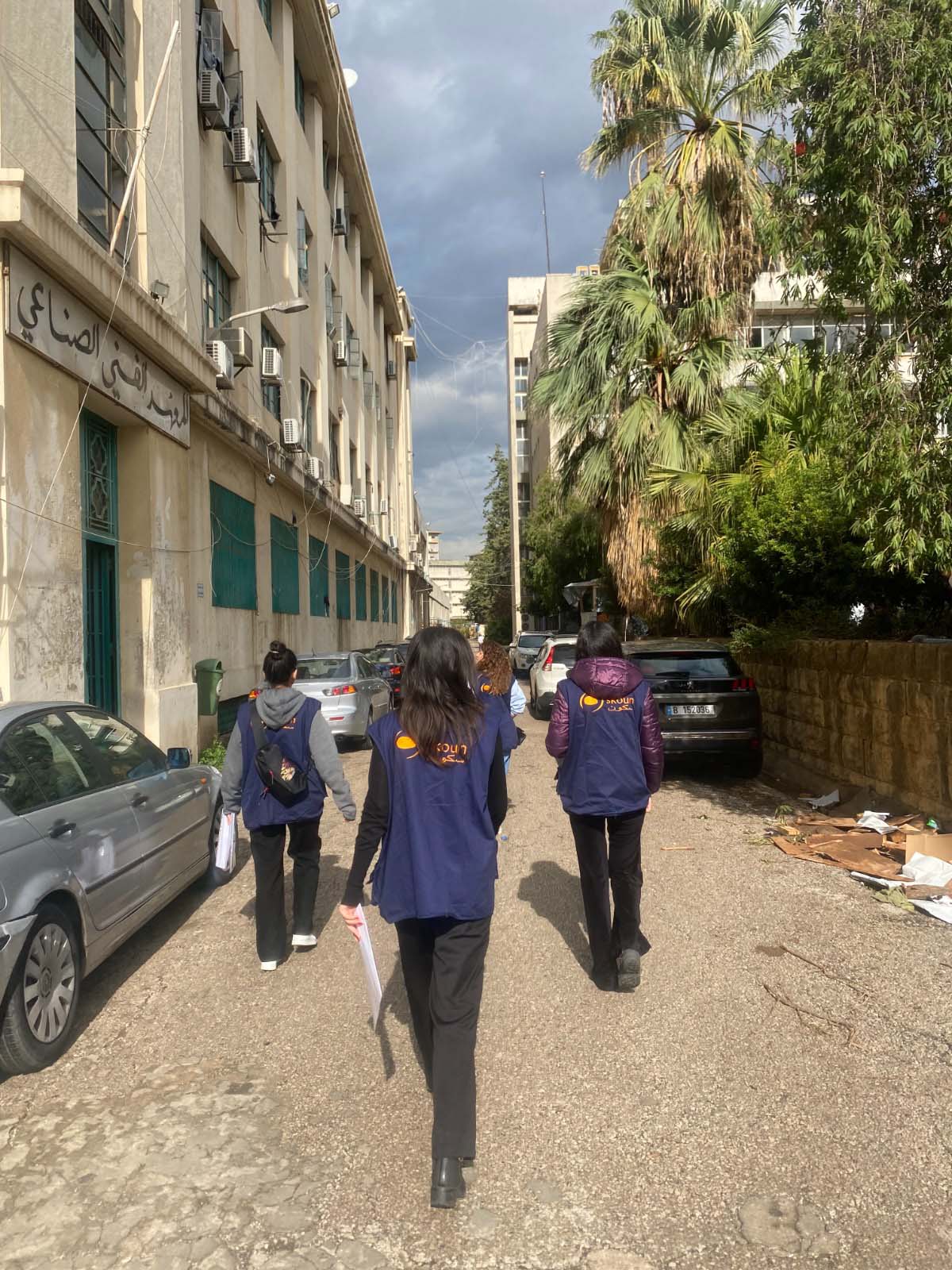
It’s made a hard job even more difficult for Tatyana and her team, who’ve continued to report for work every day despite the carnage being inflicted around them.
As this issue of Hot Press goes to print, a supposed ceasefire in Lebanon is failing to hold, with the Israeli Defence Forces continuing to attack and Hezbollah responding.
“We’d already had a war in 2024 which lasted for three months, then there was an agreement on a ceasefire,” Tatyana reflects. “The agreement has been breached many, many times since, mainly on the border in southern Lebanon and in the Bakar area. Air strikes and attacks on Beirut since September 2024 had been very rare, but – in a full-scale escalation – resumed in March at the same time as the US attacked Iran. Up till now, more than 2,000 people have been killed and almost 7,000 injured. More than 1.2 million have been displaced from their homes and their villages, which is 25% of the entire population of Lebanon.”
Asked about the daily challenges of living in a war zone, Tatyana says that, “You’ll hear on the news that a very specific area is being targeted or that an evacuation order has been sent out in advance. It makes it seem like a very ‘civilised’ attack, but it’s not.
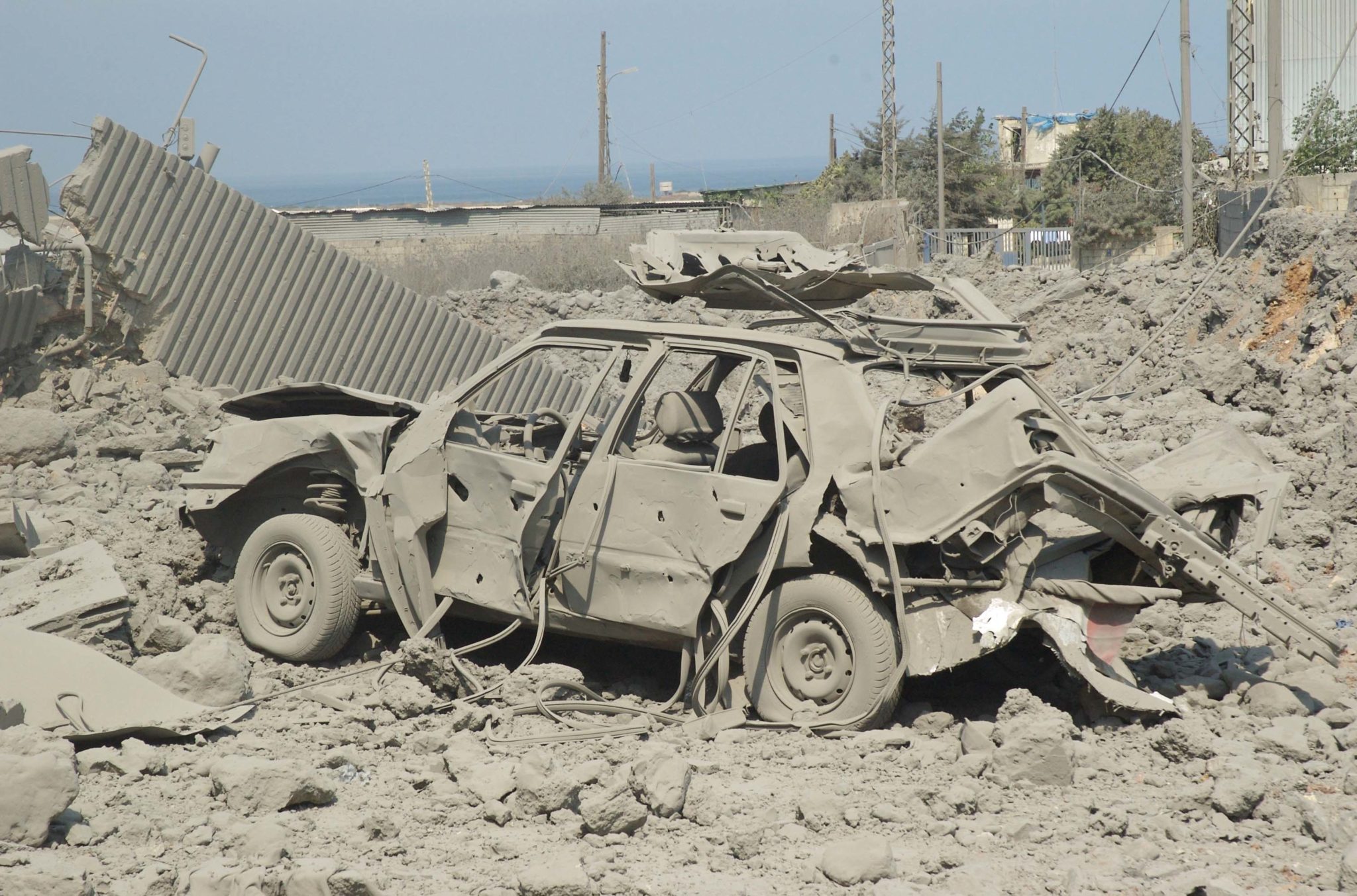
“People sometimes receive evacuation notices and have just five minutes to leave everything they’ve built during the course of their lives. At Skoun, we have five staff members who’ve been displaced from their homes since the beginning of the war, including a woman who was three-months pregnant. Another has a wife who is a severely ill cancer patient, so these are very dramatic cases of people fleeing with absolutely nothing.
“Amidst all of that,” she adds, “they continue to be super-committed to helping others and making sure that nobody’s drug treatment is interrupted.”
What is the effect on those who are forced out of their homes?
“Those who can afford it have moved into rental homes away from the directly targeted areas, but many are living on the streets or in the public schools which have been turned into collective shelters,” she explains. “A big part of the south is currently being occupied by Israeli forces, so ceasefire or no ceasefire, people can’t return. We did an impact assessment and 40% of Skoun service users have been displaced during this most recent war.”
SMUGGLING ROUTE
It might seem bizarre to some, but even conflict-addled countries like Lebanon have very serious drug issues. Tatyana’s organisation has pretty much re-written the drug addiction treatment rulebook in Lebanon.
“Skoun was founded in 2003 following previous air strikes and fighting along the southern border – unfortunately our country goes from one war to the next,” she rues. “As a consequence, there was a major opioid addiction epidemic, the most prevalent of those opioids being heroin. There were very few services supporting people who use drugs, especially ones that were harm reduction-oriented, rather than abstinence-focused.
“The founders didn’t necessarily know what ‘harm reduction’ was, but intuitively developed an outpatients treatment programme that supported people whilst giving them agency to carry on with their lives. To do this, they had to advocate for the legalisation in Lebanon of the opioid replacement drug Buprenorphine. We don’t have methadone, because the Ministry For Health is worried that there’s a higher chance of it being abused.”
Numerous hoops have to be negotiated before service users can get their hands on Buprenorphine, which in Lebanon is administered either as a fortnightly or monthly injection.
“The only people allowed to prescribe Buprenorphine are psychiatrists who’ve received specific training,” Tatyana says. “It’s the same for centres like ours: we need official ministry accreditation. There are also assigned dispensaries for Buprenorphine – you can’t just get it from any pharmacy. It’s great that we have it, but the framework is still quite rigid and not suited to the current situation in Lebanon, where you have to walk halfway across the city to get to a dispensary, only to find it’s been bombed by the Israelis.
“Whether through Skon or a few other private centres, we aren’t able to meet the needs of everyone. We have extensive waiting-lists. Opioid substitution therapy is not covered by the state, so people have to pay for their medication. We’re talking between $100-$160 a month depending on the dosage. Outside of Beirut, it becomes even more difficult.”
According to the World Health Organization, there are 281 drug-related deaths every year in Lebanon, with 40% of those who inject overdosing at least once.
While heroin is the drug that service users most commonly seek treatment for, it isn’t the only substance of concern.
“After the 2019 economic crisis, we started seeing an increased rate of people using crystal meth and other methamphetamines,” Tetyana reveals. “Which is no surprise given that Lebanon has been a methamphetamine production centre and smuggling route for quite some time. Among Skoun service users though, opioids are still the No. 1 drug. We haven’t had any reported cases of fentanyl, so it’s mainly prescription painkillers like Tramadol and actual heroin.”
RISK OF ARREST
Several international drug agencies, and the authorities in neighbouring Jordan, have accused Hezbollah of controlling the regional methamphetamine trade and acting as middlemen for Mexican and Colombian cartels.
Denying the charges, the militant group has said, “Our position on drugs, of all kinds, is clear. It’s religiously banned to manufacture, sell, buy, smuggle and consume. In some cases, the punishment could even be execution, according to Sharia laws.”
Despite these assertions, large-scale meth labs have been discovered in areas of Lebanon under Hezbollah control.
Its location notwithstanding, few countries are as diverse as Lebanon, with state recognition of 18 religious sects ranging from Armenian Apostolic to Syrian Orthodox. Does problematic drug use skew towards any particular community or is it across the board?
“Across the board,” she nods. “There are places where you’d see more concentration, but normally, it’s along socio-economic lines rather than sectarian ones. In areas where people have less access to education, proper housing and employment, opioid and methamphetamine use is widespread. Whereas in the more affluent communities, there’s a higher rate of alcohol, cocaine and MDMA use.
“While we don’t have nationally representative data, there are informal surveys which show drug use as being on the increase. Crisis after crisis, trauma after trauma, people turn to drugs as a coping mechanism.”
There’s a particularly high incidence of drug use in Lebanon’s so-called Palestinian refugee camps, which are actually settlements of up to 120,000 people, dating back to the 1948 Nakba, when 750,000
Palestinian Arabs were forced out of their own land to clear the way for the creation of Israel.
“Because they’re not legally allowed to enrol in proper employment and need permits to leave their areas, you get a lot of drug dealing and high numbers of people using,” Tatyana explains. “In order for them to contribute to the household income, some parents encourage their kids to work for these dealers.” There’s hardly any health care, let alone support for substance abuse, so the outcomes are often not good.
“The organisations who work with refugees – whether they’re Palestinian or Syrians – don’t want to add to the stigma those communities already face by highlighting problem drug use within them. Plus, Lebanon is a country that criminalises people who use drugs. If you talk about it, you’re running the risk of arrest, losing your job and your family, being kicked out of school… It comes with a very heavy burden.”
There is a relatively new diversion scheme whereby, at the judiciary’s discretion, people appear before the Drug Addiction Committee instead of going to court.
“A lot of people end up in treatment because they were smoking a joint on the street,” Tatyana says. “They don’t necessarily need long-term treatment, but they’ll go into a facility to avoid prison and a criminal record. This means there’s not enough capacity for those who really do need it.”
MOMENT OF CRISIS
The damage being done by the Trump administration is more than just military. A sizable chunk of Skoun’s funding disappeared when Elon Musk ran amok with his DOGE chainsaw.
“We used to have US funding before the Trump administration and all of the miseries that came with it,” she says. “We receive very little to no support from the Lebanese government. Most of our work is funded by international agencies. One of our biggest donors is the French Development Agency. We’ve also been supported by the EU, the Swiss, the government of Canada and (George Soros’) Open Society Foundations.”
Is Tatyana expecting a spike in drug use as a consequence of the current war in Lebanon?
“The trend is usually that during the moment of crisis – let’s say, the Beirut port explosion – we don’t necessarily see much increase,” she concludes. “It’s usually in the aftermath when people are really starting to process their trauma. The magnitude of the trauma – young people especially – are going through at the moment is unimaginable. The country is in economic collapse, and they barely have access to education or any healthy activities that can make them feel better. Drugs are very accessible and relatively cheap so, yes, we do fear an increase, particularly in the use of methamphetamines. It’s relatively new, so service providers don’t have enough experience of dealing with stimulant use of that sort. We’re trying to stay up to date but it’s not easy.”
• For more on this extraordinary story, listen to episode 5 of our Dealing With Drugs podcast.
RELATED

- Sex & Drugs
- 15 Sep 26
New Dealing With Drugs episode out now

- Sex & Drugs
- 16 Jul 26
New Dealing With Drugs podcast episode out now

RELATED

- Sex & Drugs
- 02 Jun 26
New Dealing With Drugs episode out now


- Sex & Drugs
- 09 Apr 26
'Ketamine Queen' sentenced over Matthew Perry's death

- Sex & Drugs
- 23 Mar 26
Jenny Keane announces Ireland tour

- Sex & Drugs
- 13 Mar 26