
- Film And TV
- 21 Aug 26
Teenage Sex And Death At Camp Miasma director Jane Schoenbrun: "There’s a real regression alongside the fascism to traditional ‘50s-style values"








Acclaimed director Jane Schoenbrun discusses their rip-roaring new slasher movie, Teenage Sex And Death At Camp Miasma.
When I watched Jane Schoenbrun’s neon-glow Lynchian horror/fantasy I Saw The TV Glow, I was about 20 minutes in when I texted a friend, “I think I’m watching a masterpiece.” During Teenage Sex And Death At Camp Miasma, I literally hadn’t made it through the intricately designed credits before sending a similar text. Schoenbrun’s films are visually sumptuous, emotionally piercing and feel like dispatches from somewhere cinema rarely ventures.
We’re All Going To The World’s Fair explored loneliness, adolescence and the internet, while I Saw The TV Glow transformed gender dysphoria into one of recent cinema’s most haunting horror films. Both asked what it means to suspect you’ve spent your life as the wrong person.
Schoenbrun’s latest film, Teenage Sex And Death At Camp Miasma, arrives from a different, though related place. Premiering to a standing ovation at Cannes, it is at once a gloriously bloody slasher, a satire of Hollywood’s reboot obsession, and an unexpectedly tender exploration of queer desire and cultural scripts.
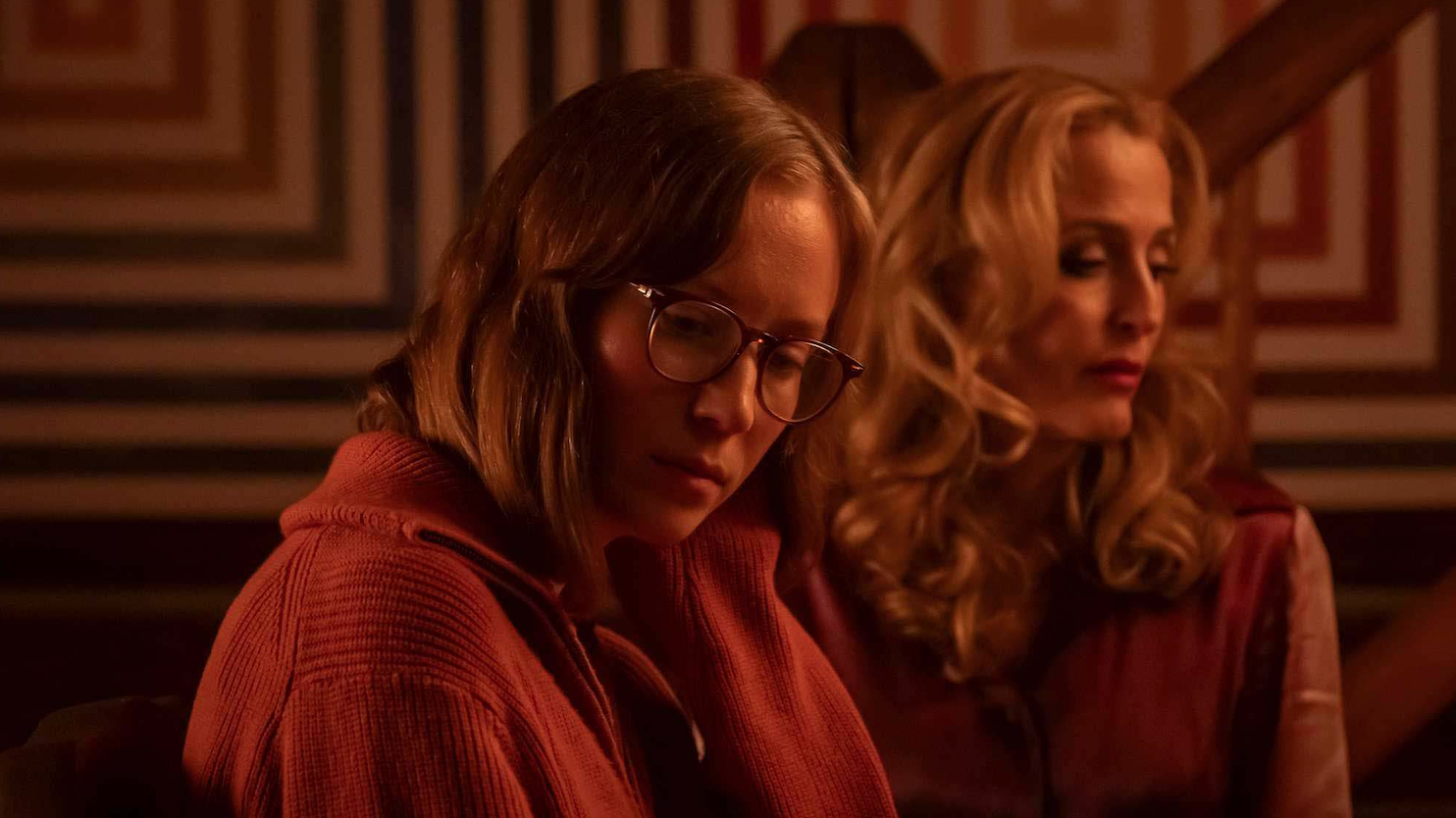
Teenage Sex and Death at Camp Miasma
Hannah Einbinder stars as Kris, an intellectually accomplished but sexually repressed filmmaker, hired to revive a beloved but deeply problematic ‘80s horror series, only to find herself drawn into an increasingly intimate relationship with its reclusive original scream queen, played by Gillian Anderson.
The casting itself is a masterstroke, with Einbinder having rapidly become beloved for her portrayal of bisexual comedy writer Ava on Hacks, while Anderson has long been a queer icon, her role as Scully in The X-Files acting as a queer awakening for many people – myself and Schoenbrun included.
Like all of Schoenbrun’s work, Camp Miasma is steeped in horror history and pop culture. But where the previous films emerged from the upheaval of coming out as trans, this one asks what comes afterwards: learning to inhabit your body, desire and identity. It’s tender, strange, gory, sexy and very funny – a confidence of tone that Schoenbrun attributes to their own sense of liberation.
“I immediately knew when we got to set that I was having so much fun, and feeling so much like myself making it,” they tell me. “It’s the first film that I felt was really representative of who I am. Glow and World’s Fair came out of this really specific and intense moment. They were trying to authentically reflect what it felt like to come out at 31 or 32, and how much of a seismic explosion that was, and how tender and terrifying that was.”
Schoenbrun remains enormously proud of those films.
“They’re really accurate reflections of that,” they say. “They’re also funny – I think there’s a tonne of dark, playful humour in those movies.”
But Camp Miasma is intentionally lighter, more funny, and more focused on pleasure itself.
“This movie was made from a place of finally starting to feel like myself,” they say. “To come into myself sexually and physically, and feel good inside my body and identity for the first time since before puberty.”
Camp Miasma is layered with ideas about identity, horror and desire, but it also delights in outrageous gore, absurd comedy and the pleasures of the slasher movie. Where I Saw The TV Glow often felt like a scream into the void, Camp Miasma is playful, flirtatious and unexpectedly hopeful.
The difference, Schoenbrun suggests, isn’t simply that they’ve become happier. It’s that they’ve become more recognisably themselves.
“I’m such a weird, goofy dork,” they laugh. “Very playful and strange. I’m not like an angsty... I mean, I’m a little angsty. I’m angsty in my own way.”
But Camp Miasma allowed playfulness to move to the foreground, as Schoenbrun plays with their obsessions – slasher movies, queer desire, camp excess, horror history – rather than only excavating pain. That, Schoenbrun believes, is both a sign of personal and artistic progression.
“I want every movie I make to feel more and more like me,” they say. “That’s a lifelong pursuit – to authentically be yourself through the medium.”
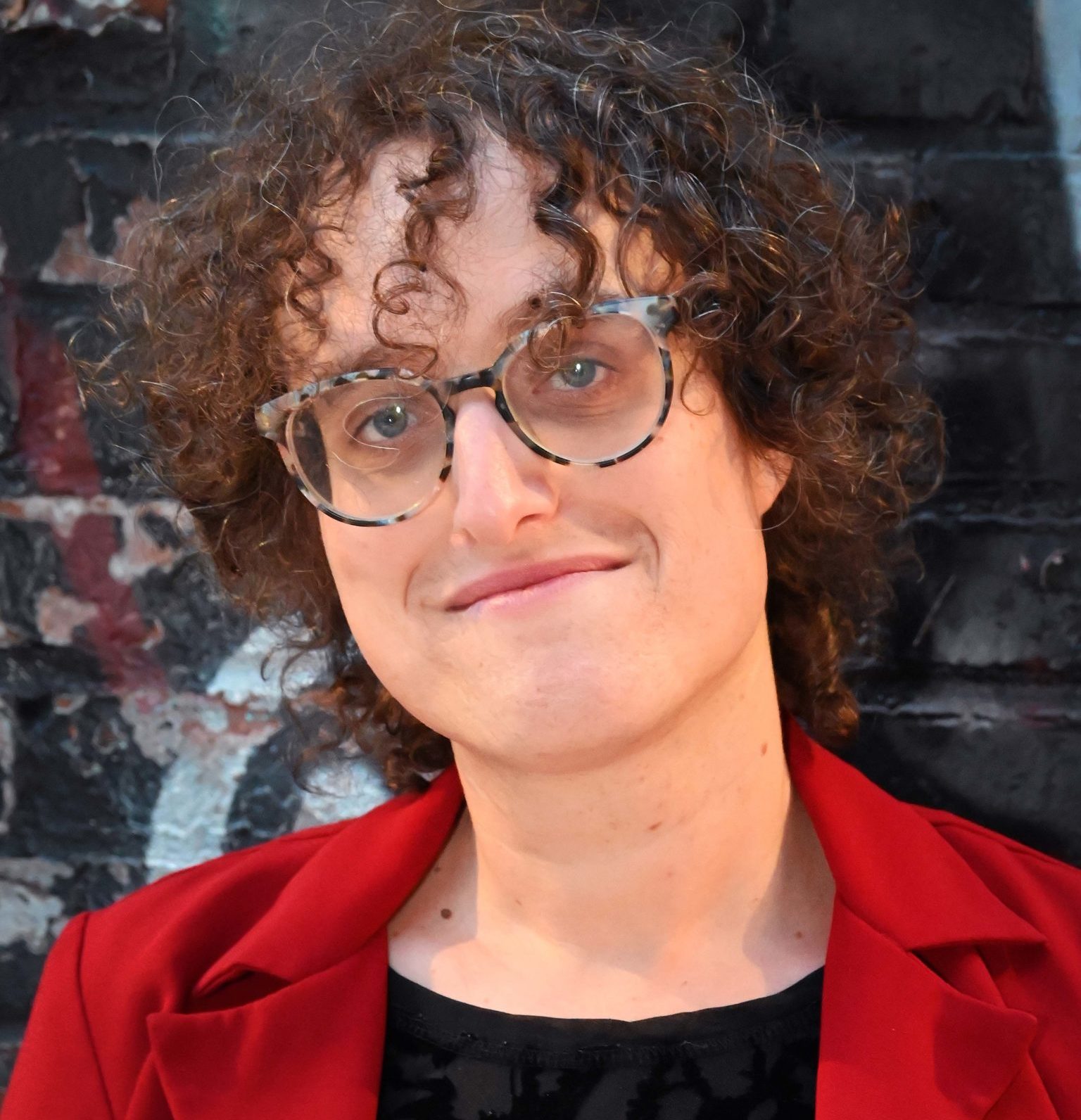
Jane Schoenbrun. Credit: Philip Romano
The intelligence, fun and understanding of visual language is rampant throughout the film. One deeply sexy monologue where Kris explains her experience of watching slasher films and imagining herself as both victim and villain, depending on the slasher films’ POV, is a brilliant exploration of how women are taught to objectify themselves; how horror villains like Leatherface, Norman Bates and Buffalo Bill have often played with (deeply problematic) trans tropes; and how horror films often allow audiences to play with ideas and experiences of gender.
It’s whipsmart and insightful, but Schoenbrun also makes the moment between Einbinder and Anderson a form of sexual intimacy itself. This philosophy of desire being messy and complicated, and often influenced by problematic media, underpins Camp Miasma’s most intimate scenes.
The film isn’t interested in sanitising desire or pretending that shame, fear and fantasy don’t coexist. Instead, it asks whether those darker impulses can be explored safely – through trust, conversation and play.
“I don’t think pretending that that under-the-lake-surface stuff doesn’t exist is the right answer,” Schoenbrun says. “We’re all in this sick culture. We’ve all been brought up in it.”
For them, the answer isn’t repression but curiosity.
“The thing that queer sex taught me,” they say, “was this feeling of safety. Knowing it’s okay to stop at any moment. Thinking of sex as play and discovery.”
That, they explain, is why Camp Miasma spends as much time with its characters eating fried chicken, smoking weed, eating candy and simply talking as it does splattering blood across the screen.
“I wanted the movie to make you feel comfortable,” they say, “so it could prod at and talk about dark, vulnerable things. I don’t think the solution is to pretend that stuff doesn’t exist. The solution is to create a healthier culture around opening up parts of ourselves that we want to keep hidden.”
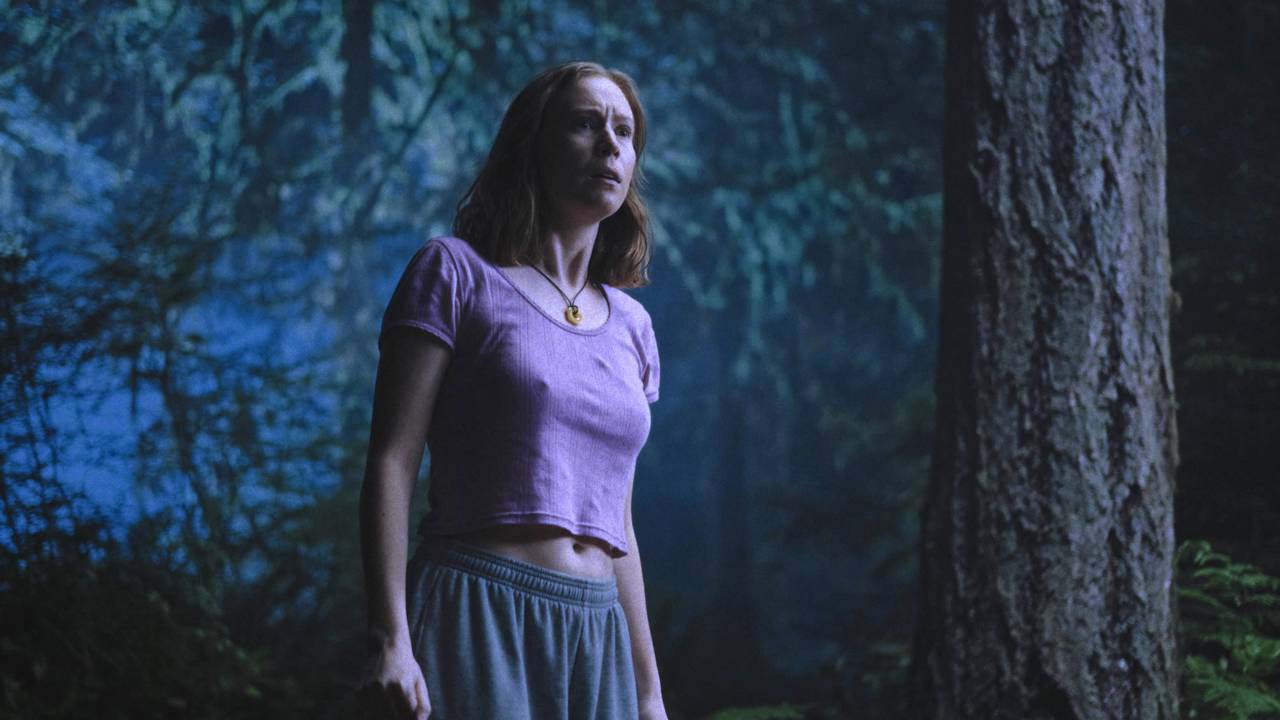
This idea of identity, sexuality and the stories we inhabit is explored in a different way, too. In Camp Miasma, Kris is hired because she’s queer, because the studio believes her identity can rehabilitate a problematic slasher franchise for contemporary audiences. It’s a pointed satire of an industry that has often embraced diversity only when it can be folded into an existing intellectual property.
When I ask Schoenbrun whether Hollywood has become better at supporting queer artists, or simply better at commercialising queerness, they laugh ruefully.
“I don’t even know that it’s doing that anymore,” they say. “I feel like it’s in a moment right now of just pretending that queerness doesn’t exist, or that it’s completely niche.”
They describe the brief period when Hollywood appeared eager to embrace LGBTQ+ stories as, at best, a compromised opportunity.
“There was this moment, six or seven years ago, when there was a shallow commodified value to queerness,” they say. “You’d get your woke points if you showed that a queer person was just like everyone else. I was never interested in that, but at least then there was an opportunity to get in there and try to make something cool within that landscape.”
That window, they believe, has closed.
“Now we’re in a really fucked-up conservative time,” they say. “There’s a real regression alongside the fascism to traditional ‘50s-style values.”
The frustration in their voice isn’t simply about queer representation. It’s about cinema itself.
“I went to the movies last night and all of the previews... I was just like, ‘What world are you guys living in?’ This ain’t 2026 as I experience it.”
In an increasingly regressive cultural moment, Schoenbrun’s films feel like beautiful, radical, necessary and deeply fun works of art. Go, be scared, be excited, be thrilled – and see if you’re brave enough to discover what lurks in the depths.
• Teenage Sex And Death In Camp Miasma is in cinemas from August 21.
RELATED


- Film And TV
- 09 Sep 26
After The Monster: Who Owns a Film When One of Its Makers Causes Harm?

- Film And TV
- 18 Aug 26
Watch: official trailer for Oasis documentary Don't Look Back in Anger
RELATED

- Film And TV
- 11 Aug 26
Final trailer released for D-Day drama Pressure starring Andrew Scott and Kerry Condon

- Film And TV
- 07 Aug 26
FILM OF THE WEEK: Love Me Tender - Reviewed by Roe McDermott


- Film And TV
- 21 Jul 26
Universal Pictures release trailer for Other Mommy

- Film And TV
- 14 Jul 26
