
- Film And TV
- 09 Nov 26
Steve Buscemi on Wild Horse Nine: "The US was complicit in this coup – and I think we as Americans should face that and reckon with it"


Stars Steve Buscemi and Mariana Di Girolamo discuss Martin McDonagh’s powerful new movie Wild Horse Nine, which explores the CIA’s murky role in the military coup in ’70s Chile.
Martin McDonagh has always been fascinated by the contradictions of human behaviour. His characters can be funny, charming and tender, while also capable of extraordinary cruelty. They rationalise their actions, evade responsibility and struggle with the uncomfortable distance between how they see themselves and what they have done.
In his latest film, Wild Horse Nine, those familiar moral preoccupations unfold against a particularly dark chapter of American foreign policy: the CIA’s involvement in Chile in the lead-up to the 1973 military coup against democratically elected socialist president Salvador Allende.
Starring John Malkovich, Sam Rockwell, Steve Buscemi, and Chilean actor Mariana Di Girolamo, the film focuses on CIA operatives Chris (Malkovich) and Lee (Rockwell), who are visiting Easter Island. In between irritating each other and bringing irreverent swearing to the sacred landscape, Chris reflects on his life’s violent work and wonders about its meaning.
With echoes of In Bruges, Wild Horse Nine brings McDonagh’s characteristic blend of absurdist humour, buddy comedy, violence and existential unease to a story about political complicity, historical accountability and the possibility of redemption.
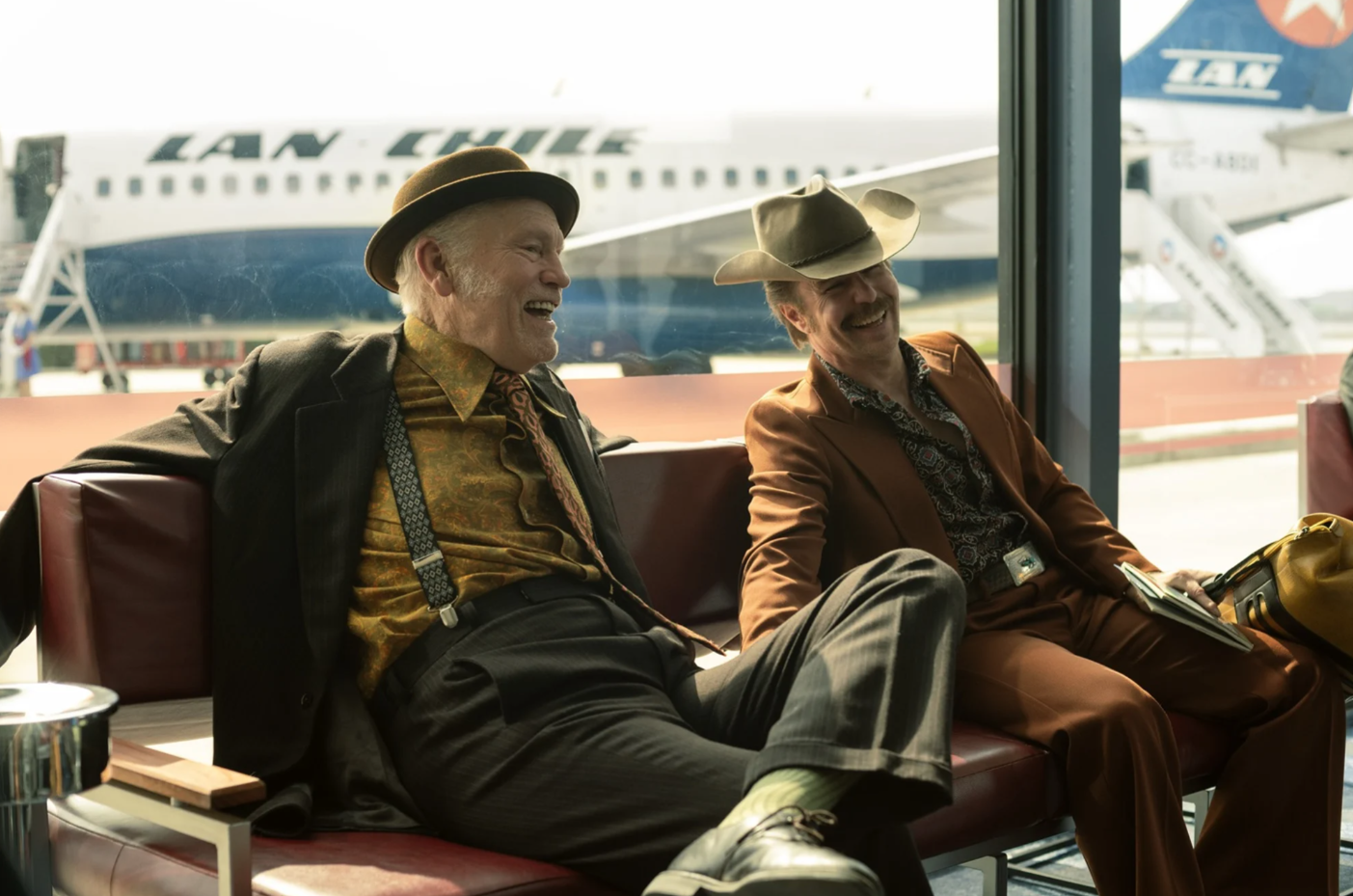
John Malkovich and Sam Rockwell in Wild Horse Nine. Photos: Searchlight Pictures
Buscemi plays CIA head honcho MJ, and the actor, whose extraordinary career has included collaborations with the Coen brothers, Quentin Tarantino and Jim Jarmusch, says that working with McDonagh was a longstanding ambition. The story goes that after seeing The Banshees Of Inisherin, he approached the filmmaker and insisted they needed to work together. When I ask him about the encounter, he laughs.
“I mean, it’s not like I threatened him!” he says. “We were hanging out in Venice. We were there at the same time, and I think I said I would love to work together.”
Buscemi was drawn not only to McDonagh’s extraordinary writing, but to the personality behind his frequently savage fictional worlds.
“It’s Martin’s writing and his filmmaking,” he notes. “It’s just so interesting, I can never figure out how he does it. And then getting to hang out with him and seeing what a gentle soul he is, that’s what really made me want to work with him. Because it makes the whole process so much easier when you get along and you have fun. And then wonderful things happen, because you’re just so compatible. I want to do my best for someone like Martin.”
That description of McDonagh as a gentle soul is particularly interesting given the brutality of his work, though perhaps the contradiction is fitting. His films frequently explore the humanity of people who have committed terrible acts, without necessarily offering them forgiveness. In Wild Horse Nine, those questions acquire an explicitly political dimension.
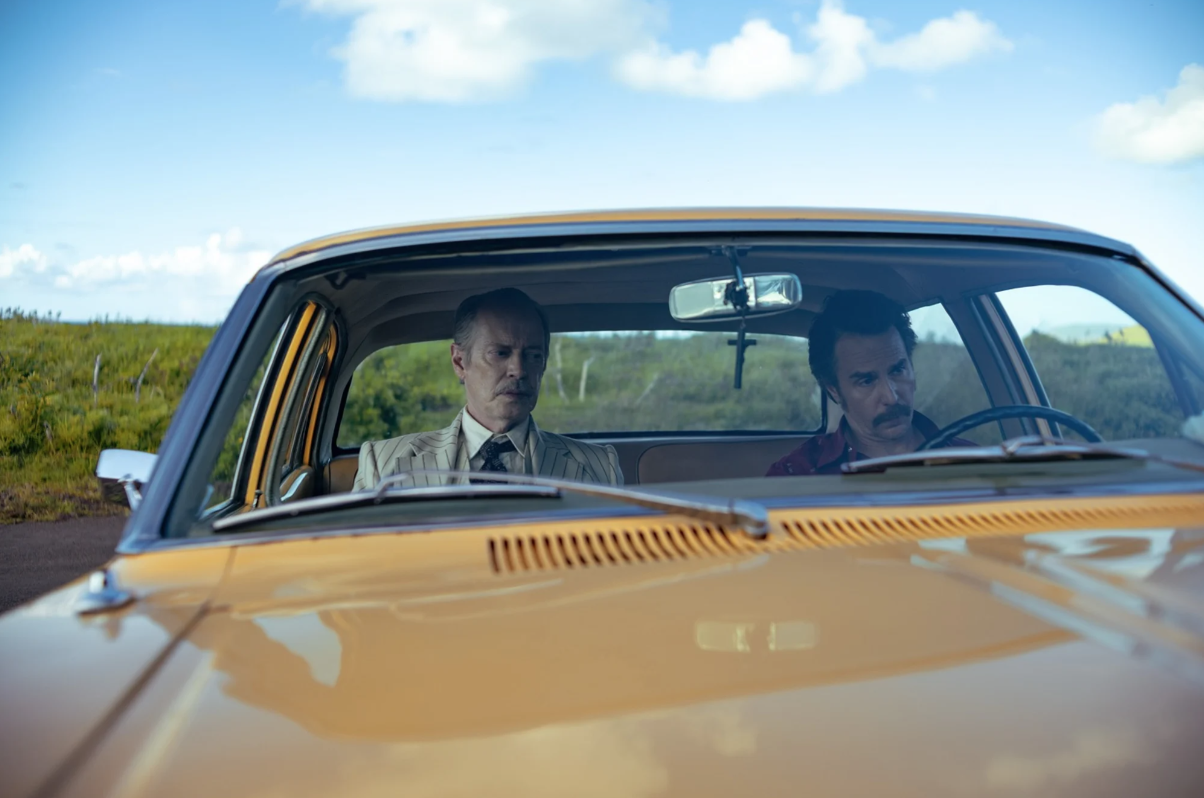
Steve Buscemi and Sam Rockwell in WILD HORSE NINE. Photo courtesy of Searchlight Pictures. © 2026 Searchlight Pictures. All Rights Reserved.
The United States’ involvement in Chile remains one of the most disturbing examples of American interference in another country’s democratic process. The Nixon administration sought to undermine Allende’s socialist government, while the CIA supported covert operations against his presidency.
The military coup of September 1973 ushered in Augusto Pinochet’s dictatorship, during which thousands of Chileans were killed or disappeared, and many more imprisoned, tortured or forced into exile.
It is a history whose consequences continue to reverberate through Chilean society. When I ask Buscemi whether Americans have genuinely reckoned with the suffering inflicted in the name of protecting their country’s interests, his response is immediate.
“No, I don’t think so,” says the actor firmly. “I mean, that’s why I think one of the things that’s important about this film, is that I am excited to see if it will educate people in the States about what happened, and bring them in through the humour. The backdrop is very dark and very serious, and the US was complicit in this coup that happened in 1973.
“And I think we as Americans should face that and reckon with it, and take measures so these things don’t happen again. But you have to know about it, you have to be aware of it. So I think it’s a very important film for American audiences, but also for the world.”
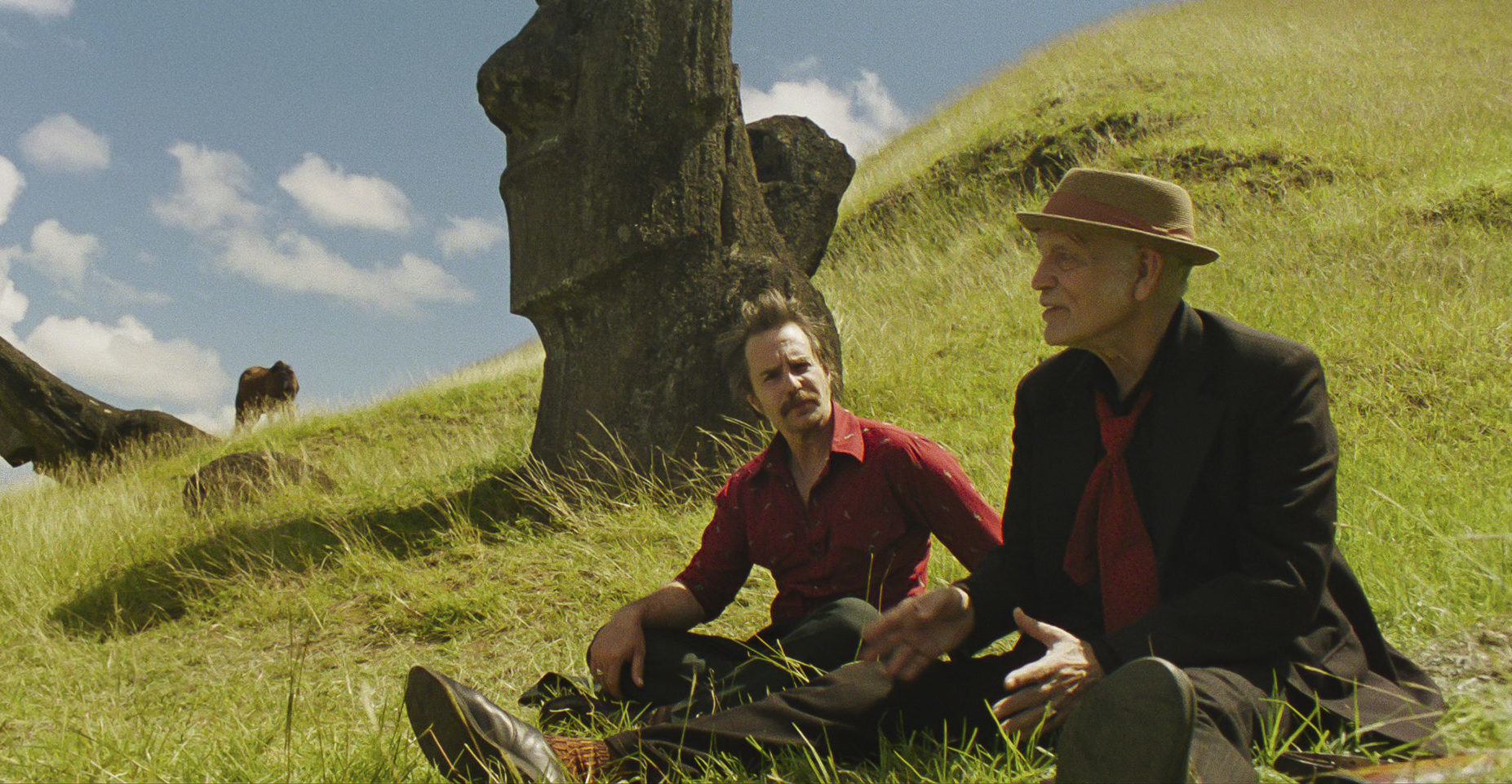
Sam Rockwell and John Malkovich in WILD HORSE NINE. Photo courtesy of Searchlight Pictures. © 2026 Searchlight Pictures. All Rights Reserved.
For Di Girolamo, the film’s historical significance is necessarily more personal. She plays Mónica, a young, politically engaged Chilean student whose hopes for her country’s future exist under the gathering shadow of the coup. As a Chilean actor, she understands this history is not simply a closed chapter of the past, but something that continues to shape the country’s collective memory and political identity.
“I really appreciated that Martin wanted a Chilean actress to play this role, to embody this character,” she says. “I think that it’s very special. And what is terrible about it, is that we know what is going to happen, probably, to a left-wing student like Mónica. I can include myself, even though I wasn’t born there, because it’s still very open.”
For Di Girolamo, keeping these stories in the public consciousness is an essential form of remembrance.
“A way to keep the memory alive,” she says, “and to honour all of the missing, those who were tortured, and the people that were forced to leave the country and went into exile is to keep – as Steve says – talking about this and having these conversations. And it’s a good way to do this, to also be entertained.”
Perhaps the film’s most intriguing relationship is the unlikely connection between Mónica and Malkovich’s character, an ageing American intelligence operative who has spent his life lying. He’s now brought into contact with a young woman whose political ideals stand in opposition to everything he has served.
Divided by nationality, generation, ideology and their relationship to American power, they nevertheless develop a strange intimacy. He possesses terrible knowledge about the violence approaching Chile, while she still believes in the possibility of a different future. Di Girolamo speaks warmly about Malkovich, both as a collaborator and as someone deeply engaged with the political history underpinning the film.
“He was amazing,” she enthuses. “He was very generous. I truly admire him. He’s a legend, and I really learned from the experience of sharing with him, not only on set, outside of it, and talking about different things. He’s very aware about what happened in Chile. He’s very aware about the world in general.”
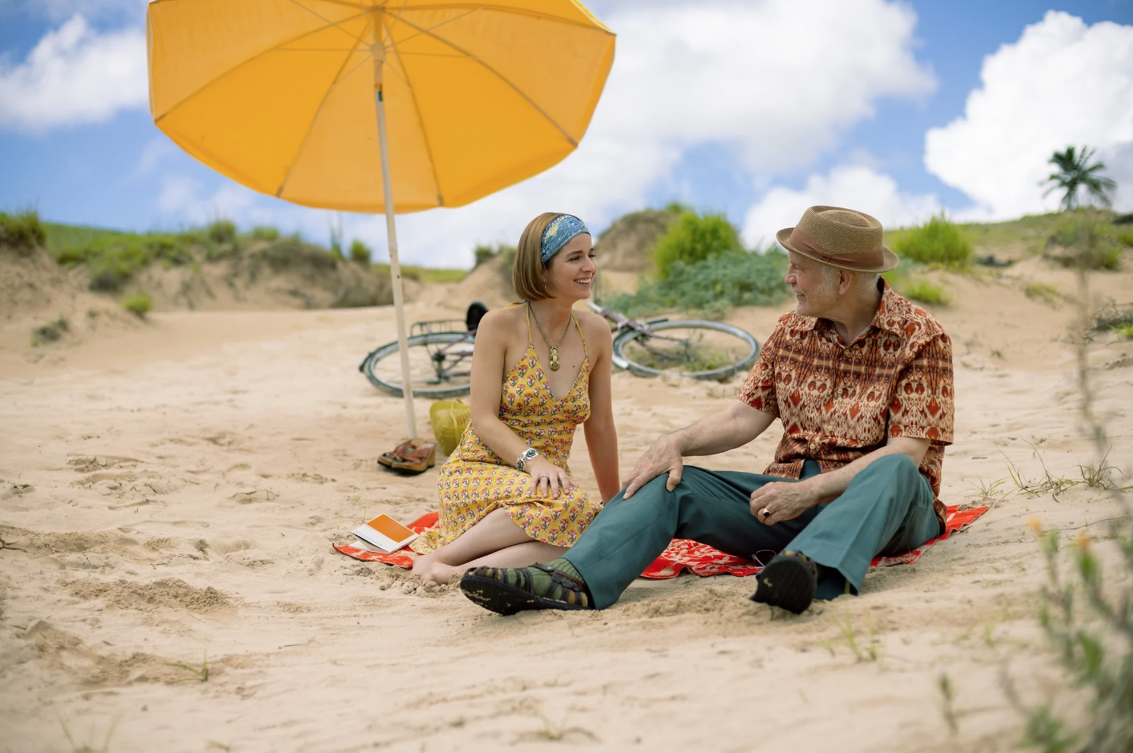
Mariana di Girolamo and John Malkovich in WILD HORSE NINE. © 2026 Searchlight Pictures. All Rights Reserved.
For Di Girolamo, the relationship between their characters becomes possible because Mónica is willing to recognise the humanity of someone whose political position she might otherwise reject.
“The relationship happens only because she has an open heart for it,” says the actress. “She invites him to sit at that scene on the beach, and she advises him not to lie anymore. And he takes that advice and says to her all the horrors that are going to happen, and then she’s stronger, and she can face the present and the future of her country. It’s a very unlikely friendship that I found very interesting.”
Malkovich’s character cannot undo the consequences of the system he has served, but his belated honesty may offer Mónica something valuable: the knowledge necessary to confront what lies ahead.
That preoccupation with guilt, retrospect and the meaning of a life also provides an interesting lens through which to consider Buscemi’s career. Across decades of performances, he has frequently portrayed outsiders, morally compromised figures and people caught within systems much larger than themselves.
I ask whether he recognises a consistent curiosity about certain kinds of characters or human experiences, and whether his artistic priorities have changed as he has grown older.
“No, I think it’s only deepened,” he considers. “I want to work with filmmakers that have something to say and are exploring the human condition. But I am an actor who wants to make a living, and I like to work. So I like working in all different types of genres, working with all different types of people.
“I feel grateful and very lucky that I’m still working, that I’m getting to work with people like Martin. And I’m getting to work with John and Sam, who I’ve known for many years.”
There is, however, one disappointment about Wild Horse Nine: despite appearing in the same film, Buscemi and Di Girolamo never share a scene.
“I wish I had a scene with Mariana,” Buscemi says, before turning warmly to his co-star. “But we’re gonna try and rectify that in the future, right?”
It’s a moment befitting McDonagh’s characters, who may not always find redemption – but the possibility of connection remains.
• Wild Horse Nine is in cinemas now.
RELATED

- Film And TV
- 19 Mar 26
Trailer for new Martin McDonagh film Wild Horse Nine released


- Film And TV
- 09 Nov 26
ACLAÍ Palestine documentary to premiere at Cork International Film Festival
RELATED


- Film And TV
- 03 Nov 26
Andrew Scott nominated for best lead performance at British Independent Film Awards

- Film And TV
- 03 Nov 26
