
- Film And TV
- 19 May 26
Nick Kelly on The Song Cycle: "Our camera kit was literally the size of a wash bag"








Nick Kelly’s The Song Cycle turns a bicycle journey into a meditation on music, memory and the small actions that might still matter in a climate crisis.
There is a moment, early in the documentary The Song Cycle, when Nick Kelly grounds the entire project in a stark, practical reality: 80% of a music festival’s carbon footprint is not the staging, the lighting, the spectacle, but the journey.
Transport accounts for the overwhelming share. It is an unromantic starting point for a film that is, in every other respect, suffused with romance – of music, friendship, endurance and small actions – and yet it is precisely that tension which gives the film its shape.
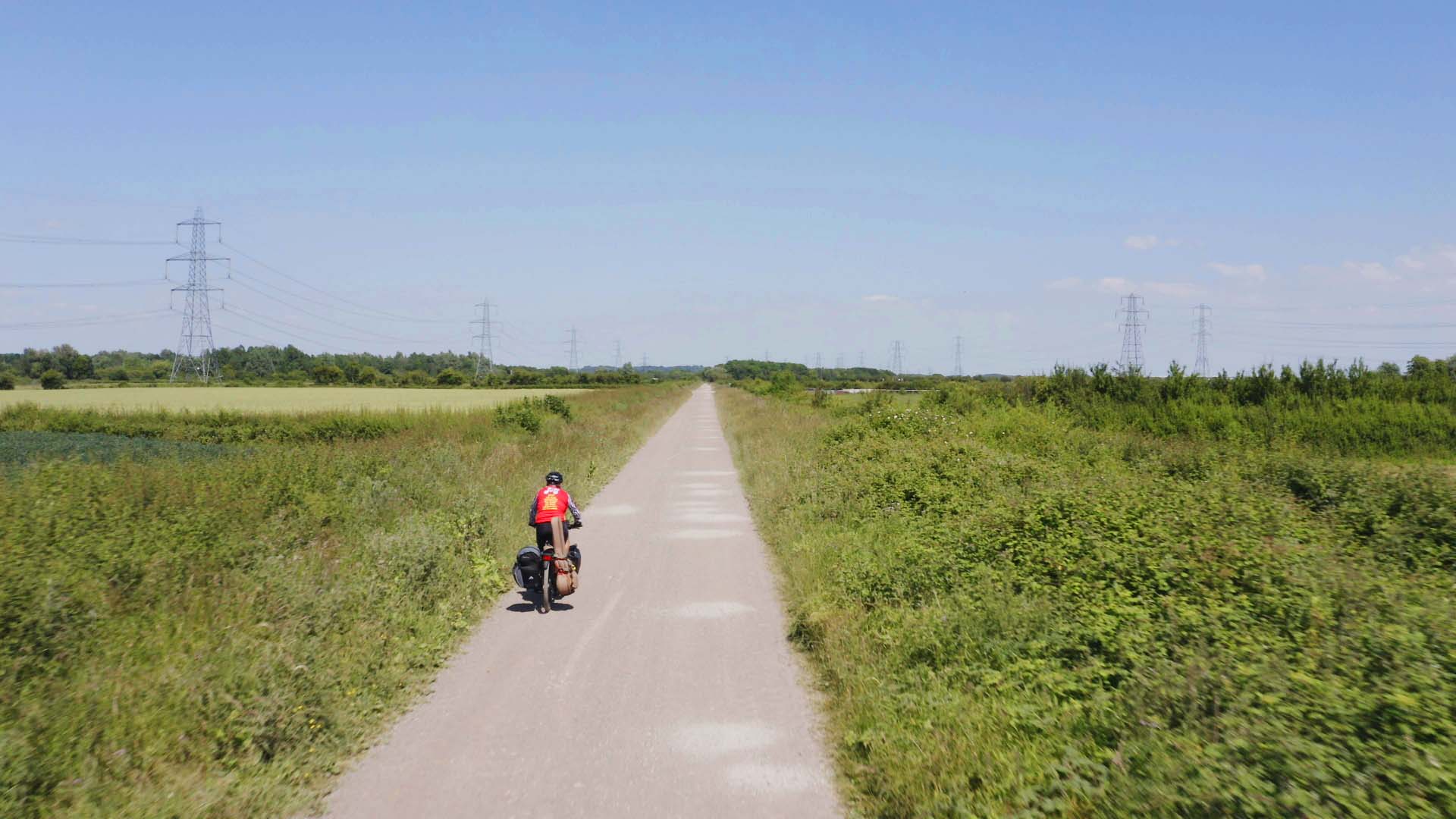
Kelly’s response is, on the surface, simple. In 2022, he cycles from Dublin to Glastonbury Festival, carrying his guitar, tent and equipment, playing gigs along the way. He is accompanied by longtime friend and collaborator Seán Millar, who travels by public transport and is, in Kelly’s words, the “witty, long-suffering, and sometimes sceptical Sancho Panza to his Don Quixote.”
The journey culminates in a Glastonbury performance on the day Kelly turns 60, a year older than his ex-Attorney General father, John Kelly, was when he died. The film becomes a three-stranded narrative: Kelly and Millar’s journey and its environmental impetus; a retrospective of Kelly’s career; and a portrait of his relationship with his dad, who never fully understood his son’s decision to pursue music.
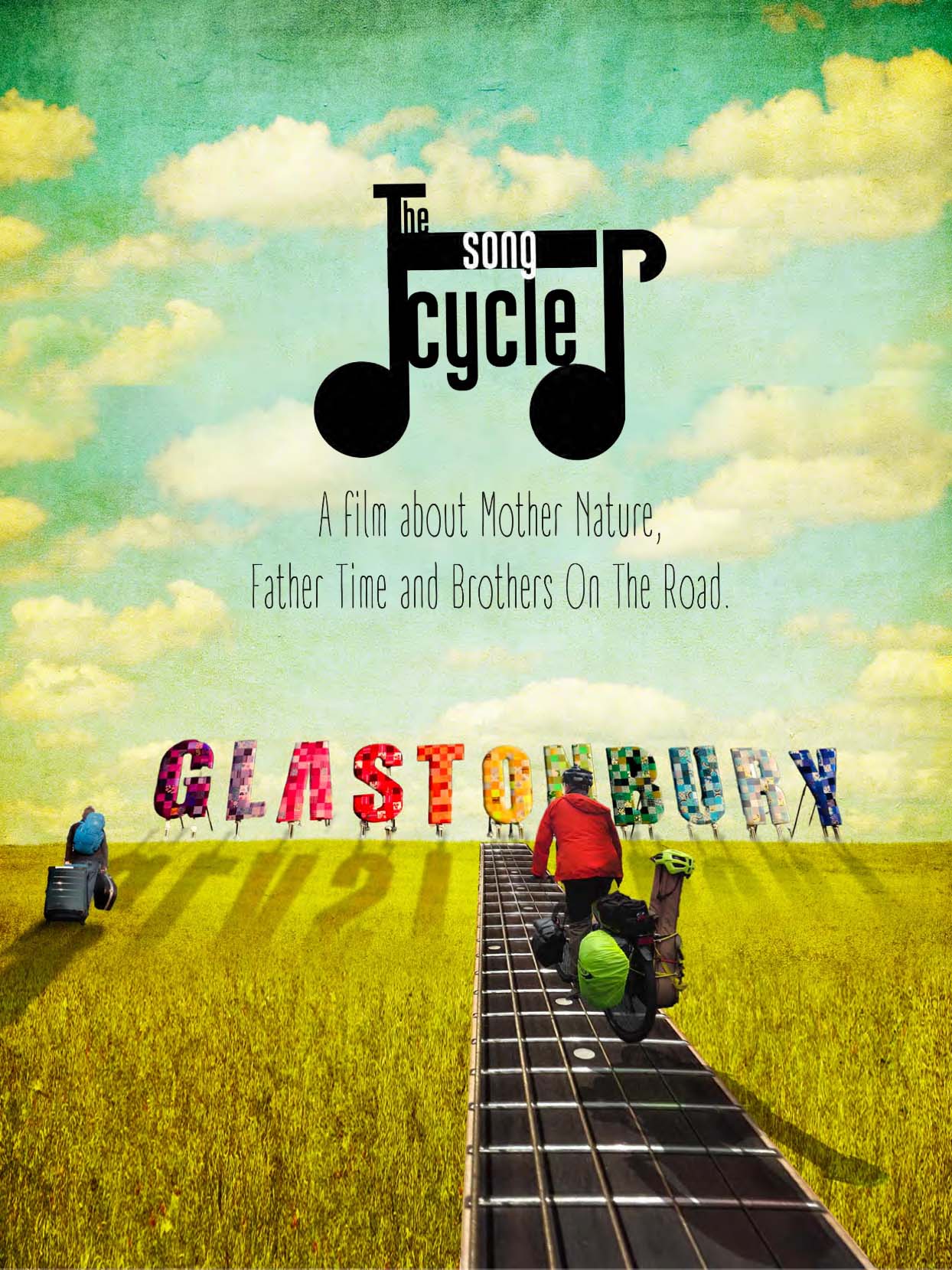
The film has been a hit at festivals, winning the Best Independent Film at the 56th Galway Film Fleadh and the Audience Choice Award at the IFI Documentary Festival – pretty good for a project not initially conceived as a film at all, just some footage of Kelly’s trip.
“Our camera kit was literally the size of a wash bag… I was going to use my own phone, we had a little drone,” Kelly recalls.
Despite the modesty of means, the film looks gorgeous, his journey bathed in golden light as he cycles through lush landscapes. But the deeper themes – legacy, family and what we leave behind – gradually coalesced.
“You start with an idea in your head about what you’re doing, but then it evolves,” Kelly says. “Especially with a documentary, it really evolves.”
That evolution is tied to time.
“There’s a moment of realising that I would actually turn 60 on the day we perform in Glastonbury,” he says, and with that came a convergence of themes: ageing, relevance, legacy.
The film folds in archival footage from his time fronting The Fat Lady Sings, a band that formed in 1986 and was based in London, hovering at the edge of major success with singles like ‘Arclight’, ‘Twist’ and ‘Drunkard Logic.’
But after nearly a decade, Kelly struggled with this sense of purpose and belonging, leaving the band in 1994. Watching that material now, Kelly recalls, “I actually could see the wheels coming off.”
That experience becomes one of the film’s central metaphors.
“If you’re not a musician or an artist, as you get older, you can kind of feel useless and sort of powerless,” he says. “And I start to think that was kind of quite an interesting metaphor, because a lot of people in climate change feel useless and powerless.”
Climate discourse, he suggests, is often counterproductive in its tone.
“The world is dying, it’s your fault, and there’s nothing you can do,” he says, summarising the dominant messaging. “None of those things produce psychological engagement or action – they produce denial, resistance and inertia.”
Against that, The Song Cycle offers something smaller, more tentative, and arguably more effective: a man and his bike, trying to make a small difference.
“In a weird way, doing something very small and personal, and funny or sad or even ridiculous, has a benefit, because it’s not threatening. It’s disarming. It comes at the problem differently – like, here’s one little thing you could do.”
At one point, Kelly compares the perseverance of being a musician to the perseverance needed to keep making environmental change, saying, “I spent a lot of time, and Sean has spent a lot of time, playing our obscure songs to small groups of people, to a smattering of applause. But I think it’s worthwhile. And I kind of think the future of the planet will actually be a lot of us doing tiny things to small groups of people, to a light spattering of applause.”
Festivals, in this framework, are both problem and opportunity. Kelly is pragmatic about what could be done.
“At least the first 50% is easy,” he says, outlining a series of practical interventions around transport, infrastructure and incentive, like rewarding cyclists with better facilities at festivals, as they do at Glastonbury; better public transport to festivals; and carpool initiatives. There are obviously bigger questions for famous artists who do global tours with huge entourages.
Early in the film, Kelly recalls Coldplay’s promise not to tour until it was more environmentally sustainable, and their 12 point plan to make it so, like using sustainable aviation fuel, solar power, kinetic dancefloors and planting seven million trees.
For smaller bands, music itself can be the strategy. Kelly recalls a conversation with climate campaigner James Dove, who said, “Every revolution has had a soundtrack, like civil rights and gay rights – where’s the soundtrack for the climate change protest?”
Kelly and Millar respond by writing a song that closes the film, emphasising creativity as contribution rather than perfection.
Running alongside these environmental concerns is the film’s more personal narrative about Kelly’s relationship with his father, who is portrayed as a very hardworking and somewhat emotionally distant man, who didn’t understand his eldest son.
But despite their differences, there are obvious similarities between the two men, who both care deeply about the world and who want to make it better. Kelly is thoughtful about the values they share, remembering his father as “a very altruistic man, a very principled man”, someone who “never canvassed really”. And who, when he did, was so honest and invested in democracy that he occasionally told voters that they would be better off supporting his opponent.
“He was always permanently, terribly, terribly worried about the world,” Kelly says. That anxiety, shaped by a generation marked by scarcity and uncertainty, forms a kind of inheritance: a concern for and investment in the future, just translated from politic to creativity.
Kelly is clear-eyed about the limits of individual action.
“I’m not at all a saint – I do drive and I do take baths – sometimes two in a day if I’m having a stressful day!” he laughs. But he remains committed to the idea that small actions matter, not only in themselves but in how they ripple outward.
“There’s two kinds of power: You have the power of what you actually do yourself, but you also have the people you influence.”
That influence, he suggests, is often underestimated.
“We don’t realise how one little thing you do, somebody notices that – and then it ripples out.”
Kelly hopes his bicycle trip nudges people to think about small possible actions.
“Just try something,” he says. “Even if they’re tiny little steps, somewhere along the line, breakthroughs will happen.”
• The Song Cycle is in cinemas now – see here for more details.
RELATED


- Lifestyle & Sports
- 29 Dec 20
WATCH: Trailer for teen climate documentary Growing Up At The End Of The World

RELATED


- Film And TV
- 25 Sep 26
FILM OF THE WEEK: The Lost Children of Tuam - Reviewed by Roe McDermott

- Film And TV
- 25 Sep 26
First look images of Charlie Brooker's Blackmere released

- Film And TV
- 25 Sep 26
A24 film Primetime features new Phoebe Bridgers song 'On Video'

- Film And TV
- 24 Sep 26
