
- Culture
- 06 Jan 26
Wendy Erskine: "It’s interesting, the whole thing of exchange, transaction and money – it’s so central to the book... the idea of the monetisation of women’s bodies"








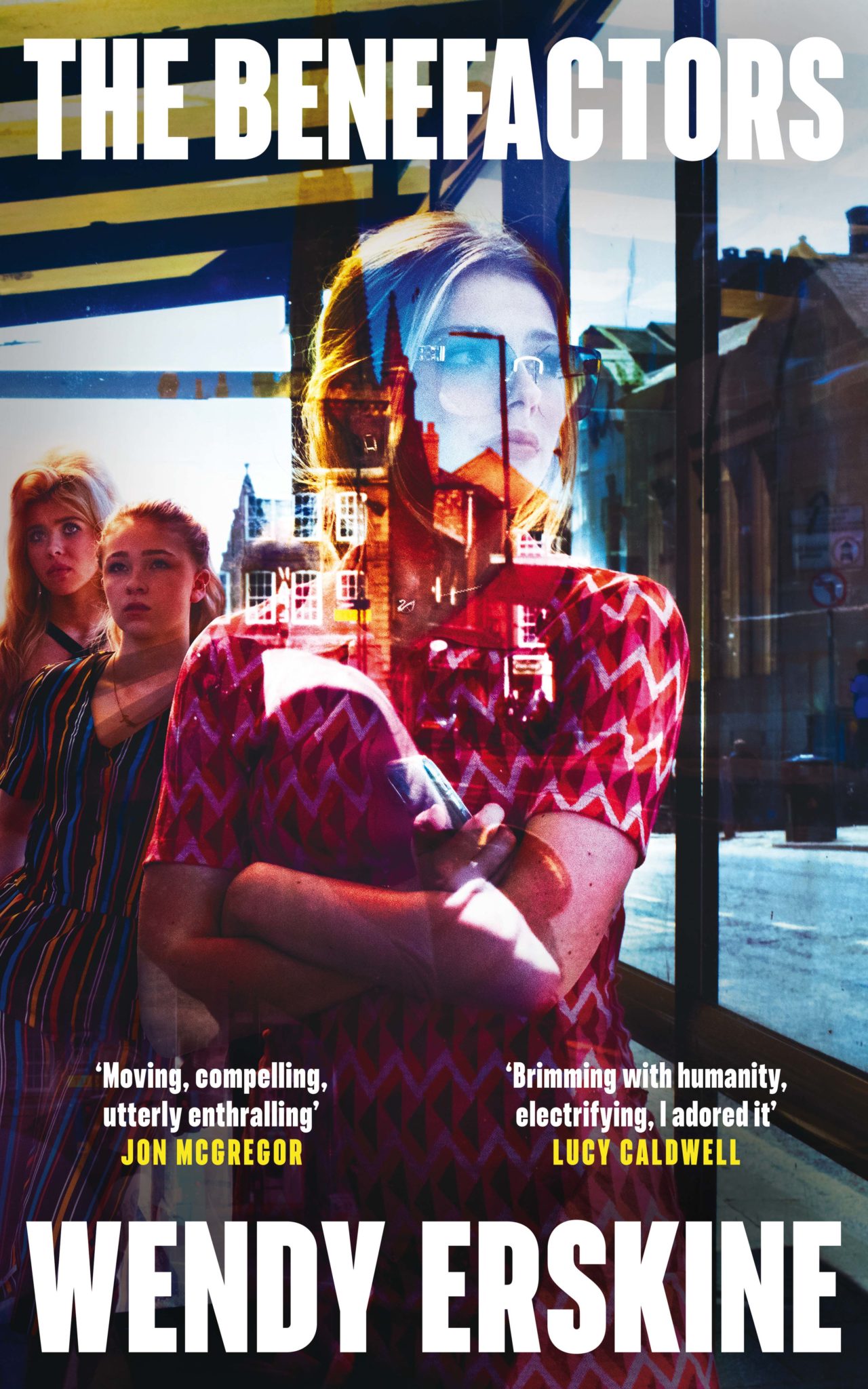
Told in a polyphonic style with multiple voices, Belfast author Wendy Erskine’s The Benefactors has been hailed as a compelling examination of power and class, and one of the literary debuts of 2025. She discusses the book’s themes, Bonnie Blue Adolescence, The Velvet Underground and the current political landscape in Northern Ireland.
One of the most acclaimed debut novels of 2025, Wendy Erskine’s The Benefactors is a powerful exploration of power and class. Set in the author’s native Belfast, the story focuses on the character of Misty Johnson, who is sexually assaulted by three teenage boys, each of them belonging to affluent families.
However, backing Misty are the duo of her father, taxi driver Boogie, and family matriach Nan D. The story is relayed through a wide mix of voices – some directly related to the story, others less so – making for a fascinating portrait of contemporary Belfast. The novel has parallels to certain real-life cases, and I wonder if they in any way prompted the story.
“If you’re somebody like me, I would describe the tradition I’m writing in as a social-realist tradition,” says Erskine, speaking from the Belfast school where she works as a department head. “If people are living in real places at a particular time, you’re going to have to have them living in a world, that in some ways, is like the world that actually exists. So what I would say is it wasn’t based on any particular news stories or cases, or anything like that.
“I’ve lived in Belfast on and off my entire life, and would be well aware of cases over many years, since I first started paying attention to whatever was happening in the world. That would probably have been from about age 10 or whatever. But also people’s experiences that never make it to the newspapers, or to courts.”
HEARING VOICES
Misty earns money through a platform called the Benefactors, which has similarities to Only Fans. In examining the issue of class, Erskine has also said she was interested in how money and power can be used to control women’s bodies. It’s certainly a timely theme, with wealth inequality worsening drastically in recent years.
“That’s good, I’m glad you think that,” says Erskine. “In terms of the sexual assault in the book, and the three young men involved being from a more affluent background, they’re not members of the super-rich. These are not the sons of oligarchs – they’re middle class. But even people in that position, in the case of my novel at least, they still have a lot of advantages that Misty and her family just don’t have.
“It’s interesting as well, the whole thing of exchange, transaction and money – it’s so central to the book, in the idea of the Benefactors themselves. And as you say, even the idea of the monetisation of women’s bodies. And sometimes the monetisation of women’s bodies by women. That’s used against Misty, and it’s also reframed for the men involved in the website, as almost being like a charitable donation.
“You’re restyled through that terminology, of benefactors and so on, as performing some kind of philanthropic act when you give one of the girls some money.”
While it is very rarely discussed in the mainstream media, the whole phenomenon of Only Fans and similar platforms is massive.
“It is,” says Erskine. “With something like Benefactors, it was interesting to think how that would actually operate. I actually think the idea seems so incredibly quaint, to be honest, and kind of tame compared to what else is out there.”
Do you think maybe people find it too difficult to talk about?
“Well, I don’t know if I would agree that it is entirely overlooked,” counters Wendy. “I’m thinking of something like Bonnie Blue, and the number of newspaper columns there were on it. People wrote all sorts of think-pieces in relation to her. I would say in her case, that was part of a reasonably widespread public discourse.
“But if you’re thinking about it at a more mundane – if that’s the right word – level, the fact that someone’s neighbours might be involved in Only Fans, maybe that is just not talked about generally.”
The Bonnie Blue story was quite a dark episode, almost like something from JG Ballard.
“Yes, to me, it was just very bizarre from start to finish, absolutely.”
The Benefactors also arrived in a year when the wildly acclaimed Netflix series Adolescence prompted renewed conversations about young male violence. Did Wendy feel she was tapping into similar subject matter?
“I would have written this book prior to Adolescence,” she explains. “I suppose what I felt was, we can talk about Andrew Tate, and young men and crisis and so on. But I felt I was writing about something that wasn’t particularly new whatsoever. It’s the idea that young men and women have always kept things from their parents – and the idea that parents have more surveillance, in terms of what their kids are up to now. In some respects, that’s the case.
“I felt what I was tapping into were fairly timeless ideas, I suppose, about what responsibilities do you have to your own kids? What responsibilities do you have to other people’s kids? And to what extent do you have control over how your children behave after a certain age? To me, all those things are interesting, but they’re not particularly new.”
The polyphonic style of The Benefactors, with multiple voices telling the story, reminded me of the sprawling ensemble approach of certain films, such as Robert Altman’s Nashville and Short Cuts, and Paul Thomas Anderson’s Boogie Nights and Magnolia. Was Erskine more influenced in her approach by cinema or literature?
“I’m mainly a short story writer,” she replies, “so I knew there was no point in me writing a book that could just be another short story. So I knew from the beginning I wanted to do something that was quite complicated, with multiple voices. Around about the time I was writing the book, I was guest curator of the Dublin Art Book Festival. I was programming events for that, and I was thinking a lot about the polyphonic style – polyphonic music as well.
“I want to have something with multiple perspectives, but what I didn’t want was that, in some way, all of the 50 voices would be adding a little piece to the plot – and that you’re trying to work that out. A lot of the voices are there because they’re sharing a preoccupation. In the novel as a whole, they’re there to reposition particular ideas or have things just slightly differently.
“I kind of knew from the beginning that this was non-negotiable. That if a publisher said, ‘This would be good, but you need to get rid of these voices’ – that wasn’t the way I would go. The voices were always going to be there.”
FAVOURITE MUSIC
More broadly, is Erkine engaged with the current political landscape in Northern Ireland?
“Gosh, it would be very difficult for me to say what direction I think things are going,” she considers. “One of the things I’ve really enjoyed reading is the new Sam McBride and Fintan O’Toole book. I have a friend who was at the event last night in the Lyric Theatre in Belfast, and they said it was absolutely fascinating. I read that book and with every single argument, both for and against, I went, ‘Yeah I could get onboard with that’.”
McBride also scored one of the big non-fiction hits of recent years, with his book Burned: The Inside Story Of The Cash For Ash Scandal And Northern Ireland’s Secretive New Elite.
“It was a massive success, an absolutely super bestseller,” nods Erskine. “It was unbelievable. I just remember in Waterstones, it was piled so high, people were just going in and buying it.”

Now in her mid-fifties, Erksine was unusually late publishing a debut novel. Perhaps unsurprisingly, she has an eclectic range of favourite music artists, with The Velvet Underground coming in for particular praise.
“My favourite album of theirs is the one that not everybody likes, Loaded,” she says. “There’s songs on it about William Burroughs and so on. It has tracks like ‘Sweet Jane’, ‘Oh! Sweet Nuthin’’ and ‘Lonesome Cowboy Bill’.”
Erskine would appear to have notably hip taste.
“No, I don’t!” she says. “Maybe when I started out. It’s been quite nice, because when the book came out, people that I taught many years ago, some of them have got in touch and so on. Maybe I was hip back in my twenties, but I don’t think so much now!”
• The Benefactors is out now.
RELATED

- Opinion
- 17 Dec 25
The Year in Culture: That's Entertainment (And Politics)

- Film And TV
- 01 Apr 25
Netflix's Adolescence made free for all UK secondary schools

- Culture
- 09 Sep 26
Keith Cullen to publish memoir Dear Future Me
RELATED

- Lifestyle & Sports
- 09 Sep 26
Alliance Française Dublin: A great way to expand the scope of your studies, and embrace a second language


- Lifestyle & Sports
- 08 Sep 26
City of Dublin FET College, Ballyfermot: A national leader in the development of new, cutting-edge courses


- Culture
- 07 Sep 26
