
- Opinion
- 17 Dec 25
Life during wartime: "The ongoing violence frequently feels too nebulous to measure"








Read The Whole Hog Round-Up of 2025 in the Hot Press Annual – out now
When President Catherine Connolly was inaugurated on November 11, she did not shy away from the topic of war.
“As I assume the privilege of office, we face the existential threat of climate change and the threat of ongoing wars. Both of course are inextricably linked,” she said, firmly adding, “We cannot turn back the clock, nor close our eyes to these realities.”
The ongoing violence in question frequently feels too nebulous to measure. Genocides devastate civilians in Occupied Palestine, Sudan and Myanmar. Political unrest has seized Central and South America. Civil wars and insurgencies rage across Africa and Southeast Asia. And, of course, Europe’s most devastating war since 1945 continues with Russia’s invasion of Ukraine – albeit with President Trump’s widely derided “peace plan” (ie. capitulation to Vladimir Putin) in the background.
The rise of autocratic leaders has incrementally worsened nearly every corner of the earth. For the first time in 20 years, autocratic governments outnumber democratic ones. The US – which flaunts itself as the great star-spangled democracy – has been identified as one of the fastest evolving cases of autocratisation in modern history, thanks to the election of Donald Trump, who seems to consider international human rights more suggestions than rules.
A look to the east: Belarus, Hungary and Russia lead the democratic decline in the post-Soviet bloc. Lukashenko of Belarus is a string puppet of Putin, and Hungary’s Viktor Orbán has made himself known for banning anything vaguely associated with the LGBTQIA+ community (of course, with international backlash; in Kneecap’s words, “Stick that up your bollox Viktor Orbán.”)
All those big men of autocracy – plus more right-wing populists, including but not limited to chainsaw-wielding Argentinian President Javier Milei, generational heiress of the French far right Marine Le Pen, and proudly Mussolinist neo-fascist Italian PM Giorgia Meloni – have one dear friend in common: Israeli PM Benjamin Netanyahu.
Under Netanyahu, Israel has experienced severe corruption, censorship, democratic backsliding and, of course, the genocide against the Palestinians.
Such names have shared many positions, from their authoritarian styles to their discriminatory policies and personal beliefs. But their perspectives often differ on one topic: “the existential threat of climate change,” as mentioned earlier.
Putin, Orbán and Netanyahu have stood for the Paris Climate Accords and advocated international cooperation to stop the threat of environmental destruction. Meanwhile, Trump, Milei and Dutch right-wing party leader, Geert Wilders, have either minimised the threat, or outright denied the existence of global warming, leaving international cooperation on the green agenda in limbo.
However, elsewhere, the Netherlands does offer a spark of hope. While Wilders and his associates have made headlines for rampant Islamaphobia and support of Israel’s genocide, they haven’t found as much success as their political lovers.
Progressive Rob Jetten took the Dutch Democrat 66 (D66) party to their best-ever election result, kicking the previous cabinet’s majority right-wing parties to the kerb. Here in Ireland, the election of progressive, pro-Palestine, environmental advocate Connolly has put smiles on faces from Dublin to Amsterdam to New York.

Catherine Connolly. Photo Credit: Abigail Ring
There is, of course, that which threatens us all. No matter politics, nationality, age, religion, gender, colour or creed, there is a looming shadow cast over humanity that has grown darker this year more than ever: artificial intelligence (AI). We’re reminded of Terminator-type cyborgs and evil digitised personalities à la 2001 A Space Odyssey. Some may scoff, suggesting the AI takeover in Harlan Ellison’s I Have No Mouth And I Must Scream is something childishly excessive and reserved for fiction.
Consider the words of the father of computer science, Alan Turing: “There would be no question of the machines dying, and they would be able to converse with each other to sharpen their wits. At some stage, therefore, we should have to expect the machines to take control.”
AI is, just as President Connolly described climate change, an existential threat. Perhaps in the extreme sci-fi sense, but also in the economic sense. Last year, the Government published a series of reports examining potential impacts of AI on the workforce in Ireland.
The research found that Ireland’s labour market is notably more exposed to the negative effects of AI than the world employment average, with 63% of Irish jobs at risk of being replaced by AI versus the global average of around 40%. Even if you ignore the fear of mechanical overlords, you cannot avoid the fear of unemployment and being made superfluous. That’s aside from AI’s massive carbon footprint (data centres, many of which are popping up across the Irish countryside, use as much water as small countries).
Let us return to wars. Something that, as well, affects all people of all kinds. It must be noted that “war” is defined legally and academically as violent conflict between armed groups. Many situations dominating headlines this year are often (carelessly) referred to as wars, when that only explains part of the situation.
In western Sudan, an estimated 250,000 civilians are unaccounted for, assumed executed or displaced by the Rapid Support Forces (RSF) paramilitary group. That’s not over the course of a decade – that’s since October 26, 2025. The killing is so incessant and widespread that the pools of blood staining the land can be seen from space.
There is an ongoing civil war between the RSD and the Sudanese armed forces, but what is occurring in western Sudan is not war. Armed groups are not engaging in strategic back-and-forth; nay, an armed group is conducting a genocidal slaughter of unarmed civilians.
In occupied Palestine, of course, there is the escalation of an ongoing Genocide by Israel against the Palestinians. By October 2025, the Gaza Health Ministry had reported that over 66,000 people in Gaza had been killed, mostly civilians, at least half women and children.
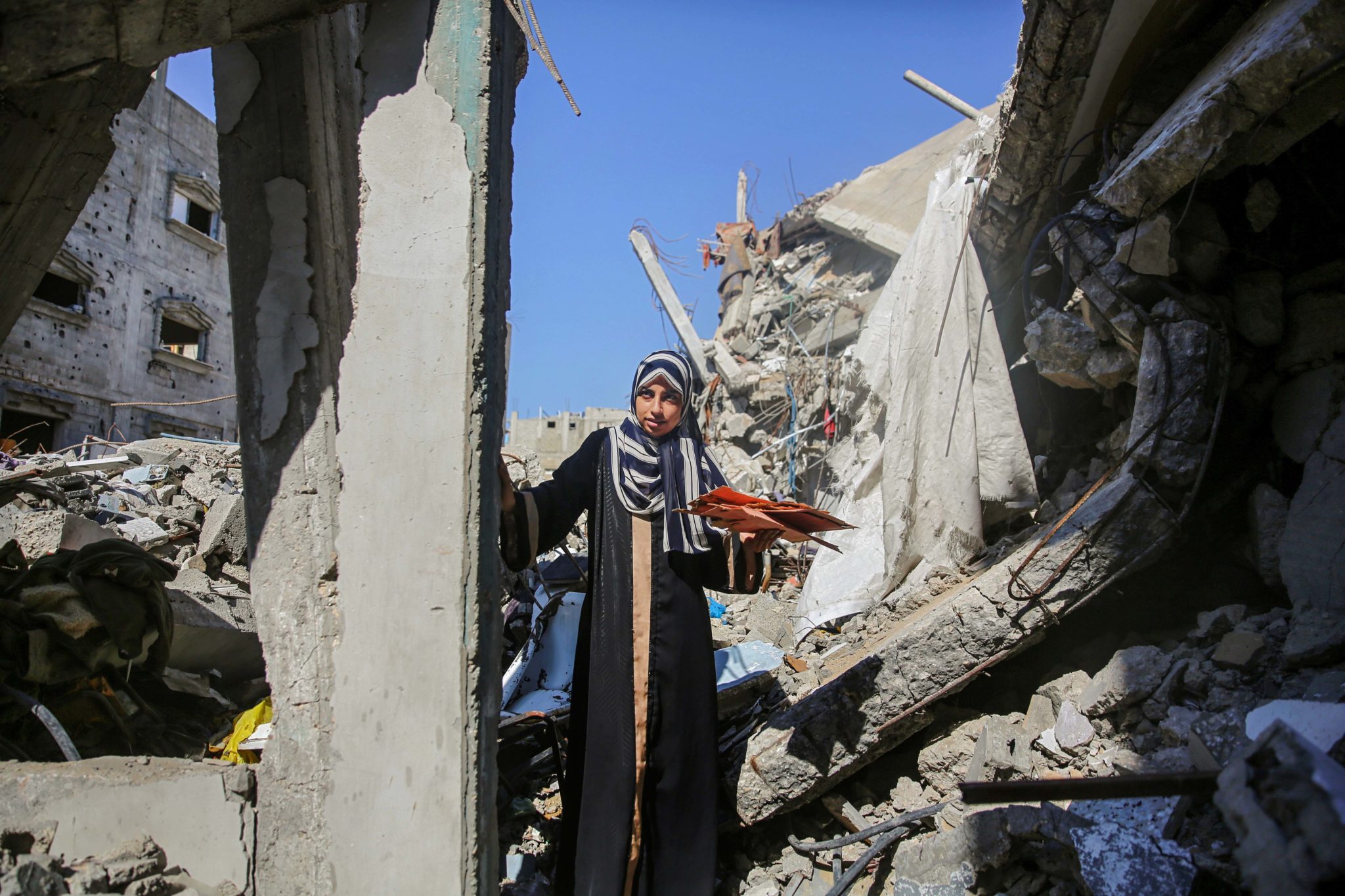
Compared to other conflicts in other parts of the world, Gaza has seen the highest numbers of targeted killings of journalists and healthcare workers. Israel’s illegal blockade has intentionally created a man-made famine.
Many assume the genocide in Gaza began in October 2023. This is false – it has been decades since the Nakba. Similarly, many assume Russia’s invasion of Ukraine began in February 2022. This, too, is false. After Ukraine’s Revolution of Dignity in 2014, Russia illegally occupied and annexed Crimea from Ukraine, then went on to support paramilitaries to start a war in the Donbas against Ukraine’s sovereign forces.
The current phase of the conflict is just that, a phase of escalation. It has seen the largest refugee crisis in Europe since World War II, plus countless human rights violations and war crimes by Russia. But listen to Putin’s rhetoric; he talks of a spiritual claim to Ukraine, going back to the days of Slavic tribes and Kievan Rus’. He encourages the seizure of land by any means necessary, even at the cost of civilian life.
That is what many of 2025’s wars have been: landgrabs. Threats of the use of weapons of mass destruction (often with likely backup to such threats, in Israel and Russia, against the Palestinians and Ukrainians, who willingly do not have nuclear weapons). But overall, pursuit of land and money for the west – at the cost of sheer devastation.
Hybrid Warfare: War But Not As We Know It
War is all around, not love. Those we know best are the ones closest, in Ukraine and Gaza, but there are many others, especially in Sudan and the Democratic Republic of Congo. And nuclear powers India and Pakistan had a good go at each other this year too.
It became very clear that the way war is waged has changed fundamentally from how it was waged in the past. It’s starting to look like the future war envisaged by science fiction. For a start, there’s less boots and wheels on the ground. Most of the violence suffered by Gaza was inflicted from distance, high tech and remote.
This has also become the norm in Ukraine. But far from the nonsense spouted by warring governments and the weapons industry about precision targeting, the new warfare is actually much less precise than the old trenchy model, and much more murderous, and the consequent inaccuracies and carelessness magnify and multiply war crimes.
As for the tech developments themselves, they include drones and autonomous combat machines. These were first developed by Ukrainian engineers as a way of counteracting Russia’s numerical superiority. The Russians caught on quickly, aided by Iranian and North Korean weapons engineers, though it seems the Ukrainians haven’t yet reached their limits of invention.
Drones also feature in the asymmetric warfare being waged by Russia, and others, usually deployed as a disruption and a veiled threat in a number of western countries. Just hanging around, making mischief. Testing border and air security. And getting into the western nervous system. This kind of thing is going on all around Europe’s coasts, including our wild Atlantic waters.
War now extends far beyond the seizure of ground and the command of air and sea. Navies don’t deploy ships and subs to take out those of other countries. They send them to map the thousands of cables that criss-cross the depths. Satellites don’t just bounce our phone messages around the world, they also watch what happens on the ground and hear what crackles through the air.
Some countries, for example North Korea, have engaged in cyber warfare for years, to their great financial profit. Hackers and cyberwarriors are as important to them as their army, navy and air force. So, now we have hybrid warfare.

It includes non-attributable actions, stuff that can be denied, where locals, like drug dealers, are paid to do nasty things, like burning asylum seeker tents, or throwing paint at a politician’s house, or encouraging violent protests.
Or bigger things like hacking into the health service database, or causing blackouts. The objective is to undermine confidence, create divisions and destabilise, to generate unease or, better still, chaos. If money’s extorted by a hack, so much the better.
Yet again, this demands that we examine all our protocols, including neutrality, to bring them into line with new realities. The old system doesn’t apply anymore. A hostile state could be waging war on us without declaring that they are at war. There is no Geneva Convention to cover this new stuff.
That said, of course there are times when it’s local, immediate and practically hand-to-hand, as in the West Bank or the Ukraine frontline. Finally, we should mention mass starvation as a technology of war. It’s always been there but it permeates the Gaza conflict.
In July alone, according to the UN, more than 1,000 Palestinians died while trying to get food. The sooner a war crimes tribunal can get to work, the better.


