
- Opinion
- 26 Jan 26
ICE killings in the US: "To label these as 'unprecedented times' would be a complete denial of history"








In the aftermath of the killings of Renee Good and Alex Pretti in Minneapolis, Maureen Arnold explores the impact of ICE in the US, and speaks to experts about how local communities have been standing up to the Trump administration.
On January 7, 2026, Renee Nicole Macklin-Good, a legal observer and 37-year-old mother of three living in South Minneapolis, was killed by an Immigration and Customs Enforcer (ICE) agent.
This murder was caught on camera from several angles. In each video, Good can be seen arguing with the agent while sitting in the driver’s seat of her red Honda. As the argument intensifies, Good begins to reverse her vehicle. Good’s wife can be seen standing outside the car, also arguing with agent, and filming the incident on her cell phone. As Good retreats, the ICE officer fires his gun through the driver’s window, killing her as she loses control of the car and crashes into a nearby snowbank.
Donald Trump said that Good was killed as a consequence of her own actions, that the federal agent who took her life felt threatened and at risk of being run over by Good’s vehicle. US Vice President JD Vance also jumped to defend ICE, saying that Good's killer is “protected by absolute immunity.”
On January 24, a 37-year-old ICU nurse named Alex Pretti, was also shot and killed by ICE agents, with videos showing Pretti being restrained by multiple officers as he was shot multiple times. It's being reported that Pretti was trying protect a woman who was being attacked by officers.
That Minneapolis has reached boiling point is not random.
Just a neighbourhood over from where Good was killed is where George Floyd was murdered by Derek Chauvin, a white police officer, in 2020. The killing was also captured on camera, and became the catalyst for the resurgence of the Black Lives Matter Movement.
The city saw a total restructuring as a result. The place where Floyd was killed was renamed to George Floyd Square, and exists as space for mutual aid and community assistance, with murals dedicated to Floyd’s memory. Nearby, houses are painted in dedication to martyrs and symbols of the civil rights movement.
ICE, of course, are not police. But how can a community that has witnessed people of colour being murdered by police officers so regularly, accept this militarised presence?
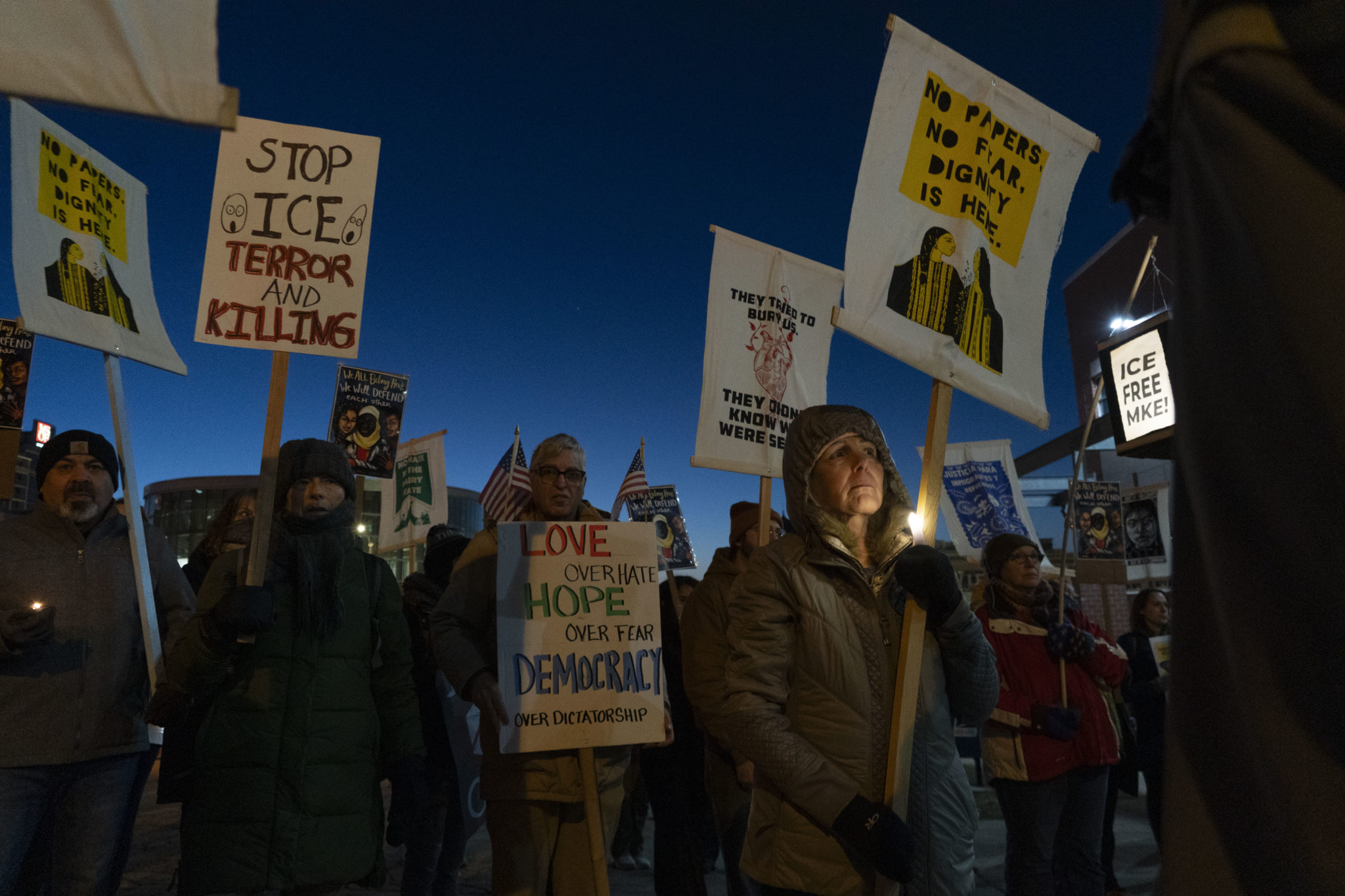 Photo: Joe Brusky.
Targeting communities
Trump’s choice to target Minneapolis is also a response to the city's unwillingness to abandon their immigrant communities. Minneapolis is home to the largest Somali diaspora within the US, with many arriving as a result of the African country's civil war in the 90s. Ilhan Omar, a Somalia-born US congresswoman for Minnesota, has been outspoken on her distaste for Trump’s targeting of the Somali community within her state. Trump has said openly that Omar should be “thrown out” of the US, regardless of her US citizenship, and that ethnic Somalis are unwelcome in the country.
His racist rhetoric, as a tool for inciting an uproar from his loyal followers, has never been subtle. From the inception of Trump's first presidential campaign, he repeatedly referred to immigrants as “criminals”, and famously promised the building of wall along the border with Mexico. As of 2026, Trump has suspended immigrant visas from 75 different countries.
Though ICE was introduced in 2003 by George Bush, and a record number of deportations were made during Obama's presidency, the current administration has taken it to another level.
Trump now employs over 22,000 ICE agents. Recruitment advertisements could be seen on platforms such as Spotify, Youtube and Amazon until late last year, most of which have been removed due to public backlash. Still, ICE enjoys nearly 1,000 hires per month.
In what the Department of Homeland Security has described as the largest operation in its history, 3,000 federal agents have been recently deployed to Minnesota. Armed, masked agents have been carrying out arrests of people in public places: on their way to work, outside churches, while out shopping. Many of those detained include children, some of whom were used as bait for ICE to secure the arrest of their parents.
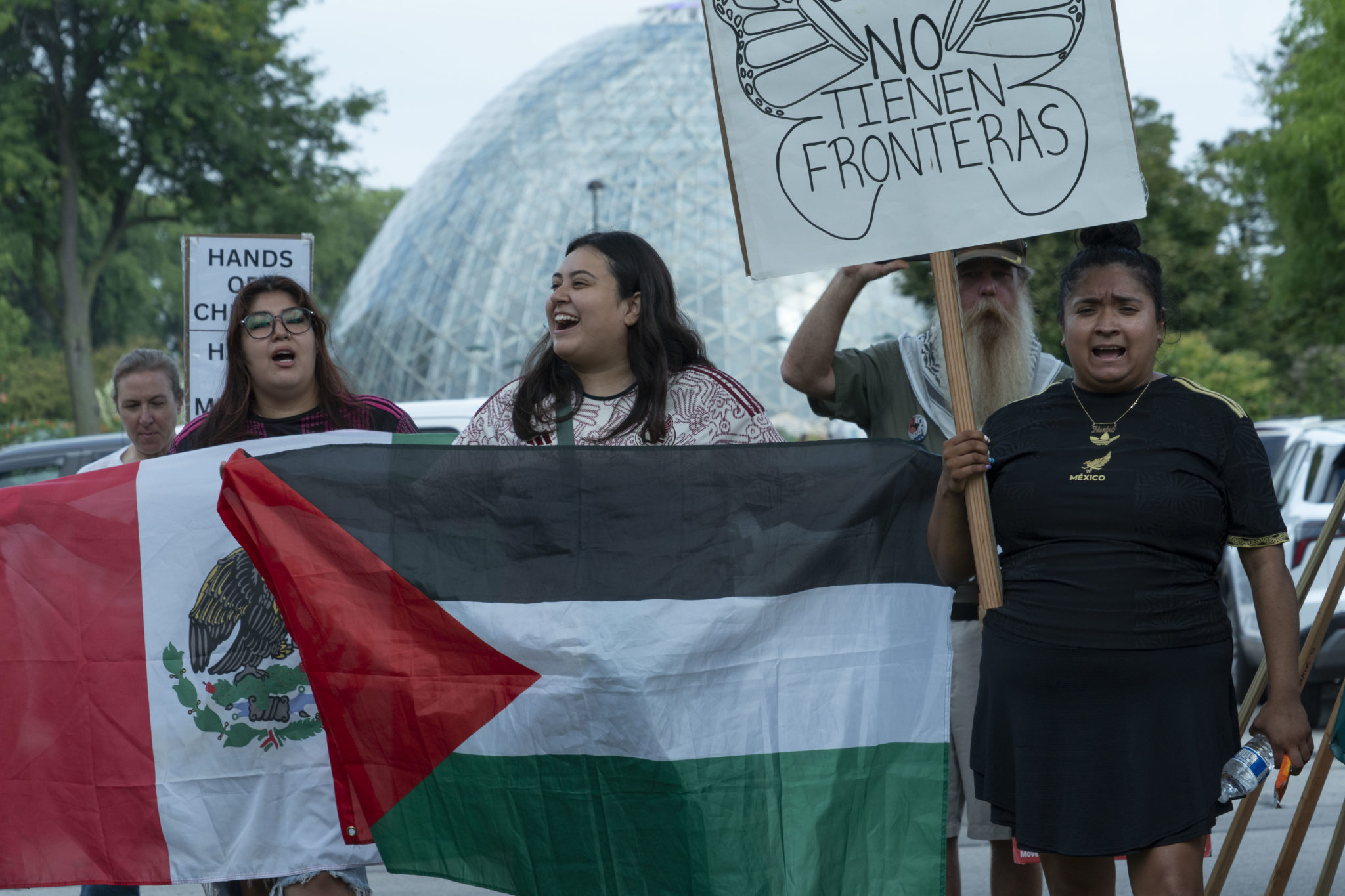 Photo: Joe Brusky.
Standing up to the state
But to label the current state of the US as “unprecedented times” would be a complete denial of history. Locals condemning ICE have called them the “modern day Gestapo”. The surveillance, fear, and political targeting also bear similarities to McCarthyism of the mid 20th century.
The world may change but the story remains the same: racist violence is being perpetrated by those in power. And like the Civil rights movement of the 50s and 60s, ordinary people have had to take it upon themselves to resist.
I’m from another midwestern city, Milwaukee, Wisconsin, where 21% of the 600,000 population is Latino. Though scenes have not yet reached the chaos of places like Minneapolis and Chicago, tensions between ICE and local communities are long-standing.
I grew up white and middle class, existing alongside Mexican culture. My mother is an English and Spanish-speaking teacher at a bilingual primary school, who aimed to educate me on the political and moral corruption of the United States, especially with regards to race.
My godparents are from Mexico city. They immigrated to the US in the early 1990s along with their two young children, aiming to create a better life for themselves, even with the dangerous risks of migration across the Southern border. On weekends, they’d spoil me with a belly full of tamales, take me to countless quinceañeras, and cradle me as I slept through hours of church services at St. Patricio’s on Milwaukee’s Southside.
Some of my first memories as a child were spent marching in the streets towards the end of Obama’s first term, protesting for immigrant rights alongside my family, standing in the place of my undocumented loved ones. As a child, the marches felt like the whole world was surrounding me. Regardless of my own cultural and racial background, I understood that one's community is inseparable from identity.
I haven’t lived in the US for several years. Instead, I watch the horror of occupation unfold on social media like anyone else. Gore, pure terror and heartbreak, all reaching a worldwide audience via ICE and police body-cam footage and the phone cameras of eye-witnesses and frightened children. I can shut my phone off and pretend I don’t recognise the very same schools, local parks and street corners that surround that make up the terrain of my upbringing. Within my mother's classroom, students have been forced to self-deport out of fear of ICE, some with parents who have already disappeared from the home.
Despite the palpable risk, dedicated individuals are making the decision to actively resist.
Luz Chaparro-Hernandez is a Mexican-born, former bilingual primary school teacher based in Milwaukee, and is the Vice President of the Milwaukee Teacher’s Education Association. Through the Comité Sin Fronteras (a branch of Wisconsin's largest immigrant and worker rights organisation Voces De La Frontera) she trains ICE Verifiers - volunteers who monitor, verify, and record ICE activity.
“Now, the call to action and protest are for the Immigrant Rights Movement, which I see as the new Civil Rights movement,” says Chaparro-Hernandez. “I see different generations and organisations coming together to stand up for their neighbours and colleagues. I see different labor organisations coming together as well - teachers, labourers, factory workers, different trade unions - united by purpose to defend the least of us, the voiceless undocumented members of our community.”
Renee Good was a legal observer, a role she was fulfilling at the time of her death. Chaparro-Hernandez explains that the difference between being a legal observer and an ICE verifier lies in how they report altercations.
ICE verifiers confirm that ICE is present. Legal observers document actions taken by ICE after they have been reported by an ICE verifier, and help build legal evidence.
“The training for ICE Verifiers takes about two hours. It starts with a brief overview of our basic rights as people who reside in the US, regardless of legal status. We go over our 4th amendment rights (protections against needless search and seizure in our homes) and our 5th amendment right (the right to remain silent).
“We then go over what it means to verify ICE sightings and why that is important in a community, followed by role playing. We download the Signal app which is not as easily detectable. We are then trained on how to record ICE once we have established a sighting. We report it immediately to the Voces dispatch network and begin recording, which also gets immediately sent to the Voces dispatch network.”
The Signal app functions as a free, encrypted messaging service, which focuses on providing a private and secure mode of communication, especially useful for journalists and activists.
“What inspired members of my union to become ICE Verifiers is the injustice and immoral treatment we all see on a daily basis on our TV screens, phone screens, iPad/laptop screens on Tik Tok, Instagram, Facebook videos of human beings being stripped of their humanity due to their legal status in the US," says Chaparro-Hernandez.
“We are inspired to try to halt the demise of this great experiment that is democracy as only this country - the United States of America - has tried to carry out since its inception 249 years ago”.
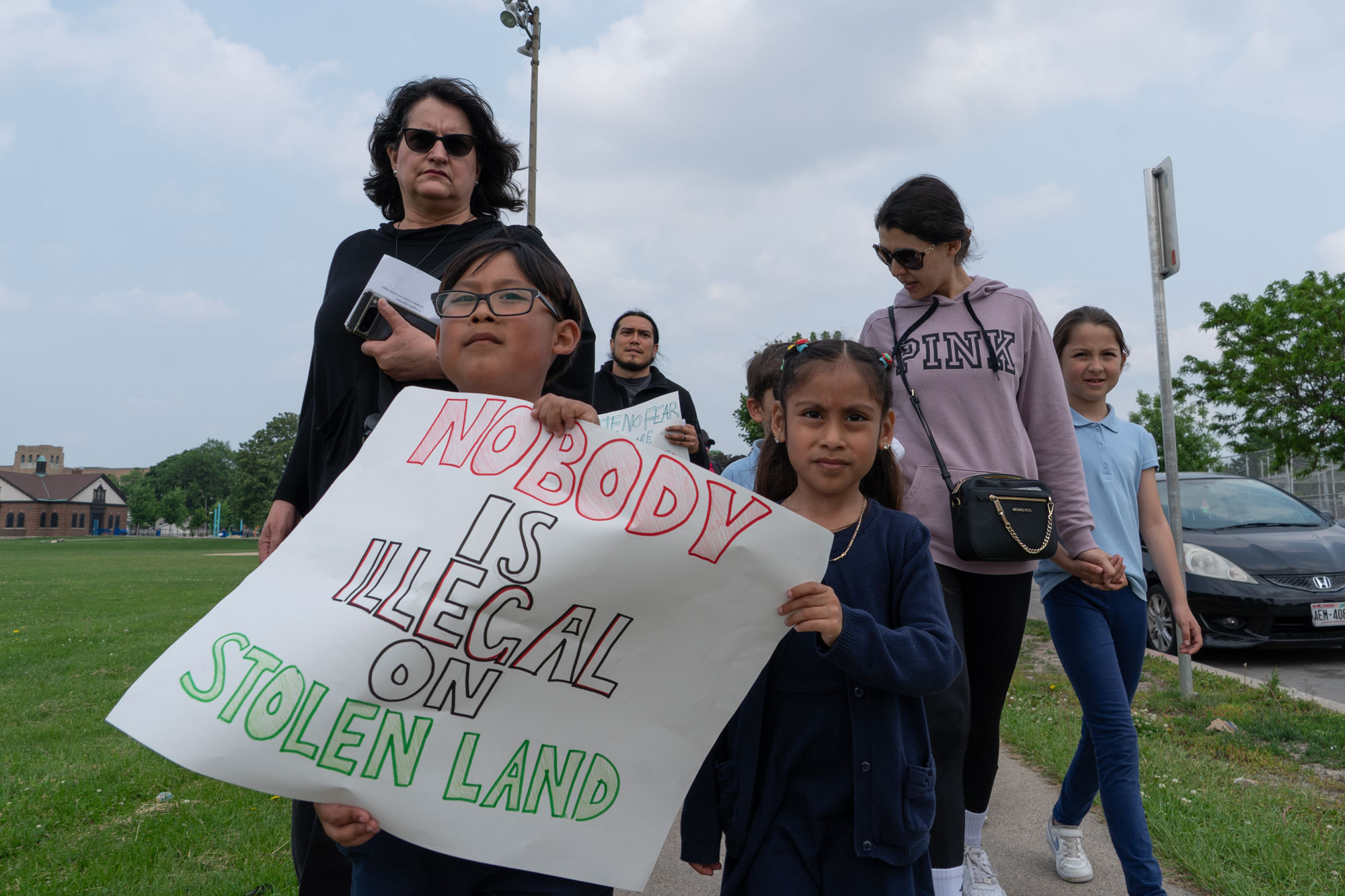 Photo: Joe Brusky.


RELATED


- Opinion
- 13 Dec 25
Trump’s assault on Europe: "Happy new year? Somehow I don’t think so..."


- Opinion
- 11 Sep 25