
- Music
- 23 Jul 26
How Charli xcx provided an antidote to internet perfectionism with Brat








At a time when online culture rewards perfection, Charli xcx has become an unlikely icon of imperfection. So how did an artist who refuses to be a role model become such a vital one?
Scroll through TikTok for five minutes, and you’ll find no shortage of women telling you how to be one. One influencer wakes at dawn for Pilates, journaling and a colour-coded morning routine. Another documents a life of homemaking on an idyllic farm, baking sourdough with her children in tow.
Elsewhere, podcasts preach discipline, submission and “high-value” femininity as the path to fulfilment.
For young women online, the algorithm offers an endless stream of competing blueprints for womanhood. Be softer. Be quieter. Be desirable, but not too sexual. Ambitious, but never intimidating. Above all, have your life figured out.
Social media has always sold aspiration, but today’s algorithms demand certainty. The women who perform certainty best are often rewarded with millions of followers. They know exactly how to organise a pantry, structure a morning routine or build the perfect relationship.
Confidence has become content. Complexity rarely goes viral. Then Charli xcx crashes the algorithm.
The question isn’t whether she is a role model. It’s why an artist who never wanted to be one resonates so deeply with young women at a moment when femininity feels more prescriptive than ever.
JEALOUSLY, VANITY, COMPETITIVENESS
Take Hannah Neeleman, better known online as Ballerina Farm. Once a talented ballerina studying at Juilliard, she is now the internet’s most recognisable trad-wife. Her videos depict a blissful domestic existence on a sprawling Utah farm where she prepares elaborate meals from scratch while raising eight children. The aesthetic is rustic, carefully curated: hand-churned butter beside luxury appliances, wholesome simplicity underwritten by extraordinary wealth.
There’s nothing inherently wrong with choosing domesticity. Nor should women be criticised for finding contentment in family life. Yet Ballerina Farm represents something larger than one woman’s lifestyle. Her content presents a version of femininity that is beautiful, aspirational and, for most people, almost entirely unattainable.
She isn’t alone. Across social media, the rise of trad-wife content has coincided with the “clean girl” aesthetic, wellness culture and a renewed fascination with gender roles. At the same time, hyper-masculine influencers have built enormous audiences promoting rigid ideas about what men and women should be. These trends don’t necessarily reflect how most young people think, but they shape the online environment in which they grow up.
The pressure isn’t only political. It’s intensely personal. Young women are increasingly expected to optimise every aspect of themselves. Their appearance. Their relationships. Their careers. Their routines. Even self-care has become another performance.
Against that backdrop, Brat felt – still feels – almost radical. Charli’s sixth studio album isn’t a declaration. It doesn’t pretend to offer answers. Instead, it documents what it feels like to live with contradiction. Across the record, she swings between confidence and self-doubt, ambition and anxiety, euphoria and loneliness. The emotional whiplash isn’t a flaw; it’s the point.
‘I Think About It All The Time’ is a muted struggle with the possibility of motherhood, capturing the uncomfortable tension between personal ambition and the expectation that women should eventually settle down. There are no neat conclusions, only uncertainties. ‘Girl, So Confusing’ dissects the mixture of admiration, insecurity and rivalry that can exist between women, while ‘Mean Girls’ plays with the stereotypes imposed on female behaviour.
Even ‘I Might Say Something Stupid’ strips away the confidence, exposing someone terrified of saying the wrong thing despite living in the public eye. These aren’t traditionally “likeable” emotions, particularly for women. Jealousy, vanity, and competitiveness have long been treated as qualities to overcome rather than admit to.
INDIE SLEAZE REVIVAL
Charli doesn’t frame them as virtues, but she refuses to pretend they don’t exist. Rather than resolving those feelings into neat lessons, she lets them be. That’s a rarity in pop music, where vulnerability is so often packaged as a stepping stone to self-improvement.
Male musicians have long been allowed to be arrogant, self-destructive, and emotionally conflicted without those traits defining their entire public identity. For less are women afforded the same complexity.
For decades, female pop stars have been expected to embody something more than music. They have been role models, brand ambassadors, and symbols of aspiration. That pressure was particularly visible during the Disney Channel era, when young stars were marketed not just as entertainers but as wholesome examples for their audiences.
Selena Gomez, for example, wore a purity ring as a teenager, publicly pledging to remain abstinent until marriage. Her personal choices became part of her public image, reinforcing the idea that female pop stars were expected to project moral virtue as much as musical talent.
Charli belongs to a different lineage of pop stars entirely. She has never built her career around being inspirational or morally exemplary. If anything, she’s built it on admitting to feelings that women have often been encouraged to suppress. In doing so, she hasn’t rejected femininity so much as expanded it.
That’s also why Brat Summer became so much bigger than an album cycle. Yes, there was the unmistakable acid-green artwork. There were the micro-shorts, smudged eyeliner, and deliberately chaotic styling that echoed the indie sleaze revival and became visual shorthand for a much broader attitude. But reducing Brat to a fashion trend misses what made it resonate. The attitude mattered far more than the aesthetic.
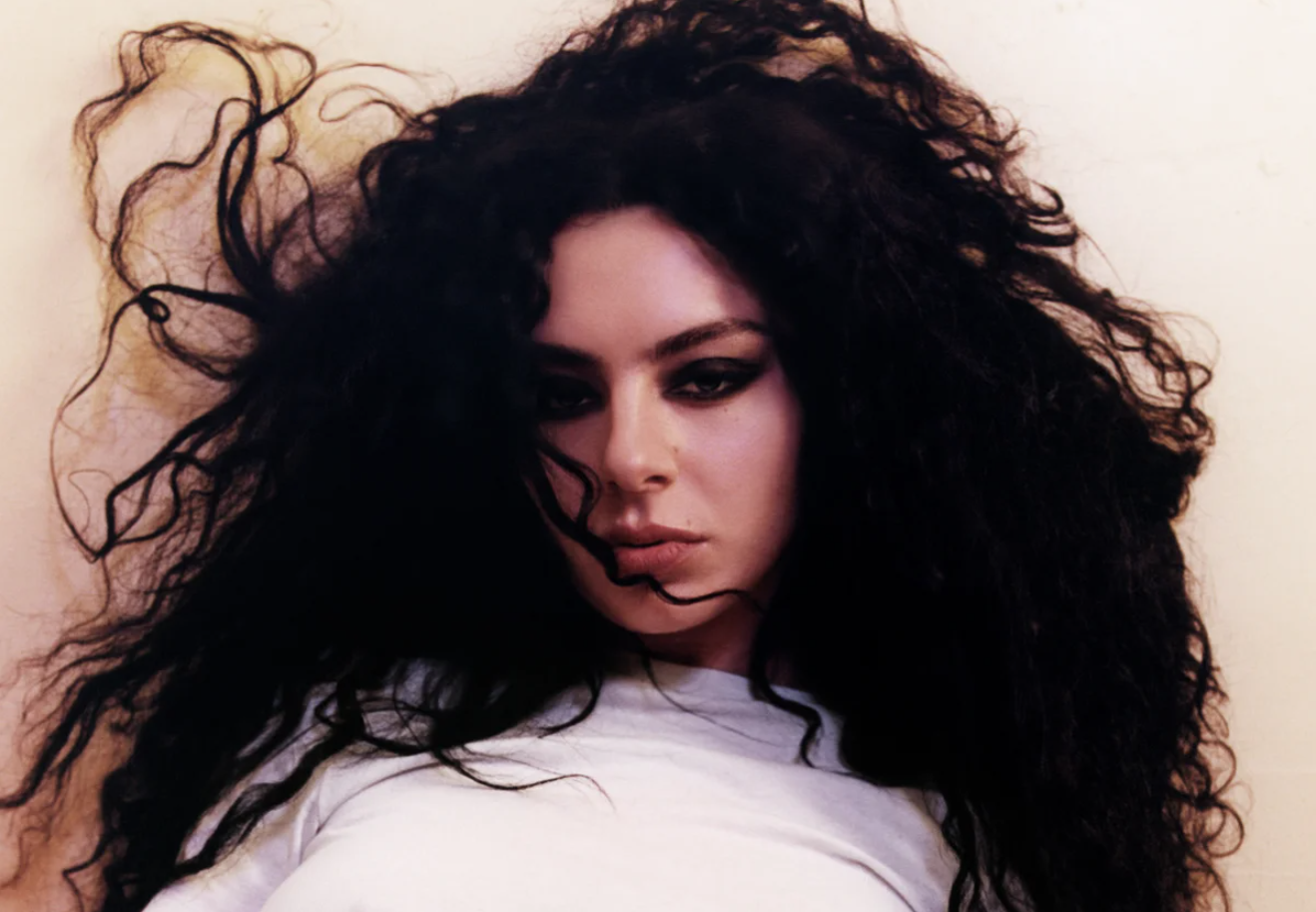
Credit: Harley Weir
ACT OF DEFIANCE
Being “brat” wasn’t about dressing badly or partying harder than everyone else. It was about rejecting the pressure to be endlessly polished. It celebrated women who could be ambitious, impulsive and occasionally selfish without immediately apologising for it. Strangely liberating for a generation exhausted by curation.
Whether Charli intended it or not, Brat became an antidote to internet perfectionism. It offered release from the prison of self-improvement. In an online culture increasingly obsessed with optimisation; she celebrated inconsistency.
That doesn’t mean Charli represents the opposite extreme. She isn’t asking young women to glorify chaos or reject responsibility. If anything, Brat succeeds because it acknowledges that womanhood is rarely coherent. You can crave success and still feel like an imposter. You can be confident one moment and deeply insecure the next. Those contradictions don’t make women failures; they make them human.
In an online culture increasingly eager to tell young women exactly who they should become, Charli’s greatest act of defiance may be insisting they don’t have to become any one thing at all.
If previous generations looked to pop stars for answers, Charli offers something more valuable: permission not to have them.
RELATED


RELATED


- Opinion
- 22 Dec 24
The Year In Culture: From Brat Green to Feuds Created and Abated

- Opinion
- 21 Dec 24
The Best Books Of 2024

- Music
- 20 Dec 24