
- Film And TV
- 03 May 26
Three-time Oscar winner Richard Baneham: "It was the tenacity of that group of guys from Ballyfermot who built an industry here"








Dublin 24 in the 1970s wasn’t the most likely place for a future triple Oscar-winner to be born, but Richard Baneham has gone from watching films in The Classic cinema to working on some of Hollywood’s biggest blockbusters. He talks to Stuart Clark about Avatar, The Lord Of The Rings, Elton John, Jessie Buckley, AI and the other Irish animators and CG experts who’ve conquered Tinsel Town.
Avatar: Fire And Ash executive producer and CG guru Richard Baneham is waiting for someone to come round and extend his mantlepiece, so there’s room on it for the Best Visual Effects Oscar he won last month.
I’m making the mantelpiece thing up, but the Tallaght-born, Los Angeles-domiciled fiftysomething does now have three Academy awards and an equal number of BAFTAs which need displaying, all for his work on James Cameron’s Avatar series of sci-fi epics, which in the 17 years since the original film hit the screens have grossed north of $6.7 billion.
They’ve also consistently pushed the technological envelope with Richard – or Richie to his friends – and the Cameron team developing techniques that have gone on to become standard industry practice.
Starting off as an animator with Sullivan Bluth, the American studio that came to Dublin in 1985 and birthed a whole new industry here, Richard headed to Hollywood in 1994 and within weeks was working on ex-Disney employee Richard Rich’s The Swan Princess.
The credits have come thick and fast since then with Scooby-Do, Space Jam, The Iron Giant, The Lord Of The Rings: The Two Towers and The Return Of The King, The Chronicles Of Narnia: The Lion, The Witch And The Wardrobe also on his CV.
With Richard currently the visual effects supervisor, executive producer and second unit direct at James Cameron’s Lightstorm Entertainment, there’s lots to talk about…
Stuart Clark: Congratulations on Oscar #3. How did you celebrate?
Richard Baneham: We ended up at the Elton John party. Daniel, unfortunately, couldn’t make it because of midterms but our other kids, Luke and Nathan, were there and as young, good-looking men were very popular!
Are Elton’s dos difficult to get into?
No, it’s relatively easy if you’re carrying an Oscar! We’d previously gone to the Vanity Fair after-shows which are a real celebrityfest. The Elton John party isn’t a party, it’s an event with thousands of people. I’m sure there were plenty of celebrities in the room, but my parents, Michael and Noeleen, were over too so it was more of a family night with them and the boys. We all enjoyed it immensely.
There were already two golden postboxes in Tallaght celebrating your Oscar wins, have they added a third?
You tell me! All I know is when they did the Oscar stamps I was left out, so the postboxes were to make up for it.
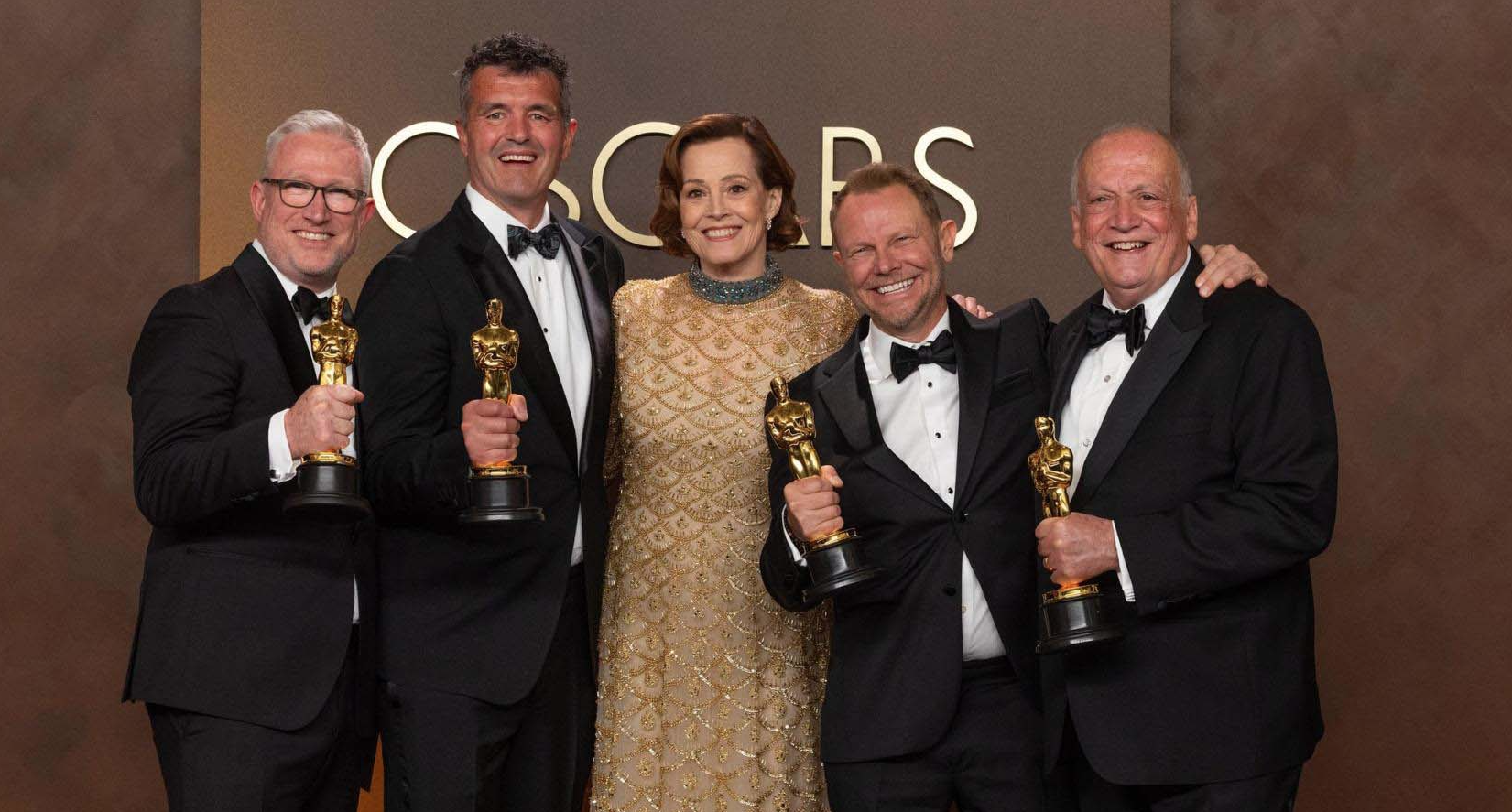
(l-r) Daniel Barret, Eric Saindon, Sigourney Weaver, Richard Baneham and Joe Letteri at the 2026 Oscars
I have a note here that the 34th annual Elton John AIDS Foundation Academy Awards Viewing Party raised a record $10.6 million to combat HIV/AIDS with Lola Young, Dua Lipa, Callum Turner, Donatella Versace, Tina Knowles, Shanina Shaik, Lana Condor, Nicola Peltz Beckham and Brooklyn Beckham among the other notable invitees.
I’ll take your word for it!
Did you get to say “hello” to Jessie Buckley at the Oscars?
I was really happy for Jessie. We were on the carpet with Kerry Condon when Jessie came in. We’d been through the whole crazy Oscar experience with Kerry in 2022 when she was nominated for The Banshees Of Inisherin. She was looking at Jessie from the outside going, “It’s a whirlwind, she won’t even remember it.” In some ways it was overwhelming for Kerry. I didn’t get the chance to talk to Jessie on the night, but we were chatting to her at the BAFTAs and a couple of other awards ceremonies and she was a doll.
I stand to be corrected but I think you’re the only person from Tallaght to have won an Oscar. What was it like growing up there in the ‘70s?
It was interesting because in many ways it was in its infancy with sprawling housing estates and lots of youth, which lead to it being a bit like the Wild West. It had a reputation but I was unaware that it was particularly rough until I went to college. I started going into town – y’know, nightclubs and stuff – and then you realise there’s a whole other side to Dublin. But, yeah, I love the fact I’m from Tallaght and really, really had fun there.
What were some of those nocturnal haunts?
I met the girl I’m now very happily married to, Ashling, in The Apartment on Fleet Street. It was what they called a bubble bar – a full-on nightclub but they weren’t selling alcohol. It was mainly for ages sixteen to eighteen, so an appropriate place to spend your youth!
You went to the Old Bawn Community School.
Exactly, yeah, which was boys and girls. Stephen Kenny, the football manager, was a year behind me I think. I was only there for a short time though.
What were the films growing up that made an impression on you?
My Left Foot was a huge one and The Commitments also made a big impression on me because it was working-class Dublin being portrayed in this positive light. The optimism in it was fantastic. Finglas was very like Tallaght in 1991 – it was the first time I’d seen people like me on screen and suddenly I felt “Everything is possible!” I met Bronagh Gallagher, who is some performer, a few years back at the Oscar Wilde Awards in Los Angeles and told her how much that film meant to me. When I was around 14, one of the lads had gotten a VHS player which was a very big deal. The idea that you could rent and watch movies was mind-blowing at the time. He’d gotten hold of Terminator which we watched and lead to me having a “Holy shit, time travel could exist!” moment. Jim (James Cameron) had really done his research. The dynamic in that movie – an untrained woman up against this killer robot from the future – was incredibly empowering. I loved everything about it.
The probability of you 25-years later working with the Terminator writer-director, James Cameron, probably wasn’t that high…
No, you’d have got long odds at the bookies!
As much as you loved The Commitments and Terminator, they were live action films and you wanted to be an animator. What was the catalyst for that?
You’re right, I was aiming towards traditional animation, not those kinds of tentpole movies. I went to see the re-release of The Sword In The Stone, the Disney one, in The Classic. To be honest, it wasn’t a great film but watching a fully-animated movie in a cinema really caught my attention..
Did the Old Bawn careers guidance teacher say, “Animation? That sounds great, Baneham, but what about being a plumber?”
I didn’t have that experience at all, Stuart. Not that there wasn’t a careers guidance teacher but I didn’t get that far in school. I left at 14. I’m dyslexic but didn’t realise it when I was younger and became an apprentice plumber. You hit it on the head! I always drew, though, and kept the wrist alive.
Before people go, “My god, he’s done his research!” I had no idea you actually were a plumber.
Yeah, for a couple of years. You realise very quickly what you don’t want to do with your life. At 18, I was old enough to get a job on the railways, which is where my dad and later my brother worked. There was a point where I tried traditional signwriting, which I was pretty good at. During college I made a relatively healthy living painting the back of jackets, which was a real ‘80s thing. When poor Freddie Mercury died I had a windfall. I don’t know if you remember the Merchant Barbers on Merchant’s Arch, but they let me hang a Betty Blue jacket with a little business card in their window. That’s how Ash and me were able to make an extra few bob, although truth is she was supporting me back then.
If I’d known, I’d have got you to do a Motörhead one for me! Were you dismissed as a naughty boy at school because of your dyslexia?
I was, I was. I hid it for years. I never thought about it, it just became part of my life. You try not to read publicly. I was never properly diagnosed until I went to Ballyfermot Senior College (now City of Dublin FET College Ballyfermot). The visual arts teacher there, Thelma Chambers, spotted it instantly. There was a lot of written work and when I submitted my first project, Thelma was like, “The writing doesn’t match the conversation.” She said, “Do you know you’re dyslexic?” I was like, “I don’t” and very quickly she allowed me to do audio submissions. That really helped when we had to do complex essays about paintings and how you saw composition. It was a real moment in time for me…
A shout out to Ms. Chambers who helped put Ballyfermot on the international animation map. Was it a good place to study?
Very much so. Don Bluth, who’d come to Dublin in the mid-‘80s and was in full swing, participated in the running of the course and implementing the Sheridan College standard. Rob Fox, a very good animator from Tallaght, was already at Don Bluth so I could see that there was a realistic career path. He taught at Ballyfermot, as did Martin Hanley (The Land Before Time, All Dogs Go To Heaven, Anastasia) who was also at Don Bluth. Dean DeBlois (Lilo & Stitch, How To Train Your Dragon, Mulan) was another I remember coming in. Most of them are still in the industry.
How did you end up joining Rob, Martin and Dean at Don Bluth?
When I got to the end of first year in college, they offered a couple of us a sort of test week. To all intents and purposes it was an internship, which resulted in them giving me a professional job. Originally it was to be full-time, but I ended up doing a couple of days there and three in college. I was able to skip some classes because I was already doing the work at Don Bluth. When I finished third year, I did end up working there full-time. Unfortunately that was the summer they closed down. We literally went back after lunch and the doors were locked. There were weeks and weeks of not getting paid but I believe at some point everybody was compensated.
Like a lot of other American film industry people, Don Bluth had been lured here by the Section 35 tax incentives introduced in 1993 by then Minister for the Arts Michael D. Higgins.
Of course Michael D. was a big part of it but you also had Steve Woods, one of the other Ballyfermot teachers, and a few more of us trying to legitimise the Irish animation industry by joining the International Animated Film Association which would have been a governing body at the time. In order to do that, we had to have meetings with minutes and everything else done officially. We had a room on Abbey Street and, interestingly enough, there was a brown bag hanging on the back of the door. Cathal Gaffney and Darragh O’Connell literally saw that and started up Brown Bag Films in 1994. Tomm Moore, who was also at Ballyfermot, went down to Kilkenny and helped set up Cartoon Saloon who’ve had multiple Oscar nominations. The tax incentives were there to attract the likes of Don Bluth, but it was the tenacity of that group of guys from Ballyfermot who built an industry here.
Are you the only Ballyfermot animation alumni that headed to the States?
No, Colbert Fennelly went over and became a Disney employee and Stevie Deane has worked on things like Avatar, Life Of Pi and The Lion King. Brian Woods also got a gig with Disney. You’ve multiple Emmy award winners all from the same class. Another of the lads living here, Kryz Reid, dropped out of the animation programme but is now the lead guitarist with Third Eye Blind. There was definitely something in the Ballyfermot water!
Do you remember the thrill of seeing your name in the credits for the first time?
Yeah, it was The Creation Of Life, our first year project which was shown at the Galway Film Fleadh and finished second in our category. That was a proper thrill. We were camping down by the river and got beaten by a short made by the guy teaching the class. We were invited into the festival tent where there was an open bar. That was a win at the time! Thirty years later, myself and Darragh O’Connell, who I made the movie with, went back and spoke at the festival. It was a real full circle moment.
After Don Bluth’s dramatic closure, you went from Tallafornia to California. Did the reality of L.A. match your expectations?
No, I never had expectations. One of the lads at JAM Media, Mark Cumberton, was applying for a Morrison Visa and brought extra forms. I filled one out for myself and one for Ashling who was still just my girlfriend at the time. We were living in a single room in Jersey on the Channel Islands, pre-cellphones. One day we came home and there was a piece of paper stuck to the door saying, “Call home.” The local parish priest (in Jersey) had gone over and put it on there. The immediate assumption was that someone had died, y’know? So Ash phoned her dad and he said, “There’s an envelope here from the U.S. Embassy. You have a visa interview.” She was like, “I never applied.” I never thought to tell her! So we both got visas and flew over to LAX where Colbert Fennelly and Dave Lyons, who was also in the same department as me at Don Bluth, met us. It was great to arrive in Los Angeles and see friendly faces.
Was L.A. quite a raw, hedonistic city in the ‘90s?
No. Well, yes and no! I mean, you can find whatever you’re looking for there. We were exposed to unusual episodes, experiences, whatever you want to call them. There was something more civilised about the U.S. in the ‘90s, though. Politics since then has made the country very divided. The separation of the classes – the haves and the have nots – seems more obvious now than it used to be, which doesn’t bode well for the country or the city.
What was the catalyst for you switching from animation to Computer Graphics (CG)?
I had the chance to learn computers. Half of the animation crew were like, “Don’t, you’ll go to the dark side and never draw again!” But for me, it’s the best tools win. It took me not much more than two weeks to switch to Veras (an AI-powered visualisation partner which transforms sketches, 2D images and 3D models into high-impact renderings). I was using the tool completely wrong but made it work for me.
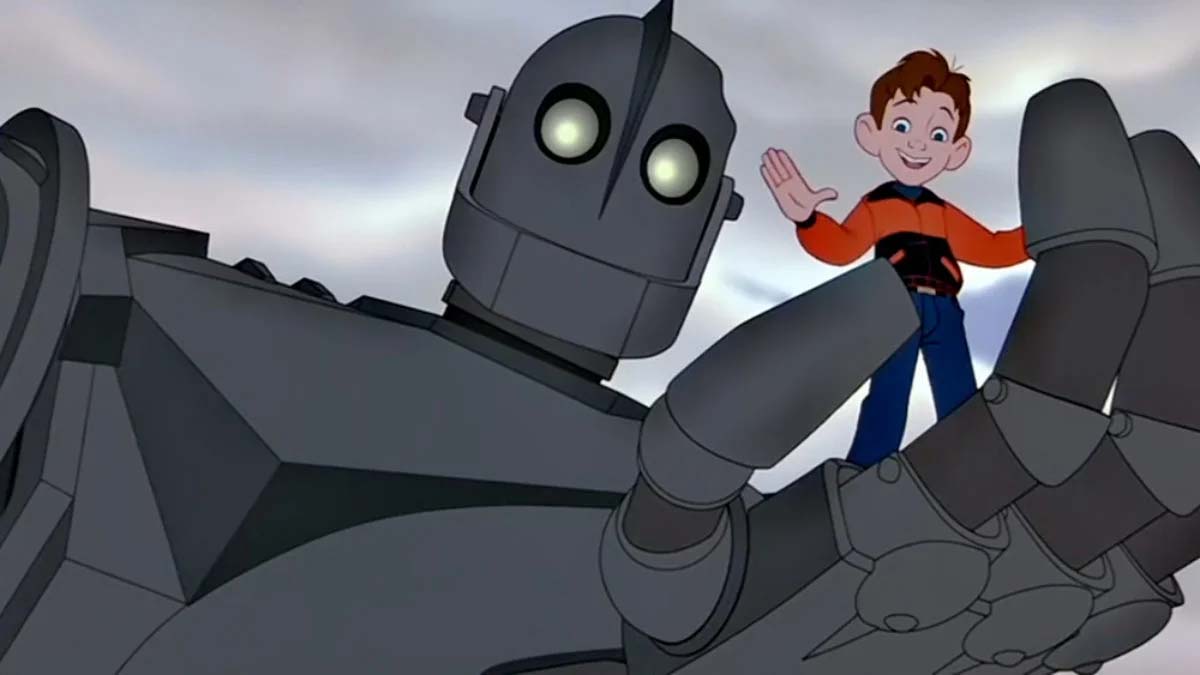
The Iron Giant
What was the first film to benefit from your newly acquired skills?
The Iron Giant (1999). There was a scene where the giant’s hand breaks away and it becomes its own character. I pitched the idea of the hand as a Great Dane puppy, which was big but didn’t understand its own size. I must have sounded mad but the director, Brad Bird, said, “Okay!” Trying to understand how imparted forces could work between 2 and 3D is a tricky thing. Who’s in control when you have a push-pull moment or an interaction? So I hung a pegboard on the computer upside down and taught myself to flip backwards and draw on acetate and move the computer simultaneously so I could see both characters. That was a real ‘aha!’ moment, mixing and matching tools in a low-tech way. It wasn’t about hi-tech and, to be honest, Avatar is the same. On the first film we were credited with multiple technical breakthroughs, but a lot of it was about being inventive with tools that already existed. Taking stuff off the shelves and using it in unusual ways. Coming off of that, I’m really proud of what I learned on Cats & Dogs (2001), which was my first opportunity to supervise CG characters and puppeteered characters in a live action movie.
Being honest too, most of that went completely over my head but I get a real sense of the complexity of your work from it. Did bagging the role of animation supervisor on Peter Jackson’s The Lord Of The Rings: The Two Towers (2002) seem like a massive break?
When Two Towers came along, I actually had an offer to do The Matrix. Brad Bird also reached out – he was doing The Incredibles with Pixar, so it was like, “Oh shit, have I made the right choice?!”
In the end, Peter Jackson won out. Did you get to spend much time with him?
Yeah, he’s an interesting guy. During that time, he was really prolific and interactive with the crew. I don’t think Peter’s a masterful actor but he’s a very, very good director and a fantastic editor. He has the ability to see things in the content and assemble it in a manner that has meaning. That’s his strength. One of the things from that movie which I’m really proud of is the Warg battle scene. It has so much energy. I don’t see Pete regularly now. His world has changed along the way… The last time I spoke to him was on The Hobbit. I was down in New Zealand and we were testing for movies two and three. I ended up hanging out in the edit room and looking at some stuff with Peter, which was such a masterclass. For me!
With the greatest respect to Aragorn, Gandalf, Frodo, Legolas and the rest of the Middle-Earth gang, the Lord Of The Rings: The Two Towers honours are stolen by Gollum. Was bringing the stoor hobbit of the River-folk to life a complicated process?
The idea was to take Andy Serkis’ contribution – which was incredible – and really hone in on how to make it consistent with multiple animators. What I found very quickly with the Lord... crew is that there were five or six particularly empathetic and sympathetic animators I could put together and cast all the key shots to. Gollum works because of corner-stoning the performance on Andy’s choices and finding consistency in the character. That’s something I’ve always striven for and which the audience can believe in. We were able to take that forward when we worked with Jim.
It’s easy with FX-laden films to overlook the outstanding performances by the likes of Andy Serkis who was famously snubbed for an Oscar. The same’s happened on multiple occasions with Avatar, hasn’t it?
Yes, there’s a certain politics to the fact that none of our actors were even considered. Some of the standout performances being Neytiri in movie #1. It was a digital character but Zoë Saldaña’s contribution on the acting side was just phenomenal, and that wasn’t considered. Movie #3 is a very complex moment in the development of Sam Worthington’s character, Jake Sully. You’ve a father trying to protect his family and mend relationships whilst dealing with grief. Tricky stuff which he does absolutely brilliantly. Again this time around, Oona Chaplin is just a great bad girl. She really embodied the role of Varang. It galls me that she wasn’t even considered for Best Supporting Actress.
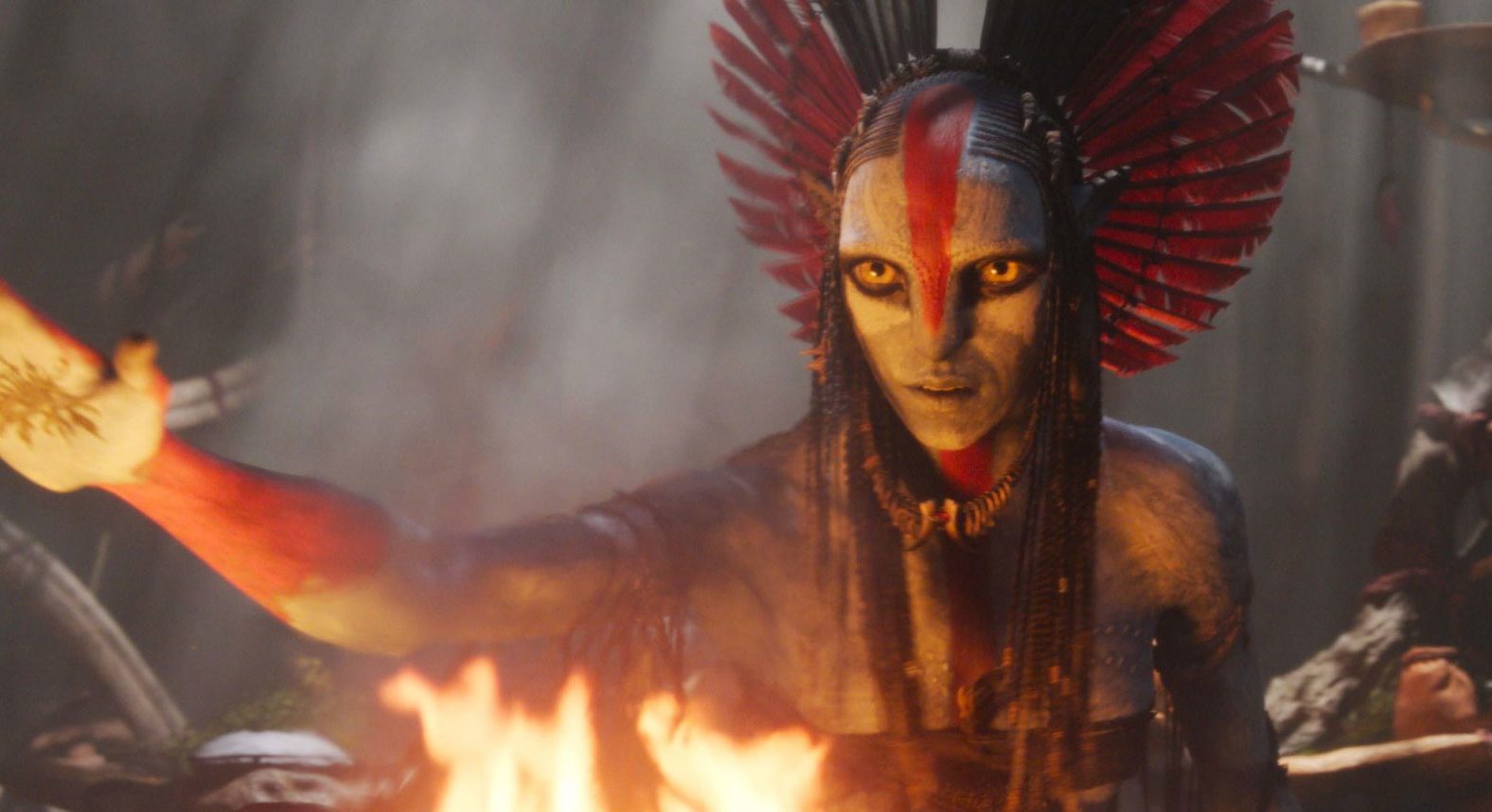
Avatar: Fire and Ash
No sooner had you said “goodbye” to Peter Jackson than you were working with another legendary filmmaker. What lead you to James Cameron’s door?
It was Richard Hollander (Blade Runner, Armageddon, X-Men 2) who made the introduction. We were both working at the time for a company called Rhythm & Hues. After doing The Chronicles Of Narnia: The Lion, The Witch And The Wardrobe in New Zealand, we’d moved back to L.A. for the birth of our first son. When Jim proposed the idea of Avatar, Richard said, “There’s this kid you should meet.” So, we met and Jim asked me to review the test they’d been doing with Industrial Light & Magic. I looked at it and was talking about how I’d approach the consistency and the muscle set in the face. At a meeting Jim said, “Give your notes to Dennis.” Dennis being Dennis Muren, a nine-time Oscar winner for the likes of Jurassic Park and Star Wars. He’s a god in the industry and I’m giving him advice! Dennis was so unbelievably gracious and sweet. This last movie, I had the opportunity to work with ILM again and same thing – just a great group of people with the willingness to grow and learn.
How would you describe James Cameron to someone who’s never met him?
From a professional standpoint, Jim’s never ambiguous and doesn’t mince his words. He knows what he wants and, to be honest, I have a big soft spot for that. He’s incredibly charismatic and funny and has some proper war stories. I don’t mind a little, y’know, turmoil in the relationship. Speaking in truths really helps. Depending on what country we’re in, I have to choose the drink. Whether it’s tequila, Chardonnay or a pint of Guinness, there’s nothing better than sitting down and shooting the breeze with Jim!
Did I read somewhere that you weren’t initially convinced thar Avatar would fly?
Well, I don’t know about that. Originally, I thought we were making Alita: Battle Angel. That’s the truth, I thought we were sharpening our teeth on the Avatar test for that. I wasn’t sure that we were actually going to make Avatar, even though we were setting up and doing some of the development on it.
To give our readers context, Alita: Battle Angel is a cyberpunk odyssey that James Cameron co-wrote in the early noughties and, after sixteen years of “development hell”, finally got made in 2019. Going back to Avatar, it’s fair to say to that the first film looked like nothing that had come before.
The colour and the visual development we did, is really impactful, almost abrasive. I was like, “There’s no way they’re going to make it like this. It’s not going to be neon in colour.” But Jim committed to that as a path. The vibrancy of Avatar is a big part of the appeal for cinema audiences.
You mentioned AI earlier. What impact is it having on your work?
Look, it isn’t as yet. Machine learning has been around for fifteen-ish years and neural networks have really come online. The facial system we use is built around a neural network with machine learning, albeit with a set of tools built on top of it to accommodate the animators working with it. So, I think generative AI has a place more in the visual development world. You know, aspirational images and that kind of generative AI in the art department. On the visual effects side, Agentic AI is where I think the toolset will really start to evolve and remove repetitive or menial tasks that animators or artists have to do on a day-to-day basis. It can speed up workflows and allow artists to be artists more of the time. It’s a good thing but it’s going to need ethical and moral guardrails wrapped around it. There has to be proper implementation.
So what you’re essentially saying is that there’s good AI and bad AI.
That’s the long and short of it. Like there’s good and bad actors. We’ll see what happens but I’m not overly concerned about it.
Despite being a multiple Oscar winner and a Hollywood veteran of over thirty years, do you still get starstruck?
Hanging out with Steven Spielberg, Jim Cameron and Peter Jackson when we were setting up The Adventures Of Tintin was a moment! Having a laugh on set with Guillermo del Toro. Man, he’s one of the funniest people. He has some one-liners that are just outrageous. He’s as sweet as he is sharp. At my first Oscars, getting into the elevator with Bradley Cooper and Jerry Butler who, again, is very funny and direct and open. We were hanging out this year with Domhnall Gleeson who was nominated for Retirement Plan. An honest to god nicer person you could not meet. He was so gracious with everybody including my mum and dad. I wouldn’t necessarily say I was starstruck but all of those were memorable.
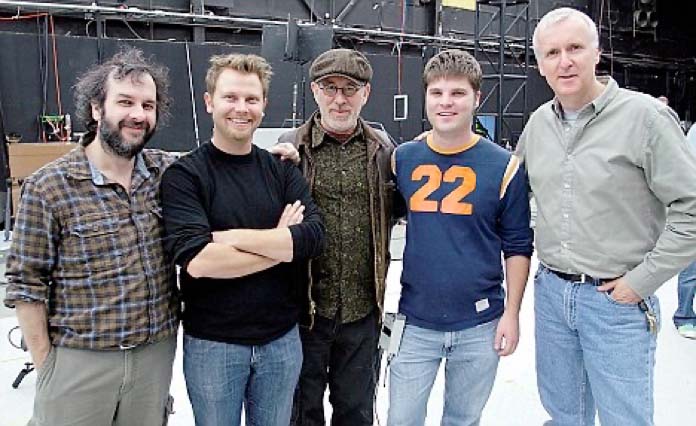
Richard Baneham meets Peter Jackson, Steven Spielberg and James Cameron
What’s the biggest challenge you’ve faced in your film career?
The in-water capture in Avatar: The Way Of Water, which had never been done like that before. It was a proper undertaking trying to understand light spectrums and how the technology is going to work. Myself and Ryan Champney started the testing in a tiny body of water, which was (film producer) Jon Landau’s pool! From there we moved to a small tank in Long Beach and then to a bigger outdoor tank, also in Long Beach. To have that come together was amazing.
Are you already working on the fourth Avatar movie, which is due at the end of 2029?
Yeah, we’re headlong into development. We’re working on some technical aspects which will hopefully change how things are done across the board in the industry and empower a lot of the smaller studios.
Finally, do you have any advice for people wanting to work in the film industry?
There’s as much to be learned from seeing a bad movie as a good movie, so watch as many as you can with a critical eye. No matter which discipline you end up in, it really is the application of fundamentals. If you stick to good narratively-driven storytelling choices – whether it’s composition, performance or the correlation of information as it runs through an edit – you’ll be on the right track. Hammer away at it every day and you’ll get there.
• For more information about the creative courses at City of Dublin FET College Ballyfermot – where Richard Baneham studied animation – see bcfe.ie
RELATED

- Film And TV
- 07 Jul 26
AI actor Tilly Norwood will debut in feature film Misaligned

- Film And TV
- 19 Mar 26
Val Kilmer to be 'resurrected' with AI for new film

- Film And TV
- 21 Oct 25
Channel 4's Dispatches becomes first British TV programme to feature AI presenter
RELATED

- Film And TV
- 29 Sep 25
Creator defends AI actor as "piece of art" amid backlash

- Film And TV
- 18 Jul 25
Netflix uses AI generated visual effects for the first time


- Film And TV
- 22 Apr 25
Oscars voters must now watch each film prior to voting

- Film And TV
- 01 Apr 25
