
- Opinion
- 29 Jan 26
What's next for Ukraine: "We want peace. But we want a just peace. Peace without justice is not going to last"








Between barrages of Russian strikes on Ukraine’s capital, Hot Press’ Chloe Craft visited Amnesty International Ukraine headquarters in Kyiv to discuss neutrality, peace negotiations and international justice.
In a narrow street in Kyiv’s Podil (Lower City) neighbourhood lies an unassuming office building. The upper floors are home to Amnesty International Ukraine, where the country’s leading experts on war crime documentation, just treatment of prisoners of war and international justice procedures carry out their vanguard work.
The space is not unlike any other typical office in Europe. The cosy cafe across the way, flocks of pigeons gathered at the steps of the door and friendly co-workers, having the craic on their lunch break outside, all reminded me fondly of my own workplace.
The sense of familiarity faltered when the impact of drone and missile strikes only a few kilometres away seemed to shake the building’s foundations.
I had first felt the earth tremble when I arrived at Kyiv’s central train station early in the morning on the final Saturday of November, as hundreds of Russian drones and missiles pelted the city. Over the course of roughly 24 hours, two people were killed, 38 injured and over 500,000 – the entire western half of the city – left without power. A majority of the city’s inhabitants, me included, spent the entire night and morning in a bomb shelter.
The aftermath of that attack was visible a few days later, as I navigated cracked sidewalks and rubble-strewn parks on my way to interview the leadership of Amnesty International Ukraine.
INTENTIONAL ATTACKS ON CITIZENS
I called Nadiia Fomina, one of Ukraine’s top youth lawyers and an executive assistant at Amnesty, to let her know I was outside. I could barely hear her over the aggressive buzz of nearby generators. Due to the frequent power outages, nearly every business employs one of these imposing and extremely noisy machines to keep the lights on and the music playing.
Fomina, a neatly put-together young woman with smart wire-rimmed glasses perched on a regal nose, greeted me and led me upstairs. The upper floor of the building, where the lawyers, researchers, analysts and other staff worked, struck me again with a feeling of familiarity. The stacks of books in every corner, cheeky stickers pasted to desk dividers, forgotten slips of paper gathering dust under cabinets – none of it screamed “war crime investigators” any more than my own office would. As Fomina led me to a conference table and went to fetch Veronika Velch, director of Amnesty International Ukraine, I felt as if I could have been sitting down for a meeting with my boss and co-workers.
Velch arrived quickly, with the look of someone full of positive energy – apparently light-hearted yet also immensely serious about her work. As she walked in, thumbing through a file folder, I noticed her nails were painted in alternating blue and yellow, the colours of the Ukrainian flag. As most small talk in Ukraine tends to, we circled briefly around the latest on the US-led ‘peace’ negotiations, which elicited sighs of disapproval and cheeky jabs at the various world leaders involved.
When the interview proper began, I was quickly reminded that our light banter notwithstanding, the reality of the situation is that Kyiv is still being attacked constantly by the Russian army on the orders of Vladimir Putin.
“During the brutal attack on Saturday,” Velch told me, “I spent 10-and-a-half hours in a basement with my 10 and 13-year-olds. We heard all the explosions, one was very strong – and I received a message saying my children’s school was bombed. A drone had landed in the front yard, on the playground.
“The irony in all of this is that, while we are talking about peace negotiations, it’s an international Christian school – where so many internationals and Ukrainians gather – which gets bombed. Instead of going to the cinema with my kids, I go to their school to document war crimes there.”
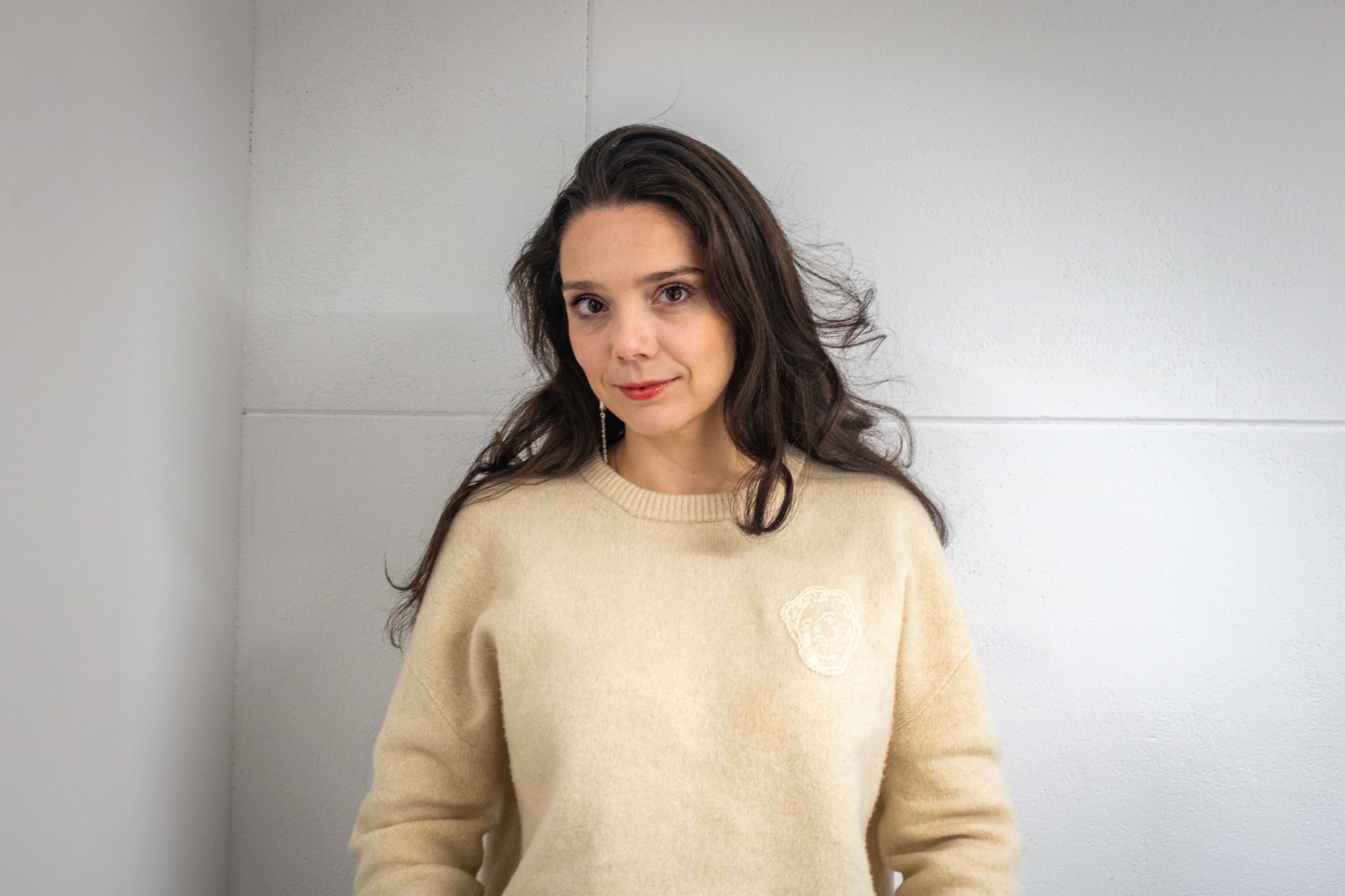
Veronika Velch
Velch explained that, after initial safety sweeps were carried out by the police, and reports were filed, Amnesty arrived to clean up the scene and carry out an in-depth documentation of war crimes – which include intentional attacks on civilians and on buildings dedicated to education.
Velch then said something about the bombing of the school, which would haunt me long after I left Kyiv.
“We were blessed,” she ruminated, “that it happened on Saturday.”
Of course! The children were sheltering at home when the attack happened. But the casual way she said it reflects the lived experience of a people who have become as used to bombings as the Irish are to rain.
A WAR OF AGGRESSION
At the same time I was interviewing the Amnesty leadership in Kyiv, Ukrainian President Volodymyr Zelenskyy was making his first State visit to Dublin. Not everyone was pleased to see him arrive. People Before Profit TDs refused to applaud when he addressed a joint-sitting of the Houses of the Oireachtas as a protest, they said, against an “agenda of militarisation in Europe.”
Afterwards, People Before Profit said they “have always rejected the idea that there is a military solution to this conflict.” And they claimed that sending ‘military aid’ to Ukraine is a “flagrant breach of Irish neutrality.” What Ireland sends is classified as “non-lethal military support.”
I asked Amnesty what they thought of such perspectives. Velch inhaled, collecting her thoughts, and Fomina sighed.
“It’s nice to be neutral when you don’t have a neighbour who really wants to eat you,” Velch began. Clearly, she points out, this is not a luxury open to Ukraine.
Velch recounted how, at a recent speaking event in Switzerland, she was asked why Ukraine “doesn’t want” to be a neutral country. Switzerland, Austria and, of course, Ireland are all highly prosperous, even relative to other European countries. All three were, as of December 2024, among the top 10 European countries in terms of per capita GDP. Individually, they have faced little or no international threat.
“What’s not to like?” the argument runs.
Ukraine’s experience is very different. They officially declared neutrality upon winning their independence from the Soviet Union in 1991. And they only voted to end that status after Russia’s illegal annexation of Crimea and invasion of the Donbas in 2014.
“We were neutral like you – and look where we ended up,” Velch said sardonically. “When we became independent, we gave up all our nuclear weapons, we signed all the international documents, we ratified everything that was needed.”
But they were betrayed in 2014, not just by the invaders, Russia, but also by the US and Europe – who stood idly by and did nothing to support Ukraine and its rights under international treaty.
“We were set on a path which should have gotten us into a good place,” Velch said. “But we ended up in this war – a war of clear aggression by Russia against Ukraine.
“You can proclaim you’re neutral while living in your own apartment,” she added. “But when you have a violent person living next to you who is running into your house in the middle of the day to try to kill you, your kids and your family with an axe, you cannot be neutral.
“When you have a neighbour who thinks about your land as a part of their own territory and wants to basically demolish your existence as a people, then neutrality is not going to work. You have to pick a side.”
Velch and Fomina emphasised that Amnesty’s work is not partisan. Along with documenting war crimes, they spearhead initiatives to ensure the fair and just treatment of prisoners of war held by both sides.
“Our work is based around very simple documents: international humanitarian law and the Geneva Conventions,” Velch says. “When it comes to prisoners of war, we are asking Russia to help fulfil their Geneva Convention obligations while also monitoring to make sure the Ukrainian military is also complying. We are documenting the treatment of prisoners of war [on both sides] to look for brutality, torture, sexual violence or execution, and also knowing where they are and staying connected.”
The third treaty of the Geneva Convention defines humanitarian protections for prisoners of war, including the right to correspondence with the outside world, some connection to family and to be updated with current events.
“Unfortunately, the Russian side is not fulfilling those obligations at all, according to our research. But also, many Ukrainians have complained about not being able to deliver on some obligations…This topic is new for Amnesty International, because we are used to operating on different issues which were more internally oriented. But right now, when this number of international crimes are committed, we have to work not as much under the Declaration of Human Rights at home as international humanitarian law abroad.”
In the early months of the full-scale war, Amnesty was the first to publicly speak out against the Ukrainian Ministry of Internal Affairs’ practice of sharing videos of captured Russian soldiers on social media. The videos had raised concerns over potential violations of another part of the Third Geneva Convention which protects prisoners of war “against insults and public curiosity.” At the time, Amnesty said, “It is essential that all parties to the conflict fully respect the rights of prisoners of war.”
Since then, much of Amnesty’s findings about prisoners of war have been documented in a report published in March 2025. Out of their 104 interviews, 10 were Russian prisoners currently detained in Ukraine, five were former Ukrainian prisoners of war, and the rest were primarily families of suspected or confirmed prisoners of war. Their surveys found evidence of Ukrainian POWs being subjected to torture, denial of medical care, unlawful killing among various other war crimes and crimes against humanity in Russia.
While they have faced some criticism for not discussing Ukraine’s treatment of Russian POWs more thoroughly in the report, they did take it into account: Amnesty representatives did a full examination of a prison camp holding Russian POWs in Ukraine, while an independent British researcher was allowed to interview the Russian prisoners without Ukrainian authorities present to ensure impartiality. They reported no violations of the Geneva Conventions.
Other organisations (chiefly the UN) have done more specific investigations into Russian POWs, which have been limited to alleged threats of violence made by Ukrainian soldiers against Russian and Russian-affiliated prisoners in March and July 2022. As a result of the reports, the Ukrainian government launched criminal investigations into the Ukrainian military units responsible, and there have been little to no reports of mistreatment in Ukrainian camps since. Both Amnesty and the UN have emphasised that they were granted access to camps and prisoners by Ukrainian authorities, but were refused access by Russia.
Beyond prisoners of war, Amnesty has issued reports criticising the Ukrainian military for setting up bases in residential areas, including schools and hospitals, and launching attacks from populated civilian areas. Russia has been found to intentionally target schools and hospitals with attacks on several occasions. Amnesty has recommended the governments of both Ukraine and Russia take action to end such violations of international law, but have reportedly received no responses. Calls for the international community to take action have also been fruitless.
CAN’T FEED A BEAR WITH ONE HAND & FIGHT IT WITH THE OTHER
Velch and Fomina’s work comes amid a corruption scandal within the Ukrainian government, in which Zelenskyy’s chief of staff, Andriy Yermak, resigned following an investigation at his home. Zelenskyy had previously appointed Yermak to head the peace negotiations with the US, but his departure prompted a full reset of Zelenskyy’s office. Investigators from Ukraine’s anti-corruption bureau linked several high-level figures to an alleged €86 million embezzlement scandal in the energy sector. Protests had been held in Kyiv over allegations the money was diverted from key infrastructure projects that would have protected civilian energy supplies at a crucial time in the war. The bureau did not specify why Yermak’s residence was searched, but Zelenskyy had already fired several ministers in relation to the corruption scandal.
“The scandal is intolerable for us as well,” Velch noted. “This kind of thing is the reason why we’re here. We are fighting to not tolerate any corruption or wrongdoing. As Ukrainians, we know you cannot feed a bear with one hand and fight it with the other. Just look at the massive protests against corruption in the summer in Kyiv. Amnesty as an organisation may make a statement or not, but know that every single member of our team was there. We are hopeful that all crimes will be investigated and everyone who is responsible will face the rightful consequences.”
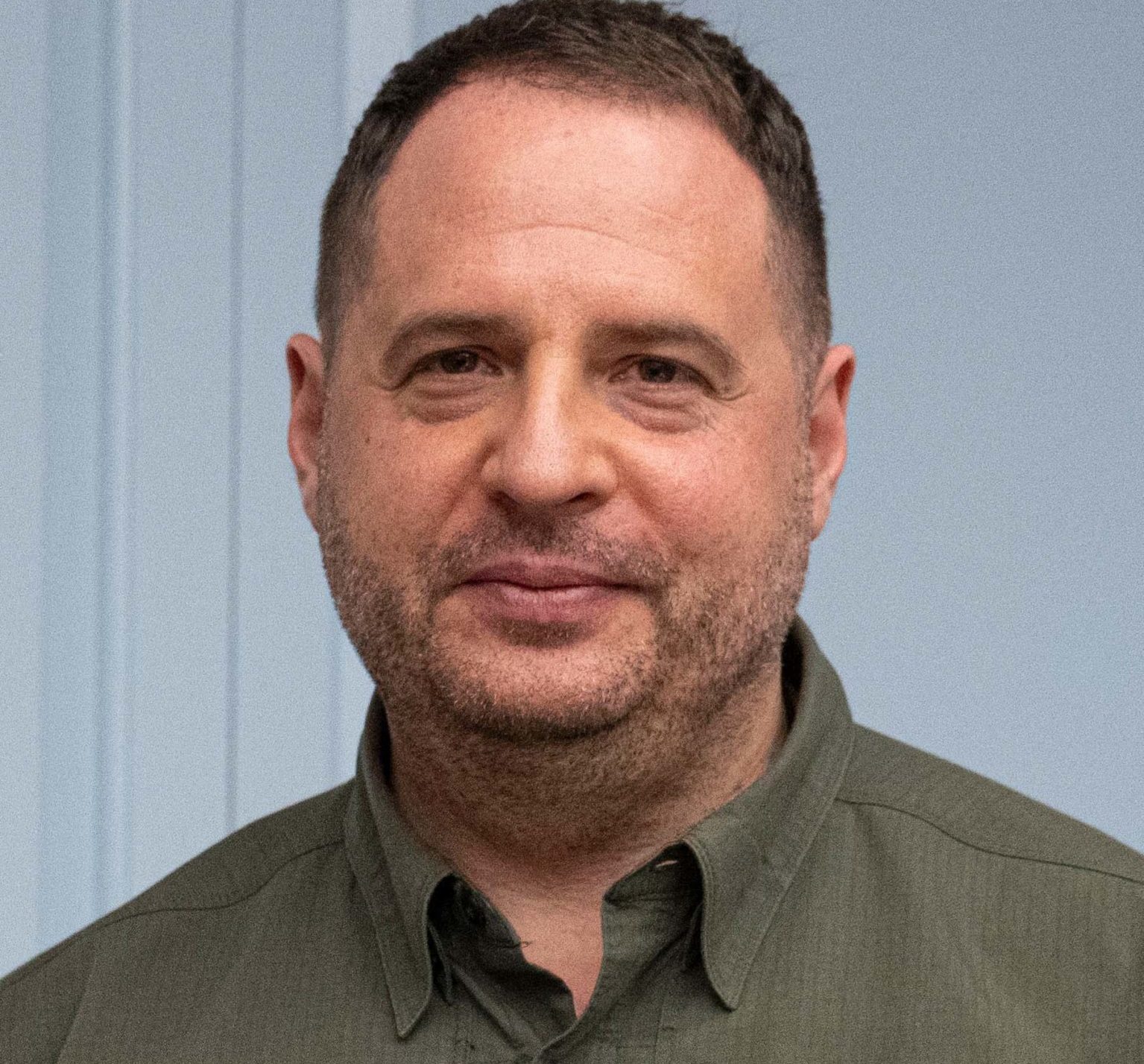
Andriy Yermak
Both US President Donald Trump and his son, Donald Trump Jr., fed the fires of outrage with public comments claiming Ukraine was “a far more corrupt country than Russia” and that the US should end all aid to Ukraine over the scandal. Amnesty said some allies have hesitated amid the media firestorm; Velch described a sense of “frustration” as the organisation watched its international partners become distant out of fears they may be supporting a corrupt government.
“I see why the international community is saying that all the work to support Ukraine is pointless, because they see the government stealing the money. I see why they are blaming Zelenskyy, because he is the face of that government. But this country stands not because of him. This country stands because of its people. Zelenskyy was delegated to represent the people at a time before the war and when he was trapped in this historical situation, he stayed and served as leader. But nothing, not even the peace deals, are made without the support of the people. This is Ukraine. Democracy is in our blood.”
Fomina addressed readers abroad: “When you see Ukraine, do not think about the Ukrainian government officials, because we are getting mad the same way as anyone else. Think about the people and the volunteers who stand for truth.”
“In a perfect world, I would want to us be neutral… and have new people in the government,” Velch added, “but in this historical moment, it is just impossible.”
We also discussed falsified anti-Ukrainian narratives, which frequently originate from Russia and are reinforced by Trump. At the time, we spoke of Trump’s February 2025 comments that Zelenskyy is a “dictator” for suspending elections during martial law, and several instances of Trump claiming Ukraine started the war and repeatedly “chose” not to end it. Since then, the most recent instance was a (since disproven) Russian claim that Ukraine attacked one of Putin’s residences on December 28. The claims came conveniently in the midst of peace talks in the US, with Putin being the one to tell Trump of the story in a December 29 phone call. Perhaps in Putin’s favour, Trump said it was “not good” for Kyiv’s odds.
“There is a strong misunderstanding that Russia wants peace and Ukraine does not want peace or is war-mongering,” said Velch, echoing the wording of People Before Profit’s statement. “Ukraine wants peace more than anyone else. We want peace. But we want a just peace. Peace without justice is not going to last. That’s the thing. We want to be reassured this war of oppression will not happen again in a year or two.”
It’s not simply a legal or political issue, Velch added. It’s personal.
“We have our kids here,” she said. “I have my kids here. We do not want them to have to fight this nonsense over again. We want them to have a good life, because that is what everyone deserves, whether they live in Kyiv or in Dublin.”
President Zelenskyy’s recently announced 20-point peace plan, discussed over recent days with President Trump – with ‘negotiations’ scheduled to be renewed in the early days of 2026 – promises a significant degree of demilitarisation, as well as the introduction of free economic zones to surmount rival territorial claims over the Donbas.
The problem is that this will almost certainly be rejected by Russia, who continue to demand that Ukraine should simply hand over the Donbas in its entirety.
WOMEN WILL BE RAPED
There is a bottom line here. Kyiv was hit with yet another 10-hour-long wave of strikes on December 26 and 27, killing two people and injuring 32. Afterwards, Zelenskyy commented that such attacks confirm that Russia “doesn’t want peace.” And there is only one thing that is likely to change Putin’s mind – and that is a commitment on the part of the US to supply the weapons that would have the potential to change the course of the war, with the permission to use them freely.
“Russian representatives are having long conversation,” Zelensky added on Telegram, “but in reality the Daggers [missiles] and Shaheds [drones] are speaking for them.
“This sick activity,” he added, “can only be responded to with really strong steps. America has this opportunity, Europe has this opportunity, many of our partners have this opportunity.”
Donning army fatigues, as if he himself might end up at the front, Putin said that Russia plans to accomplish its objectives in the war militarily if Ukraine does not comply with his expansionist plans.
“The offering made by Russia is just a request for us to surrender,” Velch explained. “It’s not the way to negotiate. A negotiation is meant to find the middle ground, but there is no middle ground with Putin. Russia’s plans are putting us in a hard position, because when you say no or yes to something, you have to understand all the consequences.”
And these are indeed severe, Velch said.
“Foreigners,” she stated, “always have the argument, ‘Why would you not stop this? Many more people will be killed.’ The problem is if we were to stop this war on the conditions proposed by Russia, then we would be fully occupied very quickly. As Amnesty, as well as our partners in places like Ireland, we know what occupation means.
“It means way much more will be killed, especially innocent people. There would be civilian detainees. The women will be raped. The kids would be indoctrinated. It’s not the way to stop killing, by letting Russia kill even more because of the occupation.”
Russia’s draft ‘peace plan’ – initially adopted by Trump and his slippery negotiator Steve Witkoff – also involved granting amnesty for all war crimes committed by both sides. But, of course, (a) there is no comparison, whatsoever, between the atrocities perpetrated by Russia and what has been done militarily by Ukraine; and (b) clearly, agreeing to such a proposal could set a dangerous standard for other conflicts.
“That won’t end war,” Fomina said, caustically. “It’s not going to work. It will tell other regimes that what Russia has done can be forgiven. There is no statute of limitations for war crimes. There is no statute of limitations for international crimes against humanity. We see what happened in the former Yugoslavia, and we see similar cases pop up right now in other places [like Gaza]. That’s the way it should be.
“For so many years, Ukraine has collected and provided the tribunal in the International Criminal Court with so much evidence. Yet they have done nothing while the war is ongoing.”
The hope is that this will change. But first there is a Russian war of aggression to be ended, ideally on terms that include a component of justice restored.
That is a vital element that Europe must press for, even against the odds...


RELATED


- Lifestyle & Sports
- 11 Sep 26
Pulse College: A cutting-edge blend of both academic perspectives and practical skills

- Lifestyle & Sports
- 11 Sep 26
The Lir Academy: Offering the highest standards of training to aspiring performers

- Lifestyle & Sports
- 10 Sep 26