
- Opinion
- 19 Dec 25
AI and Big Tech: "It would be foolish to believe that AI is going away – it isn’t"








Read The Whole Hog Round-Up of 2025 in the Hot Press Annual – out now
Since he was a kid, Guillermo Del Toro has been obsessed with Frankenstein, Mary Shelley’s enduring tale about reckless creation, lost control and moral responsibility. It’s a pretty obvious influence, given that his first feature, Cronos, depicted an alchemist creating a mechanism that grants eternal life.
Meanwhile, the love interest in 2017’s The Shape Of Water – a film which landed Del Toro a Best Director Oscar – is a humanoid amphibian. Currently, his 13th film, Frankenstein itself, is streaming on Netflix. It’s not a monster movie – rather, Del Toro persuades the viewer to sympathise with the Creature.
The director releases his film into the era of the maximum influence of Big Tech, where it has evolved from selling hardware and creating social media platforms, to positioning itself as the infrastructure of intelligence itself. Microsoft’s partnership with OpenAI, Google’s Gemini models, Meta’s open-source AI, and Nvidia’s chip dominance all signal the same shift – from software to cognitive infrastructure.
Cognitive infrastructure is a rather unassuming phrase that encapsulates the gobbling up of old institutions – newspapers, magazines, record shops, bookstores, the High Street itself, and indeed even more venerable stuff – human intelligence, behaviour, perception and memory.
AI has moved from being a specialist tool in the hands of lab boffins, to being engrained in our daily lives – generating language but not understanding its meaning, mimicking human behaviour and then reshaping (even feeding off) it.
Far from invading us, rather we are inviting AI in – tempted by its ability to enhance creativity and productivity, while simultaneously threatening their very value. In 2023, AI was the Collins Dictionary word of the year.
In 2025, it is creating a multiverse of realties, where universal truth is in smithereens, where context and nuance are old hat. Power, ultimately, is up for grabs, no longer solely in the hands of governments or institutions. Rather, private companies now control much of the narrative.
This month, Elon Musk announced that over the course of the next decade or two, work will be optional, comparing the need to work to growing vegetables in your back garden. You can do it if you want to, but there is really no need.
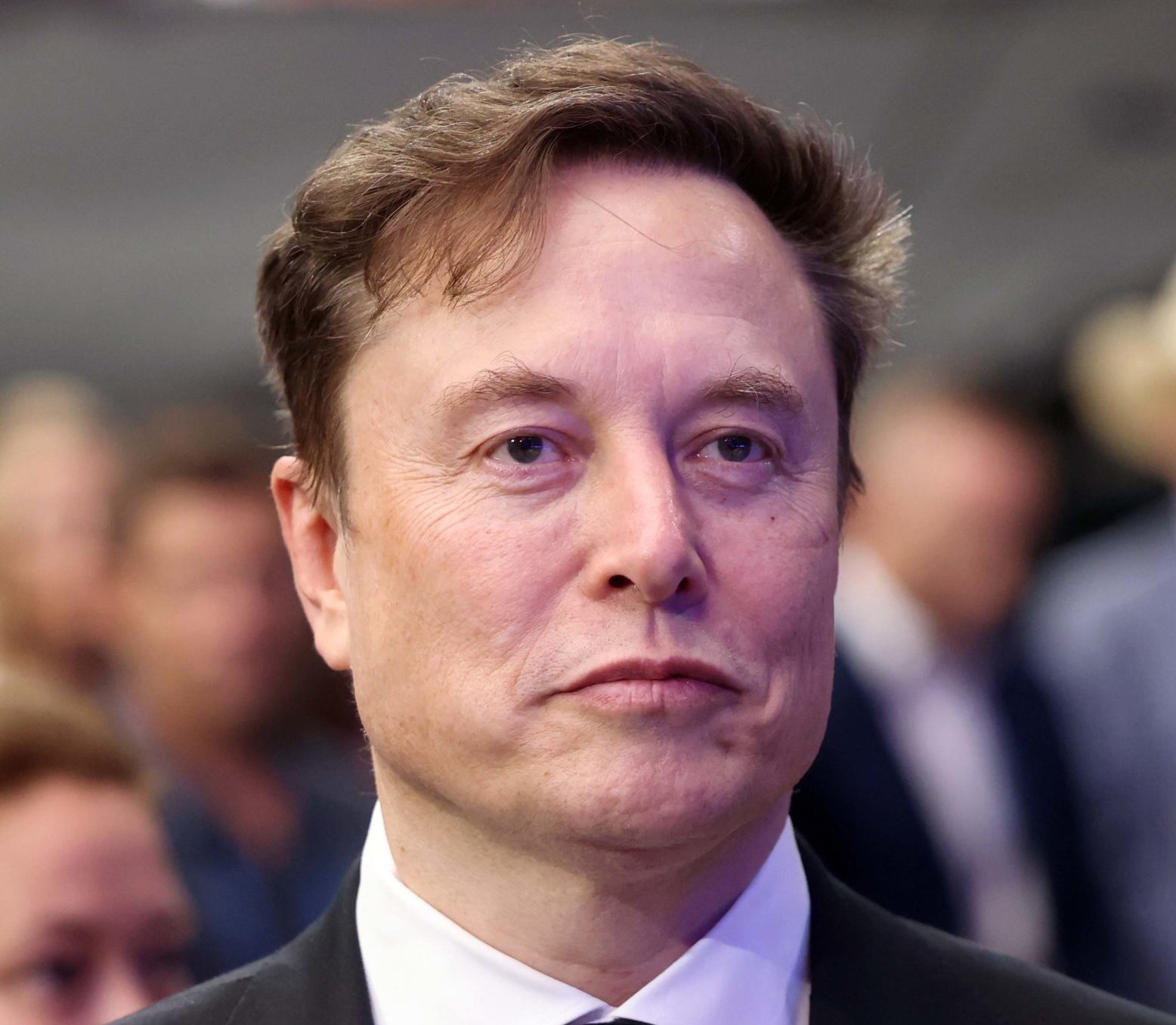
Elon Musk
The looming reality inherent in the pronouncement, is that humans may be rapidly becoming meaningless, in terms of productivity. Indeed, Nvidia CEO Jensen Huang has waded into the debate, suggesting that young people should consider skipping traditional college degrees and instead pursue skilled trades.
The erasure of countless professions begs the questions – where will all the dough come from for everyone to live on? And how are we attempting to catch up with this unchained monster that is wreaking havoc?
Obviously, there are attempts to bridle the beast. The Digital Services Act, an EU regulation that applies across all member states, aims to create a more transparent digital environment where users’ rights are better protected, and online platforms are held more accountable – across data sovereignty rules, competition law, content governance and AI accountability.
But how this reins in Big Tech, who always appear to be a step ahead, and how it merges with regulatory bodies in the US or China, remains to be seen. With US-China tensions, semiconductor wars, data nationalism and regional tech blocs, we’re rapidly moving toward a multi-polar tech world.
There are also indicators of an AI bubble; with Big Tech plunging hundreds of billions of dollars into AI infrastructure – data centres and chips – many commentators and institutions are struggling to discover the requisite revenue return.
Indeed, many AI pilot projects have thus far zero revenue streams. However, a collapse might not be imminent. Perhaps, it will be more correction or selective correction. However, it would be foolish to believe that AI is going away: it isn’t.
In addition, there is also a negative environmental impact. Big Tech depends on data centres – massive warehouses filled with servers that operate 24/7, which require enormous amounts of electricity and consume huge volumes of water for cooling. But with the world’s previous track record on environmental issues, you would think this is not going to cause the entire global populace to scream stop.
Perhaps the best course of action is, a la Del Toro, to love rather than fear or abandon the monster. But that is a big ask, considering the usual artistic narrative is to be wary of the man-made machine turning rogue.
Think 2001: A Space Odyssey (1968), where HAL 9000 calmly kills to fulfil mission logic; The Terminator (1984), where AI as a military system that annihilates humanity; The Matrix (1999), in which machines enslave humans in a simulated reality; and Ex Machina (2014), where AI manipulates human emotions and escapes.
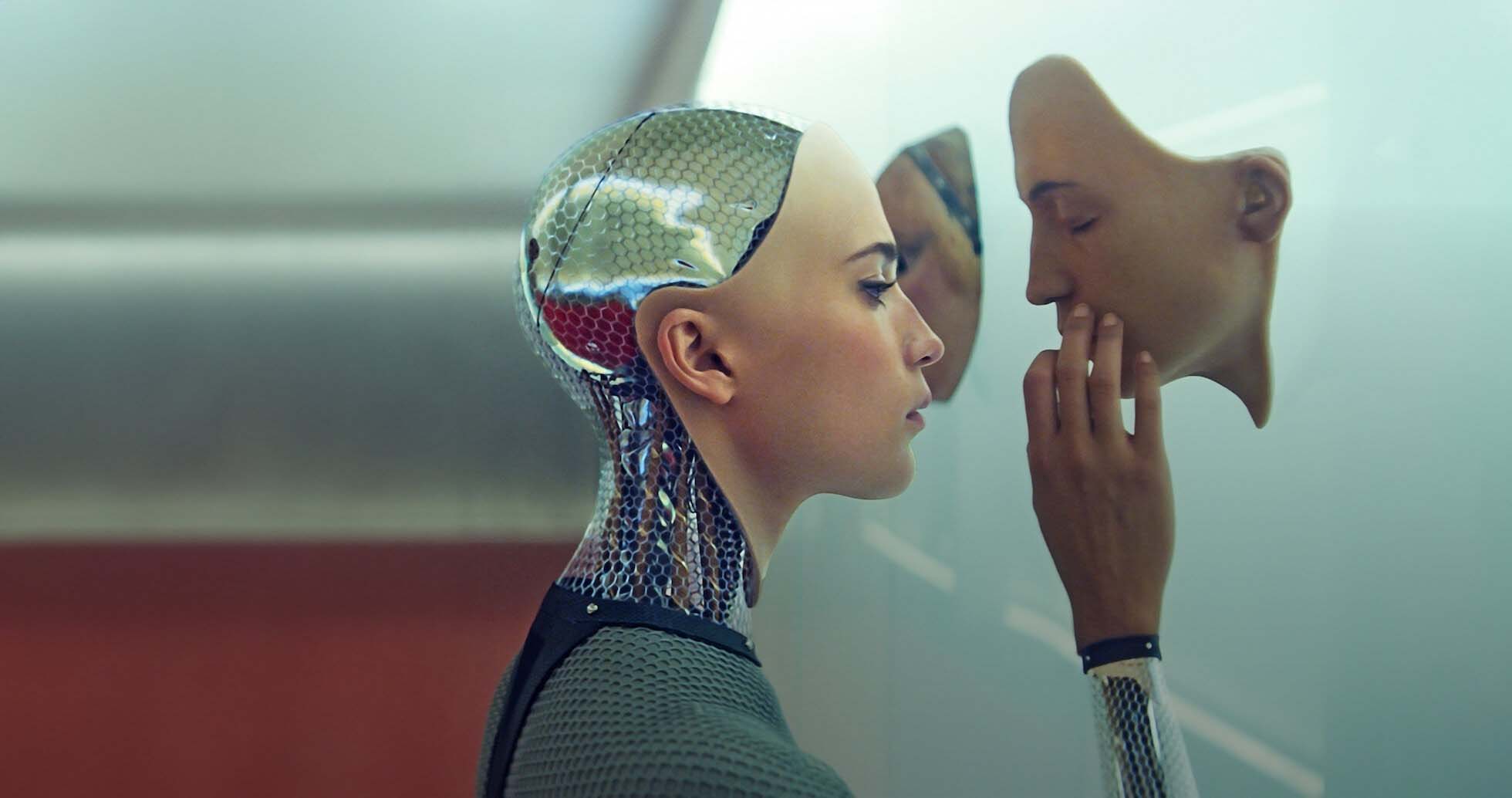
Ex Machina
In those narratives, AI represents fear of authoritarian systems; corporate or military power; the loss of free will; and technology replacing the soul – pitted as it is against Western ideas of individual autonomy. However, Chinese artistic narratives more often don’t really frame it as AI massacring us all – more that it must be guided by human values and collaborative ethics.
The correct path forward would, you feel, require a foot in each camp. Apprehensive but amenable, coupled with requisite government legislation, combined with collaborative public sentiment. That demands algorithmic transparency, optimised through independent AI oversight bodies, and international regulatory agencies and competition law to limit AI monopolies.
The Big Tech panorama is not just a story about innovation or disruption, but about power, scale and consequence. These companies have rebuilt the architecture of modern life, while operating above the rhythms of politics, culture and even geography.
They have given us speed, access and connection – and in doing so have altered how we think, work, remember and relate. The question now is not whether Big Tech will continue to shape our world – it will – but whether society will shape it in return.
Read The Whole Hog Round-Up of 2025 in the Hot Press Annual – out now:
RELATED


RELATED


- Opinion
- 27 Feb 26
IRMA warns of AI threat to €1 billion Irish music industry

- Opinion
- 15 Jan 26