
- Culture
- 27 Oct 26
Louise Kennedy: "There was a dinner in London the day Trespasses was launched, and Gillian Anderson was there...she told me she loved the book."


Louise Kennedy on her compelling new novel Stations, writing about '80s music, and the hit TV adaptation of her book Trespasses, which starred Gillian Anderson.
Having enjoyed huge acclaim for her 2022 debut novel Trespasses, subsequently adapted into a Channel 4 series starring Gillian Anderson, Louise Kennedy has now returned with Stations.
Set in '80s Ireland, Stations focuses on outsider teen Roisin and the friendship she strikes up with the tearaway Red.
When the latter flees to London after becoming embroiled in a few too many scrapes, Roisin eventually follows to try and track him down, but a darkness hangs over Red's story, and Roisin has to confront her own demons too. In much the same way Trespasses offered a vivid account of Troubles-era Northern Ireland in the '70s, Stations is similarly evocative of life in the south a decade later.
In fact, whilst the book is set in an unnamed small town, the allusions to the Irish Derby taking place nearby in the Curragh left me wondering if it was set in my hometown of Newbridge. Turns out I was only 15 miles or so off.
"When I was 12, my family left the North, and we moved to Naas in 1979", says Kennedy, who retains her Midlands accent. "At the same time, I didn't name the town, which was kind of fucking stupid. I did the same the last time with Trespasses, where I never named Holywood. Then, towards the end of the book, I mentioned a statue in the town called Johnny the Jig. Then everyone who was reading it, who suspected it was Holywood, went, 'Oh, it definitely is.
"So, I don't know why I didn't name it. It's kind of plain enough, I think, from the Moat and various things." If Trespasses represented one aspect of Kennedy's experience, in terms of her childhood in Northern Ireland, perhaps Stations reflects her adolescence in the south.
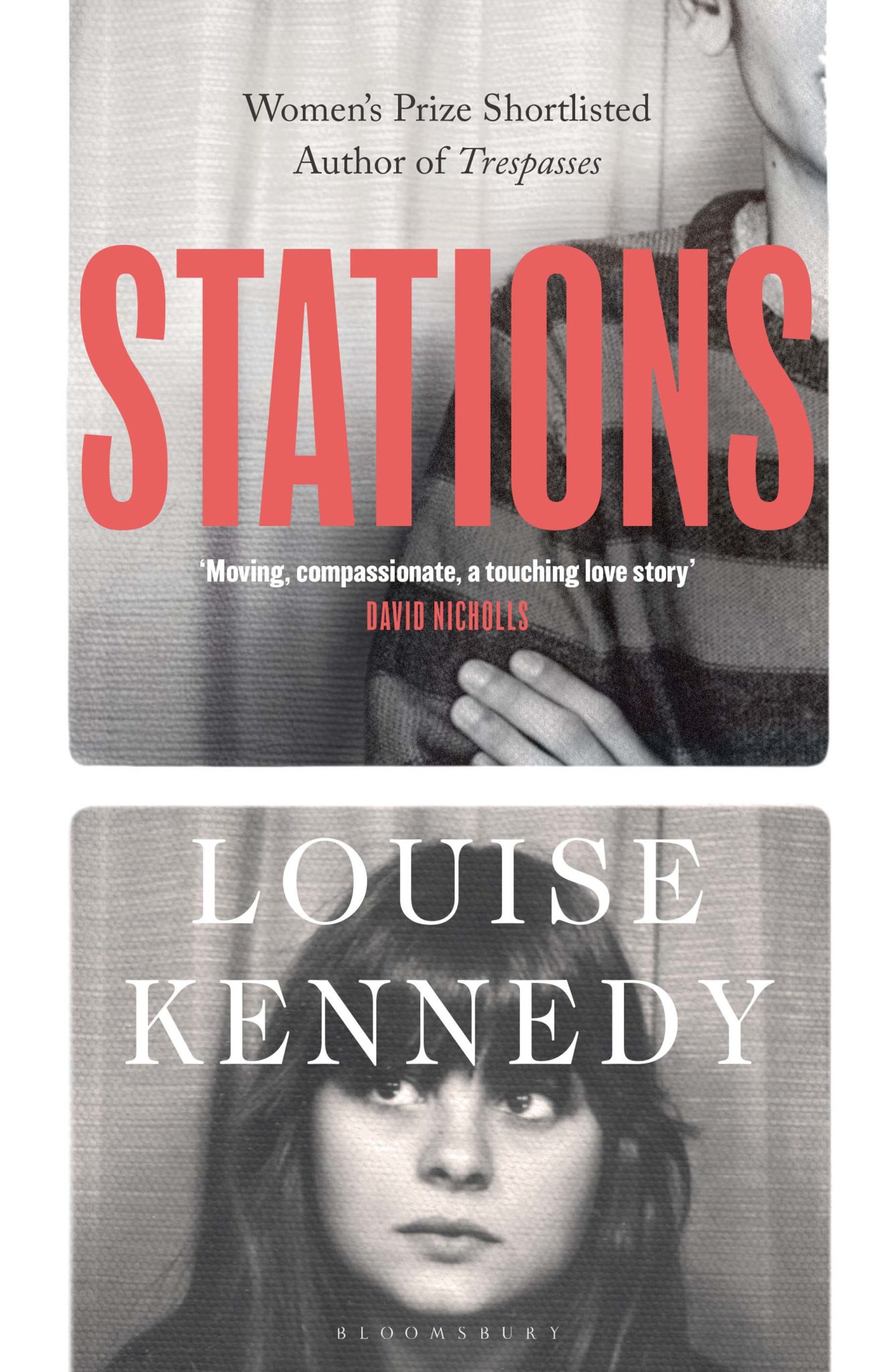 Stations
"Yeah, it probably does," she muses. "Like, Roisin is not me, but loads of things about her life are very similar to mine. The idea of someone leaving the North on the cusp of their teens and moving to the south, that was me. There are other things that are absolutely not. Like, my parents just had their 60th wedding anniversary.
"I also think I need to get a t-shirt made that says, 'My dad was never a peeler.' Because he was never in the RUC and Roisin's father was! We didn't leave under that sort of cloud. There were probably clouds there because our bar had been blown up and everything. I was also really, impressively, deeply unpopular in school. My adolescence was fucking miserable, so that's all in there.
"Red is invented, but at the same time, probably lots of us knew people who I guess didn't make it. People we knew in our teens who fell by the wayside for various reasons, and I know several people like that. I wouldn't go so far as to say his story is drawing on any of those particular stories, but I don't think it's implausible."
In terms of its cultural texture, being old enough to remember Kildare in the '80s, Stations struck me as a very authentic account. Although there are elements of traditional Irish life, the kids all listen to bands like the Human League, read the NME and engage with pop culture, which is how I remember it.
"I hope so," says Kennedy. "You're probably always drawing on things you know, but then there are things I kind of knew, but didn't. I had to go there a bit as well. I have a very good memory. If I'm trying to remember, say, being in the last term of school before my Inter Cert, I remember it in terms of Top Of The Pops, school discos, haircuts I got.
"Stupid clothes I wore, arguments at home. It's all tied up in stuff I read, listened to, or saw on TV. I don't always know if I can fully trust my memory on those things, so I have to check. You're making stuff up, but I want the people and the world to be real.
"I feel more confident about that if I know a particular song would have been on the radio on a particular day in July 1985. I don't always trust myself, but when I have to go and check, I'm almost invariably right, which is kind of weird. It's probably some kind of neuro thing, which hasn't been diagnosed because it wasn't in my day!"
Why does the author think Roisin and Red are drawn to each other? "The book is entirely from Roisin's point of view," says Kennedy. "But it's also a really close point of view. Because of that, you just see what she sees. At no point is she seeing the whole picture, because Red is necessarily concealing things. Also, it's not only just what she sees, it's this slightly hysterical, hormonal thing she has going on as a teenager. She doesn't have anything else going on really."
BIGGEST CHALLENGE
"She's fighting with her mum, her father's gone, she doesn't really have any friends. Then this person appears, and he's kind of afflicted with the burden of everything she hoped for. It's all kind of put on him. He's elusive to Roisin, and for that reason, he's probably elusive to the reader as well. He's also absent for quite a lot of the book, he isn't there from about the middle onwards. But he also has to be present for her."
As Kennedy notes, there were also other narrative challenges. "As far as she's concerned, he's there as this thing that niggles at her all her life," she continues. "That was kind of hard to write, I hope he's not frustratingly absent. My biggest challenge was trying to age Roisin from a door-slamming, headstrong 15-year-old. She's not stupid, but she doesn't have a lot of emotional intelligence, and she doesn't really understand what's going on around her at all.
"Her instincts are not nuanced at all, she's bad-tempered and angry. I had to age her from that to a 40-year-old, but it still has to be Roisin. She still can't be a very easy-going, trusting person, but you'd hope to god that by the time she hits 40, she's learned something."
Remarkably, Louise didn't publish her debut novel until she was in her fifties, having in the '80s worked as a temp in a London merchant bank, before returning home to become a chef. After attending a creative writing course on a friend's suggestion in 2014, she immediately took to it, crafting the stories that would end up in her first collection.
When she and her husband's restaurant went out of business, Louise - recovering from treatment for melanoma - began writing Trespasses. That book told the story of the forbidden love affair between a young Catholic school teacher, Cushla, and an older Protestant barrister, Michael. Despite the huge success of her debut, the author admits to some apprehension about Stations.
"The book is out soon, and I think for a lot people, it's not going to be Trespasses," she muses. "And it shouldn't be, and that's fine. There's kind of pressure. I don't want to let people down, I don't want to let my publisher down, so there's all of that."
Does she feel it's a different kind of book? "I was kind of horrified when people said Trespasses was a work of historical fiction," says Louise. "I think, mostly, I was horrified because there's something about me not quite being real about how old I am! I'm going to be 60 next year, and I'm sort of horrified anyone could call something that happened in my lifetime historical. I was like, 'Fuck off!' (laughs).
"As well, I didn't intend Trespasses to be plot-y, but I think it was. A really big, bad thing happens towards the end, and then there's a resolution. There are a couple of other story strands happening and they all get pulled together. From that point of view, it's more of a traditional plot thing. Whereas this book isn't so plot-y."
Nonetheless, there should be an eager audience for Stations, further enhanced by the bravura TV adaptation of Trespasses. The series boasted a stellar creative team and cast, with Lola Petticrew as Cushla and Game Of Thrones star Tom Cullen as Michael. And, of course, X Files icon Gillian Anderson - also one of the executive producers - as Cushla's mother Gina.
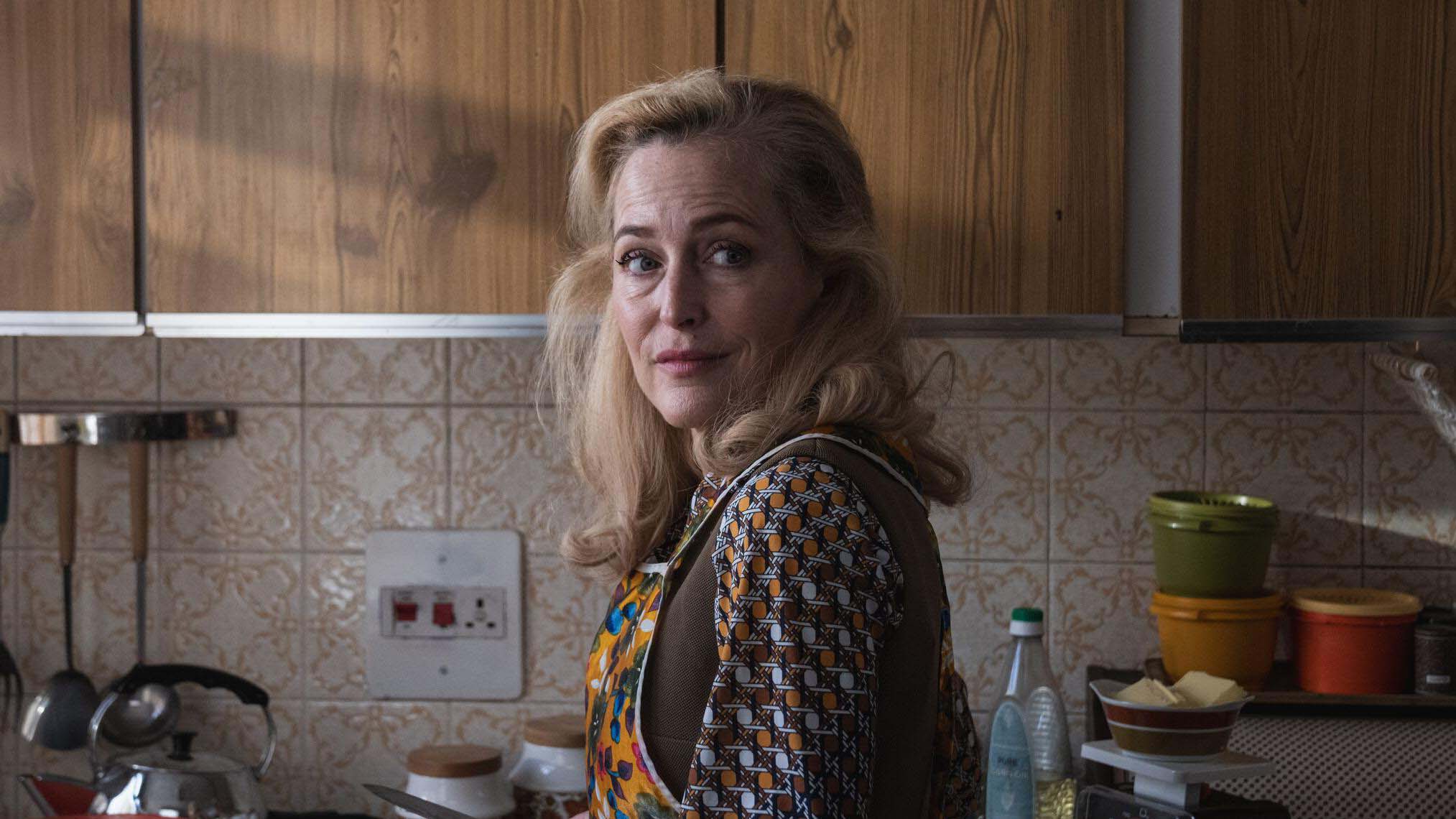 Gillian Anderson
How did Anderson come to be involved? "I did kind of get Gillian, which I think is kind of funny," Kennedy reflects. "There was a dinner in London the day Trespasses was launched, and Gillian was there. I had a fucking skinful of wine on me cos I was really nervous. Gillian told me she loved the book, and she really loved Gina, the young mother character. Because I was pissed, I thought it was entirely reasonable to ask her if she'd play Gina in the adaptation.
"I woke up the next morning going, 'Fucking nightmare, what have you done?!' People spoke to her after that, and she still wanted to do it. But she's really hard-working. There were lots of reasons why she wouldn't be available, or it wouldn't work out - but it did work out."
VISUAL ARTIST
As if all that wasn't enough, the director of Trespasses was Dawn Shadforth, the acclaimed music video director who's helmed clips for a Galaticos-like array of talent, including Oasis, Garbage, Kylie Minogue, New Order and Florence and the Machine.
"Yeah, Dawn is unbelievable," Kennedy enthuses. "She was a visual artist to start off with, she won awards when she was a sculptor. Then when they put her with Ryan Kernaghan, the director of photography, it was just fucking magic."
Stations, meanwhile, is in the early stages of development with the same producer. With music featuring so heavily in the book, I enquire about Kennedy's own tastes. "Sometimes when you're promoting a book, you get asked to say things about music," she says. "I find that a bit mortifying. The first single I ever bought was 'London Calling', but then something went really fucking wrong. Because on a school trip to the Isle of Man, I bought a single of REO Speedwagon's 'Keep On Loving You'. So I'm not cool! But yeah, I love music."
- Stations is out now.
RELATED


- Culture
- 22 Oct 26
Shortlist unveiled for An Post Irish Book Awards 2026

- Culture
- 21 Oct 26
Rory Gallagher event announced in Cork as brother Dónal reveals new book
RELATED


- Opinion
- 04 Oct 26
5 Essential Books to Read as a Student – Selected by Donal Ryan

- Culture
- 09 Sep 26

