
- Culture
- 01 Aug 26
Kathryn Stockett: "I went back to the scrappier writer that I was when I wrote The Help"








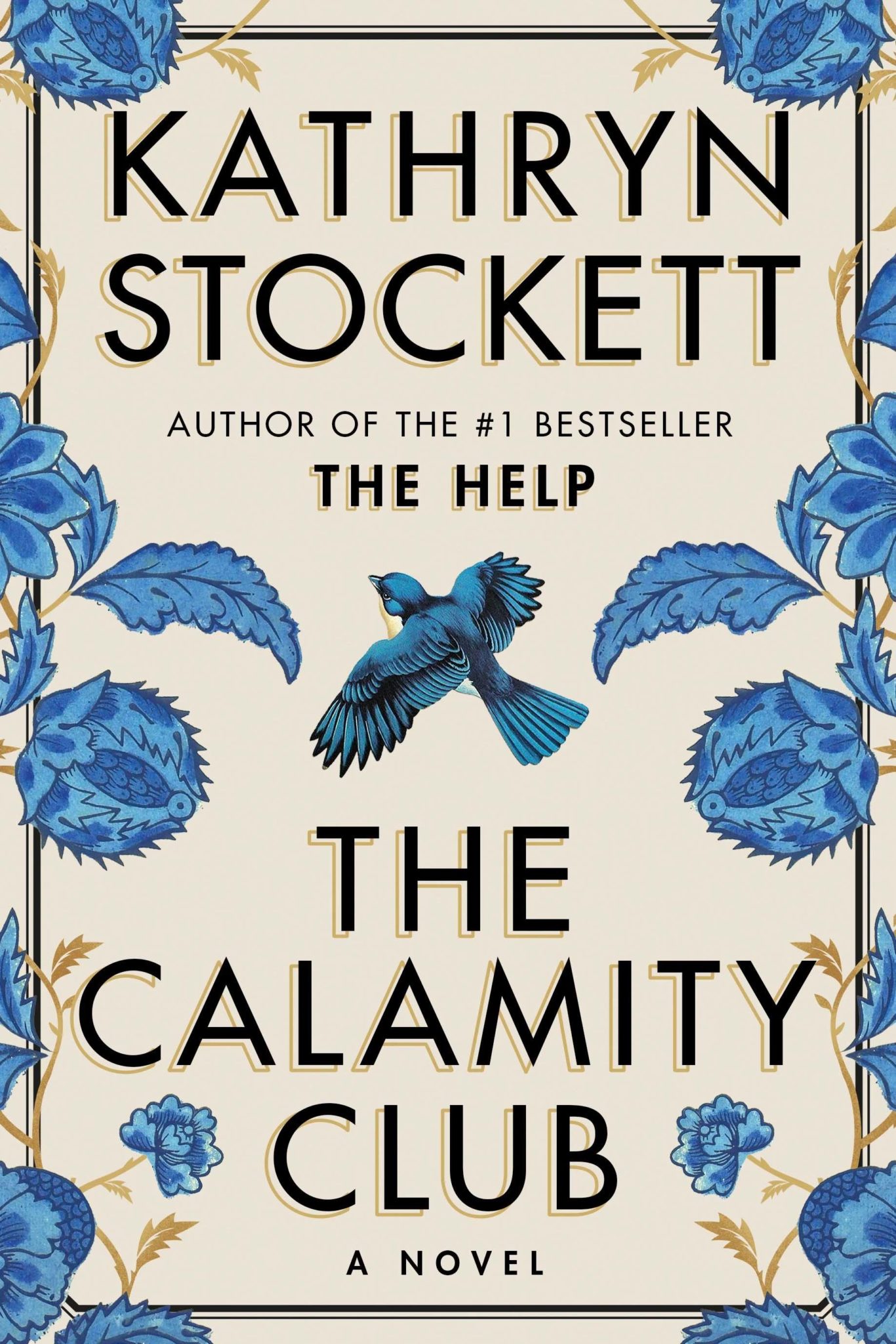
On the promotional trail for her exquisite new novel, The Calamity Club, Kathryn Stockett talks Mississippi, Eudora Welty, Donna Tartt and the blues.
When we first meet at Hot Press HQ, Kathryn Stockett seems reserved. She speaks quietly, with a Southern drawl. But soon you start to see a different personality emerge. The conversation moves swiftly from her daughter studying novel-writing at Trinity College to Sligo and Yeats Country. The author of The Help has an easy restlessness in conversation – she’s funny, watchful, tenacious, and alert to the ways writing is less a profession than a compulsion.
Kathryn will be on the promotional trail till November. She’s used to it. Her debut novel The Help was rejected dozens of times before becoming a word-of-mouth publishing phenomenon. It sold 15 million copies worldwide, spent more than 100 weeks on The New York Times bestseller list, and became an Oscar-winning film. But the scale of that success also magnified the backlash, with Stockett sharply criticised – at times vindictively – for writing across race, class and history. Seventeen years later, she returns with a second Mississippi novel, The Calamity Club, carrying both the force and the burden of that first book behind her.
“There’s two really frightening parts about being a writer,” Kathryn smiles, “facing the page and facing your audience; they’re both hard but we have to do both of them. We don’t have a choice.”
Set in Oxford, Mississippi, in 1933, The Calamity Club follows 11-year-old Meg Lefleur, abandoned by her mother and trapped among the “unadoptable” girls at the Lafayette County Orphan Asylum. Into her life comes Birdie Calhoun, an unmarried, outspoken young woman trying to save her family home from Depression-era ruin. Their stories converge with Charlie, a woman with a dangerous past and little left to lose. Together, they form an unlikely sisterhood, pushing back against poverty, hypocrisy, punitive laws and a society determined to decide what women are worth.
There’s a quotation from Faulkner’s As I Lay Dying featured prominently in the book. It suggests that sanity and morality are often less fixed truths than verdicts imposed by the majority. Given that The Calamity Club is set in Oxford, Mississippi – Faulkner’s hometown – did his shadow fall heavily across the book?
“No,” Kathryn declares, “but because I set it in his hometown, and knowing that he was alive and wandering the streets at this time, I had to include him. But Faulkner did not have a huge influence on my writing. I’m more of a Eudora Welty fan. She’s from Jackson, and she wasn’t just a writer; she was also a photographer. And during the 1930s, she was one of the first street photographers of the South. She photographed people that weren’t being paid much attention to: the poor and people of colour.”

Eudora Welty
Stockett’s research took her deep into the newspapers of the period, including The Oxford Eagle, where the texture of Depression-era Oxford revealed itself not only in the news, but in the margins – shop advertisements, court reports, church notices, social columns, grocery prices and the everyday vocabulary of who was respectable, who was watched, and who was already condemned. Running beneath it all was the acute racism of Mississippi – not simply as headline violence, but as atmosphere, assumption, hierarchy and law.
“The racism of Mississippi is always going to follow us,” Kathryn explains, describing a love-hate relationship with a place that has produced some of her closest friends, even as she finds the State’s politics self-serving, backwards and white-driven. “Inherent racism, sexism, conservatism – the Republican conservative movement dictates so much of how people think and who’s allowed to do what in the South.”
NOTHING TO COMPLAIN ABOUT
Those limits run like a current through The Calamity Club, which looks beyond Depression-era colour and eccentricity into a harsher moral landscape – the policing of women’s bodies, the punishment of poverty, the cruelty of respectability, and the laws that decide who belongs inside society and who is cast out.
“Seven years into writing this book I was hitting a wall,” Kathryn explains, “the story had lots of colourful characters and plot, but it just lacked some soul. So, I was researching women’s rights, thinking maybe I hadn’t done the best job showing the limitations of women, and I stumbled upon this law passed in 1928 in Mississippi that legalised the sterilisation of those deemed feeble-minded or imbecilic; those who suffered from epilepsy and what we now know today as autism; and it just shocked me. I had no idea that this was even a part of Mississippi history.
“I just don’t feel like it’s been written about very much,” she continues, “it’s not something that pops up in history books. When I started doing more research, I realised that Mississippi was actually one of the last States to pass their sterilisation law – almost every State already had passed theirs – and that the majority of the people that this law preyed upon were women. They expanded the definition to include promiscuous women, and right after World War One, America passed this law that we commonly called the American Plan, that made it legal for the law to detain a woman just because she looked a little promiscuous. I mean, can you imagine?”
What strikes me, is how such laws did not merely punish people after the fact but turned them into warnings. They made examples of those who stepped outside the accepted order, so that everyone else might learn to stay within it.
“Some would say that’s the purpose of religion,” Kathryn replies, “I believe in a very loving God and belief system, but I think it’s also a means to keep people in line for government.”
Stockett grew up in Jackson, Mississippi, raised largely by her mother after her parents divorced – an early mark of being an outsider in a watchful Southern world. However, she clarifies, “I grew up fine, I grew up with plenty, I’ve nothing to complain about.”
Basically, from the off, her writing bug was apparent.
“I was that little nerdy kid writing little stories,” she laughs, “I wrote my first story in third grade, called The Little Ant. I illustrated it and sold it to a sucker on the playground for 25 cents, and I was hooked!”
ANSWERED, LISTENED AND HELPED
I wonder if famous Jackson writers Margaret Walker and Richard Wright were an influence. Kathryn instead hails another Mississippi writer.
“I love Donna Tartt,” she declares, “The Secret History was the first book that gave me permission to be a writer, because she is a woman, she was only a few years older than me when she came out with her first book and she is from Mississippi. I will never compare myself to her work, because I hold her way up there, but I thought I can do it too, or I should at least try.”
The seventeen-year gap between The Help and The Calamity Club was not simply writerly delay. Stockett’s original editor at Putnam had left; the structure around Stockett collapsed, and in 2019 she was dropped by the publisher. “Fired,” as she puts it laconically.
The rescue came through Julie Grau, of Spiegel & Grau, the independent New York publisher that eventually brought The Calamity Club into the world. Stockett has called Grau her “lifesaver.” She was the editor who answered, listened, and helped her find the book again.
“I went back to the scrappier writer that I was when I wrote The Help,” Kathryn explains, before adding, “It’s harder to find a good editor than it is a man! When I wrote The Help, I was with Amy Einhorn, who’s fabulous, and she left the publisher right after The Help came out, so I didn’t have the luxury of having that genius by my side.”
Stockett compares her current editor, Julie Grau, to a ‘magician’. “She just sprinkles that fairy dust on a story and steers you without being too manipulative. She’s great.”
As we wrap up the interview talking about Mississippi blues – and the haunted spaciousness of the Delta against the raw, hypnotic drive of Hill Country – it strikes me that Kathryn’s soul, heart and mind are not simply drawn back to the Mississippi of the past; they have never really left.
“It haunts me,” she replies, “I can’t get away from it.”
• The Calamity Club is out now.


RELATED


- Culture
- 07 Jan 25
Melania Trump documentary to be released by Amazon

- Culture
- 12 Dec 24
Trump named Time Person of The Year for a second time

- Film And TV
- 18 Sep 23
The Drew Barrymore Show to postpone return after backlash amid writer strikes


- Culture
- 02 Aug 23