- Culture
- 25 Oct 26
Dónal Gallagher on his brother Rory: "Mentally, you’re still thinking he’s coming back... I even kept on employing the roadie who was in charge of the backline for 25 years"


With the publication of Edged In Blue: A Rock ’n’ Roll Odyssey With Rory Gallagher, Dónal Gallagher talks to Will Russell about growing up with Rory, the Rolling Stones, the famous Strat – and the extraordinary responsibility of guarding his brother’s legacy.
For most of Rory Gallagher’s life, his younger brother Dónal was beside him – managing the business, watching from the wings, keeping the machinery moving while Rory concentrated on the music. In the years since Rory’s death, Dónal has become something else too – the principal custodian of his brother’s legacy.
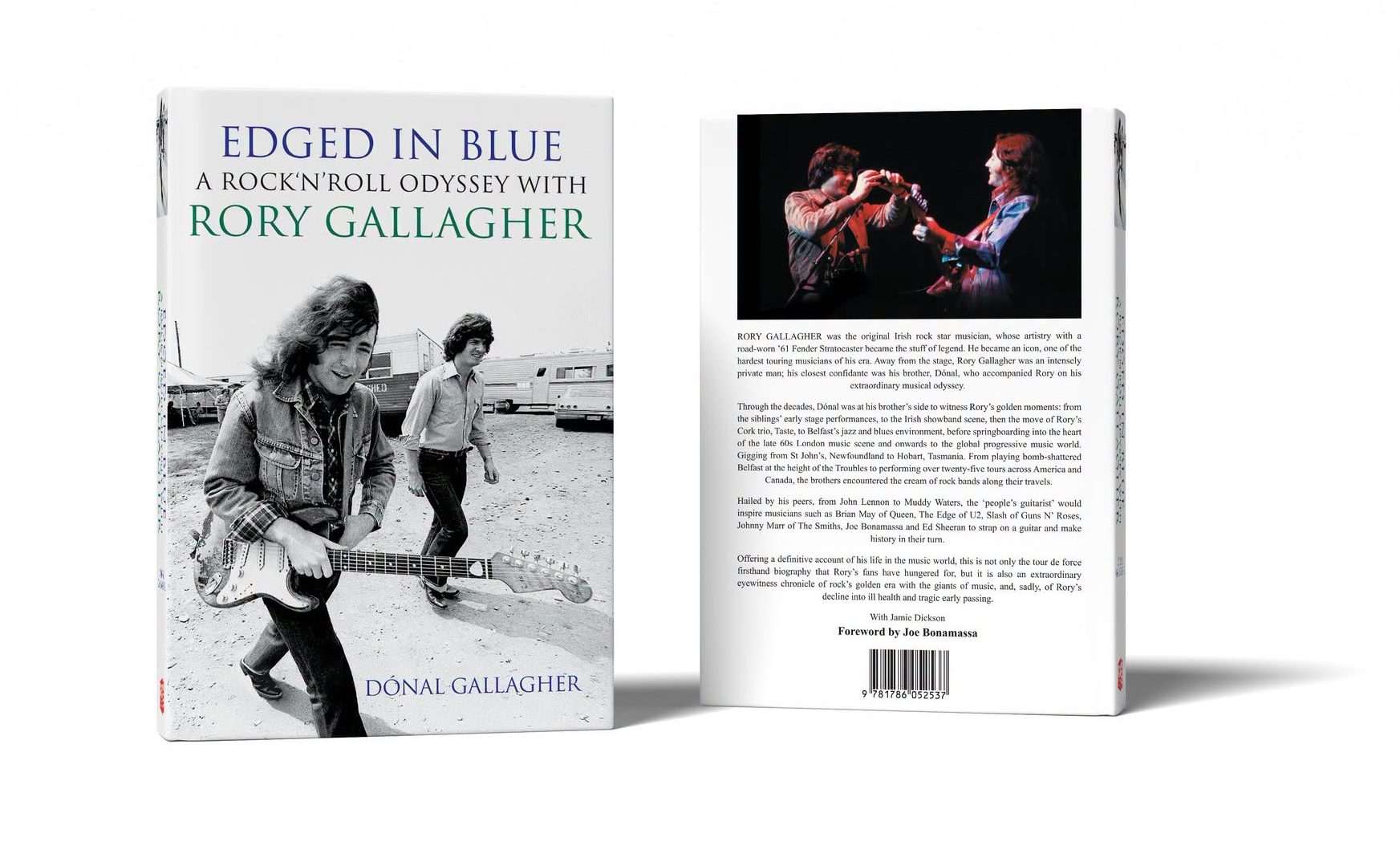
His new memoir, Edged In Blue: A Rock ‘n’ Roll Odyssey With Rory Gallagher, is therefore much more than another account of the legendary guitarist’s life and music. It is the story of Rory, told by the man who knew both the public figure on stage and the private person behind it best. As such it is an indispensible addition to the rock ‘n’ roll canon.
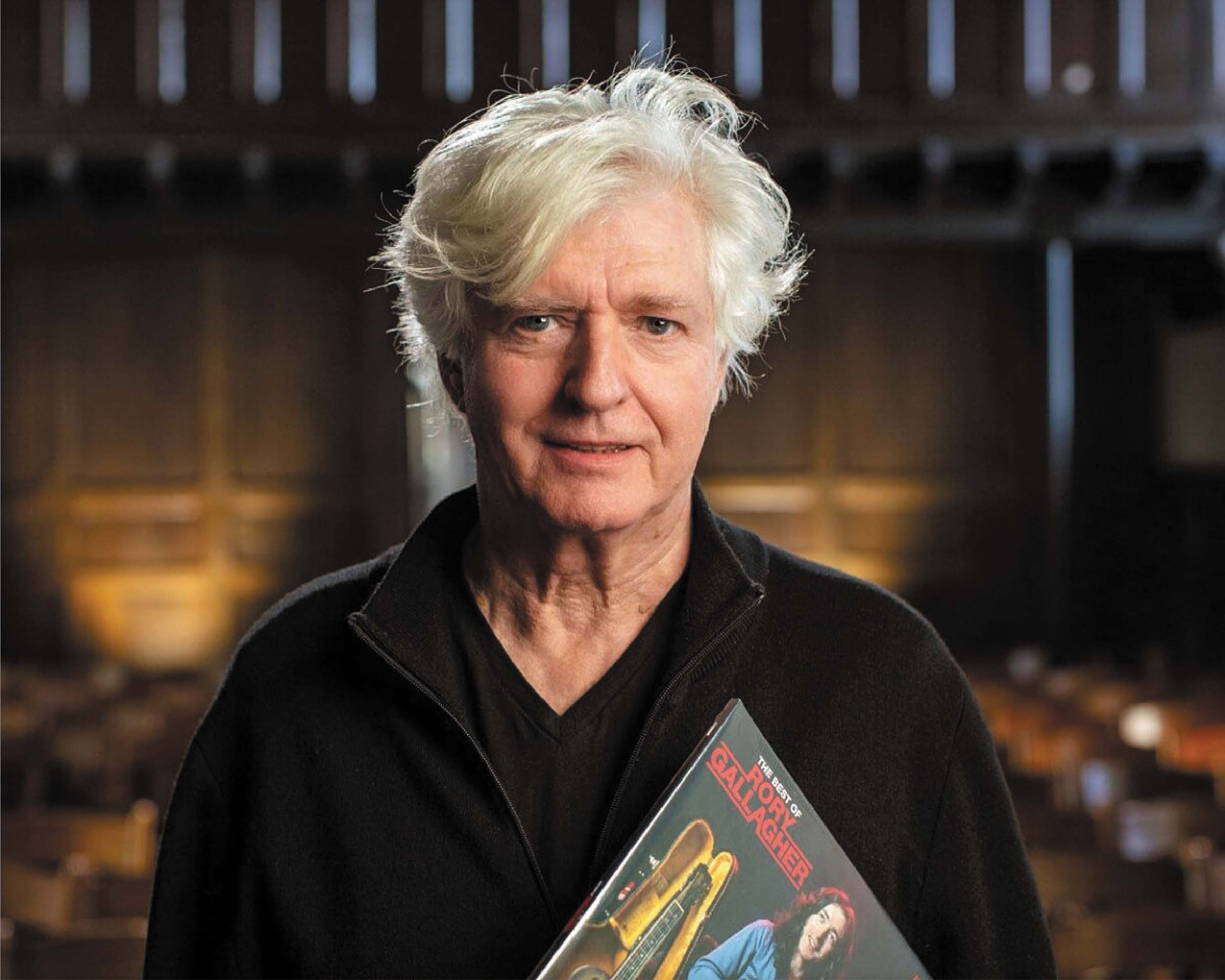
Dónal Gallagher
Before you even open the book, the cover tells its own story. Rory and Dónal together, that mythical Strat in Rory’s hand; the pair caught in an electric backstage moment as they stride towards – or is it away from? – some festival stage.
“I think it was Akron, Ohio,” Dónal relates. “I remember it was an open-air festival with Aerosmith and Ted Nugent, and a whole load of bands like that. This photographer Fin Costello, from Cork, happened to be there, but Rory hadn’t come on his radar. He got such a shock at Rory’s performance, so he started clicking Rory – it’s a lovely shot.”
That it is. A moment of calm in a story that runs at breakneck speed through Rory’s magnificent solo career, the mighty Taste, The Impact Showband, Fontana Showband, the brief Gallagher Brothers outfit, skiffle band The Vipers – all the way back to little Rory in a Roy Rogers costume, making a toy guitar from electric bands and a box.
“It’s funny,” Dónal laughs. “We were all into our cowboy and Indian films. But, because he was the singing cowboy, it was Roy Rogers that Rory latched onto; it certainly would have been an early awakening. We grew up largely surrounded by traditional music and singers.
“Our father was a piano accordionist, he had his own Céilí Dance Orchestra in the north of Ireland, and my mother had a beautiful voice – singing all the traditional songs, throwing in a bit of classical and light opera as well.”
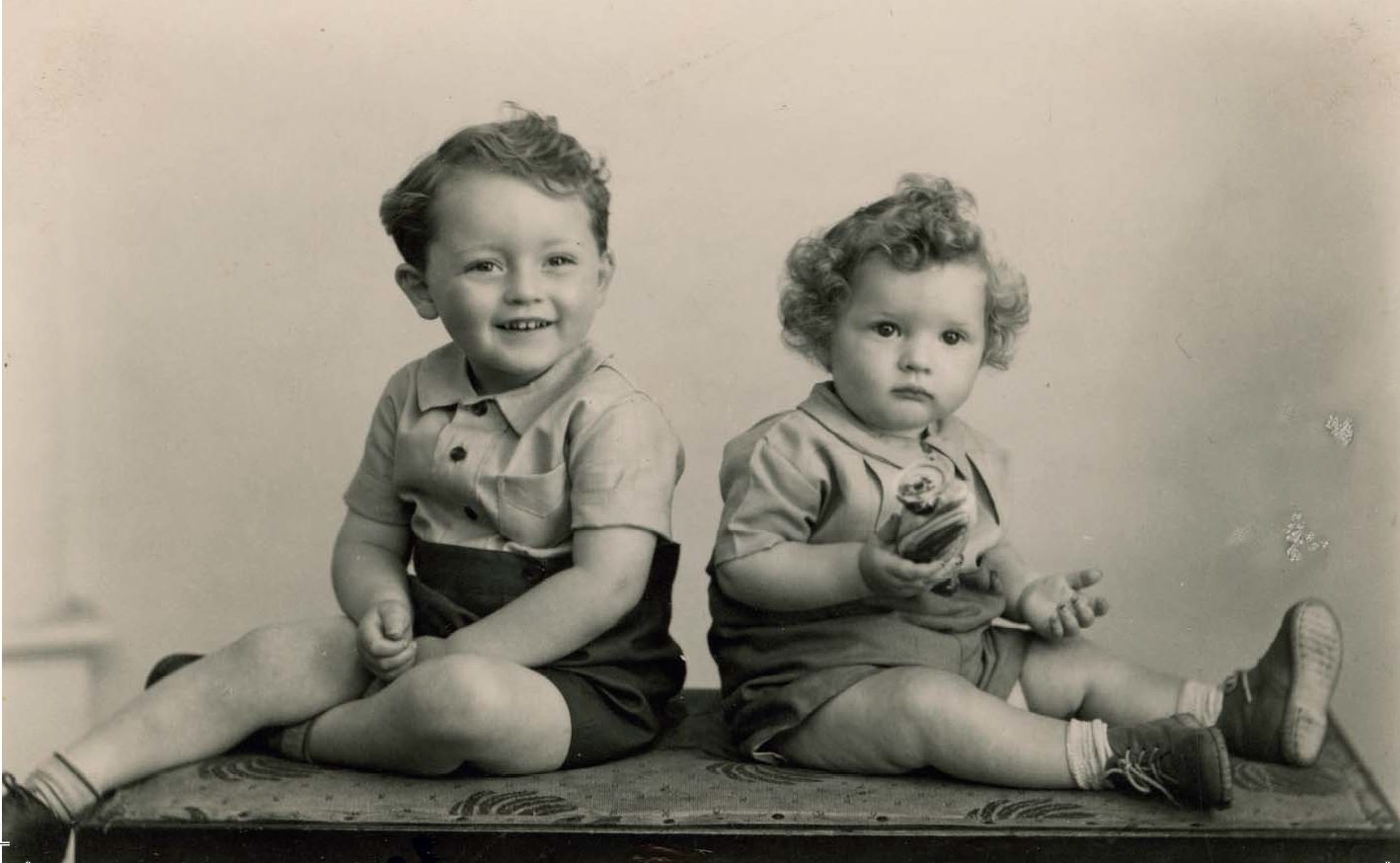
Rory and Dónal Gallagher
The lads’ Uncle Jimmy also featured prominently.
“That sort of capitalised the whole thing,” Dónal confirms. “Growing up, we were in Derry most of that time, up and down to Cork as well on the train, but Derry was the headquarters. It was the main port for the US Navy outside America, because of the Second World War, which then continued into the Cold War.
“And they built a chief antenna for their radio signals. I remember Rory tuning the radio, which was like a kid surfing the internet. He’d be waiting for the Chris Barber jazz and blues hour. Chris featured a banjo player called Lonnie Donegan, and he’d have his visiting guests – Sister Rosetta Tharpe, Muddy Waters, Sonny Terry and Brownie McGhee.”
Dónal then shares a further memory.
“We were back in Cork,” he continues. “We’d always heard about this young uncle we had, but we’d never seen him, because he’d gone to America. He’d gone to earn his money so he could put himself through third level education, back when very few people went to university.
“So he went off to Detroit, because the centre of Detroit was called Corktown. Henry Ford obviously was the big car plant manufacturer, and basically, if you got yourself to Detroit and you were from Cork, you got a job quickly with Henry Ford.”
Subsequently, Rory’s ‘Goin’ To My Hometown’ would nod to the same Henry Ford. Dónal remembers his uncle returning and confounding local expectations of the prosperous Yank in suit and tie, by appearing instead in a leather jacket and check shirt – bringing a flash of North American colour into the family home.
And some brilliant music too. “He brought back a catalogue of Hank Snow and Hank Williams,” Dónal relates. “Rory did ‘I’m Moving On’ on his first Taste album, which was a hidden tribute to Jimmy.”
And then came arguably the most famous guitar in the world. The 1961 sunburst Fender Stratocaster – Rory’s own sword in the stone – was spotted in the window of Crowley’s Music Store in Cork. Over the years, Rory would wear it almost back to the wood, until guitar and guitarist appeared completely inseparable.
“It has a life of its own,” Dónal affirms. “It’s featured in two Irish music documentaries. It first can be seen being played by Jim Conlon of The Royal Showband in a documentary called The One-Nighters. Then, after something like six months, the band were changing their uniforms and he decided to get a new Stratocaster, which is more like the Hank Marvin cherry colour.
“I remember Rory coming home one evening and saying to me, ‘You’re not going to believe it, come and look at this’. He was breathless. I thought, ‘Oh, a spaceship has landed’ – you know, something of that consequence. And going down, and him just pointing at this beautifully contoured thing sitting in the window of Crowley’s.
“It was quite a small store back then, but it was packed with everything from strings to harmonicas, mandolins to banjos. It was wall-to-wall, but this amazing-looking instrument just stood there like a Madonna or a Marilyn Monroe. We were there till darkness fell.”
Rory was transfixed by the knowledge that the legendary Buddy Holly had played the same kind of guitar. At £100, it was impossibly expensive, but the idea had taken hold. A loan was arranged, and what began with a boy staring through glass would end with Rory Gallagher enshrined as an Irish rock’n’roll icon – his image eventually appearing on the nation’s postage stamps.
Edged In Blue recounts all the twsts and turns in between superbly. There’s great yarns aplenty.
In October 2024, Dónal made the difficult decision to auction Rory’s instrument collection at Bonhams in London; Rory’s battered 1961 Stratocaster fetched over €1 million. Fortunately, it was bought by Live Nation Gaiety and donated to the National Museum of Ireland. It was a day of mixed emotions for Dónal.

Rory Gallagher's 1961 Fender Stratocaster. Credit: Bonhams
“Mentally,” he reveals, “you’re still thinking he’s coming back. You kind of feel it’s his guitar, keep it safe. I even kept on employing the roadie who was in charge of the backline for 25 years.”
Indeed, the Strat had become almost a Holy Grail, carrying huge weight and expectation. Dónal remembers answering the phone one day to an unfamiliar number.
“This is Johnny Marr,” said the voice at the other end. After talking admiringly about Rory, Marr finally asked, “Do you still have the guitar?” Dónal confirmed he did. Marr asked if he could come and see it. Dónal said, “Yeah, of course. When are you thinking?” Marr said, “Tomorrow.”
Joe Bonamassa who’d covered ‘Cradle Rock’ by Rory was honoured to get to play the Strat live. Yet each encounter underlined the responsibility involved. Every time, the guitar had to be removed from secure storage and carefully transported.
Indeed, when Fender wanted to create its Rory Gallagher Custom Shop model, Dónal personally brought the original Strat to America, where it was dismantled so “every scratch, every change, every wire” could be painstakingly replicated.
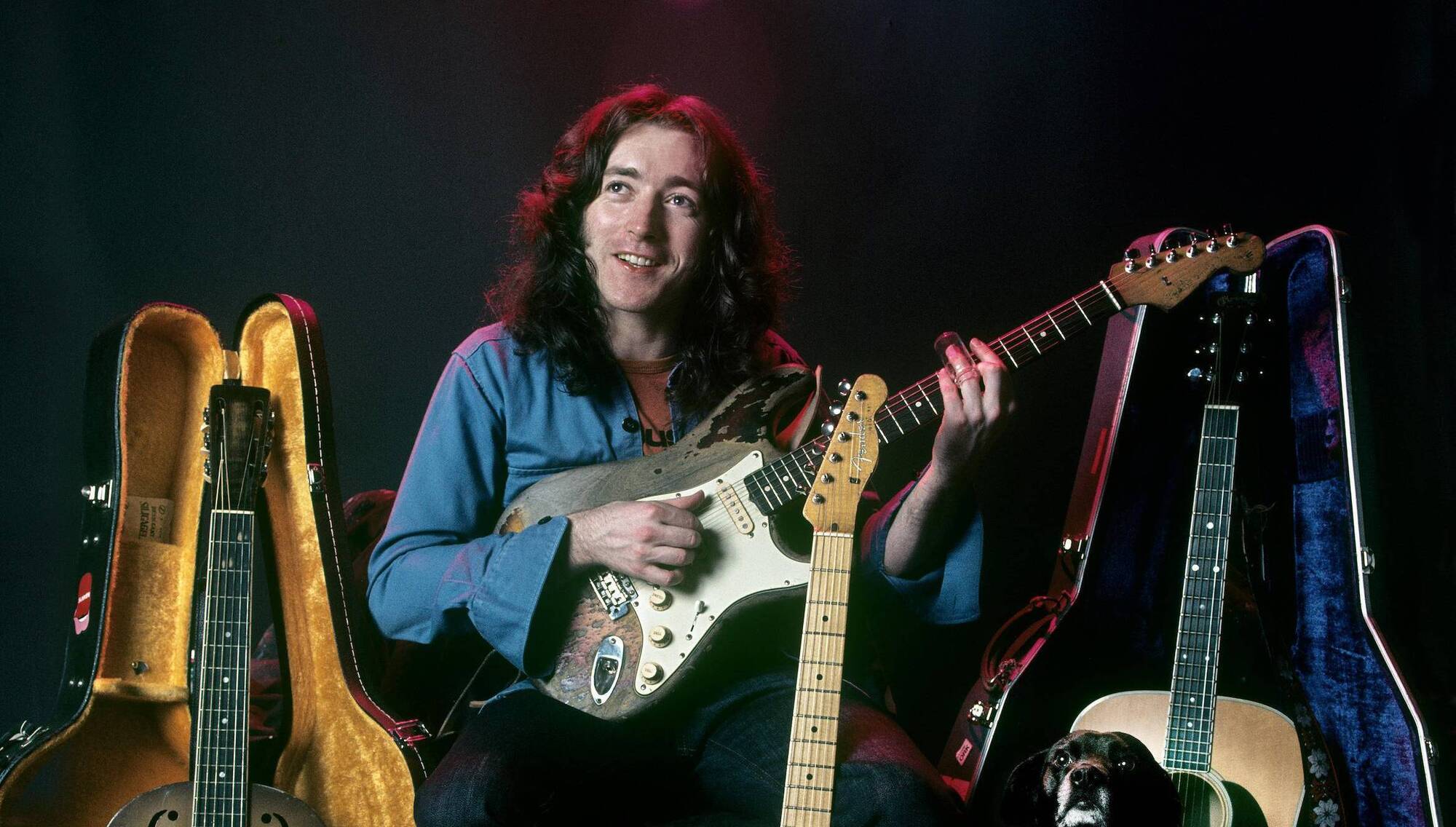
Credit: Govert de Roos
The book also sheds more light on one of the great ‘What-ifs’ of rock and roll: the possibility that Rory Gallagher might have replaced Mick Taylor in The Rolling Stones.
“Rory had his Irish Tour ’74 album out there,” Dónal explains, “which was the real breakthrough album in the States.”
Late one night, Dónal answered the phone and it was Ian Stewart, the Stones’ original pianist and trusted behind-the-scenes lieutenant. That call led to Rory joining the Stones in Rotterdam as they searched for Mick Taylor’s replacement.
Marshall Chess – son of Chess Records co-founder Leonard Chess and, by then, president of the Rolling Stones’ own label – was hugely enthusiastic. “Rory Gallagher, you’re the man for the job,” he proclaimed. “Welcome to the Rolling Stones.”
But the sessions were chaotic. Keith Richards failed to appear, and Rory, already committed to a Japanese tour, remained uncertain about the entire proposition. Dónal had urged him to take representation with him. Rory refused. “I don’t even know if I’d want to do it,” he told him. “I’m just going to check the opportunity.”
Dónal remembers Rory approaching it characteristically – less as an audition than simply a chance to play. Pure Rory. Had things gone differently, we’d never have got Against The Grain in 1975. It’s the record, Dónal recalls, on which Rory sounded most content. Again and again, Edged In Blue takes you back to the music – and the awareness of Rory Gallagher’s extraordinary genius.
• Edged In Blue: A Rock ‘n’ Roll Odyssey With Rory Gallagher is out now.