
- Opinion
- 12 Nov 26
Richard J. Baum: "We have a problem with guns going south while drugs go north"


In the latest Dealing With Drugs: A Hot Press Podcast, Stuart Clark and Tony Duffin talk to Donald Trump’s ex-drugs tsar, Richard J. Baum, and Colombia’s former Director of Drug Policy, Marcela Tovar Thomas. Here’s some of what they had to say about the $652 million a year international narco trade, the opioid crisis and Trump’s rebooted War On Drugs…
From bombing alleged narco boats in the Caribbean and removing Nicolás Maduro from power in Venezuela to threatening to put military boots on the ground in Colombia and pardoning former Honduran President Juan Orlando Hernández who was serving 45 years in prison for drug trafficking, America’s War On Drugs 2.0 has been as confused and corrupt as the Trump administration’s recent engagements with Iran, Russia, Ukraine, Syria, Greenland and, well, just stick a pin in the map.
Cocaine and The Damage Done
A large part of the problem is that most of the adults who favoured effective policy over MAGA posturing are no longer in the room.
This increasingly rare breed includes Richard J. Baum who served at the White House Office of National Drug Control Policy (ONDCP) under six presidents, and was Trump’s drug czar from March 2017 to February ’18.
His new book, Inside America’s Opioid Crisis: 12 Hard Lessons For Today’s Drug War, should be required reading for all of his ONDCP successors, but probably isn’t.
An imposing figure who professes to being non-partisan but probably skews closer to the Republicans, Baum was born and raised in a part of New York where drugs were part of the social fabric.
“I grew up on First Avenue and 6th Street in what as a kid we called the Lower East Side,” he tells us. “Now it’s known as the East Village. Frankly, it wasn’t a great neighbourhood. I was born in 1965 and, when I was little, we’d go to Tompkins Square Park and play. By the time we got into the ‘70s, you couldn’t take your kids there anymore. It was a major heroin market. I don’t say it effected my life. You know, it’s New York. You just walk around the people sleeping it off in the morning. You go to school, they offer you drugs, you say ‘no’ and just keep going.”
Asked if there were presidents he worked under who understood the nuance of America’s drug problem, Baum sighs, “Well, no. I did appreciate the way that, even when he was fighting the War On Terror and had his hands full when 9/11 happened, George W. Bush still found time to do radio addresses when we released the National Drug Control Strategy. I was very disappointed when President Obama came in because I think he felt all this drug stuff was a bunch of BS. He didn’t do an event with us or highlight the mass incarceration and overemphasis on supply. He could have told the country what he tells his daughters about drug and alcohol use; that would have been beneficial for the country. But instead, he neglected the issue until the opioid crisis, about 18 months before the presidential election, began to emerge as such a giant issue that it could not be ignored.”
Part of Baum’s job at ONDCP was to identify emerging trends. When did the alarm bells start ringing about fentanyl?
“In the previous George W. Bush administration, we were very focused on cocaine. We were working with Colombia, Bolivia, Peru. I’d been so many times to the Andean Ridge with (his drug czar predecessor) Barry McCaffrey. We were working on coca control and eradication. Also, we were dealing with methamphetamine. It’s true that drug policy people, including myself and others at the DEA, we didn’t think of prescription opioids as the real drug fight. It was maybe a residual from ‘mother’s little helpers’, right? It hit me when women said, ‘No, no, no. The big issue is prescription drug abuse.’ OxyContin came out in ’96. Overdoses started going up in 2003/’04 so it got on to our radar screen. But it didn’t become the No. 1 issue until the end of the Bush administration.”
We saw mobile cooling trailers being used as overflow morgues in Ohio. What was the political fallout from that?
“I went to the morgue in Columbus, Ohio to see these young men laid out there. Very, very sad. There was a reaction and a major effort on prescription opioid control. The prescribing was so excessive, so careless and so reckless and the marketing so overly commercialised, it had to be reduced.”
Is there a sense that those responsible for causing the opioid crisis got off lightly?
“Yeah, they should have been in jail. It took the marketing tornado of Purdue Pharma and then other drug companies to change the dynamic and allow the extended use of opioids outside of hospital. They unleashed the epidemic and hundreds of thousands of people died. So, yeah, they got off easy. They should have been locked up.”
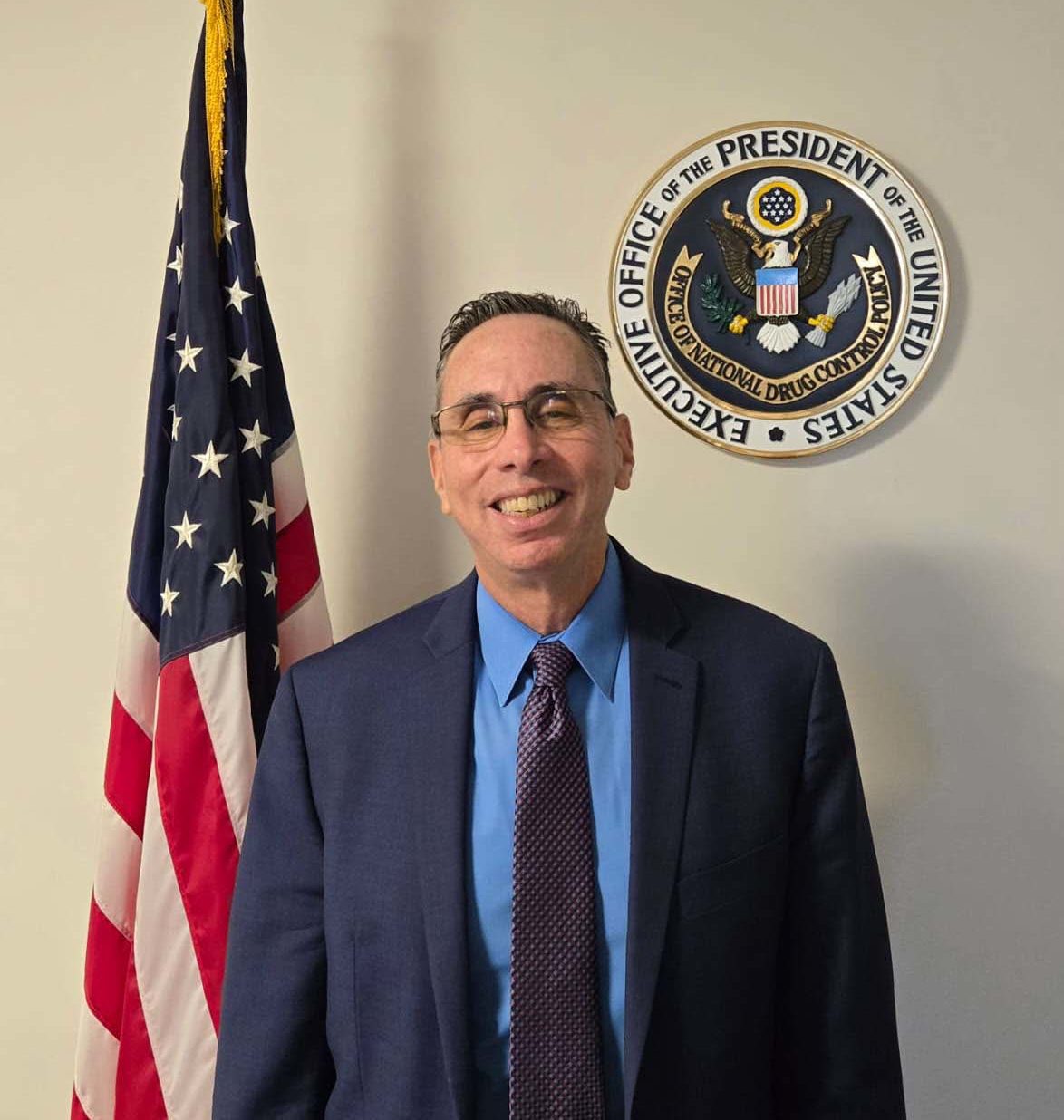 Richard J. Baum
Has the White House learned any of those hard lessons in Baum’s America’s Opioid Crisis book?
“I don’t think there’s been a really genuine accounting of past mistakes,” he proffers. “I do support strong supply side and border policies. It’s good to work with partner countries, respect their sovereignty and combat drug-related crime and violence. If we can control synthetic opioid precursors that are coming primarily from China, that is great. It creates problems in the supply chain and is a benefit to the country. But we should keep our expectations in check. There is no way to seal the border from synthetic opioids.”
Given what he just said about diplomacy and respecting other countries’ sovereignty, what does Richard make of boats being blown up in the Caribbean?
“My thoughts are that this is not a good way to do drug interdiction. Let’s presume for conversation’s sake that it’s actually a drug boat and all the people on that boat are involved in drug trafficking and know what they’re doing. We generally have pretty good intel, so that’s often the case. My heart doesn’t break for those people that are moving these deadly drugs into the country. But regardless, it’s not a smart way to do interdiction. We want to stop the boat, we want to take in the suspects, we want to interview them, we want to build cases, learn about the cartels. We want to use the leverage of prosecution to turn those arrestees into informants. By leaving everyone dead, you don’t learn as much and you don’t feed the interdiction cycle.”
Rather than targeting supposed narco boats, what should the thrust of Donald Trump’s drug policy be?
“The problem is very serious,” Baum stresses. “We still have about 70,000 people dying every twelve months. When I first got involved in combating drugs, we had 5,000 overdoses a year and were very concerned about that. Seventy thousand is a football stadium full of Americans who die, and don’t need to if they had proper care and treatment.
“We have a massive problem and we’re still under investing in it. I would like to see new initiatives from the Trump administration to get more people into treatment. One of the recommendations in my book is to hire, train and fund 100,000 recovery coaches and peers. We can virtually train people who are behind bars and in recovery to help their fellow inmates because treatment in prison is completely inadequate in most places. We can’t stand still.”
There’s a train of thought that drug policy is/was inherently racist. Fair comment?
“There’s a lot of water under the bridge that we should keep in mind,” Baum reflects. “I have a whole chapter on the crack cocaine epidemic in my book. It’s fair to say that empathy for the individual drug user during the crack cocaine epidemic was much less than we see today in the opioid crisis. And I think race was a factor in that. Mass incarceration had racial consequences. I’m very sorry looking back that people dependent on crack cocaine in particular were badly treated and locked up. It’s an ugly stain.
“That happens much less now. Today, we want everyone with a substance use disorder, of whatever race, to get the empathy and fair treatment they deserve. Black, brown, rich, poor, whatever; we don’t want our people dying. So, no, I don’t think it’s inherently racist now but there’s a history that can’t be ignored.”
When President Trump complained about drugs coming in to the US from Latin America, the former Colombian President, Gustavo Petro, countered that the cocaine trade exists almost solely to satisfy US consumer demand.
“We have a big problem with guns going south while drugs go north,” Baum admits. “We also have a problem with cryptocurrency going south. It’s a two-way street. We ought to be working together.”
Richard was involved in Plan Colombia, a US-Colombian security initiative launched in 2000 to combat drug trafficking and armed guerilla groups like FARC, now disbanded but with former members still heavily involved in the narco trade.
America bankrolled it to the tune of over $10 billion before realising that they were getting minimal bang for their buck.
“I was pretty disappointed that, after billions of dollars of investment, Colombia wasn’t able to find a way to prevent a huge expansion in coca production which is effecting the whole wide world more than ever,” he suggests. “I know cocaine use is up in Europe considerably. I would say, ‘Fine, you don’t wanna do aerial eradication. It’s complicated, it’s dangerous. Find another way to keep it under control.’ I think the governments from all these countries are duty bound to do what they can to try and solve these problems.”
Master of Puppets
If Richard J. Baum were still Trump’s drug czar, he would undoubtedly have interacted with Marcela Tovar Thomas who in May 2025 was appointed Director of Drug Policy by the former President of Colombia, Gustavo Petro.
Fearing retribution from the country’s new far-right leader, Abelardo de la Espriella, she’s currently studying and living in Austria with her partner and young daughter.
Like Baum, drugs were part of her everyday life growing up in Bogotá.
“I was born in the ‘80s when Pablo Escobar and all these cartels were at their peak, and fighting the state so that they’d not be extradited to the United States,” Marcela recalls. “We were able to go out and have a normal teenage life but knew that at any moment a bomb could explode. I have a friend from school who lost an eye when one went off. We knew that it was because of cocaine.
“Drugs are a huge part of Colombian society and how government is constructed. And they’ve fuelled the ‘War On Drugs’ for more than fifty years.”
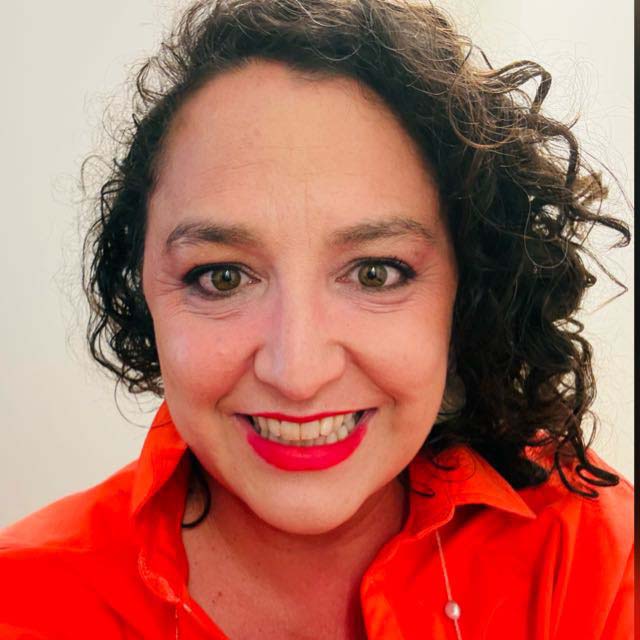 Marcella Tovar Thomas
Marcela agrees with Richard that bombing boats in the Caribbean is a serious misstep – but for different reasons.
“It was a very striking moment for all of us who work in drug policy because it shows that the War On Drugs is operating in the most basic, cruel way and actually killing people.
“These are military interventions that have been done in Latin America for years and years,” she states. “First they bomb the boats. Then they go inside Venezuela. I’m not a fan of Maduro but coming in with helicopters and taking over because he was part of a drug cartel, which they now say didn’t exist...”
When threatening a ground invasion, Trump described Gustavo Petro as “a sick man who likes selling cocaine.” In light of what had happened in Venezuela, were they worried about the US trying to effect regime change in Colombia?
“Of course,” Marcela nods. “They were not trying it, they’re doing it. Not only in Colombia but all over Latin America. They’re doing it in Brazil. They did it in Chile, Argentina, Peru, Ecuador, Venezuela, El Salvador.
“They want to take over the hemisphere. They’re doing it through a lot of very dirty strategies. They’re intervening in elections.”
What can Marcela tell us about Abelardo de la Espriella?
“Our new president was the lawyer for mafia leaders in Colombia who were extradited to the United States. He’s shutting up the press like Trump and introducing a bill against terrorism, which will make demonstrations illegal. It doesn’t take into account due process. They’re trying to prosecute us using lawfare which is a very powerful weapon.”
Is there a danger that he’ll end up presiding over a puppet government with America pulling the strings?
“You’re very politically correct!” Marcela laughs. “He is a puppet government, put in by the United States. That’s clear. He’s joined this Shield Of The Americas without passing it through Congress. There are a lot of people suffering. We have these huge inequalities in Colombia that none of the elite want to address”
RELATED


RELATED

- Opinion
- 06 Jan 20
Hot Press' 2019 Folk Albums of the Year

- Opinion
- 20 Dec 19
Hot Press' 2019 Tracks of the Year: The Top 10

- Opinion
- 20 Dec 19
Hot Press' 2019 Albums of the Year: The Top 10

- Opinion
- 19 Dec 19
Hot Press' 2019 Tracks of the Year: 20-11

- Opinion
- 19 Dec 19
Hot Press' 2019 Albums of the Year: 20 - 11

- Opinion
- 18 Dec 19