
- Opinion
- 15 Aug 26
Remembering Glen Hansard: "A proper Irish musical chieftain who never strayed from the streets that made him"








With the tragic death of Glen Hansard, Ireland has lost one of its all-time musical greats. Alongside his incredible musical achievements, he was a devoted activist who never forgot his working class roots – and remained passionately committed to the idea of community. He leaves behind a remarkable legacy, both at home and abroad..
We have been down this road too often, far too often. Being confronted suddenly with what feels like the last thing in the world that you could ever want to hear.
The first whisper in the wind. A cold draught slipping around us darkly. The gut tightening. What?
The faltering question. Did you hear anything? The words articulated then. It’s already out there. That Glen was in an accident.
The first blow, below the belt. Are there not rules that apply to this sort of thing?
Then word incoming from someone who should be, would be, most likely is among the first to know. It hits, hard, like a sledgehammer to the solar plexus. But in the now-everywhere quiet, you cannot roar. You cannot scream. You cannot shout.
Yes. It is true. A motorbike. That single vehicle accident on the news. Jesus no. The oxygen gone from the air – or at least that’s how if feels. Almost impossible to breathe. Fuck fuck fuck fuck fuck fuck.
All around, people look pale. Carry themselves differently. A quiet descends that feels immeasurably oppressive. There are tears. Theirs, yours, ours. You can see the bigger picture. It will be the same. All over Ireland. All over the globe. There will be people to whom this feels like the end of the world. Or at the very least the sad and bitter end of an era.
But first there is the duty, the responsibility, that we have imposed on ourselves. That we put on every morning like a T-shirt. Like, there is no other way it could be. Van Morrison referred to it over and over again. Probably still does. Professional time. You know what that means. Professional time. Our job is to tell our readers. Our job is tell the world in the way that we think the world needs to be told. Our job is to help people to understand, and to cope.
We will not jump the gun, put the word out in advance of the family or the band with whom Glen first made his name, The Frames. But we had to be ready. Once the news is posted, then our readers, friends and fans – among whom there is a huge proportion of fans of Glen the Man – need to hear the saddest tidings imaginable from this sad source…
Slowly. We breathe in. This cannot be escaped.
DREAMERS AND ROMANTICS
“I want to refuse to believe the terrible news that Glen has died,” I riffed and it was true. I had wanted – still wanted – this to be the work of some stupid crank or twisted fantasist. Or just someone getting ahead of themselves and pressing ‘go’ on a post without that thing that – as journalists – we all must have before we can go public. Verification. A second source. Confirmation. Certainty.
But we knew now that this was not a hoax or a misdirection, that it was not fake news. That it was for real. And so it started to take its own shape, the way these feelings do, as they happen to you. It started to pour out.
“He was a man I knew and loved.”
It was a word I wanted to use. In part because there is no other word for it. But also because, it would say something important about the way Glen made you think. There were no half-measures.
“He was a brilliant musician, a great singer, and a marvellously charismatic and intense character, who always gave his utmost in everything he did.
“From the first time we laid eyes on him in Hot Press, and heard that powerful Hansard voice, we knew that he had something utterly unique to offer. And so it proved, over and over again.”
I remembered when Hot Press was in the old, haunted hotel in Wicklow Street and the short move to Trinity Street at the start of the 1990s. Heady days in so many ways. Pete Shortt used to sell Hot Press outside Bewleys on Grafton Street. David Rooney busked there and, after I’d tossed a coin into his guitar case, made the first connection that brought him into the HP fold.
It was where we encountered Glen too, as he flung the notes out into the lunchtime air, strumming and singing his heart out to earn a crust, and sneaking a read of the magazine from Pete. So much to remember. So much not to forget.
“Glen started out as a street poet,” I recalled, “making that visceral connection to the two, or ten, or a hundred people that’d gather to listen to him sing on Grafton Street. And he never lost that direct connection either to the streets, or to audiences that flocked to see him perform. He was a troubadour at heart, as well as a man with a deep knowledge of – and love for – contemporary music in its many-faceted arteries. He was one of a kind – and an inspiration to so many young Irish musicians as they tried to find their own way into the creative world he inhabited so naturally.”
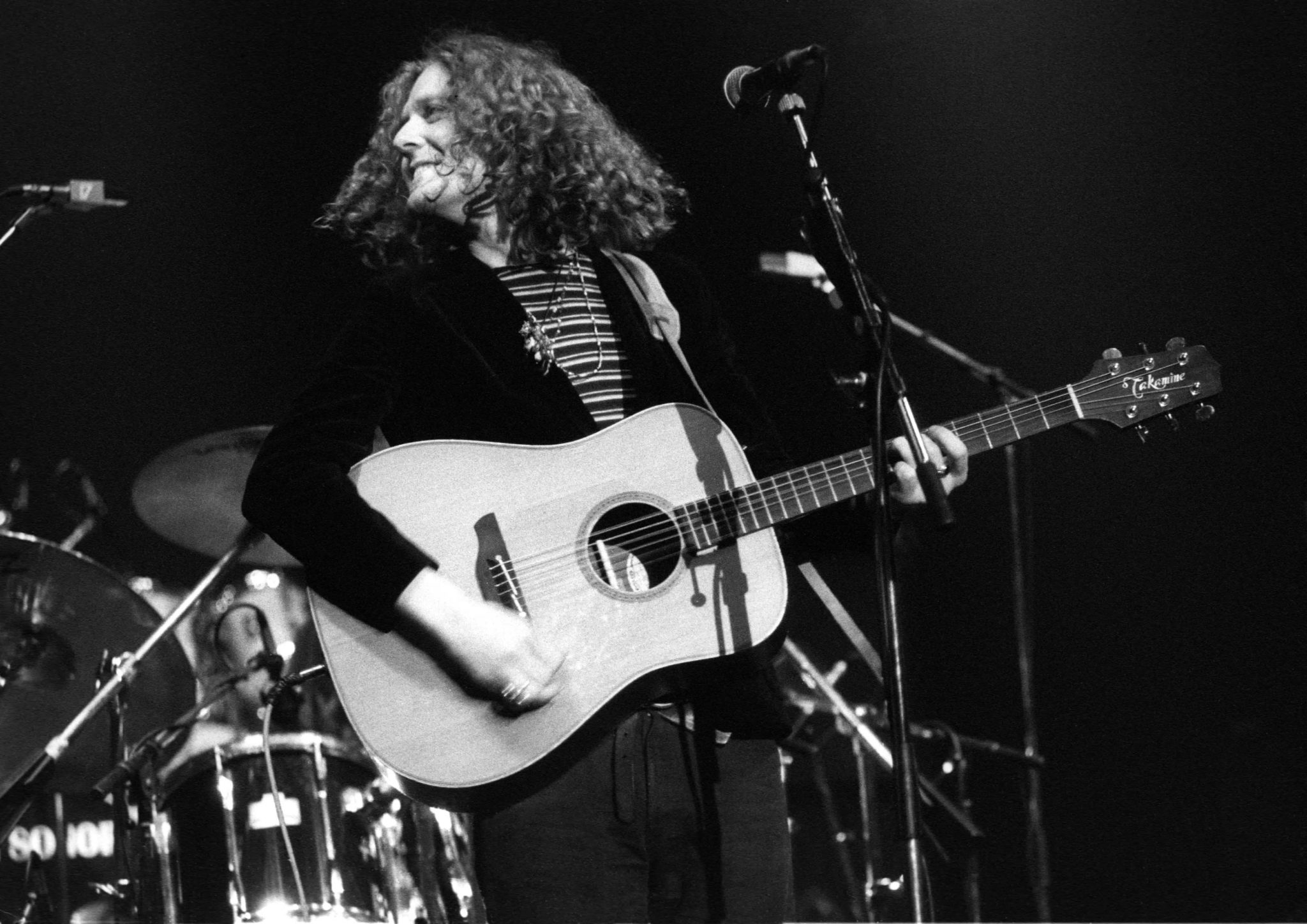
Glen Hansard at 22 on stage with The Frames, 1992
He told us the story later, confirming that it was pure luck that he got the gig as Outspan in The Commitments, which provided him with a vital leg-up. But it was a version of himself he didn’t want to be lumbered with and so, afterwards, he moved determinedly away from it. He was not Outspan. He was Glen. And so he pushed forward with The Frames, a band that – in the early days – included John Carney as bass-player. John would go on and play a pivotal role in Glen’s development as an artist and performer on the world stage.
Hear me thinking aloud.
“Glen was a wonderfully committed musician, who lived and loved the music from the very outset. He wrote marvellous songs – whether as a member of The Frames, as one half of The Swell Season or as Glen Hansard solo artist.”
Looking at that now, it is as if I didn’t really want to dwell on the success of Once. And that’s understandable. Glen had an almost paranoid attitude to fame and success. He had won an Oscar, and Hot Press was there on the night, interviewing him and Marketa, and taking pictures for the front cover. There was a lovely spirit to the interview, as there had been to Glen’s exhortations in his acceptance speech to “Mark art.”
But a few years later, when he did the Music Show for us in the RDS, he didn’t want to be introduced as the Oscar-winning Glen Hansard. In a sense, it was Outspan all over again. Except that this was a film inspired, to some extent at least, by his own life and experience as a busker. The songs in it were mostly written by Glen, and by him with Marketa Irglova, who starred opposite him in the film.
Made on a budget of just over €112k, the film became an extraordinary indie crossover success earning in excess of €23million at the box office. But, more importantly, it would – in a unique way – win the hearts and minds of young dreamers and romantics of successive generations. Directed by John Carney, it is a very special film. And at the heart of that were Glen and Marketa, in many ways being themselves, as they spun out the great unrequited love story that Once tells.
If anything turned Glen into a global icon, it was Once.
GENEROSITY OF SPIRIT
He refused to embrace that status. One of the things that made Glen unique was the extent to which he refused to allow himself to be corralled or defined by things – by anything, that is – which he had been involved in or done. He kept moving, leading The Frames to one pinnacle as Ireland’s biggest indie act of the 1990s, and helping to shape the singer-songwriter movement which clustered around the band, and was so vital to music in Ireland at that enormously creative moment.
That was the when we did what we called the “Alas poor Yorrick” Hot Press cover, shot by Mick Quinn, in which Glen is holding a human skull. Or maybe it was a prosthetic version of one! We also did a marvellous live session at Marlay Park, shot from behind the stage, a dramatic picture which we reproduced as a commemorative poster free with the magazine. The Frames came to Belfast for the Hot Press Awards, in 2002, which were broadcast by BBC NI. Among the outstanding moments was a storming collaboration with Ash on the Pixies’classic, ‘Debaser’.
Our paths criss-crossed in all sorts of ways, before I was invited to interview Glen and the feted US songwriter Paul Williams – together! – in the American Ambassador, Kevin O’Malley’s residence in Phoenix Park. And so we traded calls and messages – through the gorgeous video for ‘Raise A Flag’, shot by Myles O’Reilly, which Glen provided for our mental health campaign Now We’re Talking; on through his epic, incendiary version of ‘Astral Weeks’, shot somewhere in France, for our Van Morrison 75th birthday YouTube tribute; and then to the iconic appearance by The Frames at the Hot Press 50th Anniversary bash, in 3Arena, at the start of the year.
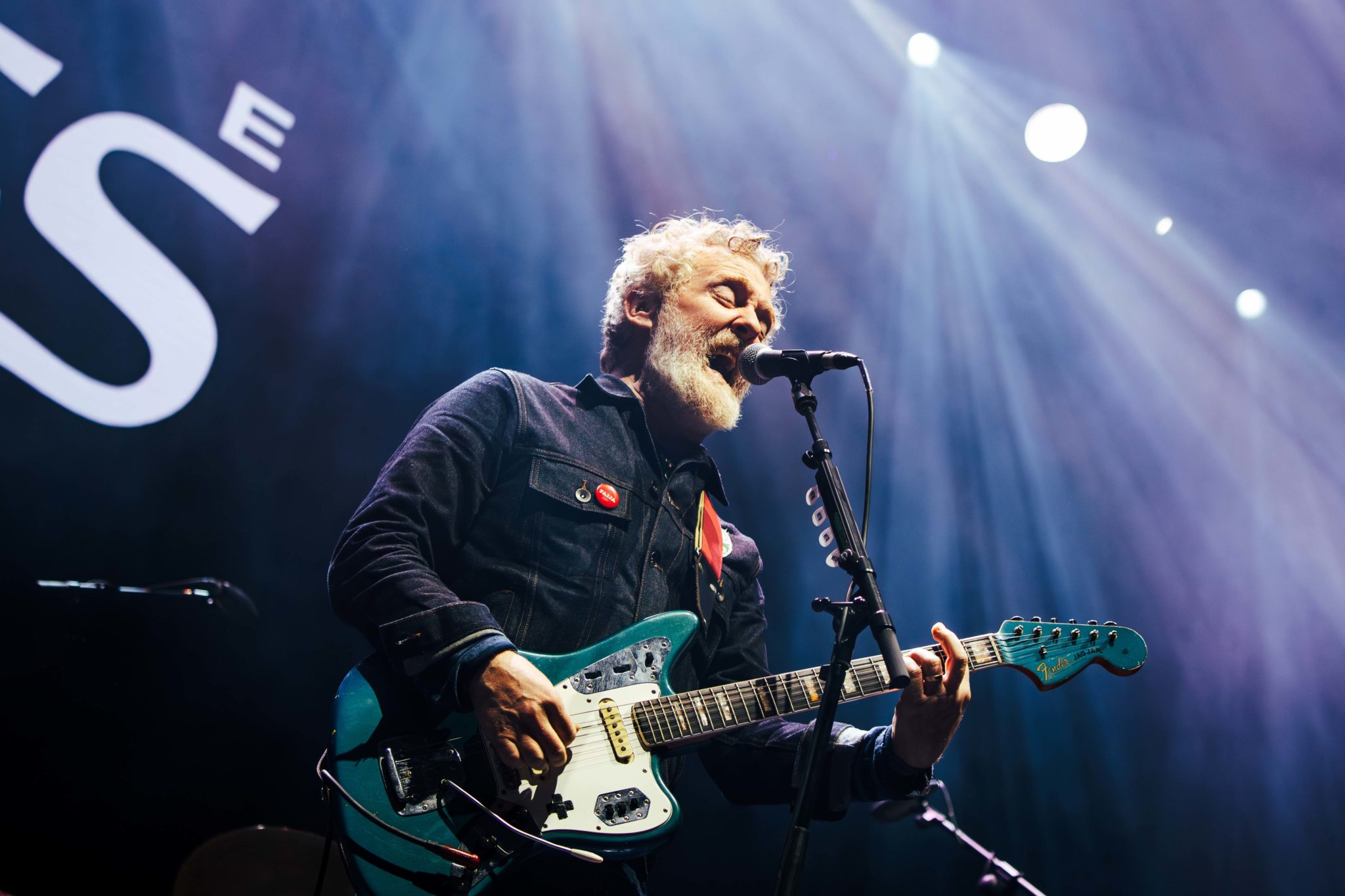
The Frames at History in The Making Preshow on February 6th, 2026. Copyright Abigail Ring- hotpress.com
When I called him about doing that show his generosity of spirit shone like a diamond. He said yes straight away. I really want do be part of that. Count me in. And we did. He decided that it was best to do the show under The Frames umbrella, and I knew immediately that it made marvellous sense.
The band’s appearance was an extraordinary highlight – first, hearing the intro to ‘Revelate’ booming out brilliantly at the afternoon soundcheck, and then during the show itself, when the band delivered a stunning performance, with Glen saying very kind things about what Hot Press always meant to him and to the musicians he worked with, both onstage and afterwards, amid hugs and handshakes, his young child Christy in his arms.
BURSTING INTO SONG
The old familiar pieces started to fall into place. Phone calls. Commiserations. Messages pouring in. Calls to make. How do you phrase what needs to be said? You do your best. It’s all you can do, especially as all the other pressures and responsibilities of everyday life pile up and demand attention.
RIP.ie. The funeral notice. Finding out how it is all going to hang together.
First, Glen would lie in repose in IMMA, a fitting temporary resting place for a great Irish artist. That public holiday Monday turned into a really beautiful and very moving occasion. Over 11,000 people came to pay their respects to Glen, reflecting the huge impact that he and his music – whether with The Frames, The Swell Season or solo – have had on Irish people, and the enormous affection in which he has always been held.
The mood outside the building was poignant and yet suitably communal, with people sharing tears, tunes and songs. I wasn’t, it turned out, the only one who wanted to refuse to believe that Glen was gone. Someone spoke to me outside IMMA about having a powerful sense that all of this was happening in a kind of parallel universe, and that out there somewhere else, things were – or are – progressing as normal.
There was, in that moment, a part of everyone who would have loved to believe that. But, of course, there was no getting away from the terrible, brutal truth that we have lost one of Ireland’s musical greats in circumstances that are genuinely tragic, and thoroughly heartbreaking.
Inside the Baroque Chapel, there was an otherworldly feeling. The setting was very beautiful, with Glen lying in repose at the centre of the room. There were bouquets of wild flowers on the wicker coffin and photos of Glen around it, with the coffin flanked by two guitars – his familiar Fender Telecaster and the great, battered guitar he called his workhorse – the famous Takamine NP15, with the big hole in the front.
At the far end of the room, the musicians were gathered, playing traditional tunes and bursting into song on occasion. While I was there, Liam Ó Maonlaí performed a beautiful version of ‘Carrickfergus’, half in English and half as Gaeilge, digging deep to find emotional depths entirely fitting to the occasion. In an adjacent room, so many musicians huddled and hugged and entered the Baroque Chapel to join the people who were passing through, quietly – and often in tears – paying their respects.
Colm Mac an Iomaire, Maria Doyle Kennedy, Kieran Kennedy, Bronagh Gallagher, Rossa O Snodaigh of Kila, Paddy Casey, Declan O’Rourke, Brendan Berry, Lisa O’Neill, Pheilim Drew and Victoria Mary Clarke were all there in that moment, sharing consolatory words and heartfelt imprecations alike.
Imelda May arrived and the word was that she was going to sing a song. Marketa Irglova and Ronán Ó Snodagh – among many more – had been there earlier. Others were entering as we left, including Glen’s wife Marie Sarrista. And all around, familiar faces from the music industry gathered, exchanging shell-shocked looks and warm embraces. It would be hard to imagine a more fitting scene or a more dignified one, in such cruel circumstances.
It was a marvellously appropriate statement by Dublin people, and by Irish people, about the importance of music and songwriting and story-telling – of which Glen Hansard was a master – to this country. But also by many from outside Ireland, who have come here to live and become part of the community – or who had made the journey specially, flying in from America, Europe, Scandanavia and even as far as Australia just to say their sad and final farewell to a lost hero.
In many ways, it felt like a state funeral. But really it was something even greater than that: a funeral of, and by, and for, a man of the people, a proper Irish musical chieftain who never strayed from the streets that made him. The circumstances couldn’t have been more emotionally devastating or tragic, but it was a privilege to be there, and to experience first-hand just how deeply loved Glen was and is – and will remain.
SENSE OF DEFIANCE
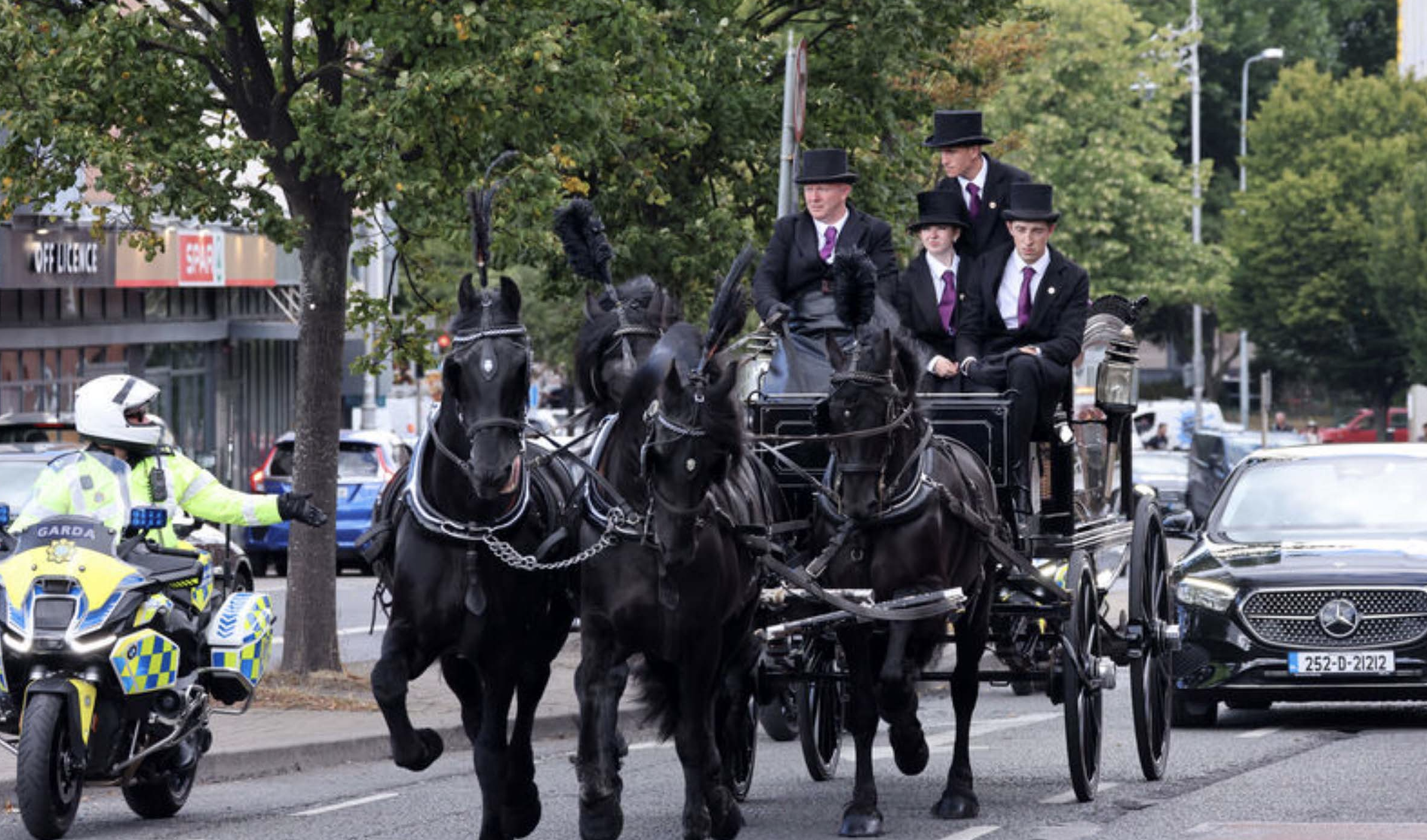
That same feeling of love and affection turned the funeral itself into a very Irish occasion. People gathered outside in St. Patrick’ Park and watched on big screens. All over Ireland people settled down and took it all in. RTÉ cameras and crew were there, ensuring that viewers could see and hear the prayers and the performances.
The Frames were at the heart of it all, as a succession of high profile musicians entered the spirit of the occasion: Marketa, Bono, Eddie Vedder, Damien Dempsey, Glen’s brother Gary, singing superbly, Liam Ó Maonlaí and of course Glen’s wife, Maire, reading a gorgeously heart-felt poem that she had written for him in the early days of their relationship.
There was a gut-busting choral performance of ‘Forever Young’, one of the loveliest songs ever written by one of Glen’s most important influences, the incomparable Bob Dylan. And that was followed by a mass singalong of a song that Glen hauled me on stage to sing with him one night, ’The Auld Triangle’, emphasising – if it were needed – the commitment that Glen always showed to the outsiders, and to those who are marginalised and downtrodden, not just in Ireland but anywhere and everywhere across the world.
In a small area to one side of the stage, Bono, Ali, The Edge, Damien Rice, Paul McGuinness, Guggi, Damien Dempsey, Hozier, Jerry Fish, Mundy, Jack L, Maria Doyle Kennedy, Kieran Kennedy, David Odlum, Junior Brother, Tom Dunne, Shobsy, Loah, and far too many more to list here all gathered and exchanged shell-shocked condolences.
Afterwards, musicians and their friends and associates gathered in Vicar Street. People I had missed during the day – Imelda, Lisa Hannigan, Una Molloy, Jim Sheridan, the Cronins, Bren Berry, Peter Aiken, Lisa O’Neill, Colm Ó Snodaigh, David Rooney, Dave Hingerty, Dean Scurry of the Apollo House takeover – all shared the collective hurt. Eddie Vedder joined Colm Mac An Iomaire, Joe Doyle, Declan O’Rourke, Imelda, Marketa, Graham Hopkins, Shobsy, The Cronins and more onstage for the kind of rousing musical send-off that the occasion demanded.
There were tears, of course, but there was also sense of defiance. Glen, who was the musical director at the funeral of Shane MacGowan, would not have wanted Irish musicians to lose their voices in a time of heart-breaking need.
A WORKING CLASS HERO
During the service in St. Patricks Cathedral, Bono changed the lyrics of ‘Beautiful Day’ to create a special personal tribute to Glen. Eddie Vedder and Markéta Irglová performed Glen’s ‘Song of Good Hope’. And Damien Dempsey stood tall, as always, to sing his own classic song, ’Sing All Our Cares Away’.
Of course, we knew that this would be impossible, but it was a beautiful reminder of what Glen Hansard had understood long ago: that music is a powerful force for good, even in the face of unspeakable tragedy. And that by opening our lungs and our hearts to burst into song – the way Glen did at every turn – we reconnect with the most beautiful and inspiring life-force. We, also, in joining one another in song, celebrate the life and the work of the great musicians who have helped to lead us to where we are. Among the greatest of whom, and not just in an Irish context – was, and is, Glen...
For this is the ultimate heart of the matter. Glen Hansard was a true working class hero – a singer, songwriter, musician, actor and activist from Ballymun on the deprived Northside of Dublin, who lived his life at an incredible pitch of intensity and creativity, and whose art and activism, especially on the issue of homelessness, left an indelible mark on this country musically, culturally, socially and personally.
As the man himself said, at the end of his Oscar acceptance speech, ‘Make art. Make art’. It may not be the answer to all of our problems, but it is as good an answer as we can ever conjure. And from now on, we can do it with renewed passion – individually and collectively – in Glen Hansard’s name.
We will never forget.
RELATED


RELATED

- Opinion
- 23 May 25
Bono calls to end war in Gaza at Ivor Novello awards


- Opinion
- 06 Apr 23
The Edge: Won't Get Fooled Again – A Hot Press Special

- Opinion
- 16 Mar 23