
- Opinion
- 23 Jun 26
Outhouse CEO Oisín O'Reilly: Ireland has built a global reputation for LGBTQ+ equality - now we need to deliver it








In an international climate where LGBTQ+ rights are under attack from far right movements, Ireland needs to continue working to deliver genuine equality.
Over the past decade, Ireland has become internationally recognised as a symbol of rapid social change on LGBTQ+ equality. That reputation still carries enormous political and cultural value abroad. The Irish state continues to present Ireland as a modern, progressive, rights-based democracy.
But there is a growing disconnect between that international narrative and the day-to-day reality many LGBTQ+ people continue to experience at home. Ireland still ranks comparatively strongly on LGBTQ+ equality in Europe. In the latest ILGA-Europe Rainbow Map, which measures LGBTQ+ rights and policy across 49 countries, Ireland places 14th with a score of 61.34%.
In a continent where LGBTQ+ rights are under sustained attack from authoritarian governments and far-right movements, that matters. It reflects decades of hard-fought progress by activists, campaigners, communities, public servants, political leaders and civil society organisations.
But beneath that headline sits a more uncomfortable question: has Ireland begun to lose momentum on LGBTQ+ equality?
For much of the last decade, Ireland became internationally recognised as a symbol of rapid social change on LGBTQ+ equality. That reputation still carries enormous political and cultural value internationally. The Irish state continues to present Ireland abroad as a modern, progressive, rights-based democracy.
But there is a growing sense within the LGBTQ+ community that the political urgency which created that reputation has begun to fade at home. There is truth in that story. Ireland has changed profoundly for the better. But there is also a growing disconnect between the country we market internationally and the day-to-day reality many LGBTQ+ people continue to experience.
This year, Ireland lost points on the Rainbow Map. We continue to score 0% on protections for intersex bodily integrity. Concerns remain around the implementation of commitments already made under the National LGBTIQ+ Inclusion Strategy II. And while Ireland is often framed as a success story, many LGBTQ+ people still face serious barriers in housing, healthcare, poverty, safety, and mental health.
At Outhouse LGBTQ+ Centre in Dublin, we see that gap every day. At times, there can be a strange disconnect between the way Ireland speaks about LGBTQ+ inclusion publicly and the conversations happening quietly inside community organisations like ours every day. We meet trans people who have spent years waiting for healthcare.
We support LGBTQ+ people navigating homelessness, addiction, isolation, and crisis. We see young people growing up in a climate where hate and hostility toward LGBTQ+ people have become louder and more normalised online and internationally. We see community groups and frontline organisations operating under growing pressure as they try to respond to increasingly complex needs.
The reality is that legal recognition and lived equality are not the same thing. Ireland became very good at passing landmark legislation. What we have been less good at is doing the slower, less visible work that makes equality real in everyday life. That work is slower. Less glamorous. Less politically rewarding.
It means investing in community spaces, healthcare pathways, youth work, mental health supports, addiction services, housing security, hate crime responses, and social infrastructure. It means understanding that equality is not just about what rights exist on paper, but about whether people feel safe, seen, and celebrated.
This matters particularly at a moment when many Western democracies are experiencing what could be described as equality fatigue. There is a growing assumption in some political and institutional spaces that the “major LGBTQ+ issues” have already been resolved. The referendums have passed. The laws have changed. The work is done. Time to move on to the next thing.
But for many people within our communities, especially trans and non-binary people, intersex people, LGBTQ+ asylum seekers, disabled LGBTQ+ people, and those experiencing poverty, the sense of precarity has not disappeared. In most of those cases, it is deepening.
Extreme poverty among LGBTQ+ people in Ireland is estimated to be three times higher than within the general population. Hate and extremism are rising across Europe and internationally. Public discourse has become more hostile and polarised. The systems people rely on are under strain.
And yet, despite this, there is a sense among many activists and organisations that political urgency has slowed.
Even in recent weeks, as the European Commission advised member states to ban conversion practices, attempts to suppress or change a person’s sexual orientation or gender identity, across the European Union, Ireland’s own long-promised legislation in this area remains stalled.
Compared to many countries across Europe, Ireland remains a significantly safer and more progressive place to be LGBTQ+. That should not be dismissed or minimised. The gains made over the last few decades have transformed lives and should be proudly defended. But progress is not permanent.
The Rainbow Map this year is dominated by stories of democratic backsliding, restrictions on civil society, attacks on trans rights, and governments weaponising LGBTQ+ communities for political gain. It is easy for Ireland to look at countries like Hungary, Russia or Turkey and reassure ourselves that we are different.
The real challenge for Ireland is more subtle than that. It is whether we allow ourselves to become complacent. Because the erosion of equality does not always begin with dramatic legislative attacks.
Sometimes i begins with stagnation. With implementation delays. With political drift. With underinvestment. With communities quietly absorbing growing pressure, while governments continue celebrating past achievements.
The next chapter of LGBTQ+ equality in Ireland cannot simply be about reputation management or symbolic inclusion. It has to focus on delivery. It has to ask harder questions about who still feels excluded from Irish society, whose needs remain unmet, and whether the systems we have built are actually capable of supporting people through increasingly difficult social and economic conditions.
If Ireland wants to continue presenting itself internationally as a leader in LGBTQ+ equality, then we need to ensure that leadership is reflected not only in our laws but also in the lived reality of our communities. That means sustained political commitment. Sustained investment. Sustained courage.
Not just celebrating the progress we have made, but continuing the work required to make equality real in people’s everyday lives.
• Oisín O’Reilly (he/him) is the Chief Executive Officer of Outhouse LGBTQ+ Centre and the Chairperson of the Irish Refugee Council.
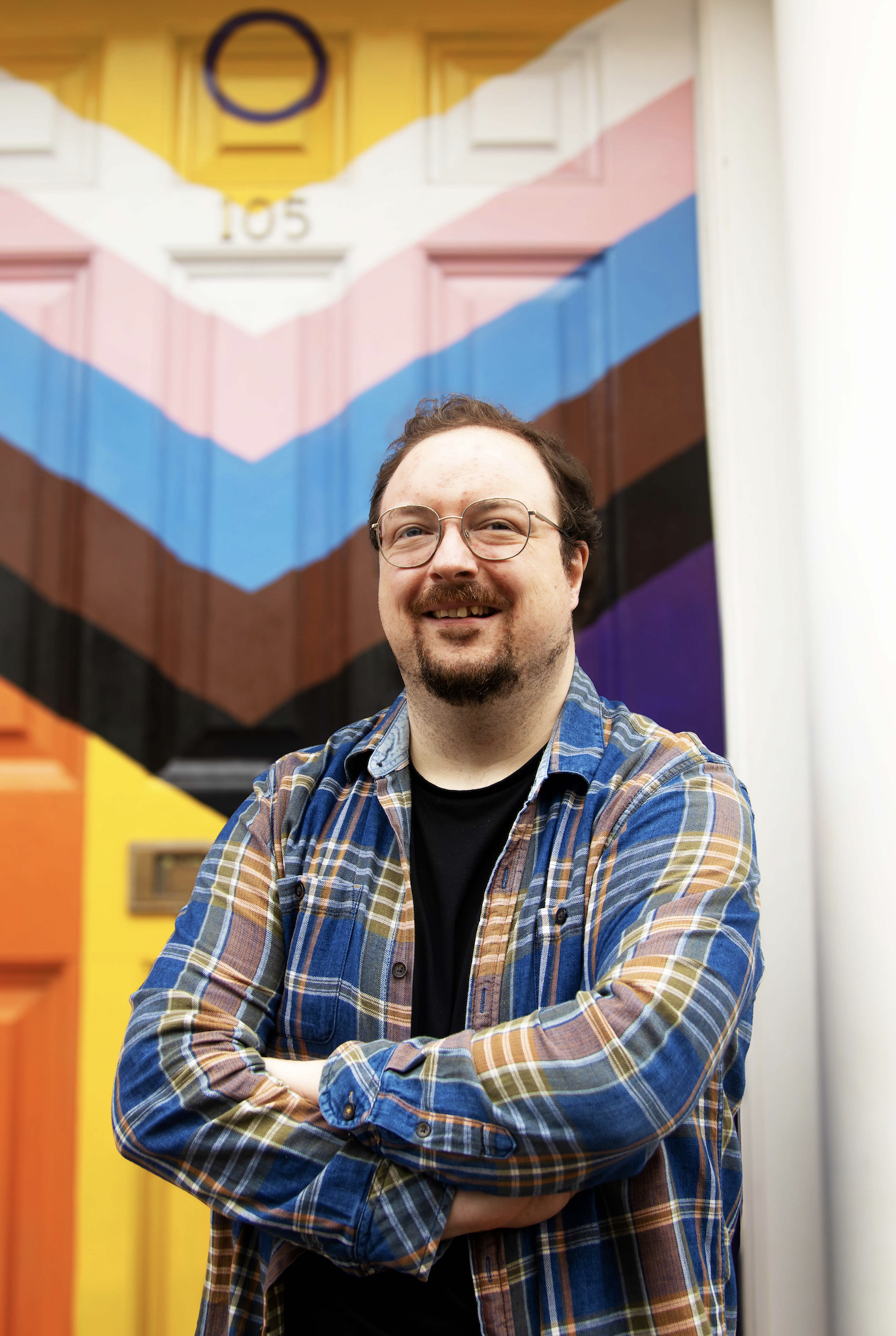 Oisín O'Reilly on May 29th, 2026. Copyright Maizy Kharrazian/hotpress.com
RELATED

- Lifestyle & Sports
- 21 Sep 26
Student Special: "Saving money does not have to mean surviving exclusively on instant noodles and blind optimism"

- Opinion
- 20 Sep 26
Dylan Moran: "Time is literally all we have. It’s all we are"

RELATED

- Opinion
- 17 Sep 26
RTÉ confirms it will not participate in or broadcast Eurovision 2027


- Lifestyle & Sports
- 17 Sep 26
