
- Opinion
- 28 Nov 26
History In The Making: "These interviews tell the story of Ireland in an utterly unique and fiercely compelling way"


Assembling our new book of classic interviews, History In The Making, afforded the opportunity to reflect on friends we have lost along the way – including most recently, Kate Shanahan, one of the most gifted journalists ever to write for the magazine.
Going back through the archives. Looking at covers from decades ago. Reading old interviews. Remembering controversies that feel like they were only weeks ago. With the Hot Press 50th Anniversary coming quickly down the tracks, I have been doing more than my share of that kind of reflective detective work recently.
With a specific purpose in mind...
We’d talked about doing ‘The Book of Hot Press Interviews’ on dozens of occasions over the years. It was a no brainer. Or so it seemed – until we started to get down to the nitty gritty, that is.
What to put in? What to leave out? What format it should be produced in? What sort of editorial parameters should be applied? How many interviews we might accommodate? Should they be left inviolate or might it be acceptable to trim them? And so on.
Some of the interviews were 10,000 words long. The possibility of doing a 400,000 word book loomed large. One sprightly young art director went cross-eyed at the thought. I’m not sure if it was permanent.
It was a conundrum – and the problem was that the longer we delayed, the bigger the challenge became. Since Hot Press was launched in 1977 – “Making Ireland safe for rock ’n’ roll” was our initial punchline – we have probably done about 10,000 interviews. And that number is increasing all the time.
PACKED WITH TREASURES
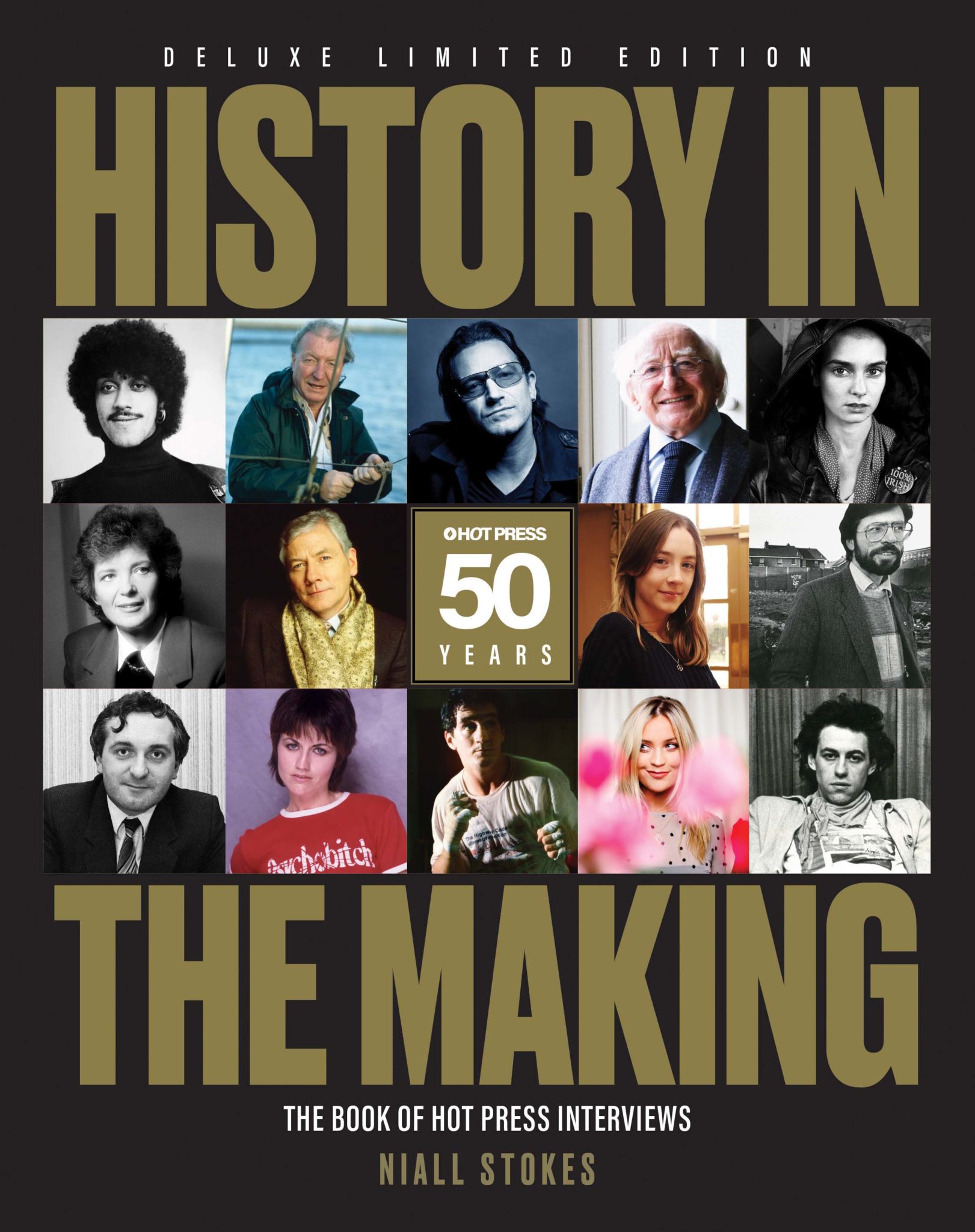
As it transpired, I discovered that the urgency of the looming 50th Anniversary deadline made it easier to decide how best to approach what we had decided to call History In The Making: The Book Of Hot Press Interviews. Over breakfast one morning, I realised that the bell had already sounded. What had just opened up was a specific, by definition uncharted opportunity that wouldn’t come around again for, oh, say another 50 years! Suddenly, it felt like it was now or never. We had to go for it.
But how to narrow it down? We decided that the book should be about Ireland, which was helpful in that it eliminated interviews with Madonna, Bob Dylan, Joni Mitchell, Leonard Cohen, Tom Waits, Kate Bush, Bob Marley, Lady Gaga, Billie Eilish – and a host of other superstars – from consideration.
We also wanted it to represent the breadth of the different editorial elements for which Hot Press has become known, across the decades. So, while the Charlie Haughey interview – still perhaps the most infamous of them all – would be in there, it wouldn’t be a ‘politicians only’ affair.
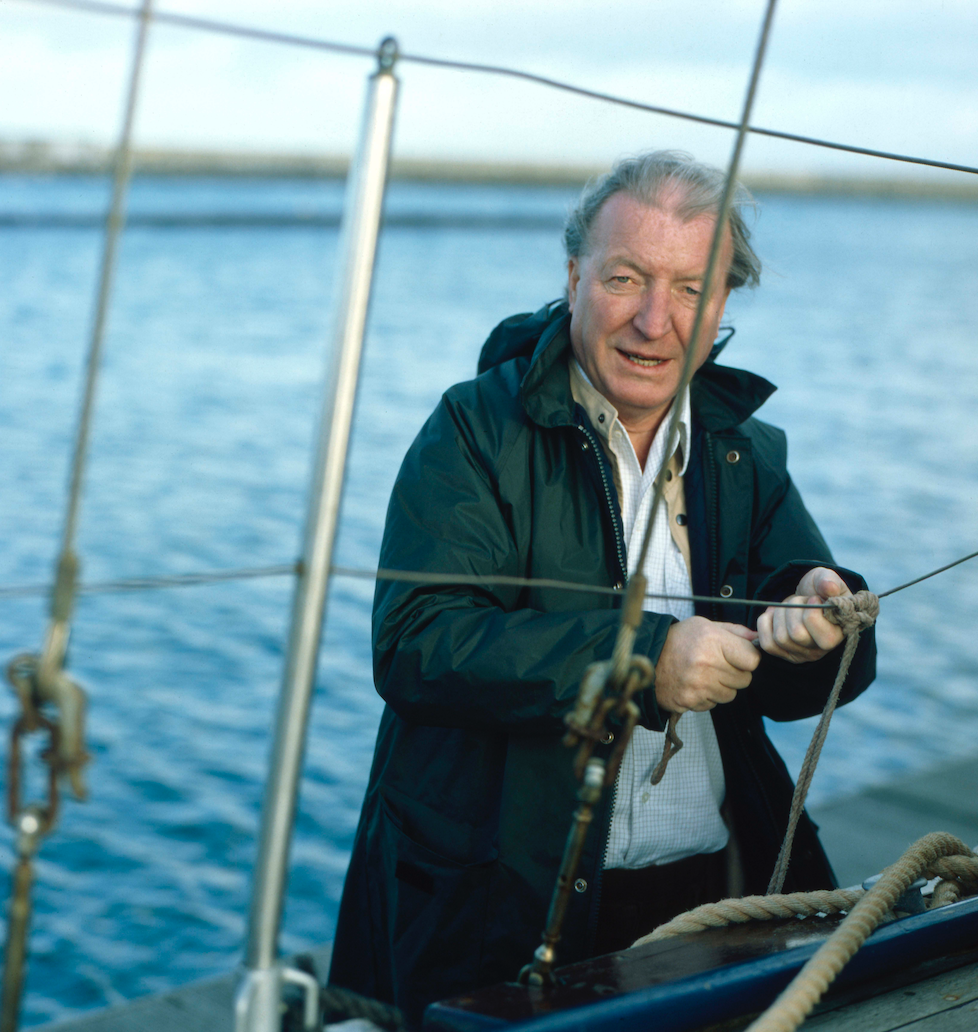
Charlie Haughey
The biggest stars in Irish music and movies should, we thought, sit alongside different Presidents and Taoisigh, truculent loyalist politicians, other leading lights in Irish broadcasting, and more. Sinéad, Bob, Bono, Shane, Saoirse and Colin all sprang to mind (try saying that with a Ross O’Carroll Kelly accent). And then, of course, there was sport – and, inevitably in an Irish context, religion!
All of which sounded like it might be fun – until we got stuck into it, that is...
The process of identifying, re-reading, selecting and reprocessing the material proved to be even more of an expedition to conquer Mount Everest than we had anticipated.
There were hundreds of interviews under consideration, many of which made a big impact at the time – but, as the process developed, a few things became clearer. It doesn’t matter how significant a politician might have seemed at a given moment, if no one remembers him or her now, then this is not the book in which to feature them. Some names live on in the popular imagination. Others much less so...
Apart from the digging, reprocessing, proofing and all the other elements in a painstaking editorial process, there was an additional challenge. We remembered that the Gerry Adams interview made headlines – along with Charlie Haughey, Gay Byrne and numerous others – but finding the key references in other media was a different matter entirely!
We knew, for example, that the day after the Gay Byrne interview appeared as a cover story in Hot Press, our friends in the Irish Independent (and, as it happened, they were our friends) – after asking for permission and being turned down – lifted a massive chunk of the interview anyway.
We knew that the whole country had been talking about it. We knew that it was widely covered. But tracking down much of that, even for the obvious biggies, involved more than a bit of trail-finding! Think 50 years. Think haystacks. Think needles.
Think weeping and gnashing of teeth.
We decided that the interviews should not be cut – this after all was a big part of their appeal, and their strength. They were proper, in-depth interviews that gave a rounded insight into – or a sharply illuminating snapshot of – what these individuals were or are really like.
Instead of agonising, we went for it, selecting the ones that stood out, not just for their eloquence or impact – but also for their entertainment value. As often as possible, we wanted readers to feel: “You couldn’t make it up.”
That was certainly something I felt reading many of these extraordinary tracts again. Some of the interviews are literally astonishing. Bertie Ahern. Garret FitzGerald. Mary Robinson. Peter Robinson (no relation). Gerry Ryan. Roy Keane. Katie Taylor. Laura Whitmore. Barry McGuigan. Bishop Eamon Casey. And, ah yes, Annie Murphy...
Indeed, having dug through more or less every word a second time around, I can state, without fear of contradiction, that what we have gathered together in this bumper anniversary tome is a truly remarkable collection of journalistic peaks, reflecting a powerful aspect of the Hot Press legacy in an absolutely unique way.
We also made the decision to present History In The Making: The Book Of Hot Press Interviews as the latest instalment in the art-book series we launched over a decade ago with the much-loved Philip Lynott: Still In Love With You. When we published our second project in this series, Covered In Glory: The Book Of Hot Press Covers, the feedback flooded in, from people who’d bought it, that they loved it and were planning to pass it on to their children and their grandchildren as an heirloom.
That too, we hope, will be the response to History In The Making: The Book Of Hot Press Interviews. It’s a limited edition. Signed and numbered. In a special slip-case. Printed by the world’s best. Packed with treasures. And costing less than €6 for every year of Hot Press’ existence.
Since the first copies were delivered to pre-purchasers last week, the good news is that the compliments have been flooding in. Cumulatively, these interviews tell the story of Ireland in an utterly unique and – we hope – fiercely compelling way.
And you realise: no matter how tough things are now, we live in a far better place, in so many ways, than the singularly repressive country Hot Press was launched into.
THE MIGHTY WHO HAVE FALLEN
There is, inevitably I guess, an emotional roller-coaster involved in any endeavour of this kind. As the production gathered momentum, I called Kate Shanahan, who had carried out two interviews – with Gerry Adams and Fr. Michael Cleary – that I knew had to be included.
People often ask me what is it that makes a great journalist. A few obvious answers usually spring to mind. The ability to string a few sentences together coherently; finding your own distinctive voice; the willingness to ask the hard questions; the diligence, and often hard work, that’s required to understand what’s really going on; and having something to say that is worth hearing or reading. But there is another subtler quality too, which I long ago decided is hugely important. You ideally want a journalist to be curious about other people, and what makes them tick – and committed to finding out.
This is especially important where interviews are concerned. The guiding principle is that everyone has a story to tell. Are you going to be the one to get them to tell it properly? Kate was always up for that challenge – and she succeeded in what is a core journalistic mission.
As an interviewer, she had a lovely chatty style. The fact that she was warm and always up for a laugh, induced interviewees to relax and open up. But underneath, there was a steely determination. She wanted to deliver the goods. And she did.
Kate had gone on from Hot Press to become a producer in RTÉ, working on some of Radio One’s flagship programmes, and in television, before graduating to a role lecturing in journalism at what is now called TUD. She went on to become the Head of Journalism and Communications there, a role she carried out with great distinction. We spoke on a few occasions during the pandemic about the move from Aungier Street to the new campus in Grangegorman. There were daunting hurdles to be jumped, but she was looking forward to it all.
As the page layouts of History In The Making were being finessed, I gave Kate a buzz to see if she could remember details of the coverage of the Gerry Adams interview in national media. When we spoke, she had bad news to impart. She had been diagnosed with a rare form of blood cancer that was incurable. She explained that it could be managed and that the treatment might succeed in containing it – hopefully for a long time.
But her voice was cracked and breaking and she found it difficult to speak. She did take the opportunity to say to me that the Hot Press years were the most enjoyable of her career; and I remembered her bravery in joining forces with Helena Mulkerns researching a story on the sex trade in Dublin that involved them doing a kind of Cagney and Lacey routine, looking for work in a number of massage parlours.
They got to meet the owners and to see the tawdry set-ups involved first-hand. Needless to say they got a number of offers of ‘employment’ that they had no intention of taking up, and delivered a brilliant story of a kind that, to my knowledge, had never been written before here.
Through April and May of this year we exchanged messages and emails – and I was eventually able to report to Kate that, at her prompting, we had located the coverage we were looking for in the national media, about both Gerry Adams and Fr. Michael Cleary. “That’s fantastic news,” she messaged me. “You’ve made my day.”
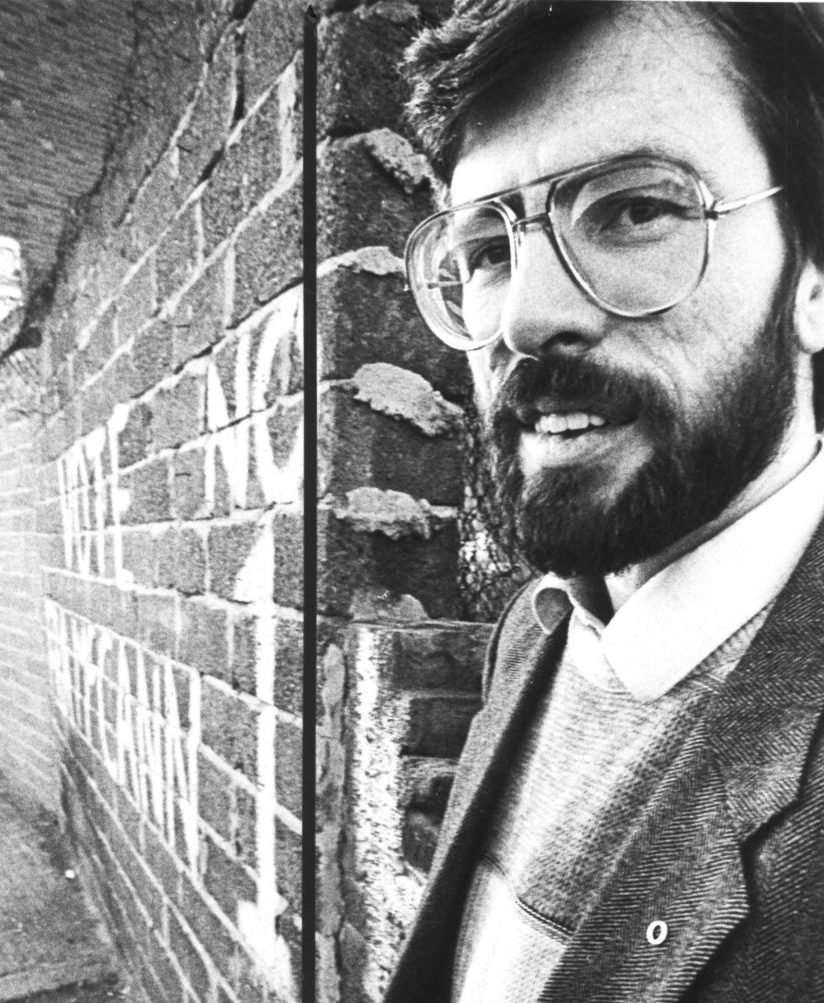 Gerry Adams
The focus now was on getting the book finished and we ploughed on, fine-tuning the detail. The team waded through the proofs when they arrived in from Italy. I’d have been due to ring Kate, to make arrangements to have a copy delivered to her, once it came back from the printers. Then I got a call from another ex-Hot Press staffer. “Did you hear that Kate had died?” she asked.
It was like something had exploded. It had happened three weeks previously, she said – but we both had somehow completely missed the news. I was appalled that I hadn’t made it to the funeral.
“My heart goes out to you in relation to your illness,” I had said to Kate in a message. “There is a terrible unfairness about being hit with something like this – and the fact that there is nothing they can do to remove the cancer only seems to make it more desperately wrong. I know that anger gets you nowhere, and I understand that there is no good advice that can be offered by someone to whom it hasn’t happened so I won’t even try – except to say that I think you are right to give yourself over to the experts, trust them, and don’t read any of the shit that appears online. It’d drive you mad, and you have enough pain and sadness already to cope with. Hopefully they will be able to keep it at bay in a way that allows you to feel a sense of lightness and joy again.”
Well, I knew now that it hadn’t turned out that way.
There had been nothing prescient involved when I dedicated History In The Making: The Book Of Hot Press Interviews “To The Mighty Who Have Fallen.” At the time, I was thinking of Bill Graham, Peter Owens, Mick Cannon, Faye Wolftree aka Fiona Stevenson, George Byrne, Nick Kelly, Niall Crumlish, Mark Classon, Sandy Harsch and Colette Ridgway, all of whom had written or worked for us in different capacities over the years.
I was thinking of some of those we had interviewed too, who had passed over to the other side. Of my own brothers Colm, Conor and Kevin. Of my parents Peggy and Maurice. Of Dermot, of Bairbre and of Brendan Sheehy. And of the other members of the wider family of Stokes’, Sheehys, McKennas, Morans, Kilmurrays, Godsons, Campbells – and all the rest.
Well, I could add Kate to the list now – one of the gang that had gone on to great things and whose work, with us at least, was now, I hoped, written more permanently in stone.
When it came back from the printers, I looked at the finished book, and felt a fresh wave of sadness at the too often cruel, arbitrary nature of the human condition. And I thought of Kate’s husband Johnjoe and her son Luke and the terrible grief they have had to contend with.
It was, I thought – leafing through the pages – right and fitting to see Kate Shanahan’s name there, engraved in black and white. We are remembered for the lives we lead, the love we give, for the family that – if we are lucky enough – we get to share the good times with. But also for what we contribute to society. For the commitment we show. For our work.
In many different ways, Kate made history. And in the here and now, we salute her memory. RIP.


RELATED

- Opinion
- 19 Nov 26
ICJ rules Myanmar committed genocide against Rohingya minority


- Opinion
- 13 Nov 26