
- Music
- 24 Nov 26
Ali Campbell: “We got discovered by Chrissie Hynde – Auntie Chrissie, we used to call her”


As UB40 Featuring Ali Campbell prepared to hit Ireland as part of the Big Love Tour, the band's frontman discussed their early days in Birmingham, their political underpinnings, being taken under Chrissie Hynde's wing and global stardom. Plus his youthful encounters with Ronnie Drew and The Chieftains.
Marvellous it is to hear Ali Campbell recall UB40’s early days, when they were still a group of young men in South Birmingham discovering reggae, politics and possibility.
Relaxed, soulful and unmistakably midlands, Ali emerged from the city’s multiracial culture in the 1970s, his voice carrying the band from the incendiary brilliance of 1980’s Signing Off to worldwide success.
And still he ploughs on, recently returned from a US tour. I browse his setlists and note with interest their broad range, from massive UB40 hits and solo material through early Trojan reggae, Jamaican 1950s ska, Chicago R&B, classic Motown, Memphis Soul and American doo wop – it’s all in there!
“We do a set of hits basically,” Ali explains. “We had 40 Top 20 hits through the ‘80s, ‘90s and 2000s – a lot of them were from the Labour Of Love series. I’ve recorded 30 LPs in my career, three of which were cover albums, so we do a lot of tracks from those.”
And who better to do it? Labour Of Love, released in 1983, was UB40’s first album of cover versions and included ‘Red Red Wine’, ‘Please Don’t Make Me Cry’, ‘Many Rivers To Cross’ and ‘Cherry Oh Baby.’ It became one of the band’s defining commercial moments, taking them from politically sharp Birmingham reggae into mass pop consciousness.
UB40 weren’t the first to bring reggae into the UK mainstream – that honour has to be shared with people like Desmond Dekker, Jimmy Cliff, Bob Marley, Toots and the Maytals, The Wailers and Trojan Records. But UB40 made the genre feel like regular pop for millions of British listeners, who otherwise might never have explored it.
How did reggae first enter Ali’s world? “It was the music of the streets,” he details. “We spent a lot of time as kids in cafes, and the music on the jukeboxes was reggae or Asian. I grew up listening to Mohammed Rafi, Asha Bhosle and Lata Mangeshkar. We also used to hang around shebeens and blues dances, ostensibly to get the curry goat juice and rice that was left over, and that’s when we were really exposed to reggae.”
While that style gripped Ali’s imagination, his father, Ian Campbell, also forged a musical path. An important figure in the British folk revival, he was an Aberdeen-born singer who settled in Birmingham, worked as an engraver in the Jewellery Quarter, and helped build a politically charged folk tradition rooted in workers’ songs, and Scottish and Irish material – documenting the lives of ordinary people.
“He had the Ian Campbell Folk Group,” Ali elaborates. “And a folk club, which was quite big in the early ‘60s. So, we had great characters like Ronnie Drew, Francis McPeake and The Chieftains come inside the house. Basically, every other folk musician in Britain came through our dad’s club, and would eventually come back to our house and continue the party.
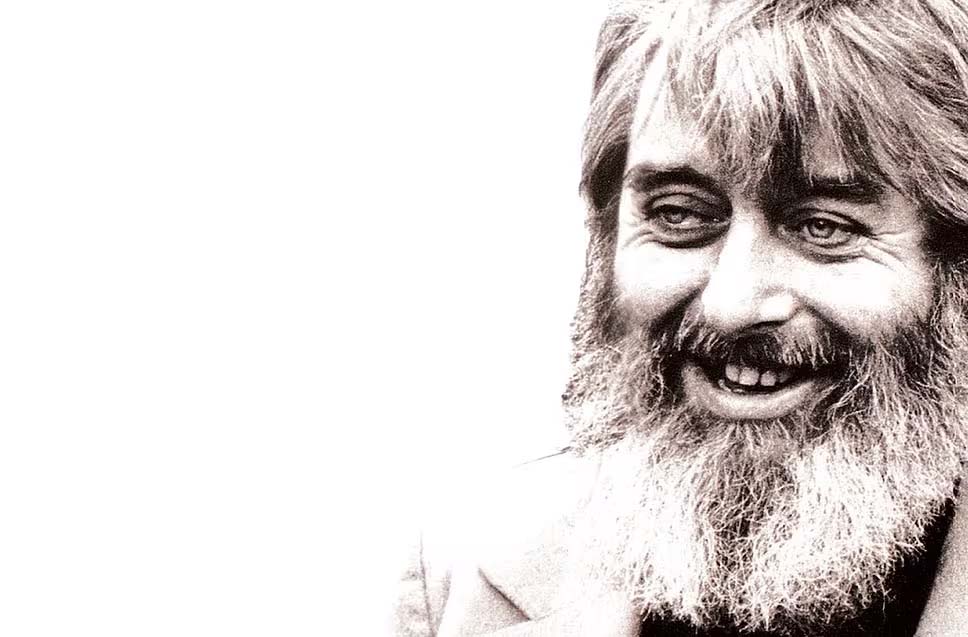 Ronnie Drew
BRIGHT LIGHTS
“But as a kid, you don’t really like what your dad likes. So I didn’t like folk, which of course horrified my dad, but reggae was the music my mates and I all loved. So, when we were unemployed and had time on our hands, we started a band. It was always going to be a reggae band, no question.”
To understand UB40 properly, it is worth stripping away, for a moment, everything that came later – the international success, the radio ubiquity, the strange spectacle of rival UB40s moving through the world with competing claims on the same history. Before all of that, they were a group of young men from a restless, racially mixed, economically battered part of Birmingham, trying to make sense of the world through reggae, dub, friendship and the dole queue.
Ali explains the genesis of UB40 in a modest manner. “We acquired our instruments,” he relates, “learned how to play them, and made the first album – all in six months. We got discovered by Chrissie Hynde – Auntie Chrissie, we used to call her. We’d only played a dozen shows in pubs around Birmingham, and we made our way to the bright lights of London.
“We got to play in the rock garden in Camden and Chrissie came to see us. She was at Number 1 with The Pretenders at the time with ‘Brass In Pocket’, and she wanted someone to support The Pretenders on a tour they had, which was 35 dates. So she offered us the support, and of course, having only played 12 dates and being offered a 35-date tour, we jumped at it.
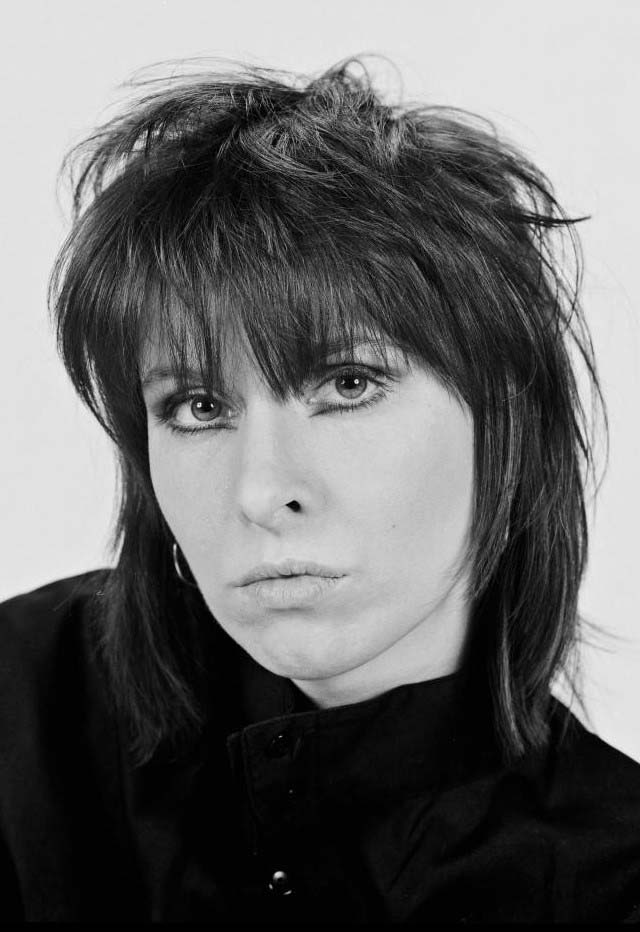 Chrissie Hynde
“Once we’d done that, we booked the same tour for ourselves. Then we released our first single, ‘Food For Thought’, which went into the top five. Our debut album Signing Off got to Number 2 and went on to sell eight million copies. We were very, very lucky – we were right place, right time.”
Ali’s modesty won’t let him make the grand claim, so let me make it for him. Signing Off is a boss record – reggae and dub in a West Midlands wash – and one of the great British albums of the period. The band’s name was itself a type of manifesto. A UB40 was the old British Unemployment Benefit Form 40 – a piece of bureaucratic paper that marked you as surplus to the economic order.
For a group of largely unemployed musicians in Birmingham in 1978, it was both joke and declaration. They were naming themselves after the system that had no place for them. At a time when Britain was moving towards deindustrialisation and the ideological cruelty of the Thatcher years, that name gave the band an immediate social charge.
Musically, Signing Off is striking because of how unforced it feels. It does not sound like a band chasing the charts, even though the charts came to them almost immediately. ‘Food For Thought’ is slow, sinuous and morally direct, a song about famine, hypocrisy and Western comfort that somehow found itself in the pop bloodstream. ‘Tyler’ reached across the Atlantic to the story of a wrongfully imprisoned Black American.
SLY AND ROBBIE
‘Burden Of Shame’ confronted colonial guilt. Elsewhere, the dub tracks are glorious -–‘12 Bar’, ‘Adella’, ‘25%’, ‘Signing Off’ and ‘Reefer Madness’ – making the record feel vast with prowling basslines, drifting saxophone and half-lit drums.
“Part of our mission was to promote reggae, but also to promote dub,” Ali explains. “We were so into dub. We loved Sly and Robbie – we learned our instruments by listening to them and playing along parrot-fashion. It was actually a 12-inch by Gregory Isaacs and Sly and Robbie called ‘Cross The Border’, and ‘Mr. Know it All’, that we used to play along to.
“We were very successful with our first album. Then we were very successful with our second, Present Arms, and in our wisdom, we thought, ‘We’ll teach people now what dub is’. So, for our third LP, we released Present Arms In Dub, and people brought it back to the shops in droves, going, ‘It’s faulty, there’s no vocals on it!’
“Because people didn’t know what dub was – that sort of proved the point that people needed education in what it was! And we went on to make a lot of 12-inches and dub mixes. But yeah, it was dub on the first album, and a pretty eclectic mix. We did ‘Strange Fruit’, a cover of Billie Holiday, with a pretty harrowing lyric. ‘Burden Of Shame’ was about how we were ashamed being British because of apartheid and what was going on there.
“When the South African record company released the album, they deleted that track from it, so we left them because of that. We always had something to say and we wouldn’t be stopped saying it.”
Roots reggae is the deeper, more spiritual and political strain of reggae that emerged in Jamaica in the late 1960s and ‘70s. Where some reggae is built mainly for dancing or romance, roots often carries heavier themes – Rastafari, Black liberation, poverty, colonialism, exile, resistance, suffering and redemption. It is the reggae of protest and spiritual seriousness.
Musically, it tends to be slower, bass-heavy, hypnotic and spacious. I wonder how audiences initially reacted to UB40’s songs?
“I think they appreciated them,” Ali replies. “It was a time just after punk and the 2-tone thing, so people were open to the reggae we were playing, even though it was too slow for a lot of them. We did get spat at by skinheads; we played one show at the Electric Ballroom, where we were covered in phlegm. That’s because we weren’t playing ska. Ska was the trendy music of the day.
POLITICAL WEIGHT
“Jerry Dammers asked us to be on his 2 Tone label, but we were horrified by the ska revival, we didn’t understand it at all. We were into promoting reggae, so we politely declined."
True, UB40’s early music does not sound Jamaican in any pure sense, nor does it sound like simple imitation. It sounds like reggae filtered through working class disaffection, Caribbean-British influence, Irish and Scottish folk inheritance, art-school looseness, and the everyday proximity of different communities living beside one another. The band were the product of a city in which musical cultures were already entangled.
In 1980, UB40 played the Cabra Grand Cinema in Dublin, the Arcadia Ballroom in Cork, Seapoint in Galway and Whitla Hall in Belfast – when few international bands ventured to the North. Did Irish audiences, especially in Belfast, understand the political weight of songs like ‘Burden Of Shame’ differently from audiences elsewhere?
“I don’t think anybody understands my Brummie accent,” Ali laughs. “Reggae bands sang in patois, and also they were mostly singing about Jah – Rasta lyrics and stuff, so they were very accessible. With UB40, our problem was our Brummie accents. In fact, with our second album, we did a song called ‘One In Ten’. We were taking it all very seriously and one journalist said, ‘Why is Ali Campbell singing, ‘I have a one-inch head’. So, I don’t think anybody understood what I was singing about!”
The Big Love Tour is Ali Campbell’s current touring project under the banner UB40 Featuring Ali Campbell – essentially a large-scale celebration of UB40’s legacy, built around Campbell’s status as the band’s original voice. It has been running through recent years and has expanded into a 2026 world arena tour, including (whoop!) Ireland dates.
“We’ve just been to America,” Ali relays. “We’ve been to Australia, New Zealand and the South Pacific – Fiji, Tonga, and that was fabulous. Now on Saturday, we go off to South Africa, and then we come back and we’ll be in the UK, Europe and Ireland. It’s been going great. At the moment, I’ve got Bitty McClean on stage with me. He’s a wonderful voice, so yeah, we’re generally having a great time.”
• UB40 Featuring Ali Campbell play TF Royal, Castlebar on November 27 and 3Arena, Dublin (28). Tickets are available here.


RELATED


- Music
- 10 Nov 26
Fall Out Boy announce Dublin show and new single 'Aces'

- Pics & Vids
- 10 Nov 26
