
- Film And TV
- 20 Apr 26
The stars of California Schemin’: “There’s a Robin Hood side of it. If we can’t get it fairly, we’ll just take it unfairly"








Séamus McLean Ross, Samuel Bottomley and Lucy Halliday on lies, rap, class and the cost of becoming someone else in California Schemin’, James McAvoy’s audacious directorial debut.
The premise of California Schemin’ is so brazen it almost resists belief: two young men from Dundee bluff their way into the American rap industry, constructing Californian alter egos with enough confidence to convince record executives, collaborators and, eventually, themselves.
It sounds absurd enough to stretch credibility, but it is indeed the true story of Scottish faux-American rap duo Silibil N’Brains, aka Gavin Bain, and Billy Boyd, who California drawled their way into a record deal in the early 2000s after being rejected for their Scottish brogues.
In the hands of James McAvoy, making his directorial debut, what might have been a silly true-crime caper instead becomes something more uneasy and textured, a story about ambition and performance, about class and credibility, and about the thin line between reinvention and self-erasure.
Speaking to stars Séamus McLean Ross, Samuel Bottomley and Lucy Halliday, it becomes clear what drew them in was not simply the audacity of the con, but the psychological strain required to sustain it. McLean Ross, who plays Gavin Bain, says that reading the script, even the idea made him anxious.
“The thing that struck me was the lie,” he says. “My initial reaction was adrenaline. Of reading it and lying to so many people’s faces, including industry professionals and execs, and living with that lie permanently. It just gives me a lot of anxiety. And I like films with a lot of anxiety. It’s really gripping.”
Bottomley, playing Billy Boyd, recognises that same tension but is equally drawn to the swagger that powers it.
“There’s a kind of Robin Hood side of it,” he says. “If we can’t get it fairly, we’ll just take it unfairly.” What fascinates him is the escalation, “the lie and the lies behind the lies,” and the way the characters “get themselves into more and more trouble,” propelled by a confidence that is both exhilarating and unsustainable.
That interplay between performance and authenticity runs through every aspect of the film, and nowhere more sharply than in its relationship to rap; a genre so often hailed as a site of authenticity and truth, here becoming a vehicle for fiction. Both actors admit they approached the challenge of performing rap with more ease than they expected.
“We were already very comfortable with rap anyway,” Bottomley says. “Not rapping, but we’re big fans of rap and all sorts of music. We submerged. Gavin Bain made me a playlist with so many class artists – Gang Starr, Biggie Smalls, Tupac. We were just trying to listen to as much of that as we could.”
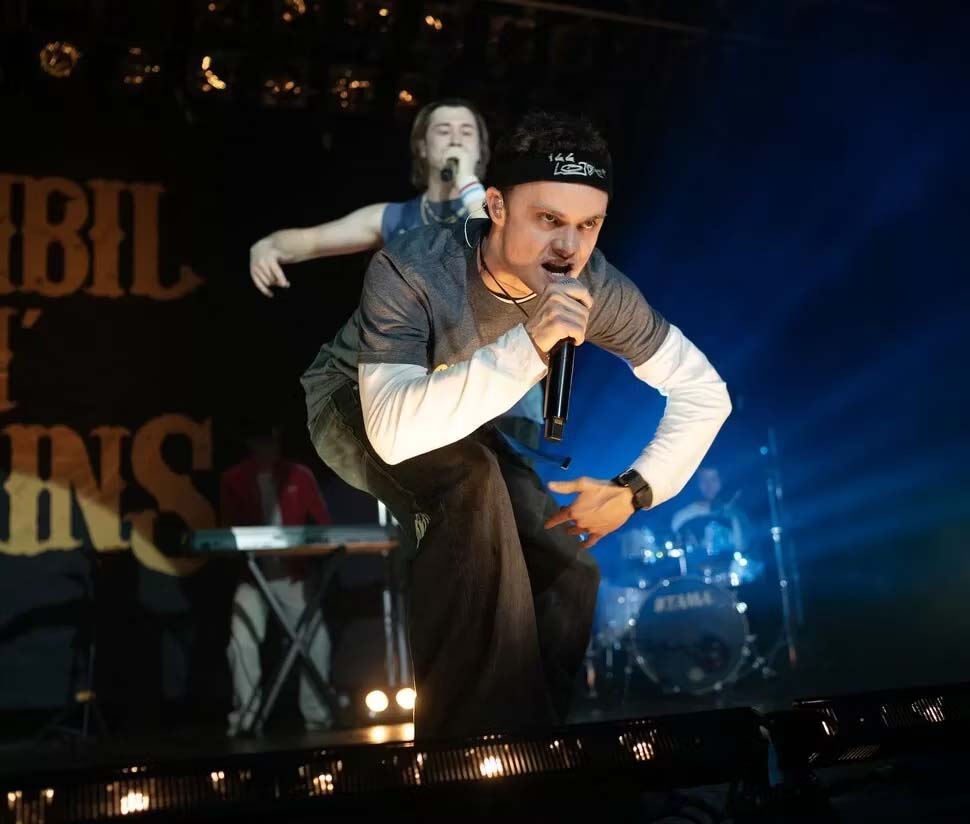
Meeting Bain and Boyd themselves introduced a different kind of intensity, with Mclean Ross describing the experience of playing a real person as “daunting”, but Bottomley says the men were open and encouraging.
“We had so many questions,” he says. “And they were really, really good at answering them.”
McLean Ross met the real Bain in Soho and recalls being struck by his openness. “He was so vulnerable,” he says. “Just telling me all the mad stuff they were up to. It feels like a Scottish legend, like resistance. Like making something out of nothing.”
There is admiration in his voice, but also an awareness of how precarious that kind of ambition can be. This awareness feeds into McLean Ross’s portrayal of Gavin, whose trajectory in the film darkens as the pressures of the deception mount.
Gavin, more shy and uncertain than the confident, fast-talking Billy, latches onto the lie of their new identities with the desperation of someone who doesn’t know how to be himself. McLean Ross recalls a story Bain shared that encapsulated that sense of losing himself to the lie.
“He told me about going home to a family funeral talking in an American accent,” the actor says. “He was losing his mind… it sounds ludicrous, but for him it felt so real. He fully lost his identity.”
McLean Ross is careful not to frame this simply as excess or ego. “He was already vulnerable to start with,” he reflects. “When you come into this industry not grounded, you can be easily influenced. It’s a dangerous world. You can lose yourself in all the lights and the clamour.”
If McLean Ross’s Gavin represents the pull of reinvention, Lucy Halliday’s Mary offers a counterpoint. Mary was Billy’s longtime girlfriend, who witnesses the lads’ con initially with amusement, but then a growing sense of unease.
Halliday speaks about meeting her real-life counterpart and immediately recognising the strength of her perspective. “Mary was really forthcoming,” she says, “but her account differs drastically from what the boys would tell you happened.”
What struck her most was Mary’s lack of interest in the world the men were entering.
“She had no interest in the glitz and glamour,” Halliday says. “She’s such a strong personality…It was definitely fun getting to play the rational side of it. To be someone who isn’t interested in following along with the buzz, but is very happy with the life she already has.”
It’s a perspective Halliday suggests may resonate with audiences as much as the more spectacular elements of the story. “It definitely showcased for me what it is to live a happy, fulfilling life,” she says.
The film’s exploration of identity extends beyond the personal into questions of perception. It begins with dismissal, with the sense that two young Scottish men are not legible as artists within a global industry that privileges certain voices. Halliday, herself from Paisley in Scotland, acknowledges the persistence of those dynamics.
“Sometimes we can feel ostracised, or a bit of a laughing stock,” she says. “When people hear things for the first time, like a Scottish accent, it’s easy to laugh.”
At the same time, she sees the film as part of a broader push towards cultural self-belief. “It’s our duty to tell our stories and get them out there,” she says, pointing to the confidence that has fuelled Ireland’s recent artistic success. “I think we should start believing in our artists.”
More broadly, she situates the film’s themes beyond Scotland. “The crux of the story is individuals who felt the need to change who they were to assimilate,” she says. “We perceive individuals based on the sound of their voice, the colour of their skin, or the background they’re from. Those things affect the value we assign to them.”
If the film succeeds, she suggests, it will be because it holds a mirror up to those dynamics. “If it can do anything to better that situation, or at least hold the mirror up, then that’s successful storytelling.”
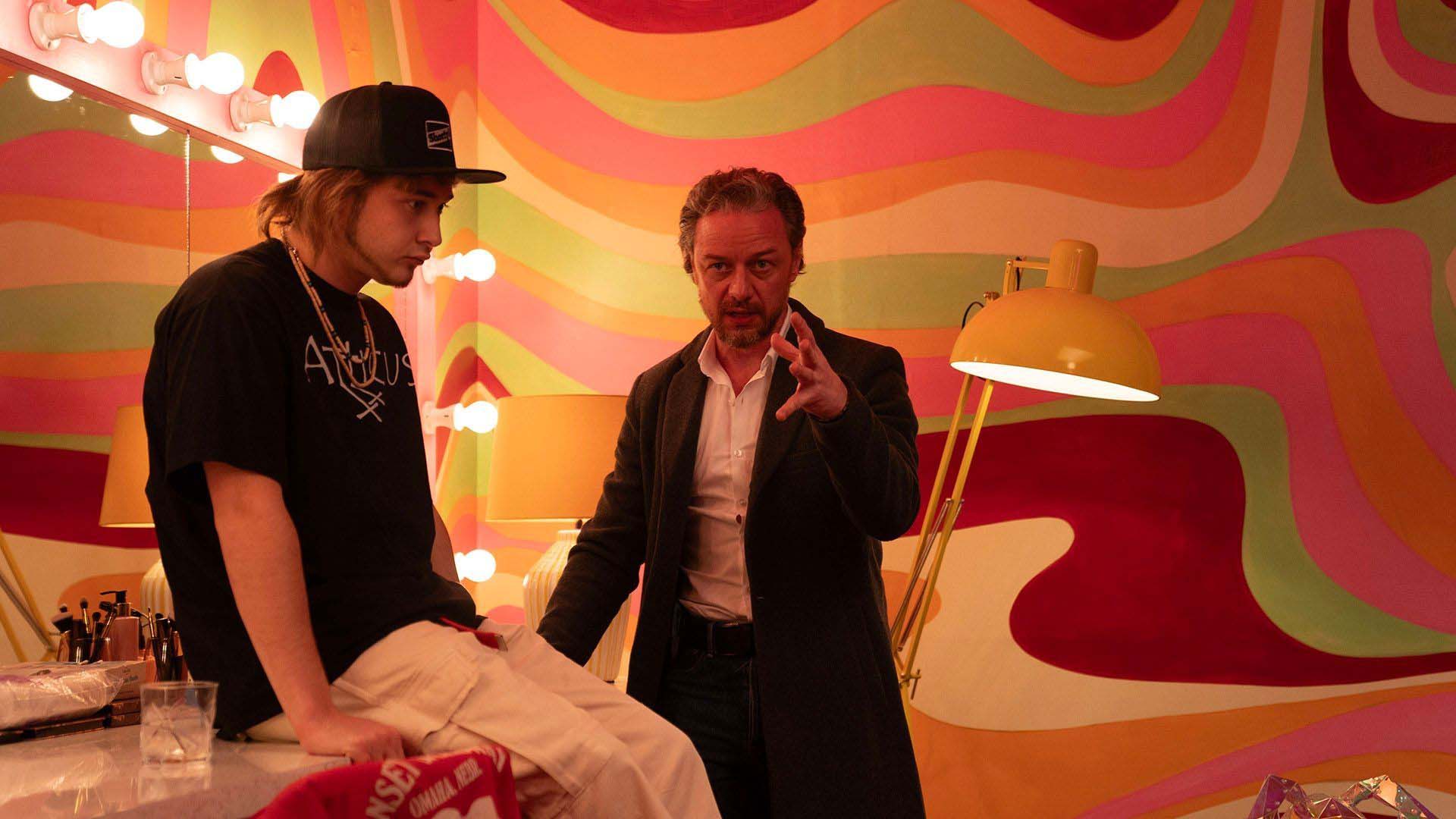
Working with McAvoy appears to have reinforced those ideas. As well as being passionate about supporting Scottish working class artists, he seems to have taken to directing like a duck to water, combining technical skill with an ability to connect with actors.
“He’s a truly remarkable director,” Halliday says. “You’re in disbelief that it’s his first time doing it.” Ross describes the experience as “massive,” recalling how they were “pinching ourselves every day on set,” while Bottomley highlights the advantage of his dual perspective. “As an actor-director, he understood what it felt like to be in our shoes,” he says.
For a film so concerned with fame and its distortions, it is striking that the cast themselves seem wary of the idea. When asked about their own rising profiles, they repeatedly return to motivation rather than visibility. “We’ve never really talked about becoming famous,” Halliday says. “It’s not what we view as being important.”
Ross frames it more pragmatically. “If you do a good job, more people will know you,” he says. “But you might not necessarily want to be famous.”
Bottomley brings it back to something simpler, and perhaps more durable. “It’s about clinging on to why you got into this job,” he says. “I wanted to tell stories. If you start believing the hype, all the lights and cameras, it’s not real. You still go home to your mum and dad and have dinner.”
• California Schemin’ is in cinemas now.
RELATED

- Film And TV
- 30 Sep 26
Trailer released for Netflix's Matthew Perry documentary

- Film And TV
- 29 Sep 26
Saved By The Bell actor Dennis Haskins dies aged 75

RELATED

- Film And TV
- 25 Sep 26
FILM OF THE WEEK: The Lost Children of Tuam - Reviewed by Roe McDermott

- Film And TV
- 25 Sep 26
First look images of Charlie Brooker's Blackmere released

- Film And TV
- 25 Sep 26
A24 film Primetime features new Phoebe Bridgers song 'On Video'

- Film And TV
- 24 Sep 26

