
- Film And TV
- 19 Dec 25
Oona Chaplin on Avatar: Fire And Ash – "It's an incredible gift to unite the world at a time when we are so divided"








Hailing from one of the most storied families in showbusiness, Oona Chaplin discusses her role in blockbuster sci-fi sequel, Avatar: Fire And Ash.
There are actors whose biographies are interesting, and then there is Oona Chaplin. She was born in Madrid to Geraldine Chaplin, the English-American actor whose own career spans continents, and Patricio Castilla, a Chilean cinematographer.
Her upbringing moved across Spain, the United Kingdom, Switzerland and Cuba, shaped by her mother’s work and the cultural mix that defined their home. Her father’s mother, Hilda Valderrama, was a Mapuche human rights lawyer whose advocacy remains a point of pride for Chaplin, and whose Indigenous heritage intersects with the global activism Oona would later commit herself to.
And then there is the lineage that the world immediately recognises. Chaplin is the granddaughter of Charlie Chaplin, one of the most influential figures in film history, and the great granddaughter of the playwright Eugene O’Neill. She speaks about this inheritance neither with awe nor reluctance, but with a grounded sense of what it means to navigate a life made possible, in part, by the work of others.
“Charlie Chaplin is opening doors for me I never would have been able to walk through if it weren’t for him,” Oona says, sitting in a Paris hotel room. At one time she felt guilty about this, but eventually realised the guilt was unproductive.
“I had to stop feeling guilty or undeserving about getting to that door, because it was such a fucking waste of time. The only thing I have tried to devote myself to now is, whenever that feeling comes up, I just go. I just need to be responsible for how I walk through that door. I need to do my best, and work hard and be kind to people.”
Her awareness is not abstract. She sees traces of her grandfather in her own child.
“I had a daughter recently, and she’s two years old – my best work!” she jokes. “And also her own best work. I look at her sometimes and she moves just like Charlie Chaplin. It’s really trippy, because that’s something I see in my mom, who moves like a Chaplin. My cousin James Terry, who lives in Paris, he moves like a Chaplin. My auntie Annie does too. I don’t have that – maybe sometimes, but definitely not in the same flavour.”
She laughs as she says it, aware of the phenomenon without placing herself at its centre. Still, she recognises how movement, physical storytelling and emotional clarity matter in her work, especially in a franchise built on performance capture.
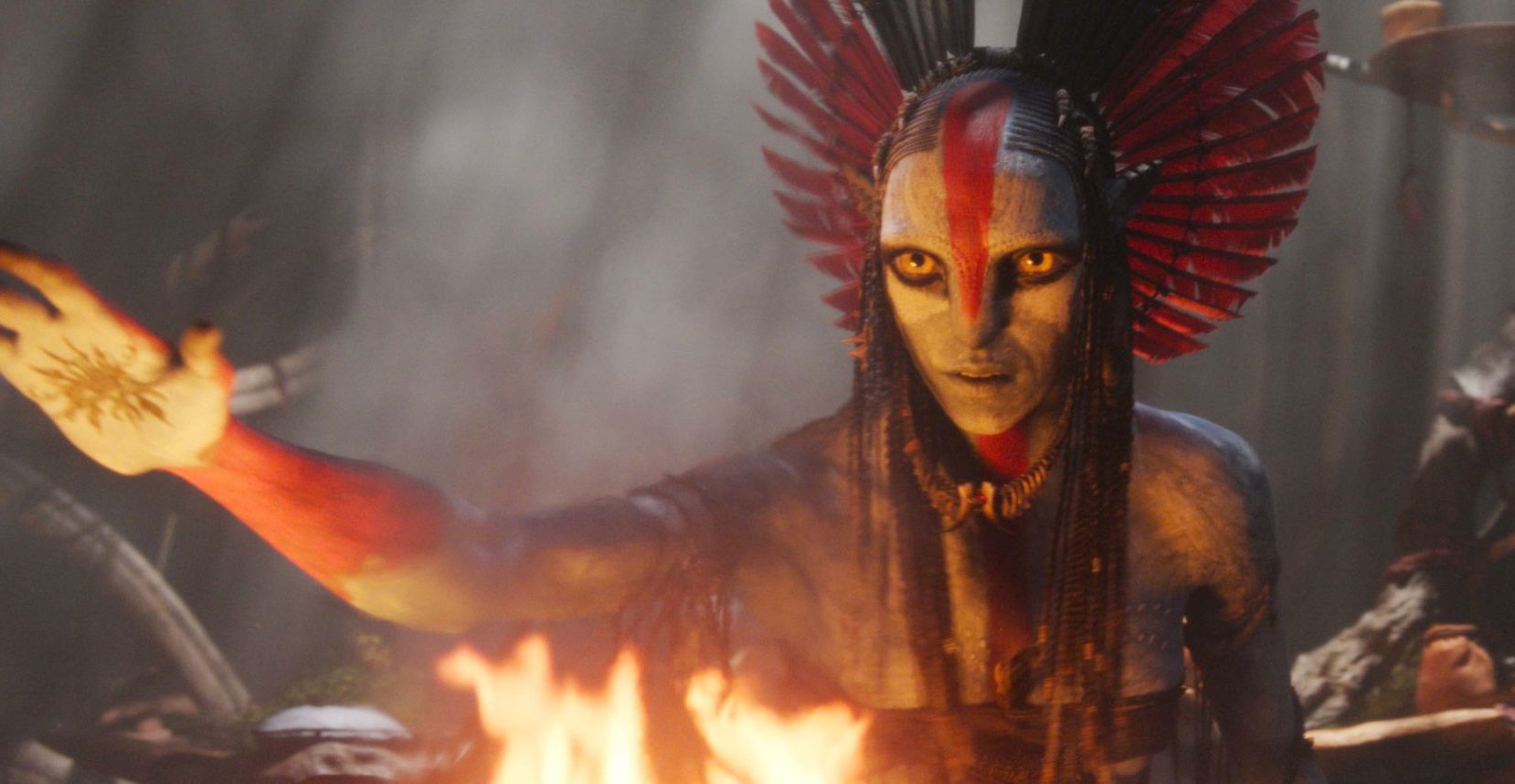
Varang (Oona Chaplin) in 20th Century Studios' AVATAR: FIRE AND ASH © 2025 20th Century Studios
Movement, precision and emotional presence are not aesthetic extras in the Avatar films. They are the bedrock of how these movies are made. Performance capture turns the smallest shift of breath, the tiniest flicker of feeling, into part of a digital body that must remain fully believable on screen.
The franchise depends on actors who can communicate in their whole being, not just their voice or face. Since 2009, James Cameron’s world has pushed cinema into new territory with underwater capture, virtual camera systems, and expansive digital ecosystems that respond to an actor’s choices in real time.
Stepping into this universe means mastering a medium where your internal state becomes architecture, and your physical choices shape the emotional reality of a ten-foot tall Na’Vi.
For Chaplin, that meant channelling all of her craft into Varang, the fierce, grief-forged leader of the Ash People, a clan reshaped by catastrophe. A ruthless leader who engages in violent and psychedelic ritual, Varang enters the saga as a character who believes her clan to be forsaken, and has turned her grief into anger, violence and vengeance.
Chaplin is remarkable in the role, bringing a primal ferocity to Varang, and her ability to express character through the body, micro-expressions, stillness and intensity made her a natural fit for the role, which demands both fury and vulnerability beneath layers of digital skin.
A LIFE SHAPED BY ACTIVISM
As ever, the Avatar films tackle ideas of environmental stewardship and colonial dynamics, but there’s also an emphasis on a people divided, as clans war with each other instead of uniting to recognise their common enemy.
These themes are close to Chaplin’s heart. Long before she joined Avatar, the actress spent more than a decade building relationships with Indigenous elders around the world, particularly in the Amazon. She has volunteered in refugee camps, supported film education for Saharawi refugees through FiSahara, and works closely with Indigenous communities in Brazil, Mexico and Chile as a trustee of the Boa Foundation. That work is personal and spiritual, not performative.
She explains it plainly, saying, “I’ve been in this great adventure of building relationships with indigenous elders from all over the world for 15 years. I’ve invested a lot of time and energy in learning from them, and seeing how I can best serve the projects they bring to me or to my friends. I’ve also worked to authentically incorporate some of those teachings into my own life.”
Then she adds what she considers the core principle behind it all: “I think, ultimately, the greatest form of activism is embodying the teachings that you would want to defend and promote, and incarnate and give your voice to.”
Chaplin felt the pull of the Avatar films long before she ever stepped on set. The first movie affected her so deeply that she still searches for the right language to describe it.
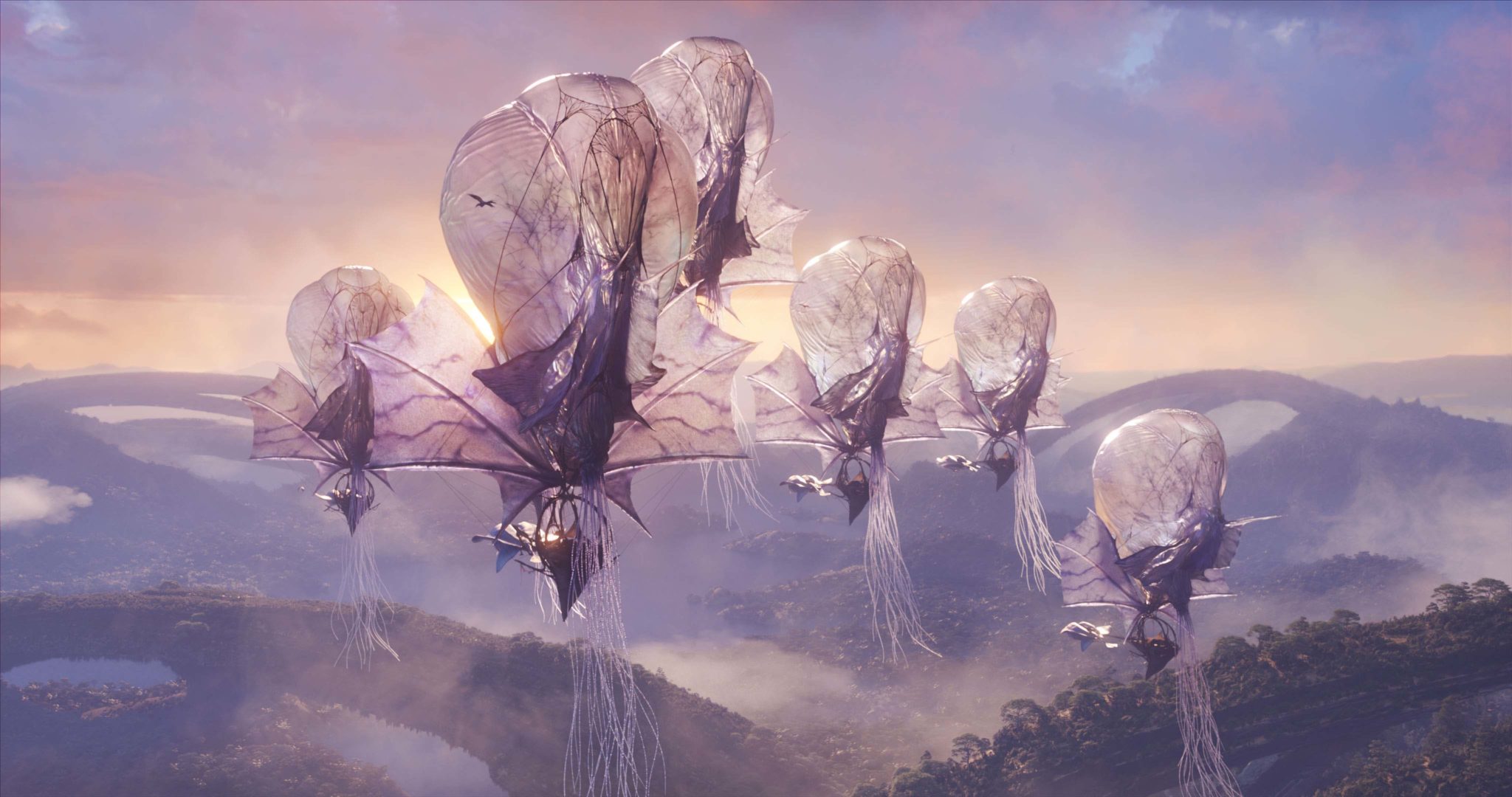
AVATAR: FIRE AND ASH. © 2025 20th Century Studios
“When I saw the first Avatar, I was blown away, because it touched me,” she says. “It brought out of me this deep, forgotten knowing that I had of my connection with nature.”
She is convinced she was not alone in that experience.
“We are all blue when we watch Avatar, they’re all Na’Vi. We’re not the other guys, you know.”
For Chaplin, that sense of recognition is the franchise’s true power. The films are not offering a lesson, so much as stirring something already there.
“We all know this place within ourselves that is deeply and intrinsically connected with nature,” she says. “That has a sacred relationship to life, that has these very old-fashioned terms of honour, dignity, respect and sanctity. But we know them.”
She believes the movies succeed because they reconnect people to those instincts, rather than presenting them as abstract ideals.
“It’s drawing out that experience within ourselves,” she says, hoping the feeling translates beyond the theatre. “And my hope is that people can take that feeling to the park, or their living room.” She knocks on the wooden table beside her. “These are nature, you know?” Then she brings the idea inward. “And we are nature, so we take that relationship for a walk with ourselves.”
During the making of Avatar: Fire And Ash, Chaplin invited two Yawanawá elders from the Brazilian Amazon to the studio, men and women she has known and learned from. What was meant to be a brief ceremony became an hours-long event.
HUGE PRODUCTION
“They came and sang, and kind of took over filming for six hours one morning,” she says. She worried that the shoot was falling behind. “I went up to Jim at one point, because I knew that their slot was 15 minutes and we were two hours in. I said, ‘Hey, Jim, I know this is taking a long time, but if there’s any...”
James Cameron interrupted her, saying, “It’s gonna take as long as it needs to.”
The memory still stuns her.
“So I feel like there’s a respect that James Cameron, and everybody on the set, has towards indigenous people and nature itself.”
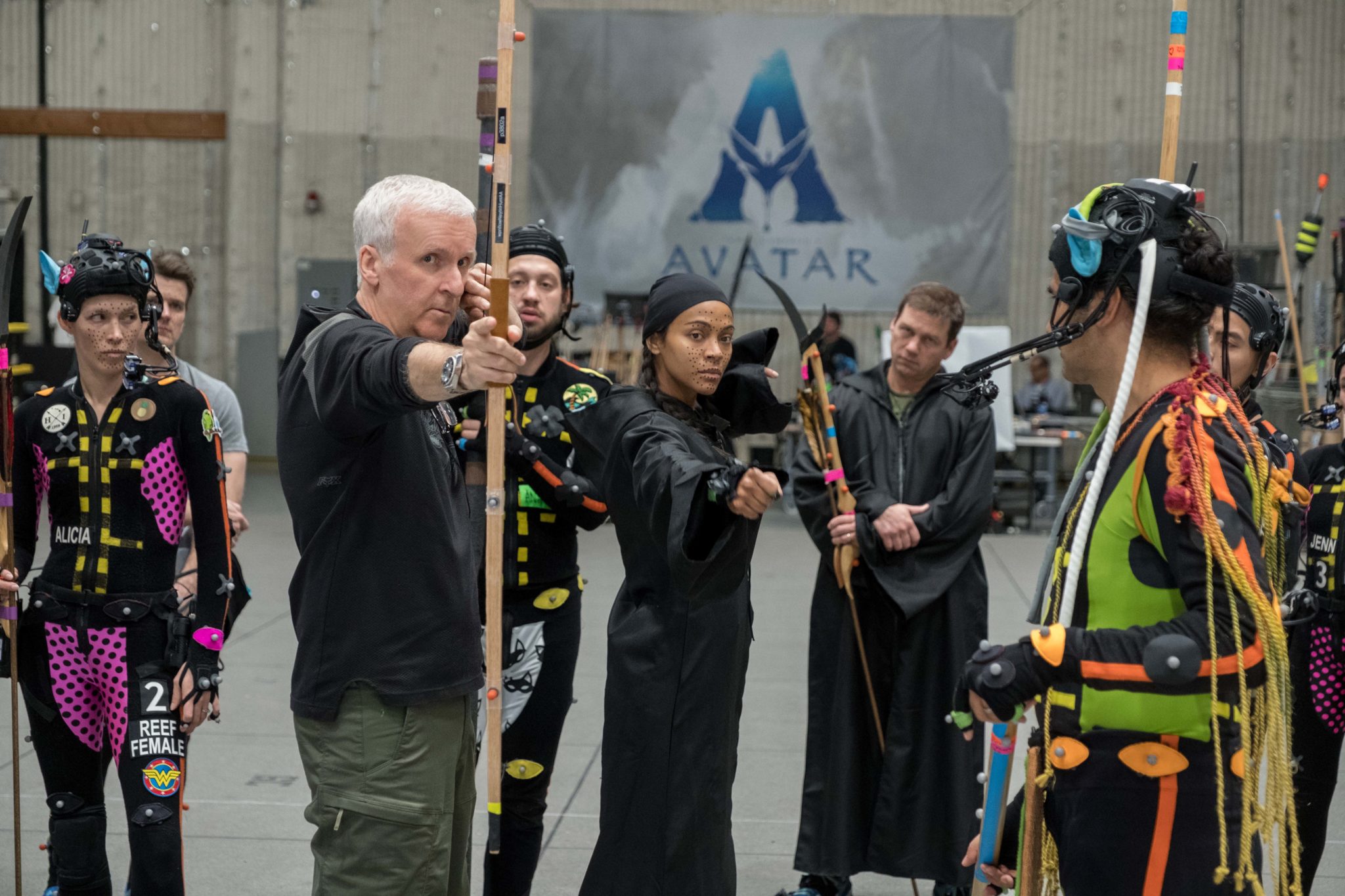
Director James Cameron and Zoe Saldana on the set of AVATAR: FIRE AND ASH. Photo by Mark Fellman. © 2024 20th Century Studios. All Rights Reserved.
Chaplin arrived on the Avatar set wide-eyed, with no preparation from actors who had worked on the previous films.
“No, I didn’t,” she says. “I was going in there like a deer in the headlights.”
Fire And Ash is a huge production, starring Sigourney Weaver, Sam Worthington, Zoe Saldaña, Kate Winslet and Giovanni Ribisi, among others. Chaplin expected to feel intimidated, but instead found a wealth of warmth and support.
“Jim is such a generous guy. He’s such a caring person, and he is so curious,” she says. “The first time, when I entered the set for a script reading, everybody was there, and there was a feeling of family that you can’t fake.”
She lists what she found: “The encouragement, the support, the challenge, the safety, the love, the care, the play, the in-jokes.”
And because she values community, that mattered.
“Even though these people are some of my heroes, they’re also just people. And everybody seems to be very united, you know? It just spoke to the leadership of James Cameron, because he is one of the most fantastic leaders I’ve ever met.”
Saldaña, a cornerstone of the series as Neytiri, became a quiet mentor.
“Zoe is such a woman’s woman. She is such a good sister. She was always looking out for me, always asking, ‘Are you okay?’, always teaching me.”
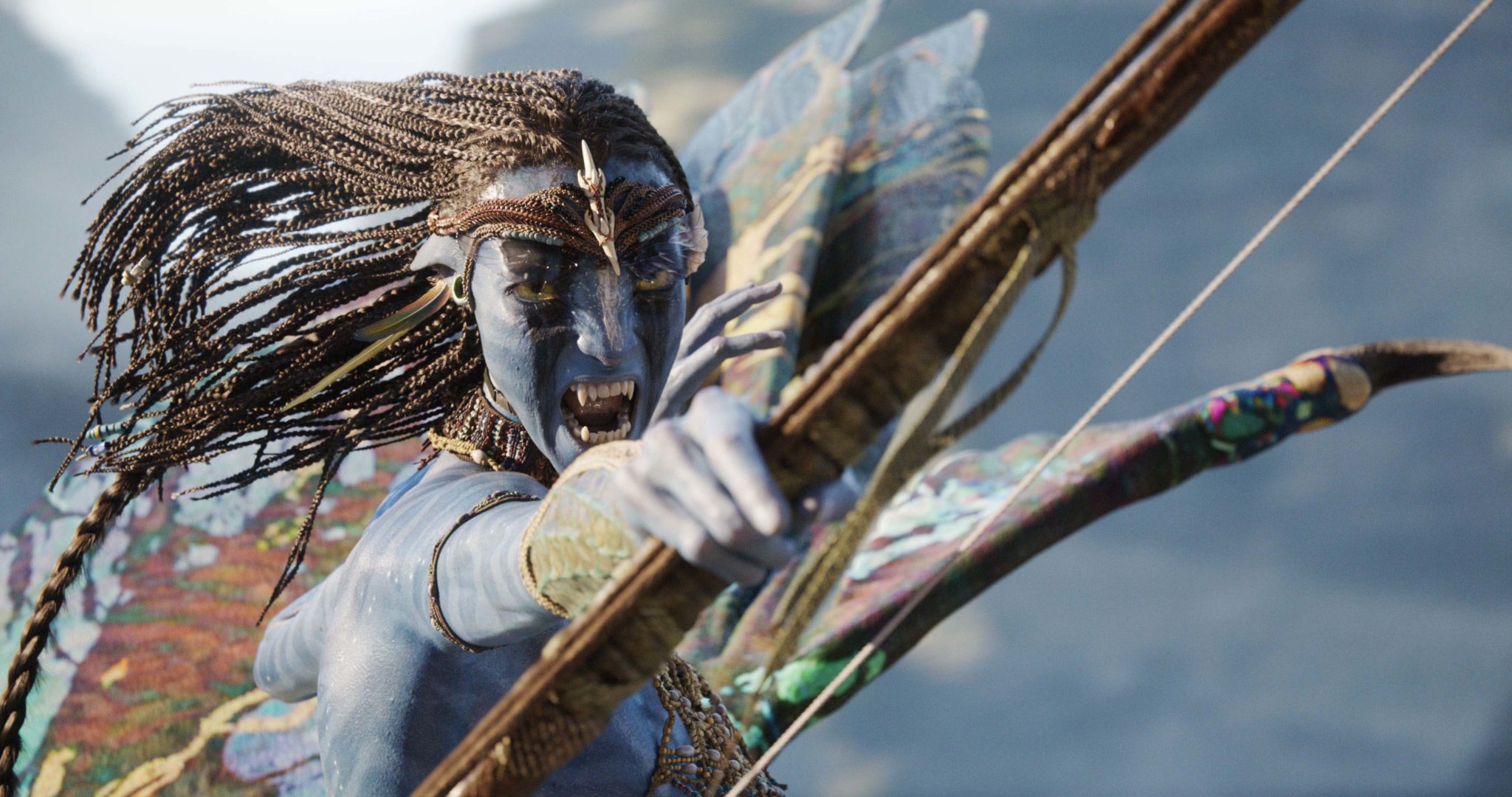
Zoe Saldaña as Neytiri in AVATAR: FIRE AND ASH. © 2025 20th Century Studios
But teaching on this set happens without pretence.
“The conversations we have are so centred on the art we’re creating in the moment,” Chaplin explains. “Everybody’s learning from other people, because everybody’s leading by example.”
One moment remains vivid to her, when a fight scene with Saldana became a little intense.
“I remember having this fight scene, and I got all excited, my adrenaline was up,” she says. “And then she said, ‘Hey, I have a body. Remember, I have a body. My neck is a little sore. Just remember, just be a little bit more careful with me.’”
It was gentle and mutual, not reproachful.
“I was like, dang, thank you for that,” Chaplin says. “It was a reminder of the connection, a reminder of, ‘Hey, let’s work together. Let’s dance. Like, remember that we’re also sharing this.’ For me, it was this great gift of increasing my awareness, and also modelling how I could take care of myself when I needed to.”
BECOMING VARANG
Chaplin’s character, Varang, is not a straightforward antagonist. She is the leader of a clan shattered by disaster, a leader who has turned toward fire and myth to make sense of her anguish.
“She has found a power that’s greater, and she’s made an allegiance with it, because she believes in it. She’s also uncovered a mythology that is primordial and essential, and it’s going against the grain.”
Chaplin refuses to frame her as purely villainous.
“I think in her own eyes, she’s a revolutionary, and she has a divine purpose in this life,” she says.
The actress speaks about this with a clear sense of emotional self-knowledge. Her bond with Varang did not come from justifying the character, but from recognising the terrain that produces someone like her. When she says, “I was also extremely angry at the time, at the world,” she is not aligning herself with Varang’s choices, but acknowledging a point of entry.
“For me, she’s like a cautionary tale of what happens when you don’t bother to dig a little bit and scratch the surface,” she says. “When you don’t dig under the anger and see what’s underneath, because anger is always a mask at the surface level.”
Chaplin is thrilled to promote Fire And Ash, her energy and enthusiasm infectious – and she sees a symmetry between the work of her grandfather and this franchise, which has become a global sensation.
“Charlie Chaplin united the world, made the world laugh and cry together,” she says, thinking about the scale of his influence. Then she turns to Cameron. “But with Avatar, James Cameron is uniting the world because we’re all blue.”
For her, the parallel is not about genre or era, but intent.
“They’re both using cutting edge technology,” she continues, “whilst telling stories about the human condition.” That, to her, is what links them across generations of filmmaking. What mattered to her grandfather was connection, and what matters in Avatar is the same instinct made newly possible. She lingers on what that means now, her eyes shining a little.
“It’s an incredible gift to unite the world at a time when we are so divided,” she says. “We can see ourselves reflected, and be inspired and uplifted. That’s really special.”
• Avatar: Fire And Ash is in cinemas from today, December 19.
RELATED

- Film And TV
- 05 Aug 26
First look at Billie Eilish in The Bell Jar adaptation


- Film And TV
- 11 Dec 25
Billie Eilish releases trailer for concert film directed by James Cameron
RELATED

- Film And TV
- 02 Dec 25
The best new movies to see this Christmas

- Film And TV
- 09 Nov 23
Academy Award winning Irish animator Richie Baneham to receive an Oscar Wilde award


- Film And TV
- 08 Jan 20
James Cameron shares first look at Avatar 2 concept art

- Film And TV
- 22 Oct 26