
- Film And TV
- 02 Dec 25
Testimony director Aofie Kelleher: "There is still so much stigma and shame felt by the survivors"








Director Aoife Kelleher on her new documentary Testimony, which explores survivors’ courage, State complicity, and why the Mother and Baby Homes story remains unfinished business. Interview: Roe McDermott
When director Aoife Kelleher first heard the story of the High Park Magdalene Laundry graves while making her 2014 film One Million Dubliners, she could not have known how much would take place in the years that followed: the revelations at Tuam, survivor testimonies at the United Nations, fraught government inquiries, and a broader cultural reckoning with Ireland’s past. Yet the image of exploited women exhumed, misidentified and mishandled stayed with her.
“The women from the High Park Magdalene Laundry,” she explains, “the plot on which their graves lay was sold to a developer for the benefit of the convent, and the women were exhumed and their bodies cremated and moved to Glasnevin. But there were women who were misidentified, and body parts were missing.”
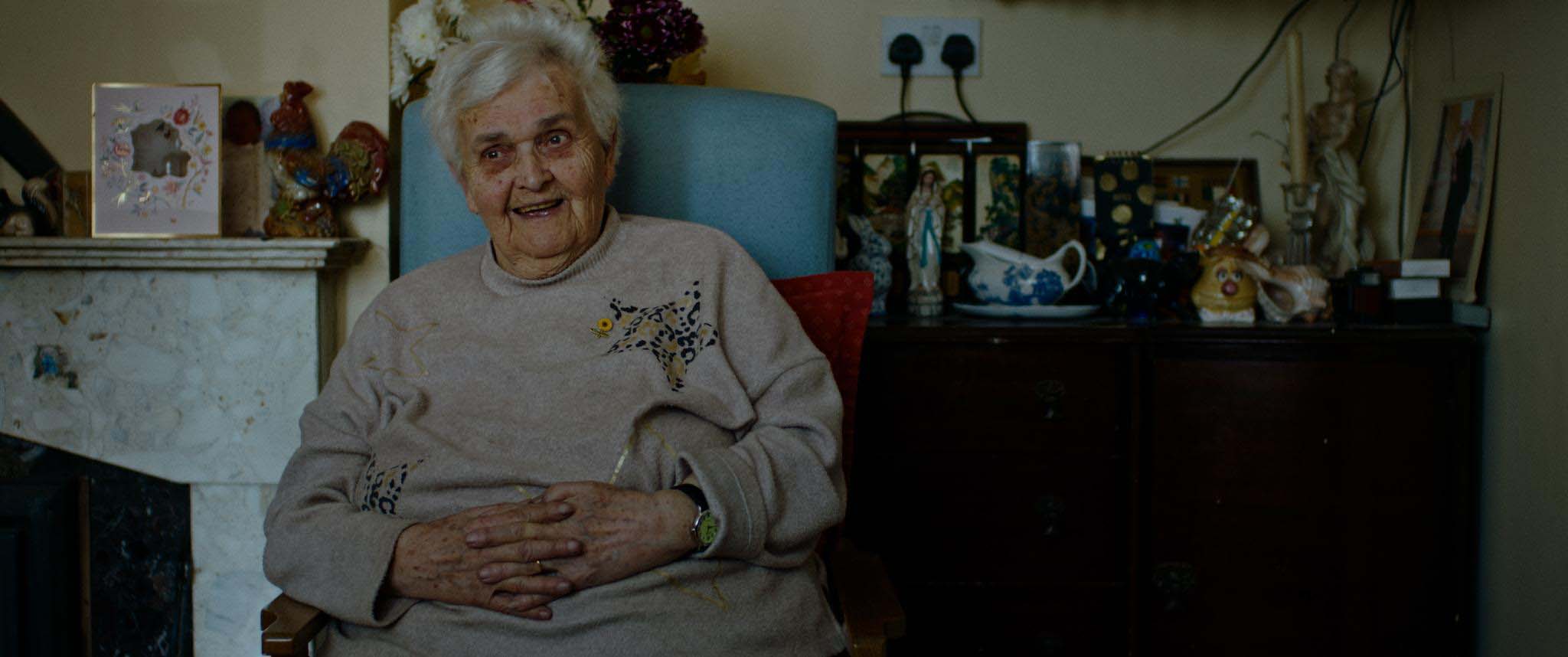 Testimony.
The women, as the film says, were treated as disposable in life and disposable in death. “It was a really harrowing story.”
As Ireland began, haltingly, to confront the scale of harm inflicted in its institutions – Magdalene Laundries, Mother and Baby Homes, industrial schools – public discussion often reduced the people at the centre of these histories to quiet, passive figures. But in the rooms Kelleher entered, she found something very different.
In 2013, even before the Tuam revelations, she was attending the kitchen-table strategy meetings of Justice for Magdalenes Research, where survivors, activists and experts worked side by side.
“I met Claire McGettrick, I met Maeve O’Rourke. I started to sit in on their meetings and get a sense of the work they were doing.”
In those meetings, Kelleher witnessed a tiny group shouldering the work of a national truth commission on their own time: legal research, survivor support, UN submissions, evidence-gathering and relentless pressure on a political system that often sought to minimise or delay.
“It was a group of women, and one man, working together in their spare time – unpaid volunteers – holding the State to account,” she says. “What they did in relation to the UN, and the pressure they were able to put on the government to force that apology, was really extraordinary.”
That clarity changed the shape of the film. Testimony would not simply recount individual tragedies; it would document the organised, strategic resistance to a narrative of silence, one designed to hold the State accountable for its complicity.
“Survivor stories were always going to be the heart of the film,” Kelleher says, “but this campaign was going to be the spine.”
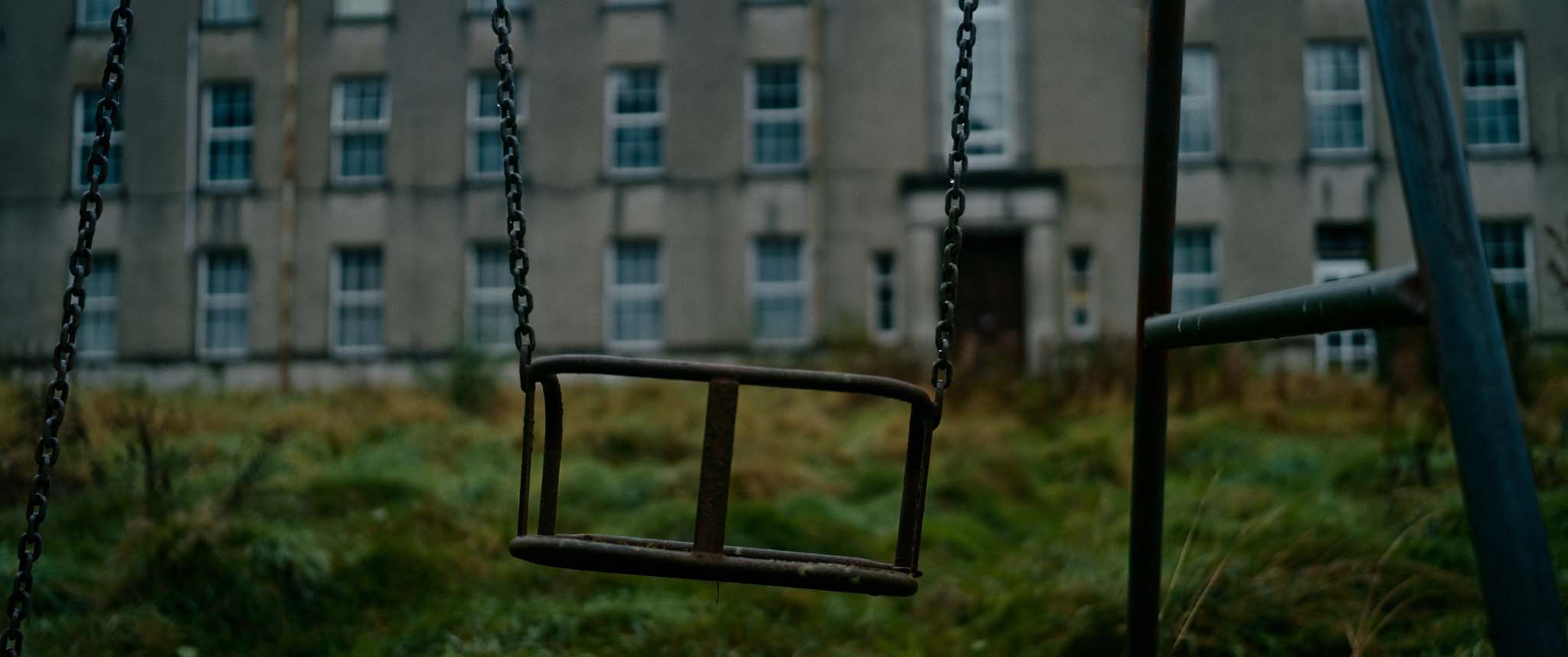 Testimony.
Asking survivors to revisit traumatic events demands a huge amount of safety and trust, asked of women who have been silenced and shamed for decades. Kelleher speaks of Madeleine Marvier, whose infant son William died in Bessborough.
“Madeleine really didn’t know if she wanted her name attached to the film or her face to appear in the film.” Kelleher filmed her interview knowing she might later opt for anonymity. “That day ended up being really positive, very cathartic. By the end, she had completely changed her mind and decided she wanted to tell her story very publicly.”
Madeleine’s story, involving the separation from William as he suffered an infection, and her frantic search for him, was followed by the discovery that he had not been buried where she was told. He lay instead in an unmarked famine graveyard in Old Saint Cemetery, Cars Hill.
Other survivors shared equally shattering accounts. Claire McGettrick, who was adopted at six weeks through St Patrick’s Guild Adoption Society, says bluntly, “They obliterated our identities.” Angela Fahy was taken to a Magdalene Laundry at age 13, when her foster mother died, and was kept there for four-and-a-half years, forced to do constant unpaid labour and experiencing restrictions, beatings, and the humiliation of having her hair cut as punishment.
Angela eventually escaped over a wall on a rainy night using a ladder, fleeing back to her foster father, who protected her. “It left its mark on me,” she says; even now, she refuses to enter a nursing home, fearing enclosure too strongly. Kelleher says the enduring power of shame ran through every conversation.
“There is still so much stigma and shame felt by the survivors. These are traumas that don’t disappear. Shame just goes on.” But shame was only one mechanism of control. Coercion, often State-backed, was equally pervasive. “There was this narrative that women and children were passive victims, but what we heard were these attempts at escape, and in many cases, the escapes were thwarted with the support of the State.”
Several women who escaped were returned to Magdalene laundries by the ISPCC and An Garda Síochána. For Kelleher, these accounts expose Ireland’s complicity. “These women had committed no crime and yet they were being returned to these carceral institutions by the State. It’s vital that we understand how coercive it was.”
The film revisits pivotal public testimonies, including Michael O’Brien’s raw appearance on Questions & Answers, where he revealed the physical and emotional abuse inflicted on him in an industrial school and his demand for State acknowledgement. It was a moment that shook the country.
“Everything about it was a watershed,” says Kelleher. “That testimony is impossible to ignore and minimise. It’s raw and it’s devastating.” Many of the stories told in Testimony have the same moral force. Madeleine’s testimony about William’s short life carries the same moral force. Her story is devasting, the emotion still raw and deeply felt. “You want to know where your child is buried,” she says. “He needs that. He’s been on his own all this time.”
 Testimony
Kelleher acknowledges the power of it: “Those are moments you’d like to see shown in schools. The truth is just undeniable.”
The director believes international pressure forced Ireland to confront what it had long tried to bury.
“Tuam could have been a really significant moment,” she says. “A moment for wholesale truth and reconciliation, a reappraisal of all the child deaths, all the burials, all the missing bodies around the country. But it hasn’t happened.”
Instead, “the response felt very much a direct response to the international coverage and, as often happens, a quite limited response.”
The film highlights how much silence and lack of accountability still surrounds these issues, with title cards noting how many State figures, departments, institutions and religious orders have never made public statements about the abuse, or who refused to participate in the film.
Still, something shifts when survivors see their stories reflected back publicly. At Dublin’s premiere, “there was a joyful outpouring,” and in London “it was very emotional.”
For Kelleher, Testimony enters a landscape where survivors, activists, teachers and younger generations are collectively listening to survivors of the past and trying to reshape the future for the better. She hopes the film deepens that shift.
“These are their stories,” she says. “And the ownership of the stories, that’s everything.”
- Testimony is in cinemas now. Watch the trailer below.
RELATED

- Film And TV
- 28 Nov 25
FILM OF THE WEEK: Testimony - Reviewed by Roe McDermott

- Film And TV
- 16 Jun 25
FILM OF THE WEEK: Lollipop - Reviewed by Roe McDermott

- Film And TV
- 01 Nov 24
FILM OF THE WEEK: Small Things Like These - by Roe McDermott
RELATED

- Film And TV
- 22 Jul 24
RTÉ to broadcast documentary on "sexual predator" Bishop Eamonn Casey tonight

- Film And TV
- 08 Apr 24
Marvel actor Jonathan Majors sentenced to probation for assaulting ex-girlfriend

- Film And TV
- 02 Oct 23
Second U.K. Police investigation into Russell Brand underway

- Film And TV
- 06 Mar 23
Netflix announces Hunting Gary Glitter documentary series

- Film And TV
- 26 Sep 22
Maisie Williams opens up about 'traumatic' relationship with father

- Film And TV
- 16 Aug 22